
A smile makeover for brides and grooms is a personalized dental plan with the aim of improving smile appearance while protecting oral health before the wedding. For a 2026 celebration, start with your teeth, gums, and treatment needs—not a promise of a particular shade by a fixed date.
- A smile makeover for brides and grooms starts with healthy teeth, not a whitening appointment.
- Starboard Dental offers general, restorative, and cosmetic dental care for patients in Kennebunk, York, and Saco, Maine.
- Choose teeth whitening for natural-tooth color; consider bonding for small shape changes after a dental assessment.
- Veneers and orthodontics need separate discussions about tooth preparation, treatment timing, maintenance, and your bite.
Why a smile makeover matters for brides and grooms
Wedding planning gives dental decisions a deadline. Engagement photographs, fittings, travel, and the ceremony can also create several dates when you want your smile to feel comfortable and look familiar. Your plan should account for those dates without letting them dictate care that your teeth do not need.
Starboard Dental is best for brides and grooms seeking general, restorative, and cosmetic dental care in Kennebunk, York, and Saco, Maine. Led by Dr. Alex Kerbaugh, the practice serves patients of all ages. Start with Starboard Dental to discuss your oral health goals rather than choosing a procedure from a photograph.
A wedding smile makeover does not have to mean treating every visible tooth. Cleaning, addressing a specific concern, or leaving healthy teeth unchanged are all valid decisions. The useful question is what bothers you and which treatment addresses it without unnecessary changes.
Your 2026 wedding date belongs in the consultation, alongside symptoms and dental history. Tell your dentist about sensitivity, bleeding gums, existing crowns, and any upcoming travel. These details affect which treatments make sense and how to arrange them.
How to plan your wedding smile makeover
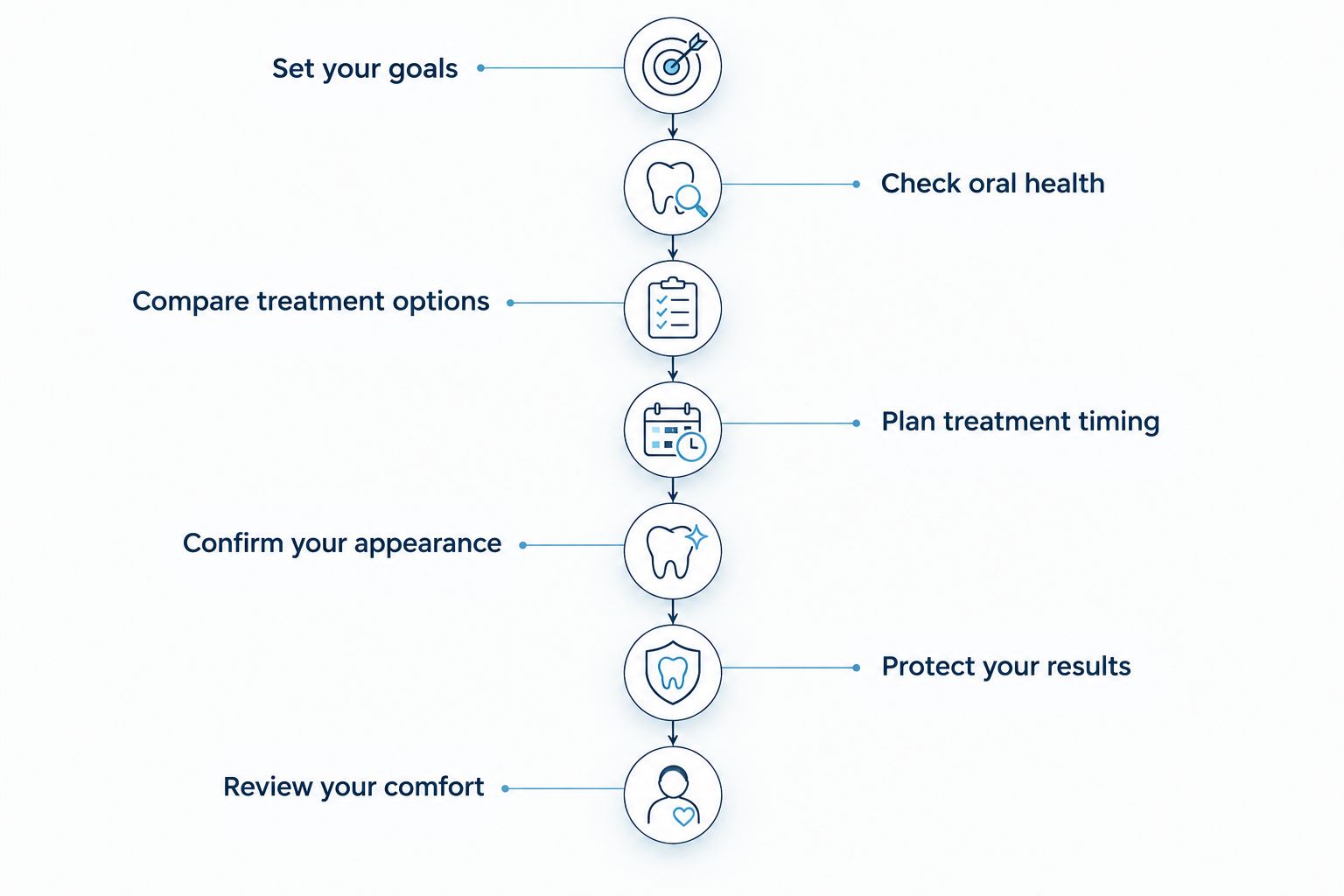
Work through these checkpoints in order: Set your goals, Check oral health, Compare treatment options, Plan treatment timing, Confirm your appearance, Protect your results, and Review your comfort. Each checkpoint answers a different question, from what you want changed to how your teeth feel after treatment.
Set your goals
Begin at home with a plain-language list of what you want changed. Separate color, shape, spacing, missing teeth, and discomfort. A tooth that looks dark needs a different assessment from a tooth that feels painful, even when both show in photographs.
Use ordinary photographs taken in different lighting rather than filtered close-ups alone. Bring examples of your own smile that you like, too. They help explain whether you want a noticeable change or simply want to feel more comfortable smiling.
Choose your goals independently, even when you attend as a couple. You and your partner do not need matching shades, matching treatments, or identical schedules. Agreeing on the wedding calendar is useful; agreeing on the same dental procedure is not necessary.
- Write down your main appearance concern.
- List pain, sensitivity, or bleeding separately.
- Bring unfiltered photographs of your smile.
- Identify features you want to keep unchanged.
- Share ceremony, photograph, and travel dates.
Check oral health
Keep brushing and cleaning between your teeth while you arrange an examination. Do not use cosmetic products to cover up a toothache or persistent bleeding. Whitening changes color; it does not treat decay, gum disease, or an infection.
A dental assessment establishes whether your concern is cosmetic, restorative, or both. Your dentist can examine existing restorations and decide whether imaging or other checks are needed. You cannot reliably identify a cracked tooth or the cause of a dark tooth from a selfie.
Starboard Dental's general, restorative, and cosmetic dental care gives brides and grooms a place to discuss health and appearance together. The trade-off is that a consultation does not guarantee a particular procedure or wedding-day result; your examination determines the appropriate plan.
- Report persistent tooth pain before discussing whitening.
- Mention gums that bleed during brushing or flossing.
- Identify crowns, veneers, fillings, and missing teeth.
- Explain any grinding or clenching symptoms.
- Ask which health concerns need attention first.
Compare treatment options
First, identify whether your concern is tooth color, shape, position, or missing structure. Then compare the treatments that address that concern. A more involved treatment is not automatically a better wedding choice.
Whitening is the relevant category for lightening natural teeth; bonding addresses selected shape defects. Veneers cover the front surface of teeth, while orthodontic treatment moves teeth. These approaches are not interchangeable, and each needs an assessment of tooth health and bite.
For a color-focused goal, review the teeth whitening options comparison before your consultation. Ask how existing restorations affect the plan: crowns, veneers, and tooth-colored fillings do not whiten like natural enamel. Do not assume that a cosmetic treatment discussed here is available or appropriate for you without confirming it with your dentist.
- Ask what each treatment changes—and what it leaves unchanged.
- Compare reversible changes with treatments involving tooth preparation.
- Discuss sensitivity before selecting whitening.
- Ask how the treatment affects your bite.
- Include maintenance and future repairs in your decision.
Plan treatment timing
Write your important dates on a calendar before accepting a treatment schedule. Include engagement photographs, the ceremony, and travel. Ask your dentist to map appointments, any laboratory work, recovery, and review visits against those dates.
For a 2026 wedding, do not use a generic online countdown as your treatment schedule. Whitening, bonding, orthodontics, and restorative treatment have different requirements. Your starting condition and response to treatment matter more than someone else's wedding timeline.
Keep a backup plan that protects your teeth if the preferred treatment cannot be completed appropriately. That can mean limiting the changes before the ceremony or continuing treatment afterward. A healthy smile with an unfinished cosmetic goal is preferable to rushed, unnecessary dental work.
- Give your dentist all photograph and travel dates.
- Ask which appointments require healing or follow-up.
- Confirm when your dentist will review comfort and appearance.
- Discuss what happens if treatment needs additional visits.
- Decide which cosmetic changes can wait until after the wedding.
Confirm your appearance
Explain your preferred result in everyday language: brighter but familiar, a smoother chipped edge, or less noticeable spacing. An edited photograph is not a treatment specification. Your dentist needs to consider tooth structure, gum position, and how your teeth meet.
Ask how the proposed changes will be previewed or discussed before treatment. Depending on the procedure, this can involve photographs, shade selection, or a mock-up. Confirm which planning methods are appropriate rather than assuming every treatment includes a physical preview.
Where natural teeth and restorations share the visible smile, discuss the order of color changes and restorative work. Whitening an existing crown will not make it match newly lightened enamel. Agree on the treatment sequence before choosing a final restoration shade.
- Describe the result you want without relying on filters.
- Ask how shade selection accounts for existing restorations.
- Discuss which teeth actually need treatment.
- Ask whether a preview is suitable for your proposed procedure.
- Confirm what changes require removal of natural tooth structure.
Protect your results
Start with daily care, not another cosmetic purchase. The American Dental Association recommends brushing for 2 minutes, twice a day, with fluoride toothpaste and cleaning between teeth daily. That routine supports oral health before the wedding and afterward.
Follow the instructions for your specific treatment. More whitening product, longer wear, or overlapping products does not create a safer result. Report irritation or sensitivity rather than extending treatment on your own.
For your 2026 wedding preparations, keep your routine consistent through travel and busy days. Cosmetic treatment does not make teeth resistant to cavities or gums resistant to inflammation. Bonding, veneers, and crowns also need ongoing care and assessment.
- Brush for 2 minutes at each twice-daily session.
- Clean between your teeth every day.
- Use whitening products only as directed.
- Avoid using your teeth to open packaging.
- Ask whether grinding protection is appropriate for your teeth.
Review your comfort
Pay attention to chewing, temperature sensitivity, and how your teeth meet after treatment. Appearance is only part of the result. A restoration that looks right but feels high when you bite needs a dental review.
Arrange any recommended follow-up around your wedding and travel plans. Do not dismiss persistent pain as the normal cost of a brighter smile. Your dentist should assess symptoms that continue, worsen, or interfere with eating.
A 2026 wedding deadline does not change the need for urgent care. Facial swelling, fever with dental pain, or worsening symptoms need prompt professional assessment. Trouble breathing or swallowing requires emergency medical attention, not another cosmetic appointment.
- Describe where discomfort occurs and what triggers it.
- Report a bite that feels uneven after treatment.
- Keep recommended review appointments.
- Ask what symptoms warrant an earlier call.
- Seek emergency care for trouble breathing or swallowing.
Compare options for your wedding smile
Use this table to match a concern with a treatment discussion. The benefits describe what each option can address; the limitations explain why an examination still matters. No single option is best for every bride or groom.
| Option | Best for | Main benefit | Key limitation |
|---|---|---|---|
| Cleaning and preventive care | Surface deposits and oral health maintenance | Removes plaque, tartar, and some surface staining | Does not reposition teeth or change their underlying shape |
| Teeth whitening | Discoloration of natural teeth | Lightens natural tooth color without reshaping teeth | Can cause sensitivity; restorations do not whiten like enamel |
| Composite bonding | Selected small chips, shape changes, or gaps | Adds tooth-colored material to selected areas | Can stain or chip and needs maintenance |
| Porcelain veneers | Selected front-tooth color or shape concerns | Changes the visible front surface | Often requires irreversible tooth preparation and future replacement |
| Orthodontic treatment | Tooth alignment and selected bite concerns | Moves teeth rather than covering their position | Needs an individualized schedule and retention afterward |
| Restorative treatment | Damaged or missing teeth | Addresses lost tooth structure or tooth replacement needs | Treatment depends on the diagnosis, not the wedding deadline |
Choose the least invasive option that appropriately meets your goal. For example, color alone does not automatically justify veneers, and a missing tooth needs a replacement discussion rather than whitening. Ask what happens if you choose no cosmetic treatment at all.
Common mistakes brides and grooms make
Copying a partner's treatment plan
Matching wedding outfits does not require matching dental care. One partner's discoloration and another's chipped tooth need different decisions. Compare goals together, but let each person's examination determine treatment.
Booking cosmetic care around photographs alone
A photograph date does not account for tooth health, sensitivity, laboratory work, or follow-up. Share the complete wedding calendar before scheduling treatment. Leave the treatment sequence to your clinical needs rather than trying to fit every procedure into the final stretch.
Whitening without considering crowns or fillings
Natural teeth can lighten while visible restorations stay the same color. That mismatch matters when you already have dental work near the front of your smile. Discuss shade coordination before buying products or approving new restorations.
Treating a reference photo as a prescription
Someone else's tooth proportions and gum line are not yours. Ask for changes that suit your teeth and preserve comfortable function. A familiar smile can meet your goal without reproducing every detail in an inspiration image.
Accepting permanent changes under deadline pressure
Veneers and other treatments involving tooth preparation deserve a discussion about alternatives and long-term care. Feeling rushed is a reason to ask more questions, not to skip consent. Postpone an optional change if you cannot make a comfortable, informed decision.
FAQ
What's the best smile makeover for brides and grooms?
The best smile makeover for brides and grooms is the least invasive plan that addresses their concerns after a dental examination. Whitening suits natural-tooth color changes, while shape, alignment, and missing teeth need different treatment discussions.
When should I start planning dental treatment before my wedding?
Start with a consultation before committing to a procedure or treatment schedule. Bring your wedding, photograph, and travel dates so your dentist can account for appointments, healing, and follow-up.
Can I whiten my teeth if I have a crown or veneers?
Natural teeth can be whitened, but crowns and veneers do not lighten like natural enamel. Ask your dentist about color matching before starting whitening, especially when restorations show in your smile.
Is bonding better than veneers for a wedding smile?
Bonding is often the more conservative discussion for selected small chips or shape changes, but it is not a substitute for every veneer indication. Veneers often involve irreversible tooth preparation, while bonding can stain or chip; the appropriate choice depends on your teeth and goals.
What should I do if whitening makes my teeth sensitive?
Pause whitening and contact your dentist for advice if it causes sensitivity. Do not increase application time or combine whitening products, and have persistent or localized pain assessed.
Should my partner and I get the same shade of teeth?
No, brides and grooms do not need matching tooth shades. Choose each person's result around their natural teeth, existing restorations, preferences, and oral health.
Can I get veneers right before the wedding?
Do not assume veneers can be planned and completed appropriately just before your wedding. Examination, planning, tooth preparation, fabrication, and review need an individualized schedule; your dentist should explain alternatives if the deadline is unsuitable.
Does Starboard Dental provide dental care for wedding smile goals?
Starboard Dental provides general, restorative, and cosmetic dental care for patients in Kennebunk, York, and Saco, Maine. Discuss your wedding smile goals with the practice and confirm which treatments are appropriate after an examination.
One last thing
Your wedding photographs capture a moment; your teeth need to function comfortably afterward. Before approving a change, ask: Would I still choose this treatment without the wedding deadline? That question helps separate a lasting oral health goal from a decision made under pressure.
For your 2026 wedding, choose the smile you can comfortably live with—not just the one you want to photograph.