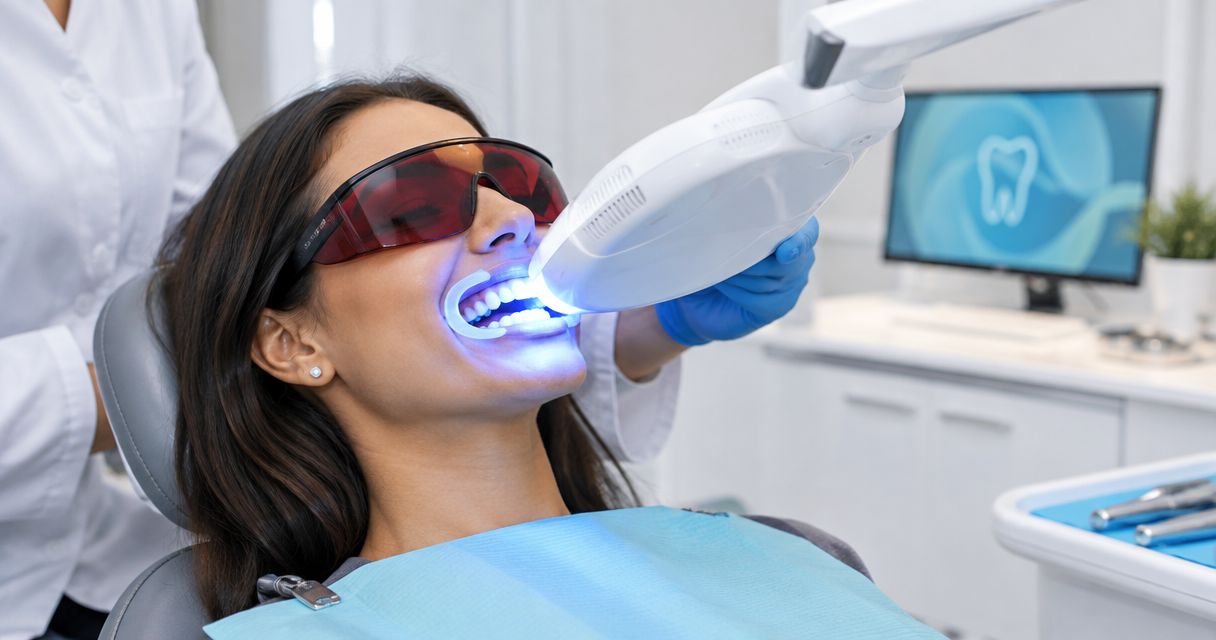

Best overall: dentist-supervised take-home whitening. Best for a shorter treatment visit: in-office whitening. Best for managing surface stains: whitening toothpaste. These are the best teeth whitening options for different goals in 2026, but the right choice depends on what caused the discoloration and whether your teeth and gums are healthy enough for whitening. If you’re in Kennebunk, York, or Saco, Starboard Dental can help you discuss that decision before you start.
- Dentist-supervised take-home whitening is the best overall teeth whitening option when you want professional guidance and control over treatment.
- In-office whitening is best for people who prefer treatment during a dental visit; sensitivity still matters.
- Whitening strips are best for people comfortable following package directions without a custom fit.
- Whitening toothpaste helps remove surface stains but does not whiten crowns, fillings, or veneers.
Why this matters
A darker-looking tooth is not always a tooth that needs bleach. Coffee and tea can leave surface stains, while changes within a natural tooth need a different approach. A single tooth that changes color also deserves a dental assessment rather than a stronger whitening product. The cause of the color change matters more than the strength of the product.
Whitening also has a firm limit: it changes the color of natural teeth, not the color of crowns, veneers, or fillings. If a restoration shows when you smile, whitening the surrounding teeth can make the color difference more noticeable. Existing sensitivity, gum irritation, and untreated dental problems affect which approach makes sense for you.
For patients in Kennebunk, York, and Saco, Starboard Dental is a local dental practice where you can discuss your oral health before choosing a whitening method. This guide compares the methods themselves; it does not assume that every option is suitable for every person or available at every practice.
What makes the best teeth whitening option?
Use these criteria before you compare products or book treatment. A method that fits your stain type and oral health is a better choice than one selected for convenience alone.
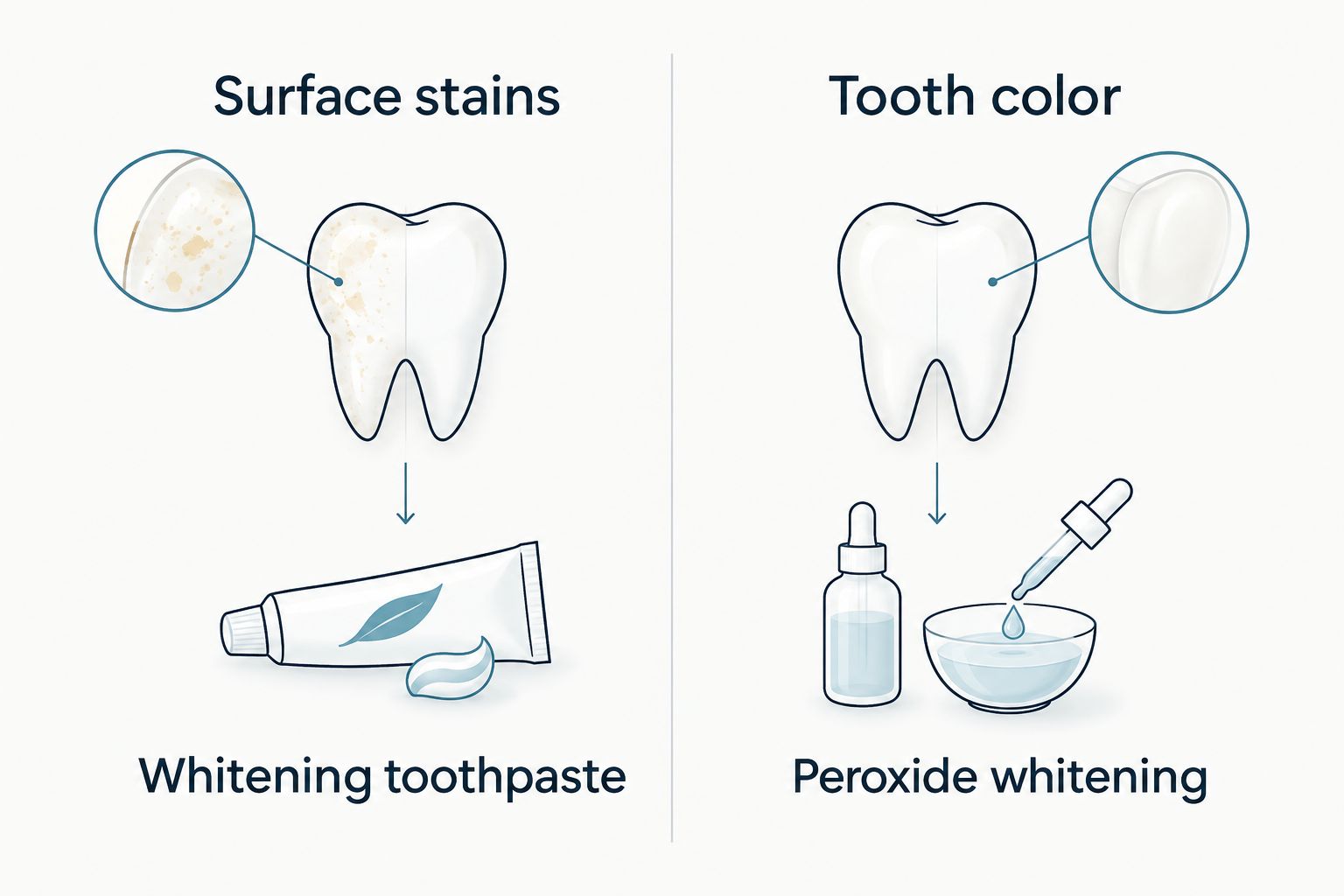
- Type of discoloration: Whitening toothpaste focuses on surface stains. Peroxide whitening targets color in natural teeth, though not every discoloration responds the same way.
- Condition of teeth and gums: Pain, visible decay, or irritated gums calls for a dental assessment before you apply a whitening agent.
- Existing dental work: Crowns, fillings, and veneers will not lighten along with natural teeth. Think about the final color match before whitening.
- Sensitivity: Whitening can temporarily make teeth sensitive and irritate gums. Your history of sensitivity belongs in the decision, not in the fine print.
- Fit and control: A dentist-supervised plan offers professional input. Store-bought strips and trays depend more heavily on how you place and use them.
- Effort: Decide whether you would rather attend a treatment visit, follow a take-home routine, or manage surface stains through regular brushing.
Surface stains and tooth color are separate problems. Whitening toothpaste addresses stains on the outside of teeth; peroxide whitening aims to lighten natural teeth. Neither option changes the color of existing dental restorations.
Teeth whitening options at a glance
| Option | Best for | Standout feature | Key limitation |
|---|---|---|---|
| Dentist-supervised take-home whitening | People who want guidance while whitening at home | A treatment plan informed by a dental assessment | Requires you to follow a take-home routine; sensitivity can still occur |
| In-office whitening | People who prefer treatment during a dental visit | Whitening takes place in a dental setting | A visit does not guarantee your desired shade or prevent sensitivity |
| Over-the-counter whitening strips | People who want a self-directed whitening option | Sold with directions for home use | Placement and use are your responsibility; strips do not whiten restorations |
| Whitening toothpaste | People managing surface stains | Fits into a brushing routine | Does not produce the shade change expected from bleaching |
1. Dentist-supervised take-home whitening: best for guided home care
Dentist-supervised take-home whitening pairs a home routine with professional advice about your teeth and gums. The dentist can discuss whether whitening is appropriate, what outcome is realistic, and how to respond if sensitivity develops. You still carry out the treatment as directed, so this option works best when you are comfortable following a routine.
Dentist-supervised take-home whitening pros:
- A dental assessment can identify concerns to address before whitening.
- You can ask about sensitivity and existing dental work before starting.
- Treatment takes place at home rather than entirely during an office visit.
Dentist-supervised take-home whitening cons:
- You must use the treatment consistently and according to the dentist’s directions.
- Sensitivity or gum irritation can still happen.
- It will not change the color of crowns, veneers, or fillings.
Best for: Someone who wants professional input but prefers to complete whitening at home. It is not an automatic answer for a painful tooth, unhealthy gums, or an existing restoration that affects the visible color of a smile. Ask about those issues first, then decide whether take-home whitening fits your goals.
Verdict: Buy if a dentist confirms whitening is appropriate and you will follow the treatment directions. Hold if a dental problem needs attention first.
2. In-office whitening: best for treatment during a dental visit
In-office whitening puts the whitening appointment in a dental setting rather than leaving you to place a product at home. It suits someone who prefers a visit-based approach and wants to discuss tooth color with a dental professional. The appointment format does not make every stain treatable or guarantee a particular final shade.
In-office whitening pros:
- A dental professional can discuss the condition of your teeth before treatment.
- You do not have to place whitening strips yourself.
- The treatment takes place during a planned visit.
In-office whitening cons:
- Temporary sensitivity and gum irritation remain possible.
- Restorations will not change color with natural teeth.
- A visit-based approach will not appeal to someone who prefers home treatment.
Best for: Someone who wants whitening handled during a dental visit, after discussing their teeth, gums, and existing dental work. If your main concern is one dark tooth or a visible crown, ask what caused the color difference before treating the rest of your smile. A whitening appointment is not a substitute for finding that cause.
Verdict: Buy when a dental assessment supports whitening and you prefer a visit-based option. Wait if you first need to understand a new or uneven color change.
3. Over-the-counter whitening strips: best for self-directed whitening
Whitening strips apply a bleaching ingredient to natural teeth through a product you use at home. They offer a self-directed route for someone prepared to read the directions, place the strips carefully, and stop if irritation becomes a problem. They do not assess why your teeth changed color or whether dental work will affect the result.
Over-the-counter whitening strips pros:
- You can follow a home routine without scheduling a whitening treatment visit.
- Package directions give you a defined way to use the product.
- Strips are a bleaching option, unlike toothpaste that only addresses surface stains.
Over-the-counter whitening strips cons:
- Strips can be awkward to position evenly around all teeth.
- Whitening can cause sensitivity or gum irritation.
- Strips do not whiten crowns, fillings, or veneers and do not identify dental problems.
Best for: Someone with healthy teeth and gums who wants a self-directed option and understands the limits of whitening. Follow the product directions rather than extending use to chase a particular shade. If you already have sensitivity, pain, or visible restorations, talk with a dentist before deciding whether strips make sense.
Verdict: Hold until you know your teeth and gums are suitable for whitening. Buy only if you are comfortable following the directions and accepting an uncertain color match with any restorations.
4. Whitening toothpaste: best for managing surface stains
Whitening toothpaste helps remove stains on the outside of teeth through brushing. That makes it useful for maintaining the appearance of natural teeth when surface staining is the concern. It is not a stand-in for bleaching if your goal is to change the underlying shade of a tooth.
Whitening toothpaste pros:
- It fits into a daily brushing routine.
- It targets surface stains rather than requiring a separate whitening session.
- It gives you a practical first question to ask: is the discoloration on the surface or within the tooth?
Whitening toothpaste cons:
- It will not whiten a crown, filling, or veneer.
- It cannot address every cause of tooth discoloration.
- It is the wrong pick if you expect the kind of shade change associated with bleaching.
Best for: Someone whose main concern is surface staining and who wants to make brushing part of the plan. Brush for 2 minutes, twice per day, and clean between your teeth once per day; those oral-hygiene habits matter whether or not you choose a whitening product. Ask your dentist about a stain that persists or appears on just one tooth.
Verdict: Buy for surface-stain upkeep. Skip it as your only plan if you want to change the shade of natural teeth.
How these options were ranked
The ranking favors a method that helps you make an informed choice about tooth health, sensitivity, and existing dental work. That puts dentist-supervised take-home whitening first for someone seeking guidance with a home routine. In-office whitening follows for a different preference: having treatment during a visit. Strips offer a self-directed bleaching route, while toothpaste serves the narrower job of managing surface stains.
This is a decision tree, not a claim that the first option will whiten every smile more effectively. If a crown shows when you smile, the best first move can be a conversation about color matching. If one tooth has changed color, the best first move is to find out why. The ranking assumes whitening is appropriate only after those questions are addressed.
Which teeth whitening option should you choose in 2026?
Choose dentist-supervised take-home whitening as the default if you want to whiten natural teeth and value guidance. Choose in-office whitening if you would rather have treatment during a dental visit. Choose strips only when a self-directed routine suits you and you understand the risks of sensitivity and an uneven match with dental work. Choose whitening toothpaste when your goal is surface-stain upkeep, not bleaching.
If you cannot tell which problem you are trying to solve, pause before buying a stronger product. Starboard Dental serves patients of all ages in Kennebunk, York, and Saco and offers general, restorative, and cosmetic dental care. A conversation about your teeth can help separate a whitening goal from a concern that needs dental attention first.
FAQ
What is the best teeth whitening option in 2026?
Dentist-supervised take-home whitening is the best overall choice for someone who wants professional guidance and a home routine. The right method still depends on tooth health, sensitivity, restorations, and the cause of discoloration.
Is in-office whitening better than whitening strips?
In-office whitening is better for someone who wants treatment during a dental visit; strips suit someone who prefers a self-directed home option. Neither method whitens crowns, fillings, or veneers, and either can cause sensitivity.
Can whitening toothpaste make teeth whiter?
Whitening toothpaste can help remove surface stains from natural teeth. It does not provide the same kind of shade change as bleaching or change the color of dental restorations.
Do teeth whitening products work on crowns or veneers?
No, whitening products do not lighten crowns or veneers. If these restorations show when you smile, discuss the potential color difference with a dentist before whitening natural teeth.
Should I whiten my teeth if one tooth has turned dark?
Have a dentist assess a tooth that has changed color on its own before whitening. The cause matters, and whitening the surrounding teeth may not address the darker tooth.
Can teeth whitening cause sensitivity?
Yes, whitening can cause temporary tooth sensitivity or gum irritation. Discuss existing sensitivity with a dentist and follow the directions for any product you use.
What should I do before choosing a whitening option?
Start by identifying whether your concern is surface staining, a change in natural tooth color, or one tooth that looks different. Check for sensitivity and visible dental work, then seek dental advice if the cause or suitability of whitening is unclear.
One last thing
A whiter natural tooth can make an unchanged crown or filling stand out. Check what will not whiten before choosing what will. In 2026, that simple color-match question can save you from pursuing a whitening plan that does not address the part of your smile you actually want to change.