

Scaling and root planing has no fixed appointment length: the time depends on how many teeth need treatment, the buildup beneath your gums, and whether treatment is divided across visits. Your dentist should give you a personalized appointment estimate after examining your gums. That estimate covers treatment time—not the separate period your gums need to heal or the follow-up visit used to assess the response.
- How long does scaling and root planing take? Your gum examination determines the appointment length and treatment schedule.
- Scaling and root planing appointment time, gum healing, and follow-up are separate parts of treatment.
- Starboard Dental provides general dental care for patients in Kennebunk, York, and Saco, Maine.
- Ask which areas need treatment, how comfort will be managed, and when your gums will be reassessed.
How long does scaling and root planing take?
The useful estimate is the time reserved for your specific treatment—not a standard cleaning slot. Scaling and root planing removes plaque and hardened deposits from below the gumline and treats affected root surfaces. The amount of work differs from person to person, so an appointment estimate starts with a gum examination.
If you are arranging care in 2026, ask whether your appointment includes the examination, local anesthesia, treatment, and aftercare instructions. A treatment-only estimate does not necessarily describe your entire visit.
Starboard Dental provides general, restorative, and cosmetic dental care. When discussing gum concerns, ask what treatment is appropriate and whether you need evaluation by a gum specialist.
Your dentist can explain whether treatment will be completed together or divided into separate appointments. Neither arrangement is automatically better.
| Treatment arrangement | Best for | Main benefit | Main limitation |
|---|---|---|---|
| Treatment completed together | Patients whose treatment needs and comfort allow a combined appointment | Keeps the planned treatment together | Requires a longer uninterrupted appointment |
| Treatment divided across visits | Patients whose treatment area or comfort needs favor shorter sessions | Allows the team to treat selected areas at each visit | Requires returning to complete the remaining treatment |
Choose the schedule that supports thorough treatment and your comfort, not simply the fewest visits. Your dentist should explain why the proposed arrangement fits your mouth.
Why this matters
Knowing the appointment length helps you arrange work, transportation, and meals. Knowing what happens afterward helps you avoid treating the appointment’s end as the end of care.
Gum disease can damage the tissues and bone supporting your teeth. Scaling and root planing addresses deposits below the gumline, but keeping those areas healthy also requires home care and professional follow-up.
For your 2026 treatment plan, separate these questions: How long will I be in the office? How will I feel afterward? When will the dentist check whether treatment worked? Each answer serves a different purpose.
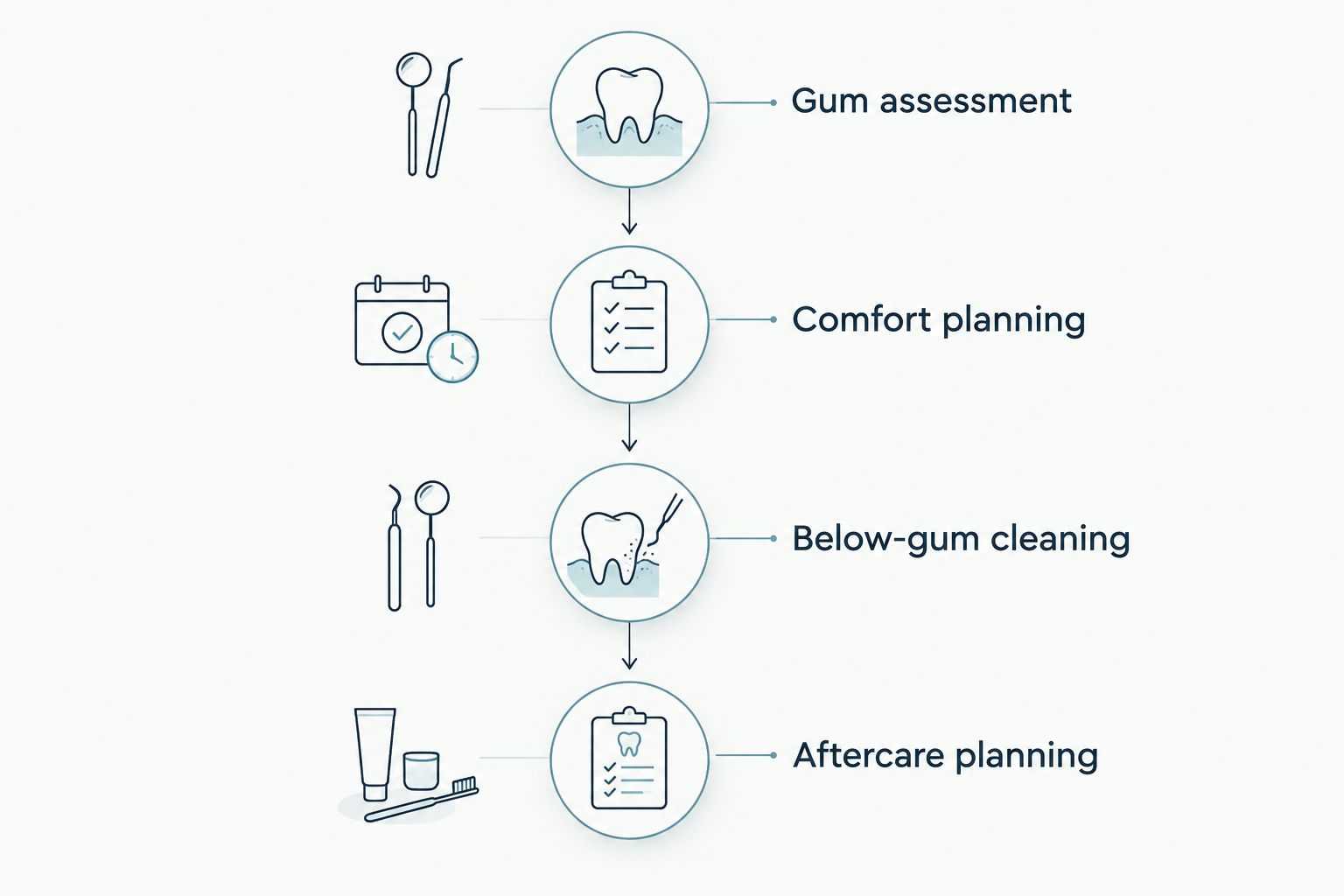
What happens during the appointment?
The appointment includes more than the cleaning itself. Understanding the sequence makes it easier to ask for a realistic time estimate and explain any concerns before treatment starts.
Gum assessment
Your dental team checks the affected areas and reviews the treatment plan. Gum measurements, bleeding, and other examination findings help show where treatment is needed; dental X-rays can help assess supporting bone when indicated.
Tell the team about changes in your health, medications, or symptoms. Do not stop prescribed medication unless the clinician responsible for it instructs you to do so.
Comfort planning
Local anesthesia can numb the treatment area. Your team should explain the comfort plan before starting and check that the area is sufficiently numb.
If dental visits make you anxious, say so before treatment day. Discussing breaks and a signal to pause gives you a practical way to communicate during the appointment.
Below-gum cleaning
The clinician removes plaque and hardened deposits from affected tooth and root surfaces. Hand instruments, ultrasonic instruments, or a combination can be used according to the treatment needs.
This work is different from polishing visible tooth surfaces. Access below the gumline and the extent of deposits influence how much treatment is required.
Aftercare planning
Before you leave, the team should explain cleaning, eating, discomfort management, and follow-up. Ask for instructions you can refer to at home rather than relying on memory while your mouth is numb.
Why scaling and root planing time varies
A shorter appointment does not necessarily mean milder disease, and a longer appointment does not automatically mean something is wrong. The schedule reflects the work needed and how that work can be completed comfortably.
These factors shape the appointment:
- Treatment area: Treating selected teeth is different from treating affected areas throughout your mouth.
- Deposit buildup: The amount and location of hardened deposits affect the cleaning involved.
- Gum condition: Inflamed tissues and deeper spaces around teeth affect access and treatment planning.
- Tooth anatomy: Root shapes, tooth position, and difficult-to-reach areas influence access beneath the gums.
- Comfort needs: Numbing, sensitivity, anxiety, and planned pauses affect the appointment schedule.
- Visit contents: An examination, imaging when needed, treatment, and aftercare discussions all require attention.
For a useful 2026 appointment estimate, ask what is included and which areas will be treated. A calendar invitation alone does not explain the clinical plan.
Can scaling and root planing be done in one visit?
Scaling and root planing can be completed in one visit when the treatment needs and your comfort allow it. More extensive treatment or a preference for shorter sessions can lead to a divided schedule.
The benefit of completing treatment together is fewer separate treatment appointments. The trade-off is spending longer in the chair, which does not suit everyone.
Ask how the team will manage numbness and eating afterward if several areas are treated together. Do not compress the schedule at the expense of comfort or completing the necessary cleaning.
Why would treatment be split across visits?
Treatment can be split across visits so the team can focus on selected areas and manage comfort. You still need to complete the remaining recommended treatment; finishing one area does not treat disease elsewhere.
Separate appointments can make each session easier to manage, but they also require additional scheduling. Before starting, ask which areas belong to each visit and what happens if you need to reschedule.
Keep the distinction between treatment appointments and reassessment clear. A later check of gum healing serves a different purpose from an appointment to clean an untreated area.
How long does healing take after scaling and root planing?
Healing takes place after the cleaning and does not follow the same schedule as your appointment. Tenderness, bleeding, and tooth sensitivity can occur after treatment, and the pattern depends on your gum condition and the areas treated.
Feeling more comfortable does not, by itself, confirm that gum disease is controlled. Your dentist assesses the response using examination findings, including gum measurements and bleeding.
For recovery planning in 2026, follow your own written instructions rather than another patient’s experience. Ask when you should expect improvement and what symptoms should prompt a call.
Contact your dental team about worsening pain, increasing swelling, persistent bleeding, or symptoms outside the instructions you received. Facial swelling with difficulty breathing or swallowing requires emergency medical care.
Can you work or eat after the appointment?
Your plans afterward depend on the treatment, any anesthesia, and how you feel. Local anesthesia can leave your lips, cheeks, or tongue numb, so follow instructions about waiting before chewing and avoiding hot food or drinks.
If sedation is part of your care, ask about transportation and activity restrictions before treatment day. Do not assume that instructions for local anesthesia also apply to sedation.
For work, explain whether your day involves speaking continuously, physical activity, or limited access to breaks. Your dental team can help you plan around the treatment you are actually receiving.
Choose foods that feel comfortable and follow the cleaning instructions provided. Avoid turning temporary soreness into a reason to abandon oral hygiene; ask how to clean tender areas gently.
How should you prepare for scaling and root planing?
Preparation should make the appointment easier, not add unnecessary rules. Your dental team’s instructions take priority, particularly when medication or sedation is involved.
Use this checklist before treatment:
- Confirm the appointment scope. Ask which areas will be treated and whether the examination is included.
- Review your health history. Share current medications, allergies, medical conditions, and relevant changes.
- Discuss comfort early. Explain sensitivity, anxiety, or difficulty keeping your mouth open.
- Check eating instructions. Ask whether you should eat normally beforehand; do not assume fasting is required.
- Plan the trip home. Confirm whether your planned care requires an escort or driving restrictions.
- Arrange follow-up. Find out how reassessment will be scheduled and whom to contact with concerns.
At Starboard Dental, start the conversation with your oral health goals and the symptoms you have noticed. A clear description of bleeding, tenderness, or sensitivity helps your dental team understand your concerns.
What happens at the follow-up visit?
The follow-up visit checks how your gums responded to treatment. Your dentist reviews healing, gum measurements, bleeding, and how effectively you can clean the treated areas at home.
Some areas need additional attention even when your mouth feels better. Depending on the findings, your dentist can recommend further treatment, a periodontal maintenance schedule, or specialist evaluation.
Treatment success is measured by gum health, not by how quickly the cleaning finishes. Ask what improvement your dentist expects and which findings would change the next step.
Starboard Dental serves patients of all ages in Kennebunk, York, and Saco. For patients discussing general dental care and gum concerns, the next useful question is how the examination findings translate into a treatment and follow-up plan.
FAQ
How long does scaling and root planing take in 2026?
Scaling and root planing has no fixed appointment length in 2026; your examination determines the treatment area and schedule. Ask for the total appointment time, including numbing and aftercare instructions.
Is scaling and root planing the same as a regular cleaning?
Scaling and root planing is not the same as a routine cleaning. It treats affected areas below the gumline and root surfaces when periodontal treatment is needed.
Does scaling and root planing hurt?
Local anesthesia helps control discomfort during scaling and root planing. Tell the clinician if you feel pain so the team can pause and reassess your comfort.
Can I have my whole mouth treated at once?
Whole-mouth treatment can be appropriate when your treatment needs and comfort allow it. Your dentist should explain the benefits and limitations compared with dividing treatment across visits.
Can I brush my teeth after scaling and root planing?
Follow your dental team's instructions for brushing and cleaning between your teeth after scaling and root planing. Ask how to clean tender areas without abandoning daily plaque removal.
Do I still need treatment if my gums do not hurt?
A lack of pain does not rule out gum disease or remove the need for recommended treatment. Gum measurements, bleeding, and supporting-bone findings help guide the diagnosis.
Will scaling and root planing cure gum disease permanently?
Scaling and root planing does not replace ongoing periodontal care. Home cleaning, professional maintenance, and reassessment remain important after treatment.
One last thing
Less bleeding is encouraging, but it is not the only sign your dentist needs to check. Gum measurements and the condition of supporting tissues help show whether treatment achieved its purpose.
Before leaving, ask: What should improve, when will you check it, and what happens if an area does not respond? Those answers give your treatment plan a clear next step.