Best overall for small chips and gaps: dental bonding. Best for discoloration alone: teeth whitening. Best for crooked teeth: orthodontic treatment. This 2026 guide compares the best porcelain veneer alternatives by the problem they solve, the tooth structure they preserve, and the maintenance they need.
- The best porcelain veneer alternatives depend on whether you need to change tooth color, shape, alignment, or strength.
- Dental bonding is the leading option for small chips and minor shape changes, but it can stain and chip.
- Teeth whitening changes color; orthodontic treatment changes alignment. Neither replaces missing tooth structure.
- Starboard Dental provides general, restorative, and cosmetic dental care for patients in Kennebunk, York, and Saco, Maine.
Why this matters
Porcelain veneers cover the front surfaces of teeth. Many veneer treatments require removing enamel, making the decision more involved than choosing a brighter shade. Start with the problem you want to fix, not the treatment you have seen online.
At Starboard Dental, the practice’s focus includes general, restorative, and cosmetic dental care. A useful consultation separates appearance concerns from decay, gum disease, bite problems, and structural damage before you choose a cosmetic treatment.
A stained tooth does not automatically need a covering. A crooked tooth does not automatically need reshaping. Matching the treatment to the cause helps you avoid changing healthy tooth structure unnecessarily.
What makes the best porcelain veneer alternatives?
Use these criteria to compare your options before discussing a treatment plan:
- Problem fit: Whitening addresses color, bonding changes shape, and orthodontic treatment moves teeth. These are different jobs.
- Tooth preservation: Ask whether treatment adds material, removes enamel, or changes tooth position without reshaping it.
- Oral health: Cavities, inflamed gums, and damaged teeth need attention before cosmetic work.
- Bite compatibility: Grinding, clenching, and the way your teeth meet affect treatment planning and maintenance.
- Future upkeep: Consider stain removal, repairs, whitening touch-ups, retainers, and replacement restorations.
- Realistic appearance: Ask what the treatment can change and what will remain visible afterward.
The best choice is not necessarily the option that changes the most. It is the option that addresses your concern without adding unnecessary treatment.
Porcelain veneer alternatives at a glance in 2026
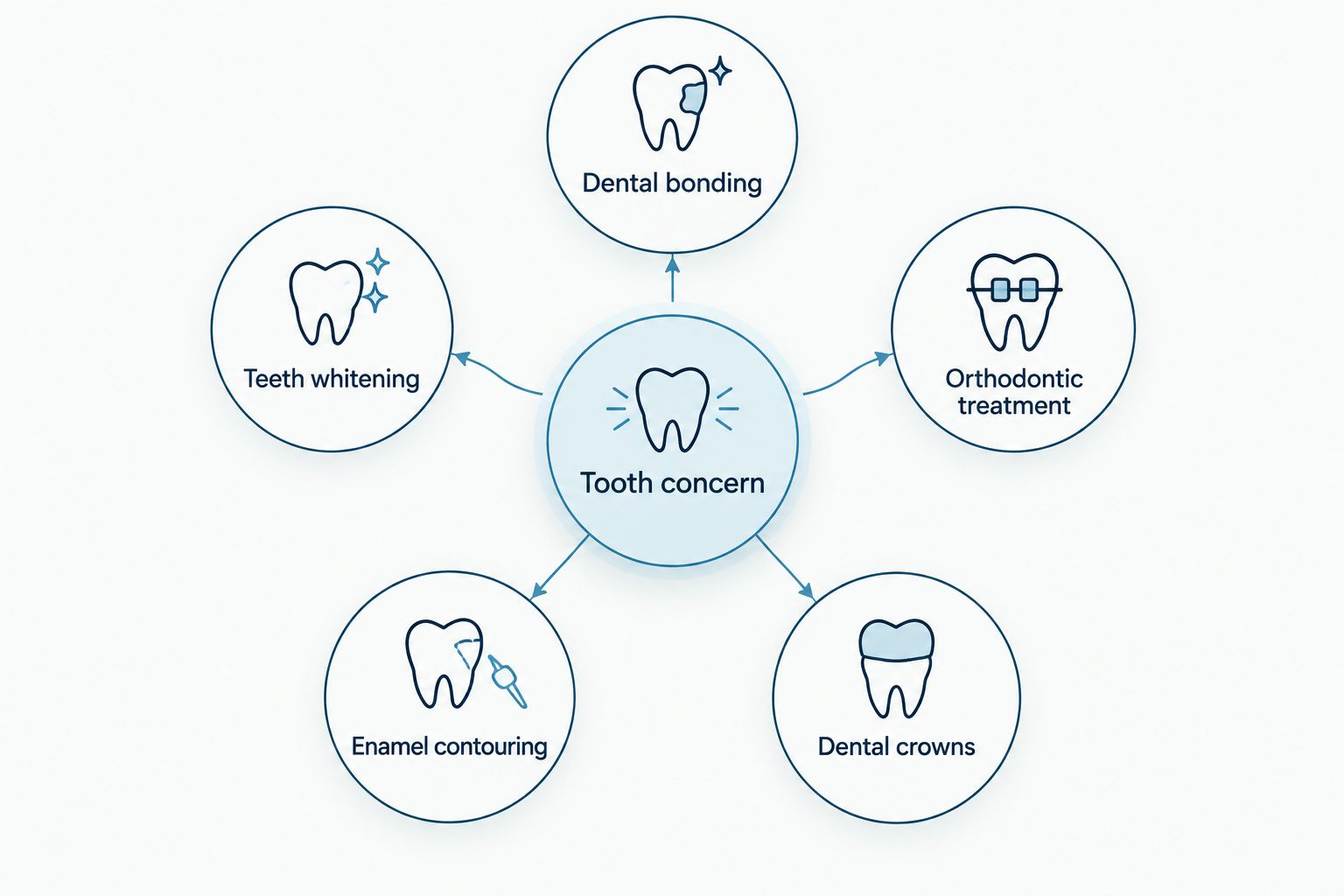
The order below starts with a versatile option for minor cosmetic defects, then separates treatments by their strongest use case. Crowns appear last because they serve a different purpose: protecting compromised teeth rather than simply covering healthy ones.
| Option | Best for | Standout feature | Key limitation |
|---|---|---|---|
| Dental bonding | Small chips, minor gaps, and shape changes | Adds tooth-colored resin directly to the tooth | Resin can stain, wear, or chip |
| Teeth whitening options | Discoloration without a shape problem | Lightens natural teeth without covering them | Does not whiten existing fillings or crowns |
| Adult teeth-straightening options | Crooked teeth and alignment-related spacing | Moves teeth rather than disguising their position | Requires treatment time and retainers afterward |
| Enamel contouring | Small, uneven edges on otherwise healthy teeth | Reshapes a limited area of enamel | Enamel removal is permanent |
| Dental crowns | Teeth with substantial damage or structural weakness | Covers and protects the remaining tooth | Requires more tooth preparation than minor cosmetic treatments |
These options are not interchangeable. If your concern involves both color and alignment, you need a coordinated plan rather than an assumption that a single treatment will solve everything.
1. Dental bonding: best veneer alternative for small chips and gaps
Dental bonding uses tooth-colored composite resin to repair or reshape a tooth. A dentist places and shapes the material, hardens it with a curing light, and polishes the surface. Bonding can address a small chip, a minor gap, or an edge that looks different from neighboring teeth.
Best for: Small, localized cosmetic changes when the tooth does not need extensive reconstruction.
Bonding is the default option to discuss for a modest shape problem. It adds material rather than relying on extensive enamel removal, although the preparation needed depends on the tooth and the repair.
Dental bonding pros
- Can replace a small amount of missing tooth structure.
- Allows targeted changes instead of covering every visible tooth surface.
- Often needs little or no enamel removal for minor cosmetic work.
- Can sometimes be repaired when a small area chips or wears.
Dental bonding cons
- Composite resin can stain and lose its polished appearance.
- Bonded edges can chip, especially under heavy biting forces.
- Large changes in shape or color have limits and need careful planning.
Ask the dentist to explain how the repair will meet the opposing tooth when you bite. A result that looks good while your mouth is open still needs to function comfortably when you chew.
Verdict: Hold until your bite is assessed; choose bonding for a confirmed minor chip or shape defect.
2. Teeth whitening: best veneer alternative for discoloration alone
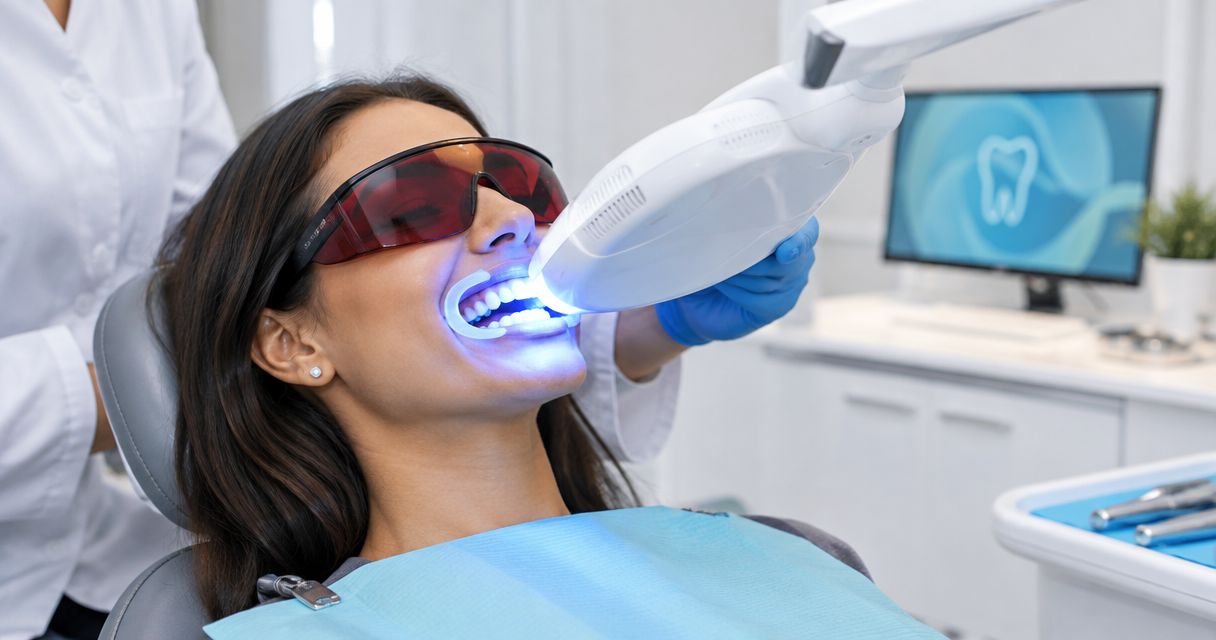
Teeth whitening lightens natural teeth using bleaching agents. It changes color, not tooth position or shape. When your main concern is staining and your teeth are otherwise suitable for treatment, whitening addresses that concern without placing a permanent covering.
Best for: Natural teeth that need a color change rather than a repair or alignment correction.
Whitening is not a universal fix for every dark tooth. An individually discolored tooth, particularly after an injury, needs an assessment before you treat it as an ordinary stain.
Teeth whitening pros
- Does not require reshaping teeth to attach a covering.
- Addresses discoloration across natural tooth surfaces.
- Leaves future restorative choices open.
- Can be considered before selecting the shade of new cosmetic restorations.
Teeth whitening cons
- Can cause temporary tooth sensitivity or gum irritation.
- Does not change the color of existing crowns, veneers, or fillings.
- Results vary with the cause of discoloration and need maintenance.
If you have visible restorations, discuss the risk of a shade mismatch. Whitening the neighboring natural teeth does not make an older filling change color with them.
Verdict: Hold until discoloration is assessed; choose whitening when color is the only issue.
3. Orthodontic treatment: best veneer alternative for crooked teeth
Orthodontic treatment moves teeth using braces or clear aligners. It addresses the position of teeth rather than covering their visible surfaces to make them appear straighter. Treatment planning also considers your bite, not just the appearance of the front teeth.
Best for: Crowding, rotated teeth, and spacing caused by tooth position.
For an alignment concern in 2026, ask whether moving the teeth would address the underlying problem more directly than reshaping them. Clear aligners and braces are treatment methods, not automatic indicators of how simple or difficult your case is.
Orthodontic treatment pros
- Changes actual tooth position rather than disguising it.
- Can address alignment and bite concerns together.
- Avoids removing healthy enamel solely to make a tooth look straighter.
- Can create a better foundation for later cosmetic repairs when needed.
Orthodontic treatment cons
- Requires a course of treatment rather than an immediate cosmetic covering.
- Needs retainers afterward to help maintain tooth position.
- Requires careful cleaning around appliances or consistent aligner wear.
Moving teeth will not repair a chipped edge or whiten a stained surface. You can finish with straighter teeth and still need a separate discussion about shape or color.
Verdict: Hold cosmetic coverings until alignment has been evaluated; prioritize orthodontic treatment for position-related concerns.
4. Enamel contouring: best veneer alternative for slightly uneven edges
Enamel contouring removes a small amount of enamel to smooth or reshape a tooth. It can help when a minor irregularity makes an otherwise healthy tooth edge look uneven. It cannot add length, fill a gap, or rebuild missing structure.
Best for: Small edge irregularities that can be corrected safely within the available enamel.
This is a subtractive treatment. The dentist needs to assess enamel thickness, tooth health, and your bite before deciding whether the desired change is appropriate.
Enamel contouring pros
- Targets a limited shape issue without adding a restoration.
- Can smooth a minor uneven edge.
- Leaves no resin or ceramic surface that needs shade matching.
Enamel contouring cons
- Removed enamel does not grow back.
- Cannot correct a tooth that needs more material rather than less.
- Excessive removal can create sensitivity or weaken the tooth.
If an edge has become uneven because of grinding or ongoing wear, reshaping it does not address the cause. Discuss why the edge changed before removing additional enamel.
Verdict: Hold until enamel and bite checks confirm suitability; skip contouring when the tooth needs rebuilding.
5. Dental crowns: best alternative for structurally damaged teeth
A dental crown covers the remaining portion of a tooth to restore its shape and function. Crowns are relevant when a tooth has substantial damage or weakness that a small repair cannot adequately address. They are not a conservative substitute for veneers on healthy teeth.
Best for: A compromised tooth that needs protection as well as an appearance improvement.
The important question is not whether a crown can make a tooth look different. It is whether the condition of that tooth justifies the preparation and coverage a crown requires.
Dental crown pros
- Can restore the shape and chewing surface of a damaged tooth.
- Provides coverage when a limited cosmetic repair is insufficient.
- Addresses structural needs alongside appearance.
Dental crown cons
- Requires removing tooth structure to make room for the restoration.
- Needs ongoing care around the crown’s edge.
- Does not prevent decay or gum disease around the treated tooth.
Ask what specifically makes a crown necessary and whether a more limited restoration is suitable. A healthy tooth and a heavily damaged tooth should not receive the same recommendation simply because both appear in your smile.
Verdict: Skip crowns for a purely cosmetic concern on healthy teeth; consider them when structural damage warrants coverage.
How these options were ranked
This 2026 comparison ranks treatments by problem fit, tooth preservation, bite requirements, and maintenance—not by a promise of a perfect smile. Dental bonding leads for minor shape defects because it can address localized problems with limited preparation. Whitening and orthodontic treatment take priority when color or alignment is the actual concern.
Starboard Dental provides general, restorative, and cosmetic dental care. Your examination determines which category fits your teeth; this guide does not establish whether a particular procedure is suitable for you.
Which porcelain veneer alternative should you choose?
For a small chip or minor shape change, start by asking about dental bonding. For discoloration alone, ask about whitening. For crooked teeth, ask whether orthodontic treatment addresses the cause rather than covering it.
Bring a short list of concerns to your 2026 consultation: what bothers you, whether you have sensitivity, and whether you clench or grind. Mention existing fillings, crowns, and previous cosmetic work because they affect shade matching and treatment planning.
Keep everyday care in the plan, too. The American Dental Association recommends brushing 2 times per day, for 2 minutes per session, with fluoride toothpaste, and cleaning between teeth 1 time per day. Those habits support natural teeth and teeth with restorations alike.
FAQ
What's the best porcelain veneer alternative for a small chipped tooth?
Dental bonding is a leading option for a small chip when the tooth is otherwise suitable for a localized repair. A dentist must check the chip, remaining tooth structure, and bite before recommending treatment.
Is teeth whitening better than veneers for yellow teeth?
Teeth whitening is the more targeted option when discoloration is the only concern and the natural teeth are suitable for bleaching. It does not change tooth shape or whiten existing fillings, crowns, or veneers.
Can clear aligners replace veneers for crooked teeth?
Orthodontic treatment can address crooked teeth by moving them rather than covering their surfaces. Clear aligners are not suitable for every case, and retainers are needed after treatment to help maintain alignment.
Does dental bonding damage healthy teeth?
Minor cosmetic bonding often requires little or no enamel removal, but the preparation depends on the tooth and the repair. Ask your dentist what will be changed and what future repair or removal would involve.
Can enamel contouring fix a gap between my front teeth?
Enamel contouring cannot fill a gap because it removes material rather than adding it. Bonding or orthodontic treatment can address certain gaps, depending on their size and cause.
Are crowns a good veneer alternative for healthy teeth?
Crowns are generally not the conservative choice for a purely cosmetic change to healthy teeth. They require substantial preparation and are most relevant when a tooth needs structural restoration or protection.
What should I ask at a veneer-alternative consultation in 2026?
Ask which treatment addresses your concern with the least necessary change to healthy tooth structure. At Starboard Dental, you can discuss your oral health goals within its general, restorative, and cosmetic dental care focus; ask about bite considerations, shade matching, and maintenance.
One last thing
Choosing no cosmetic treatment is also a valid decision when your teeth are healthy and the concern does not bother you enough to justify intervention. A consultation is a chance to understand your options, not a commitment to change your smile.
For your 2026 discussion with Starboard Dental, describe the outcome you want in ordinary language: a smoother edge, less staining, or straighter teeth. That gives the conversation a clearer starting point than requesting veneers before you know what your teeth need.