Yes—teeth whitening at the dentist is worth it in 2026 when your natural teeth have discoloration that responds to bleaching and you want professional guidance on safety and results. It is less worthwhile when untreated dental problems, visible crowns or fillings, or unrealistic shade expectations stand between you and the result you want; temporary sensitivity and gum irritation are the main trade-offs.
- Is teeth whitening worth it? The American Dental Association identifies tooth sensitivity and gum irritation as potential side effects.
- Dentist-supervised whitening suits people who want an assessment, tailored instructions, and help managing sensitivity.
- Whitening changes natural tooth color, not the color of existing crowns, veneers, or fillings.
- Treat decay, gum problems, and unexplained tooth pain before pursuing a brighter smile.
Is teeth whitening at the dentist worth it in 2026?
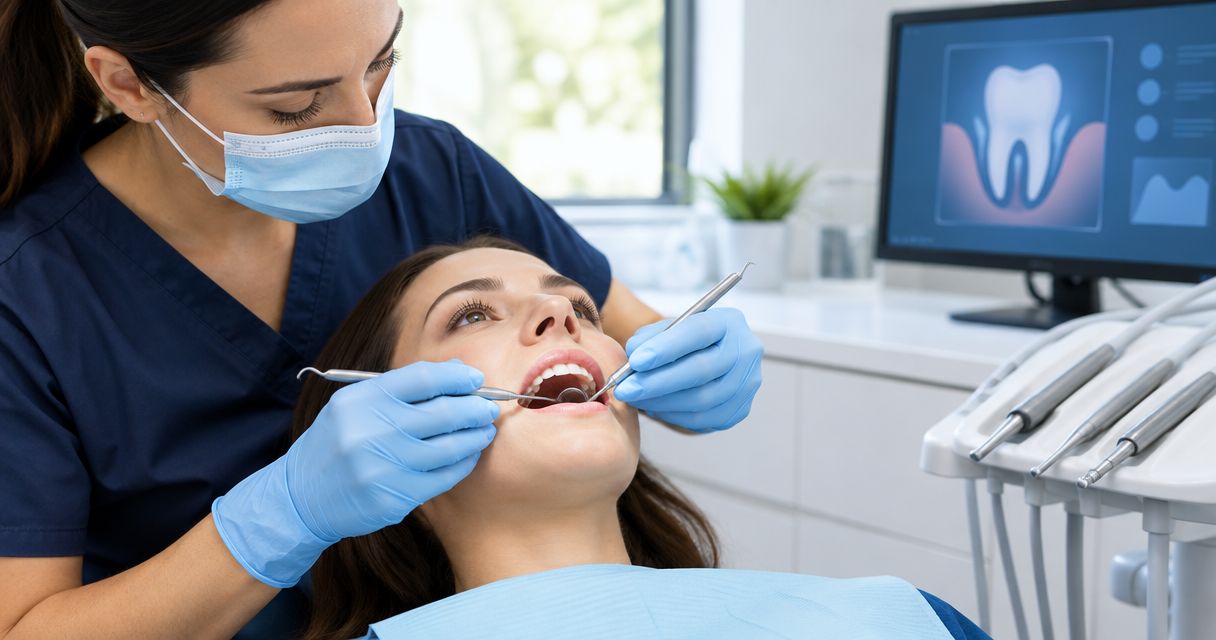
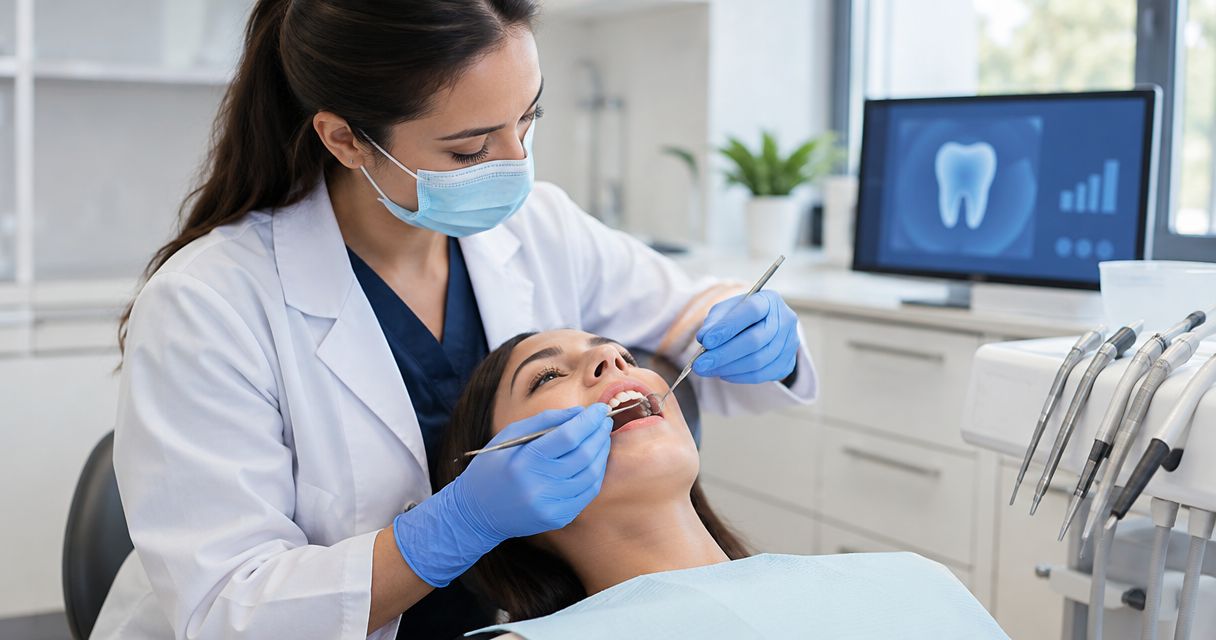
Professional whitening earns its value through appropriate treatment selection and supervision—not a guaranteed shade. A dentist can examine your teeth, discuss the cause of discoloration, and explain which visible surfaces will respond. That assessment matters more than choosing the strongest bleaching product.
The American Dental Association’s patient guidance distinguishes bleaching natural teeth from removing surface stains. Its whitening guidance also identifies sensitivity and gum irritation as potential adverse effects. These distinctions give you a practical way to compare your options:
| Approach | Best for | Main advantage | Main limitation |
|---|---|---|---|
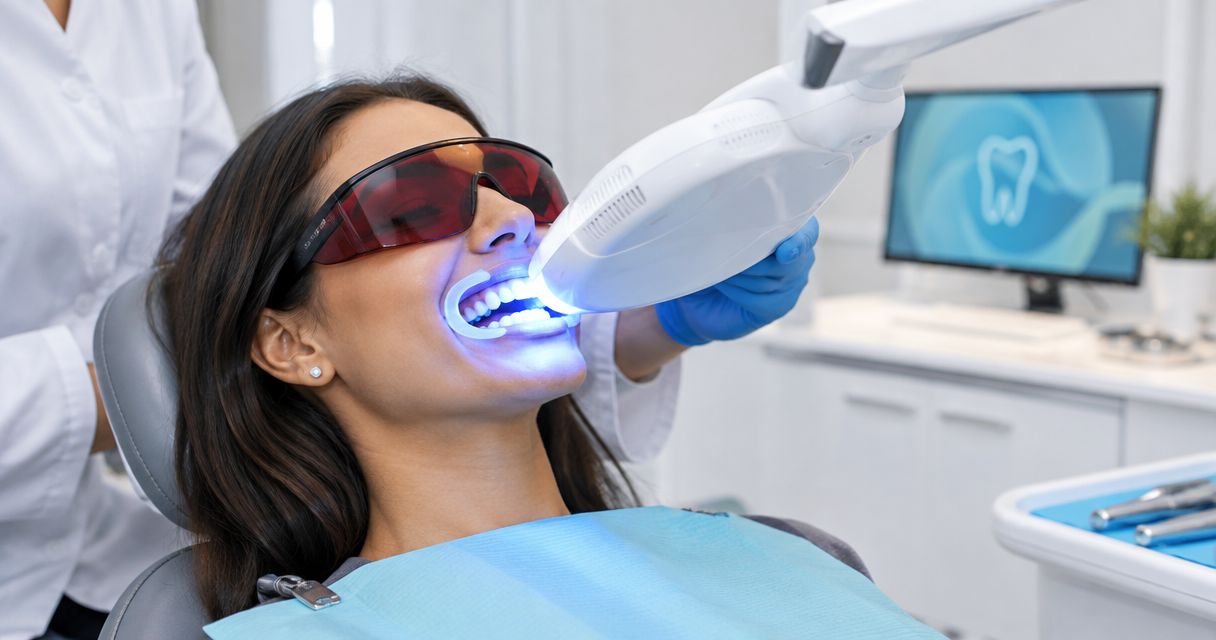
| In-office whitening | People who want professionally applied treatment | A dental professional oversees application and protects surrounding tissues | Sensitivity remains possible; results depend on the teeth being treated |
| Dentist-supervised home whitening | People comfortable following an at-home treatment plan | Professional instructions and follow-up support | Requires consistent use as directed |
| Over-the-counter bleaching | People with healthy teeth seeking a self-directed approach | Can bleach natural teeth when used correctly | Does not include an examination or individualized treatment planning |
| Whitening toothpaste | People mainly concerned about surface stains | Fits into normal brushing | Does not produce the same kind of color change as peroxide bleaching |
For local care, Starboard Dental provides general, restorative, and cosmetic dentistry to patients in Kennebunk, York, and Saco, Maine. Discuss your goals and oral health before choosing a whitening approach.
Why this matters
A brighter smile and a healthier mouth are different goals. Whitening changes appearance; it does not repair cavities, treat gum disease, or strengthen a cracked tooth. If you have discomfort, getting an explanation for it comes first.
Your starting point also affects satisfaction. Someone with stained natural teeth faces a different decision from someone whose front teeth include a crown. The right question is not simply whether whitening works, but whether it addresses what you dislike about your smile.
When professional whitening makes sense
Professional guidance is useful when you want to understand both the likely benefit and the limits before starting. Tell your dentist what bothers you: an overall yellow appearance, staining near the gums, or a single tooth that looks different. Those descriptions lead to different clinical questions.
Whitening generally makes more sense when:
- Your concern is the color of natural teeth rather than their shape or position.
- Your dentist has checked for decay, gum problems, and other causes of discomfort.
- You understand that existing restorations will not bleach along with your teeth.
- You accept that sensitivity can occur and know what to do if it develops.
- You are comfortable with a result that improves your starting shade rather than matches an edited photograph.
Bring a clear description of your goal, not just a request for the whitest possible result. Ask which teeth are likely to change and which are not. That conversation can prevent a technically successful treatment from leaving you disappointed.
When whitening is not the right first step
Address pain and disease before choosing cosmetic treatment. Bleaching over an unresolved problem does not solve its cause, and sensitivity from whitening can complicate your understanding of existing symptoms.
A tooth that has recently become darker than its neighbors needs an assessment. The change can have causes that differ from ordinary surface staining, particularly after an injury. Do not assume that repeating a home treatment will correct it.
Whitening is also a poor match for concerns about chipped edges, gaps, or the shape of teeth. Those are structural or alignment concerns, not simply color concerns. A dentist can help separate the problem you see from the treatment that actually addresses it.
If visible crowns, veneers, or fillings already match your current teeth, bleaching the surrounding teeth can create a mismatch. Discuss that possibility before treatment, especially if you are also planning restorative work.
Why whitening results vary
The same whitening approach does not produce an identical result in every mouth. These factors explain why a personal assessment matters:
- Cause of discoloration: Surface stains, age-related color changes, and discoloration within a tooth do not behave identically.
- Starting tooth color: The natural shade of your teeth affects the change you can reasonably expect.
- Existing restorations: Crowns, veneers, and fillings retain their existing color during bleaching.
- Tooth and gum condition: Exposed roots, decay, gum inflammation, and existing sensitivity affect treatment planning and comfort.
- Treatment instructions: Product choice, application, and following directions affect both results and side effects.
- Ongoing stain exposure: Tobacco and staining drinks can affect how your teeth look after treatment.
Ask your dentist to connect each relevant factor to your mouth. A useful explanation identifies the limitation, rather than promising a result without discussing your starting condition.
How to decide before starting treatment
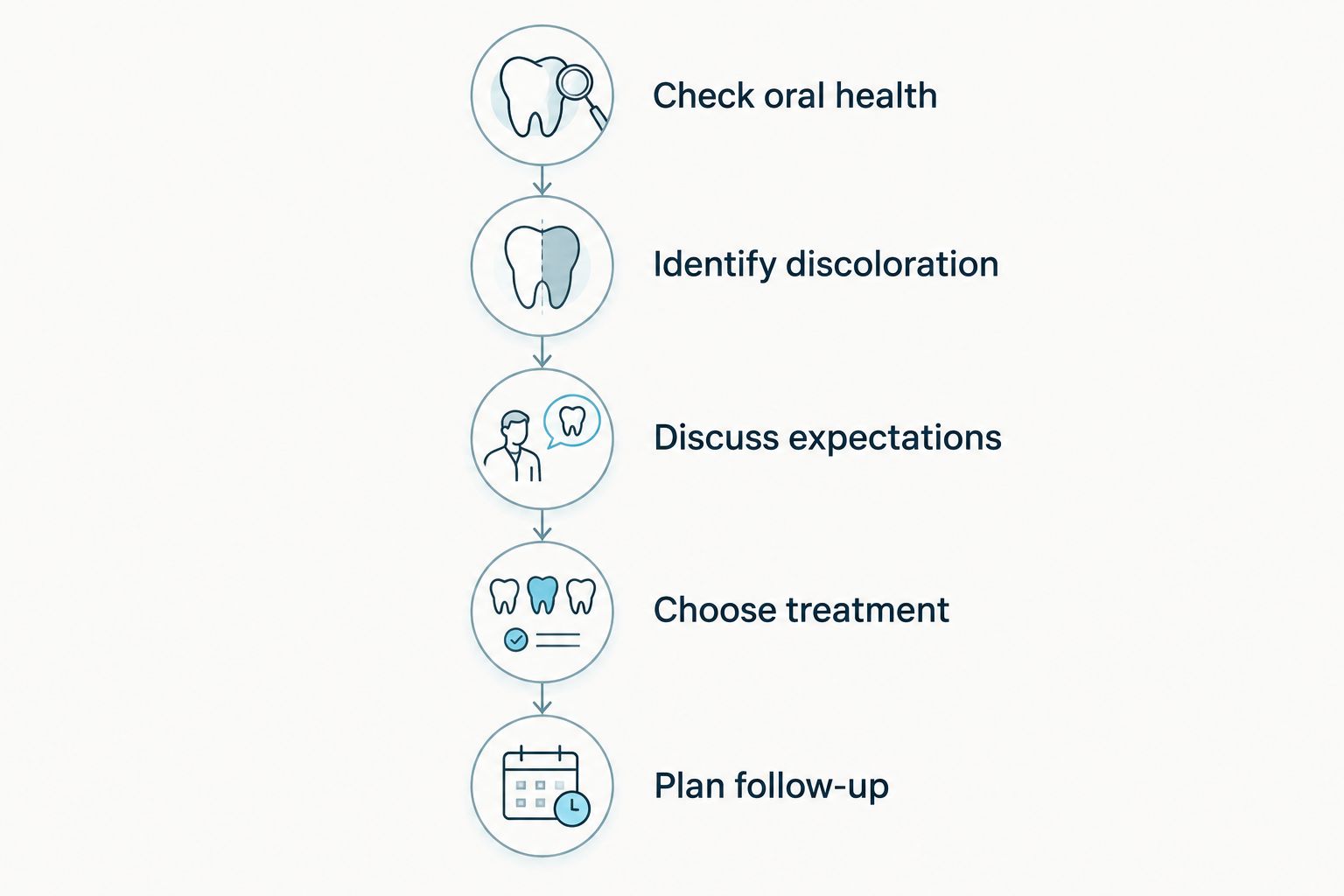
Use this sequence when planning whitening in 2026. It keeps the cosmetic decision tied to your health and the result you actually want.
- Check oral health. Arrange an examination if you have pain, bleeding gums, visible damage, or an unexplained color change. Describe sensitivity before treatment begins.
- Identify discoloration. Ask whether your concern involves removable surface stains, the underlying color of natural teeth, or a restoration that will not bleach.
- Discuss expectations. Review which teeth are visible when you smile and where uneven color might remain. Avoid treating a photograph as a promised outcome.
- Choose treatment. Compare professional application, supervised home treatment, and self-directed options in light of your dental findings and ability to follow instructions.
- Plan follow-up. Ask what to do about sensitivity, when to stop treatment, and when your dentist wants to reassess the result.
This order prevents a common planning mistake: choosing a whitening method before understanding the discoloration. Keep the examination and expectation-setting ahead of the product decision.
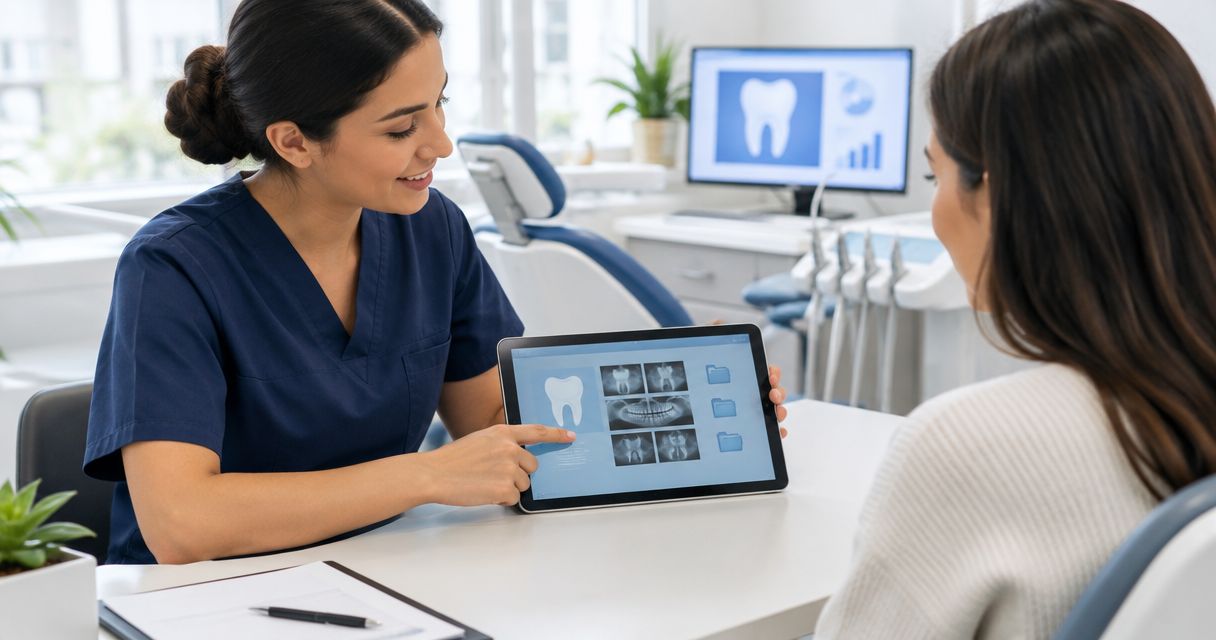
What should you ask at a whitening consultation?
Bring questions that reveal how the treatment fits your teeth. Asking only how white your smile will become leaves out the decisions that affect comfort and consistency.
Useful questions include:
- What is causing the discoloration I can see?
- Which visible teeth or restorations will not change color?
- Does my sensitivity need treatment before whitening?
- What instructions should I follow if my teeth or gums become uncomfortable?
- Should whitening happen before or after any planned restorative treatment?
- How will we decide whether I have reached an appropriate stopping point?
For a 2026 cosmetic dentistry consultation, Starboard Dental is a fit for patients in Kennebunk, York, and Saco who want to discuss appearance alongside general and restorative dental care. The practice is led by Dr. Alex Kerbaugh. A consultation should clarify your options; it is not a reason to assume whitening is automatically appropriate.
Discuss your smile goals
Start with your concerns about tooth color, sensitivity, and existing dental work.
Is dentist whitening better than whitening strips?
Dentist-supervised whitening is better for individualized assessment and treatment guidance; strips are a self-directed bleaching option. Neither approach changes the color of existing crowns, veneers, or fillings.
The distinction is supervision, not a promise that every professionally treated smile becomes lighter than every smile treated at home. Your starting shade, dental condition, chosen treatment, and adherence all matter. If you have sensitivity or uneven discoloration, get those concerns assessed before comparing methods.
For a more detailed comparison, read the guide to teeth whitening options. Use the comparison to prepare questions, not to diagnose the cause of a tooth’s color change yourself.
Will whitening work on crowns, veneers, or fillings?
Whitening will not lighten crowns, veneers, or fillings. Bleaching natural teeth around those restorations can make the difference in color more noticeable.
Tell your dentist about visible dental work before beginning. If you are planning a new restoration, discuss the treatment sequence and shade selection together. Do not assume that an existing restoration needs replacing simply because whitening is under consideration.
How can you manage sensitivity during whitening?
Whitening can cause temporary tooth sensitivity, but you do not need to push through discomfort to prove treatment is working. Stop and follow your dentist’s or the product’s instructions if symptoms develop. Ask for advice before restarting or changing how you use the treatment.
Describe the pattern clearly: whether discomfort affects several teeth, stays in one tooth, appears with cold drinks, or continues after the trigger is gone. Persistent, severe, or localized pain deserves an assessment rather than an assumption that bleaching is the only cause.
Avoid combining bleaching products or extending use beyond the directions. More treatment is not automatically a better result. Your dentist can advise whether a pause, a different approach, or evaluation for another problem is appropriate.
How to look after your smile afterward
Whitening does not replace daily preventive care. Brush for 2 minutes per session, with 2 brushing sessions per day, using fluoride toothpaste, and clean between your teeth daily. These American Dental Association recommendations support oral health whether or not you choose cosmetic treatment.
Keep stain management separate from aggressive cleaning. Harder brushing is not a whitening strategy, and abrasive home mixtures can harm tooth surfaces. Follow product directions rather than experimenting with household acids or combining treatments.
Ask your dentist how to review future color changes. Whitening is not permanent, but that does not mean you should repeat it on a fixed schedule without advice. Base the next decision on your teeth, comfort, and current goals—not the calendar alone.
FAQ
Is teeth whitening worth it in 2026 if my teeth are healthy?
Teeth whitening is worth considering in 2026 when your concern is the color of natural teeth and you accept the limits and possible sensitivity. Healthy teeth still need an assessment of the discoloration and any visible restorations before choosing treatment.
Does professional teeth whitening damage enamel?
Dentist-directed whitening is generally considered safe when appropriate products are used as instructed. Sensitivity and gum irritation can occur, and misuse or excessive treatment increases the risk of problems.
How long does teeth whitening last?
Teeth whitening is not permanent, and there is no single duration that applies to every person. Stain exposure, oral habits, and the treatment used affect how your teeth look afterward.
Can I whiten my teeth if they are already sensitive?
Existing sensitivity needs assessment before you start whitening. Your dentist can check for causes such as exposed roots or decay and advise whether whitening is appropriate.
Will whitening make my fillings and crowns whiter?
Whitening does not make fillings and crowns whiter. Natural teeth can lighten around them, creating a visible color difference that needs discussion before treatment.
Should I whiten my teeth before a wedding or other event?
Discuss whitening before an event rather than choosing a last-minute treatment schedule yourself. Leave the timing to the treatment instructions and your dentist’s advice, including how to manage sensitivity or uneven color.
Can I ask Starboard Dental about cosmetic dentistry?
Starboard Dental provides cosmetic dentistry alongside general and restorative dental care in Kennebunk, York, and Saco, Maine. Discuss your tooth-color concerns and ask which next step fits your dental health and goals.
One last thing
A single dark tooth is a reason to ask why—not simply to bleach harder. If that tooth changed after an injury or looks different from the rest, have it assessed before starting cosmetic treatment. The most useful whitening decision you make in 2026 might be recognizing that color is a symptom to investigate first.