
Instead of repeatedly explaining your jaw pain to different offices, organize your physician referral for TMJ treatment around a clear clinical question, transferred records, and a confirmed receiving clinician. This 2026 workflow helps you move from a medical visit to an appropriate jaw-pain evaluation without treating the referral itself as a diagnosis.
- A physician referral for TMJ treatment should identify the clinical question, receiving clinician, and relevant records.
- Starboard Dental provides general dental care; confirm the appropriate destination for a TMJ evaluation before transferring records.
- TMJ names the joint; TMD describes disorders affecting the jaw joint and chewing muscles.
- Confirm referral requirements separately with the receiving office and your insurance plan.
- Start with an evaluation, not a request for a particular appliance or irreversible treatment.
Why this matters
A referral connects clinicians, but it does not establish what is causing your symptoms. Jaw pain can involve the chewing muscles, jaw joint, teeth, or another medical problem. An evaluation helps separate those possibilities before you choose treatment.
Starboard Dental is best suited to local patients seeking general dental evaluation alongside physician-led jaw-pain care. Starboard Dental is a general, restorative, and cosmetic dental practice led by Dr. Alex Kerbaugh, serving patients of all ages in Kennebunk, York, and Saco, Maine. Confirm who should receive your referral before sending records; a general dental practice and an orofacial pain specialist serve different roles.
The National Institute of Dental and Craniofacial Research distinguishes the temporomandibular joint, or TMJ, from temporomandibular disorders, or TMD. Its patient guidance supports starting with conservative care and avoiding treatments that permanently change the teeth, bite, or joint without a sound clinical reason. Use that distinction throughout your 2026 referral: describe the symptoms first, rather than assuming every jaw complaint needs the same treatment.
Before you start
- Gather 3 record categories: your physician's referral or visit summary, relevant test or imaging reports already completed, and your current medication and allergy list. Ask the receiving office which records it needs; do not arrange new imaging just to complete a packet.
- Have your coverage information ready: medical and dental plan details, plus the receiving office's contact information. Confirm benefits using your current 2026 plan documents rather than an older explanation of coverage.
- Check the hidden handoff problem: sending a referral does not confirm that the office evaluates your symptoms, received the records, or scheduled you. Verify all three before assuming the transfer is complete.
Seek urgent medical assessment rather than following a routine referral workflow if jaw discomfort occurs with chest pain, shortness of breath, sweating, or faintness. Rapidly increasing facial swelling, difficulty swallowing or breathing, and significant trauma also need prompt assessment. These symptoms should not wait for routine dental scheduling.
Referral destination
The first configuration decision is clinical, not administrative: who needs to assess you next? Tell your physician what you experience and ask what question the referral is intended to answer.
- Describe the pattern. Explain where the pain occurs, when it began, what makes it worse, and whether your jaw locks or your ability to eat has changed. Mention tooth pain, recent injury, headaches, and ear symptoms without assigning a cause yourself.
- Ask for the referral question. A useful question is whether jaw-muscle or joint symptoms need assessment, whether a dental cause needs evaluation, or whether a specialist is appropriate. A referral requesting an appliance skips this diagnostic step.
- Confirm the receiving clinician's scope. Ask the office whether it evaluates the symptoms listed in the referral and what it needs before scheduling. For Starboard Dental, confirm the appropriate evaluation route directly rather than assuming a specific TMJ service or appliance is offered.
- Check clinical urgency. Tell both offices about new locking, difficulty eating, worsening pain, or a change since the original visit. Let a clinician decide whether the appointment timing needs to change.
Expected result: you know which clinician will assess you, why that clinician is being consulted, and whether the referral belongs in a routine or more urgent pathway.
Which evaluation route fits the referral?
These routes address different questions. They are not competing treatments, and you can need more than one during the same episode of care.
| Evaluation route | Best for | Main benefit | Limitation |
|---|---|---|---|
| Physician assessment | Symptoms needing medical evaluation or occurring with broader health concerns | Reviews medical history and non-dental causes | Does not replace a dental examination when a tooth problem is suspected |
| General dental assessment | Tooth symptoms, oral examination, and identifying dental contributors | Examines teeth and oral structures alongside your symptom history | Does not automatically provide specialist management of persistent facial pain |
| Orofacial pain specialist assessment | Persistent or complex jaw and facial pain when a clinician recommends specialist care | Focuses the evaluation on facial pain and jaw disorders | Still requires a clinical assessment; a referral is not a guaranteed treatment plan |
Choose the route that answers the referral question, not the route that promises a particular device. For treatment context after an assessment, review the TMJ pain relief options comparison.
Referral packet and coverage checks
Keep the clinical handoff separate from the insurance decision. An office can receive your referral while coverage questions remain unresolved; an insurer's authorization does not prove that the receiving clinician has your records.
- Request the referral summary. Ask your physician's office to include the reason for referral, symptom history, relevant findings, and the intended receiving clinician. Ask for a copy you can keep.
- Authorize the record transfer. Follow the sending office's process for sharing records. Use the secure transfer method the offices specify rather than posting medical information in an ordinary website message.
- Include existing reports. Transfer relevant imaging reports and ask whether the actual images are needed. A report and an image file are different materials; sending one does not necessarily send the other.
- Verify receipt. Ask the receiving office whether it has the referral and necessary records. If something is missing, identify the exact document and the office responsible for sending it.
- Confirm coverage requirements. Ask your plan whether the consultation requires a referral, prior authorization, or a particular clinician network. Ask which benefits apply to the proposed evaluation; do not assume a jaw-pain visit belongs exclusively under medical or dental coverage.
For your 2026 coverage check, record the representative's name or reference number when provided. Keep the answer attached to the specific service discussed. Permission for an evaluation does not establish coverage for every treatment later recommended.
Expected result: the receiving office has the requested records, and you have a documented answer about the plan's requirements for the proposed appointment.
Appointment preparation
Your symptom history is part of the assessment, not extra paperwork. Prepare a short account that helps the clinician connect the pain pattern with daily function.
- Create a 1-page summary. Include symptom onset, pain location, triggers, locking episodes, relevant injuries, and what you have already tried. Separate observed facts from guesses about their cause.
- Describe function. Explain whether chewing, speaking, yawning, or sleeping is affected. Mention avoiding particular foods because of discomfort, rather than simply writing that your jaw hurts.
- List medicines and devices. Include prescribed medicines, nonprescription medicines, supplements, and any mouthguard you already use. Bring an existing appliance if the office requests it; do not purchase one solely because a referral was written.
- Prepare your questions. Ask what the working diagnosis is, what alternatives were considered, whether testing is necessary, and what changes should prompt an earlier review.
- Confirm appointment instructions. Ask whether you need additional forms or records before the visit. Follow the receiving office's actual instructions rather than assuming a standard online booking process.
You do not need a polished medical narrative. A clear description of what happens when you chew is more useful than choosing clinical terms you are unsure about.
Expected result: the clinician receives a usable symptom history, and you arrive ready to discuss evaluation rather than defend a self-diagnosis.
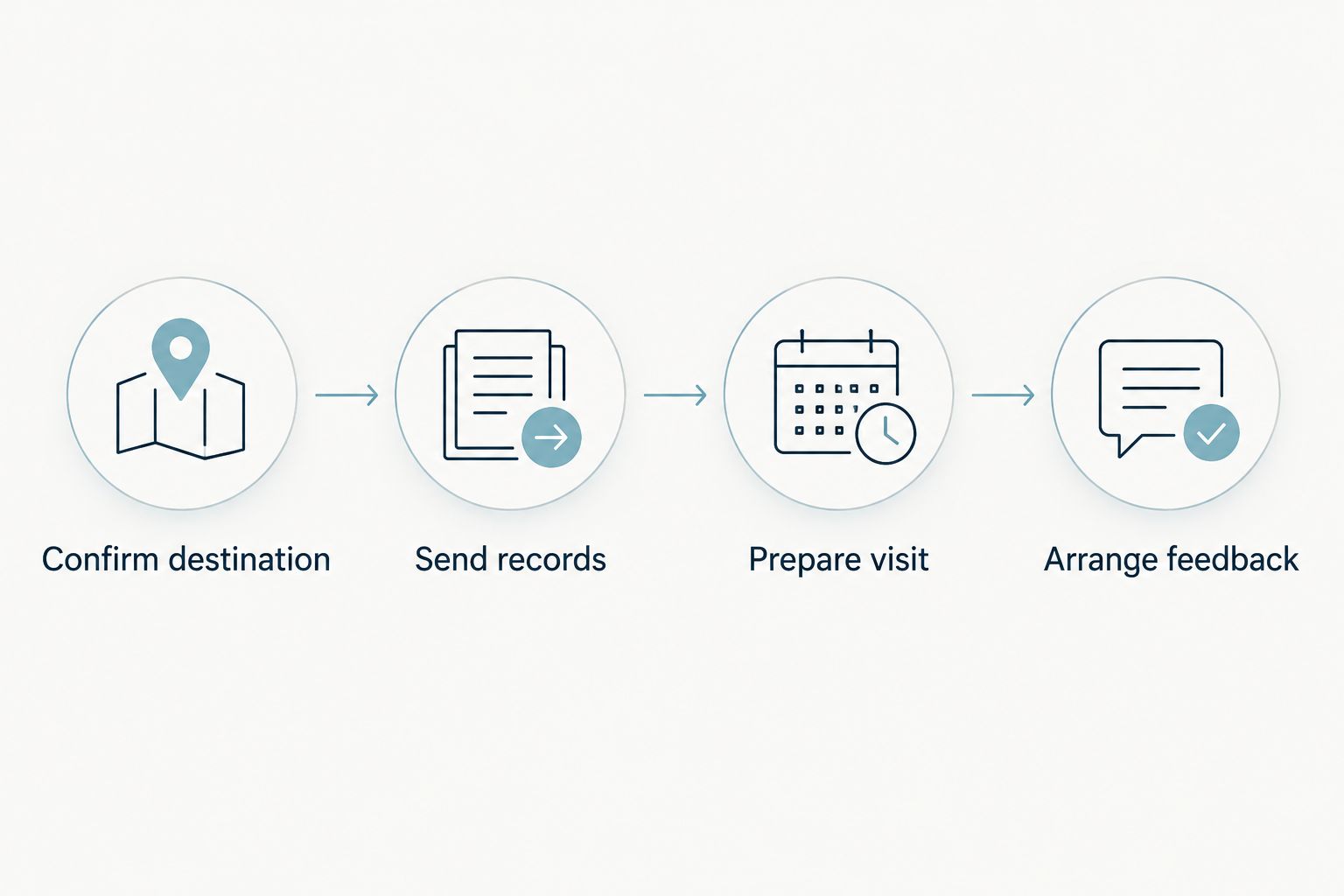
The handoff has a simple order: confirm the destination, send the records, prepare the visit, and arrange feedback. Keep each stage visible so an unfinished transfer does not disappear between offices.
Treatment discussion and feedback
A completed consultation should produce more than a device recommendation. You need to understand the diagnosis, the initial plan, and how the clinicians will review progress.
- Clarify the assessment. Ask whether the findings point to a joint problem, muscle-related pain, a dental condition, or another cause. If the diagnosis remains uncertain, ask what the next evaluation step is.
- Discuss conservative choices first. Depending on the assessment, clinicians can discuss habit changes, self-care, physical therapy, or an appliance. Each option needs a reason tied to your symptoms; none is automatically appropriate for everyone.
- Ask about benefits and drawbacks. An appliance needs assessment and follow-up, exercises need individualized guidance, and medicines need a review of your health history. Avoid forceful jaw stretching or changing medication doses on your own.
- Agree on follow-up. Ask what improvement should look like, when reassessment is planned, and which symptoms should trigger earlier contact. Do not substitute a generic internet timeline for the clinician's instructions.
- Close the referral loop. Ask whether the consultation summary will reach your referring physician and who will coordinate further care. Keep a copy of the plan for your own records.
Expected result: you leave with an explained treatment plan, follow-up instructions, and a clear owner for the next step. The 2026 goal is coordinated care, not simply getting the referral marked complete.
When symptoms change after the referral
An updated referral workflow is useful when your symptoms change before the appointment or after an initial assessment. A new problem should reach the clinician rather than remain buried in the original paperwork.
- Contact the appropriate treating office and describe exactly what changed, including a new injury, locking, swelling, or difficulty eating.
- Ask whether the clinician needs to reassess you or update the referral's urgency or destination.
- Send only the new records requested, clearly identifying them as an update to the existing referral.
- Confirm which office will communicate the revised plan and whether any coverage requirement needs another check.
Expected result: the next appointment reflects your current symptoms instead of an outdated clinical picture. Use urgent medical care for emergency warning signs rather than waiting for a revised referral.
Troubleshooting the handoff
- The receiving office cannot find the referral. Ask the sending office to verify the recipient and transfer method. Then confirm receipt with the receiving office; avoid repeatedly sending the same packet without checking where it went.
- The office says it does not evaluate your condition. Return to the referring physician with that answer and request an appropriate destination. Do not ask the office to schedule an unrelated service just to obtain an appointment.
- The insurer and office give different answers. Ask each party about the same proposed evaluation and clinician. Distinguish network participation, referral requirements, authorization, and benefits instead of treating them as one question.
- The symptoms no longer match the referral. Report the change to a clinician and ask whether the referral needs updating. New symptoms require clinical review, not just a corrected form.
Customize your workflow
Choose a practical goal you can describe at follow-up, such as eating comfortably or having fewer episodes of jaw locking. Record changes consistently without repeatedly testing painful movements.
If you have dental symptoms alongside jaw pain, ask how the dental findings fit the overall assessment. Starboard Dental's general dental care can be part of that conversation, while the referral destination and any specialist involvement remain clinical decisions.
For your 2026 records, keep the current referral, consultation summary, and follow-up instructions together. Give each office the relevant update rather than assuming another clinician has already sent it.
FAQ
Do I need a physician referral for TMJ treatment?
Referral requirements depend on the receiving clinician and your insurance plan. Ask both before scheduling, and confirm whether prior authorization is a separate requirement.
Who should my physician refer me to for jaw pain?
The receiving clinician should match the problem your physician wants evaluated. A general dentist can assess dental contributors, while persistent or complex jaw and facial pain can require an orofacial pain specialist.
Does a TMJ referral mean I need a mouthguard?
No, a TMJ referral requests an evaluation rather than prescribing a mouthguard. An appliance should follow an assessment and include instructions for use and follow-up.
What should I bring to a jaw-pain appointment?
Bring your referral information, medication and allergy list, relevant existing reports, and a short symptom summary. Ask the receiving office whether it also needs image files or an appliance you already use.
Is painless jaw clicking always a problem?
Painless jaw clicking alone does not necessarily require treatment. Tell your clinician if clicking occurs with pain, locking, or reduced jaw movement, because those accompanying symptoms change the assessment.
Can Starboard Dental receive my physician's TMJ referral?
Confirm the appropriate referral destination directly with Starboard Dental before transferring records. The practice provides general, restorative, and cosmetic dental care; ask which evaluation route fits your symptoms.
When should jaw pain receive urgent medical attention?
Seek urgent medical attention when jaw discomfort occurs with chest pain, shortness of breath, sweating, or faintness. Difficulty breathing or swallowing, rapidly increasing facial swelling, and significant trauma also require prompt assessment.
One last thing
A jaw click is not a treatment plan. Painless joint sounds alone do not necessarily need treatment, according to NIDCR patient guidance. The useful question is whether pain, locking, or reduced function accompanies the sound—and what the examination shows.