Best overall for mild jaw pain: conservative self-care. Best for persistent muscle-related pain: guided physical therapy. Best without equipment: reducing jaw strain. This 2026 guide compares the best TMJ pain relief options, explains their limits, and helps you decide when to seek an examination.
- The best TMJ pain relief options start with reversible care, not permanent changes to your bite.
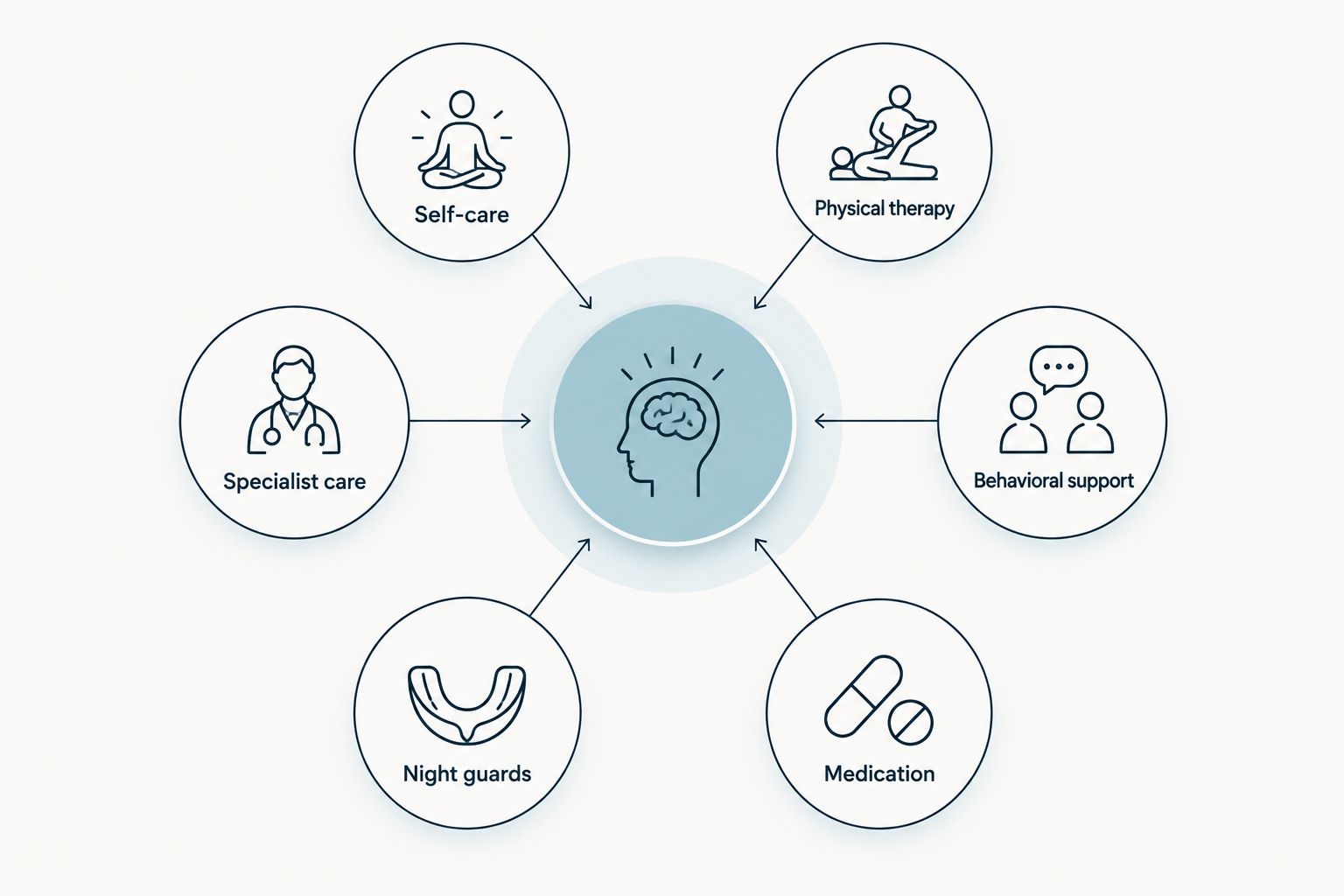
- Physical therapy supports jaw movement; behavioral support addresses clenching habits and coping with persistent pain.
- Night guards protect teeth in selected cases but are not a proven cure for every jaw disorder.
- Starboard Dental provides general dental care for patients of all ages in Kennebunk, York, and Saco.
Why this matters
Your temporomandibular joints connect your lower jaw to your skull. You have 2 jaw joints, one on each side, and pain can involve the joints, the chewing muscles, or both. TMJ names the joint; TMD describes temporomandibular disorders.
That distinction matters because toothache, muscle pain, and joint pain do not call for the same treatment. A painless click also does not automatically mean something needs fixing. Pain, locking, and difficulty eating deserve more attention than noise alone.
Starboard Dental is a general dental practice serving patients of all ages in Kennebunk, York, and Saco. Starboard Dental suits local families seeking general dental care while sorting out questions about TMJ pain relief. The right starting point is identifying the source of discomfort, not buying an appliance before an examination.
What makes the best TMJ pain relief options?
This 2026 comparison puts safety and the reason for your symptoms ahead of product claims. Judge each option against these criteria:
- Reversibility: Prefer treatments you can stop without permanently changing your teeth, bite, or joint.
- Symptom fit: Muscle soreness, restricted movement, and tooth damage require different decisions.
- Daily function: Look for easier eating, speaking, and comfortable movement—not simply a quieter joint.
- Safety: Account for medication interactions, other medical conditions, and worsening pain.
- Clinical guidance: Exercises and appliances need instructions suited to your symptoms.
- Follow-up: Keep treatments that help; reassess those that worsen pain or change your bite.
TMJ pain relief options at a glance
These 6 treatment options serve different purposes. Their order favors conservative care; it is not a claim that every patient needs every step.
| Option | Best for | Main benefit | Key limitation |
|---|---|---|---|
| Self-care | Mild, recent discomfort without warning signs | Reduces avoidable chewing strain | Does not identify the underlying cause |
| Physical therapy | Persistent muscle pain or limited movement | Provides guided movement and rehabilitation | Requires assessment and consistent participation |
| Behavioral support | Clenching habits and persistent pain coping | Helps change habits and responses to pain | Does not repair joint damage or tooth disease |
| Medication | Selected short-term symptom relief | Temporarily reduces pain; some medicines reduce inflammation | Side effects and interactions restrict suitability |
| Night guards | Selected patients with grinding-related tooth damage | Separates tooth surfaces while worn | Tooth protection does not guarantee jaw-pain relief |
| Specialist care | Persistent, disabling, or complex symptoms | Clarifies diagnosis and treatment choices | Invasive procedures carry additional risks |
The useful comparison is what each treatment addresses. Self-care reduces strain, rehabilitation works on function, and a guard primarily addresses tooth contact. None should substitute for investigating unexplained pain.
1. Conservative self-care: best for mild, recent jaw discomfort
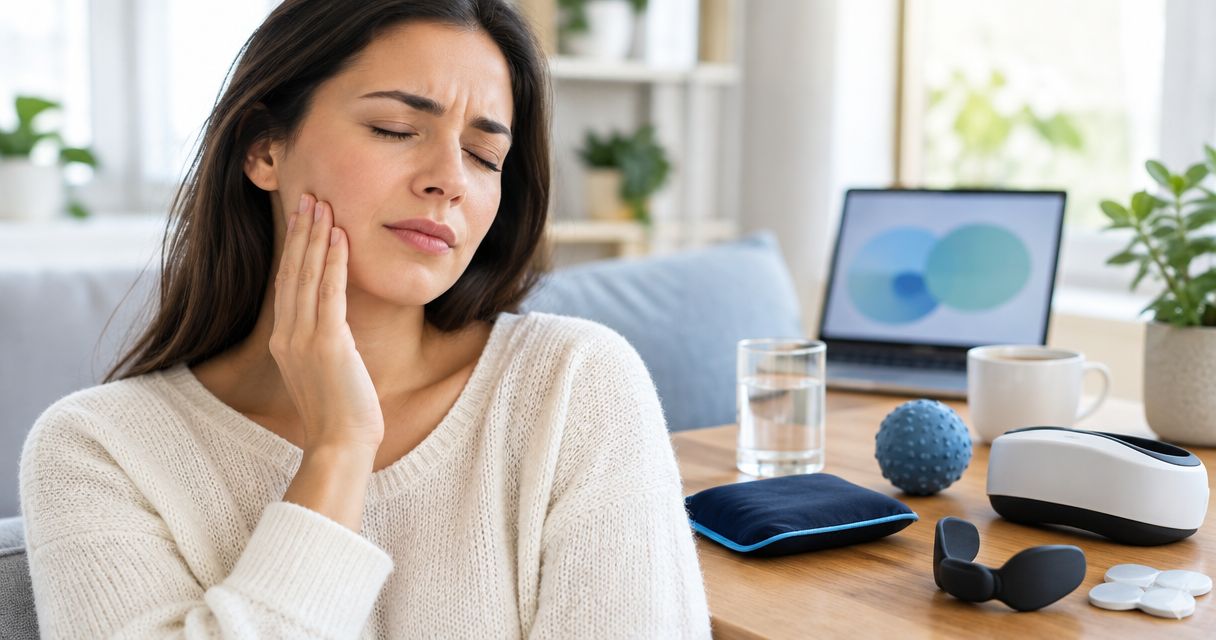
Conservative self-care means temporarily reducing activities that strain a sore jaw. Choose easier-to-chew foods, avoid gum, and stop repeatedly testing how widely you can open your mouth. A wrapped warm or cool pack can provide comfort; protect your skin and stop if it feels uncomfortable.
Gentle movement is different from forcing a stretch. Keep normal activities within a comfortable range, and ask for guidance if opening your mouth causes pain or locking. Do not try to push a locked jaw back into position yourself.
Self-care pros:
- Does not permanently alter your bite.
- Helps you identify activities that aggravate symptoms.
- Fits around everyday meals and routines.
Self-care cons:
- Cannot rule out tooth infection or another cause.
- Becomes inadequate when pain persists or function declines.
Best for: Mild, recent soreness without swelling, injury, locking, or other warning signs.
Verdict: Buy into conservative care first; seek an examination if symptoms persist, worsen, or interfere with eating.
2. Guided physical therapy: best for persistent muscle-related pain
Physical therapy addresses movement, muscle function, and habits that contribute to jaw strain. A clinician can assess your symptoms and choose exercises rather than asking you to follow a generic routine. Treatment can include guided movement, manual techniques, and education.
The goal is comfortable function, not forcing the jaw to reach an arbitrary opening distance. Tell the clinician about locking, recent trauma, and exercises that increase your pain. A movement that feels wrong needs reassessment, not more repetition.
Physical therapy pros:
- Adapts exercises to your symptoms and movement.
- Focuses on eating, speaking, and daily function.
- Avoids permanent changes to teeth or bite.
Physical therapy cons:
- Requires participation between appointments.
- Does not treat an infected tooth or every structural joint problem.
Best for: Persistent muscle-related discomfort or restricted movement after an appropriate assessment.
Verdict: Buy into guided rehabilitation when muscle pain or movement problems are the main issue; skip forceful exercises copied from social media.
3. Behavioral support: best for clenching habits and pain coping
Behavioral support helps you notice habits such as daytime clenching and develop a different response. During comfortable rest, your teeth generally do not need to be pressed together. Reminders to release tension can help you recognize contact that has become automatic.
For persistent pain, cognitive behavioral therapy can support coping, reduce unhelpful pain-related behaviors, and improve day-to-day functioning. This does not mean your pain is imaginary. It addresses how behavior and the nervous system interact with a real physical problem.
Behavioral support pros:
- Targets habits that a night guard does not address.
- Provides strategies you can use throughout the day.
- Can complement physical treatment rather than replace it.
Behavioral support cons:
- Does not repair damaged teeth or diagnose joint disease.
- Requires practice and access to appropriate support.
Best for: Daytime clenching, repeated jaw-tension habits, or difficulty coping with ongoing pain.
Verdict: Buy into behavioral support when habits or persistent pain are part of the problem; skip advice that dismisses symptoms as merely stress.
4. Short-term medication: best for selected flare-ups
Pain medicines can reduce symptoms while the cause is being assessed or managed. Some anti-inflammatory medicines also reduce inflammation, but they are not suitable for everyone. Ask a pharmacist or clinician about your health conditions, current medicines, and the product label.
Do not combine products with overlapping ingredients or assume an over-the-counter medicine is harmless. Kidney disease, stomach ulcers, blood thinners, pregnancy, and other circumstances can change the advice. Persistent pain needs a plan beyond repeatedly taking pain relievers.
Medication pros:
- Offers symptom relief without changing the bite.
- Can make a short flare-up easier to manage.
- Provides an option alongside other appropriate care.
Medication cons:
- Carries side effects and interaction risks.
- Does not correct the underlying cause.
Best for: Selected short-term pain relief after checking that the medicine is appropriate for you.
Verdict: Hold until you have checked suitability and instructions; skip escalating medication without clinical advice.
5. Dentist-assessed night guards: best for selected tooth protection
A night guard separates the upper and lower teeth while you wear it. In selected patients who grind their teeth, its purpose includes protecting tooth surfaces. That benefit is different from treating the cause of jaw pain.
The National Institute of Dental and Craniofacial Research cautions that evidence for appliances improving TMD pain is limited. An appliance should not be designed to permanently change your bite. Stop using it and contact the prescribing clinician if it causes pain or an unwanted bite change.
Night guard pros:
- Provides a physical barrier between tooth surfaces.
- Can be assessed for fit and monitored.
- Offers a removable approach when appropriately selected.
Night guard cons:
- Does not reliably resolve every type of TMD pain.
- Can cause discomfort or unwanted bite changes.
Best for: Selected patients needing tooth protection after grinding and dental damage have been assessed.
Verdict: Hold until a dentist explains the goal; skip promises that a guard cures all TMJ pain.
6. Specialist assessment: best for persistent or complex symptoms
Specialist assessment becomes useful when symptoms remain disabling, the diagnosis is unclear, or earlier care has not helped. Depending on the problem, this can involve an orofacial pain clinician or an oral and maxillofacial specialist. Assessment does not automatically lead to surgery.
Injections and surgical procedures are not routine first steps for uncomplicated jaw pain. Ask what diagnosis a proposed procedure treats, what conservative options remain, and what permanent changes it involves. Consider another clinical opinion before an irreversible intervention.
Specialist care pros:
- Helps clarify complex or persistent symptoms.
- Reviews whether earlier treatment matched the diagnosis.
- Provides advice about options beyond routine care.
Specialist care cons:
- Procedures can carry risks without guaranteeing relief.
- Some interventions permanently change joint structures.
Best for: Persistent disability, recurrent locking, or a complex diagnosis requiring further assessment.
Verdict: Buy into specialist assessment when needed; wait on invasive treatment until its purpose, alternatives, and risks are clear.
How these options are ranked
This 2026 ranking follows the conservative-care principles described in the National Institute of Dental and Craniofacial Research's public TMD guidance. That guidance favors simple, reversible approaches and cautions against unnecessary treatments that permanently change the teeth, bite, or joint.
The ranking separates symptom relief, improved function, and tooth protection. Those are different outcomes. An option ranks well only when its purpose matches your problem and its risks are acceptable—not because it appears more technical.
Which TMJ pain relief option should you choose?
For mild, recent discomfort without warning signs, start with reversible self-care. If pain persists, arrange an assessment rather than adding several treatments at once. Physical therapy and behavioral support deserve consideration when the diagnosis points to muscle pain, movement problems, or persistent pain patterns.
For a 2026 appointment, bring these 3 symptom notes:
- Pain location: Point to the joint, cheek muscles, or individual tooth.
- Pain triggers: Describe chewing, yawning, waking, and daytime clenching.
- Function changes: Explain locking, restricted opening, or difficulty eating.
Starboard Dental provides general, restorative, and cosmetic dental care under Dr. Alex Kerbaugh. Tell your clinician what you have already tried, including medicines and appliances, so the discussion starts with your actual symptoms.
Discuss your dental concerns
Learn about general dental care for patients in Kennebunk, York, and Saco.
When jaw pain needs urgent attention
Seek prompt assessment for facial swelling, fever with dental pain, an injury, or a jaw that becomes stuck open or closed. Difficulty breathing or swallowing needs emergency care. Do not delay treatment while trying a new guard or exercise routine.
Jaw discomfort accompanied by chest pressure, shortness of breath, sweating, or nausea also needs emergency attention because it can signal a heart problem. Not every pain near the jaw joint comes from TMD.
FAQ
What's the best TMJ pain relief option to try first?
Conservative self-care is a reasonable first step for mild, recent jaw discomfort without warning signs. Reduce chewing strain and seek an examination if pain persists, worsens, or affects eating.
Is a night guard better than physical therapy for TMJ pain?
Neither is universally better because they serve different purposes. Physical therapy addresses movement and muscle function, while a night guard can protect teeth in selected grinding cases; an assessment helps distinguish those needs.
Does clicking in my jaw mean I need treatment?
A painless jaw click does not automatically need treatment. Clicking accompanied by pain, locking, or restricted movement deserves an assessment.
Can stress cause me to clench my jaw?
Stress can contribute to clenching habits, but jaw pain should not automatically be blamed on stress. Behavioral support can complement an examination and other appropriate treatment.
Should I use heat or ice for jaw pain?
A wrapped warm or cool pack can provide comfort for some jaw symptoms. Protect your skin, stop if it causes discomfort, and do not use it instead of assessment for swelling, injury, or persistent pain.
Should I stretch my jaw if it locks?
Do not force a locked jaw open or closed. Seek prompt assessment, especially when you cannot eat normally or the jaw remains stuck.
Does TMJ pain usually need surgery in 2026?
Surgery is not the usual starting point for uncomplicated TMD pain in 2026. Conservative, reversible approaches come first; invasive treatment needs a specific diagnosis and a clear discussion of alternatives and risks.
One last thing
A quieter jaw is not necessarily a healthier jaw. Track comfortable eating, pain, and movement instead of trying to eliminate every click. For your 2026 treatment decisions, improving daily function is a more useful goal than chasing a sound that causes no discomfort.