Best overall for stained natural teeth: professional teeth whitening. Best for small chips: dental bonding. Best for coordinated changes to tooth shape and color: porcelain veneers. This 2026 guide compares the best cosmetic dentistry procedures for a smile makeover by the problem each treatment actually solves.
- The best cosmetic dentistry procedures for a smile makeover depend on tooth health, discoloration, alignment, and missing teeth.
- Professional teeth whitening suits stained natural teeth; dental bonding suits small chips and localized shape changes.
- Porcelain veneers change visible tooth surfaces; orthodontic treatment changes tooth position.
- Starboard Dental provides general, restorative, and cosmetic dental care for patients in Kennebunk, York, and Saco, Maine.
Why this matters
A smile makeover is a treatment plan, not a single procedure. Whitening changes color, bonding repairs small defects, and orthodontic treatment moves teeth. Choosing the wrong category means treating the appearance of a problem without addressing its cause.
Starboard Dental provides general, restorative, and cosmetic dental care under Dr. Alex Kerbaugh. For patients considering cosmetic dentistry, the useful starting point is a conversation about what bothers you, followed by an examination of the teeth and gums.
Healthy teeth and gums come before cosmetic changes. Untreated decay, active gum disease, or an unstable bite changes which procedures are appropriate. Your 2026 smile makeover plan should begin with those findings, not a photograph of someone else's smile.
What makes the best cosmetic dentistry procedure?
The best procedure solves your concern while preserving healthy tooth structure. Use these criteria before choosing a treatment:
- Problem fit: Match treatment to discoloration, chips, spacing, tooth position, structural damage, or tooth loss.
- Tooth preservation: Understand whether treatment leaves enamel intact or permanently removes tooth structure.
- Oral health: Check for decay, gum inflammation, exposed roots, and other conditions that affect treatment.
- Bite compatibility: Consider grinding, tooth contact, and chewing forces before changing tooth shape.
- Maintenance: Understand cleaning needs, staining, wear, and the possibility of future repairs or replacement.
- Treatment sequence: Decide whether alignment or whitening belongs before bonding, veneers, or crowns.
Bring a specific concern to the appointment: a chipped edge, uneven front teeth, or a color mismatch. That gives your dentist a clearer starting point than asking for a completely different smile.
Cosmetic dentistry procedures at a glance
The order below moves from common cosmetic concerns to treatments that address damaged or missing teeth. It is not a recommendation to complete every procedure.
| Procedure | Best for | Standout feature | Key limitation |
|---|---|---|---|
| Professional teeth whitening | Discolored natural teeth | Lightens natural tooth color without reshaping teeth | Does not whiten crowns, veneers, or fillings |
| Dental bonding | Small chips and localized shape changes | Adds tooth-colored resin to a specific area | Can stain, chip, or need repairs |
| Porcelain veneers | Coordinated changes to visible tooth shape and color | Covers the front surface of selected teeth | Often requires permanent enamel removal |
| Orthodontic treatment | Crowding, spacing, and tooth-position concerns | Moves teeth rather than covering their position | Requires treatment time and ongoing retention |
| Dental crowns | Damaged teeth that need structural restoration | Covers and restores the remaining tooth | Requires preparation of tooth structure |
| Dental implants | Missing teeth when implant treatment is appropriate | Supports a replacement tooth without relying on adjacent teeth | Requires surgery and suitable supporting tissues |
1. Professional teeth whitening: best for stained natural teeth
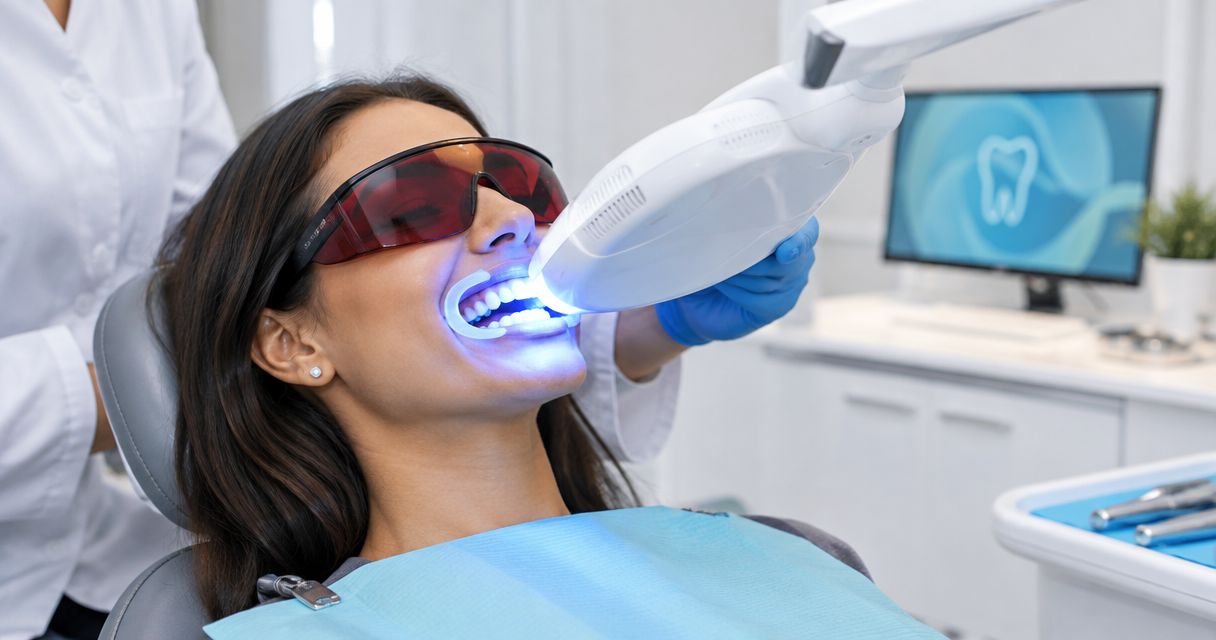
Professional teeth whitening uses bleaching agents to lighten natural teeth. It addresses color rather than chips, crooked teeth, or missing tooth structure. An examination helps distinguish ordinary staining from discoloration that needs a different approach.
Best for: You like the shape and position of your teeth but want to address their color.
Whitening is a useful first discussion when discoloration is your main concern because it does not require reshaping teeth. The limitation is important: existing crowns, veneers, and tooth-colored fillings do not bleach along with natural enamel. Whitening can therefore make an existing color mismatch more noticeable.
Professional teeth whitening pros:
- Changes natural tooth color without removing enamel for a restoration.
- Addresses discoloration across several visible natural teeth.
- Helps establish a shade before selecting new cosmetic restorations.
Professional teeth whitening cons:
- Can cause temporary tooth sensitivity or gum irritation.
- Does not change the color of existing restorations.
- Does not correct tooth shape, spacing, or alignment.
Verdict: Hold until your dentist checks the cause of discoloration and any existing sensitivity. Whitening is the default discussion for color-only concerns, not a substitute for treating decay or replacing a failing restoration.
2. Dental bonding: best for small chips and localized repairs
Dental bonding adds tooth-colored composite resin to a tooth. Your dentist shapes the material to repair a small chip, adjust an edge, or address a limited shape concern. Bonding changes the treated area rather than moving the whole tooth.
Best for: A small, specific defect bothers you more than the overall appearance of your smile.
Bonding often allows a conservative repair, but suitability depends on the defect and your bite. A visible chip caused by grinding needs more than a cosmetic patch if the same forces will continue to damage it. Ask what caused the chip before deciding how to cover it.
Dental bonding pros:
- Targets a localized defect without covering the entire tooth.
- Often requires less tooth preparation than a veneer or crown.
- Can be repaired when the material becomes damaged.
Dental bonding cons:
- Composite resin can stain and lose its surface polish.
- Bonded edges can chip under chewing or grinding forces.
- Is not suitable for every large defect or heavily loaded tooth.
Verdict: Hold until the size of the defect and your bite are assessed. Discuss bonding first for a small repair, rather than assuming every chipped tooth needs a veneer.
3. Porcelain veneers: best for coordinated shape-and-color changes
Porcelain veneers are thin restorations attached to the front surfaces of teeth. They can change visible shape, proportions, and color together. Unlike whitening, veneers alter the surface appearance through a restoration rather than bleaching the natural tooth.
Best for: Several visible teeth have shape or color concerns that a simpler treatment does not adequately address.
Veneers deserve a careful discussion because preparation often removes enamel permanently. They also do not move tooth roots or correct every bite problem. If your main concern is crowding, compare orthodontic treatment before committing to a restoration-based approach.
Porcelain veneers pros:
- Address visible shape and color within the same treatment plan.
- Allow selected teeth to be coordinated in appearance.
- Porcelain resists staining better than composite resin.
Porcelain veneers cons:
- Often require irreversible enamel removal.
- Can chip or need replacement over time.
- Require attention to bite forces and gum health.
Verdict: Hold until conservative alternatives and enamel preparation are explained. Veneers belong in a 2026 smile makeover when their benefits justify the permanent changes, not simply because they appear in a before-and-after photograph.
4. Orthodontic treatment: best for crowding and spacing
Orthodontic treatment moves teeth using braces or clear aligners. It addresses tooth position, spacing, and selected bite concerns rather than masking them with restorative material. The appropriate appliance depends on the movements your teeth need and the treatment plan.
Best for: Your main concern is where your teeth sit, not their color or surface shape.
Straightening can also help establish tooth positions before cosmetic restorations are designed. Clear aligners require consistent wear as directed, while fixed braces remain attached throughout treatment. Neither approach removes the need for good cleaning or follow-up.
Orthodontic treatment pros:
- Changes actual tooth position rather than covering misalignment.
- Can reduce the need to reshape teeth solely to disguise crowding.
- Addresses spacing and selected bite problems within a planned course of care.
Orthodontic treatment cons:
- Requires time, appointments, and cooperation with instructions.
- Requires retainers afterward to help maintain tooth position.
- Does not directly whiten teeth or repair broken tooth structure.
Verdict: Hold on veneers until tooth movement has been considered. For a position-related concern, orthodontic assessment answers a different and more relevant question than choosing a veneer shade.
5. Dental crowns: best for damaged teeth needing restoration
A dental crown covers a prepared tooth to restore its shape and function. It can also improve appearance, but its main role is restoring a tooth whose remaining structure needs that coverage. Crowns are not the default cosmetic choice for healthy teeth.
Best for: A damaged or heavily restored tooth needs structural treatment as well as an appearance change.
Your dentist considers remaining tooth structure, the location of damage, and the bite before recommending a crown. A superficial chip and a structurally weakened tooth are different problems. They should not automatically receive the same treatment.
Dental crown pros:
- Restores shape and chewing surfaces on an appropriately selected tooth.
- Covers defects that exceed the scope of a small bonded repair.
- Combines restorative and appearance goals when both need attention.
Dental crown cons:
- Requires removal of tooth structure during preparation.
- The underlying tooth can still develop decay.
- A crown can need repair or replacement over time.
Verdict: Skip crowns for healthy teeth when a less invasive option meets the goal. When structural damage is present, discuss the crown as restorative care with cosmetic benefits, not as an elective shortcut.
6. Dental implants: best for replacing missing teeth
A dental implant is placed in the jaw to support a replacement tooth. Implant treatment addresses the absence of a tooth rather than changing an existing tooth's appearance. Suitability depends on oral health, supporting bone, medical considerations, and the planned restoration.
Best for: A missing tooth is the central problem and an examination confirms that implant treatment is appropriate.
The visible replacement tooth is only part of the treatment. Surgery, healing, and long-term care of the surrounding tissues also matter. Compare implants with other tooth-replacement approaches before deciding which plan fits your mouth.
Dental implant pros:
- Supports a replacement tooth independently of neighboring teeth.
- Replaces a missing tooth without bleaching or covering existing teeth.
- Provides a fixed replacement when the treatment plan calls for one.
Dental implant cons:
- Requires surgery and healing before treatment is complete.
- Some patients need additional treatment to prepare supporting tissues.
- Implants require ongoing cleaning and monitoring for inflammation.
Verdict: Hold until a tooth-replacement assessment confirms suitability. An implant is a missing-tooth treatment, not an upgrade for an otherwise healthy natural tooth.
How these procedures are ranked
This 2026 ranking uses problem fit, tooth preservation, oral health, bite compatibility, maintenance, and treatment sequence. Whitening leads for color-only concerns; bonding follows for small defects. Veneers address broader surface changes, while orthodontics addresses position.
Crowns and implants appear later because they solve structural damage and tooth loss. That placement does not make them less useful. It separates restorative needs from elective changes to healthy teeth.
The right procedure is the one that solves your actual problem with an appropriate amount of treatment. A crown can be necessary for one tooth and unnecessary for its healthy neighbor.
Plan your smile makeover in the right order
A useful plan connects your appearance goals with the condition of your mouth. Starboard Dental's general, restorative, and cosmetic dental care gives patients a setting to discuss those concerns together.
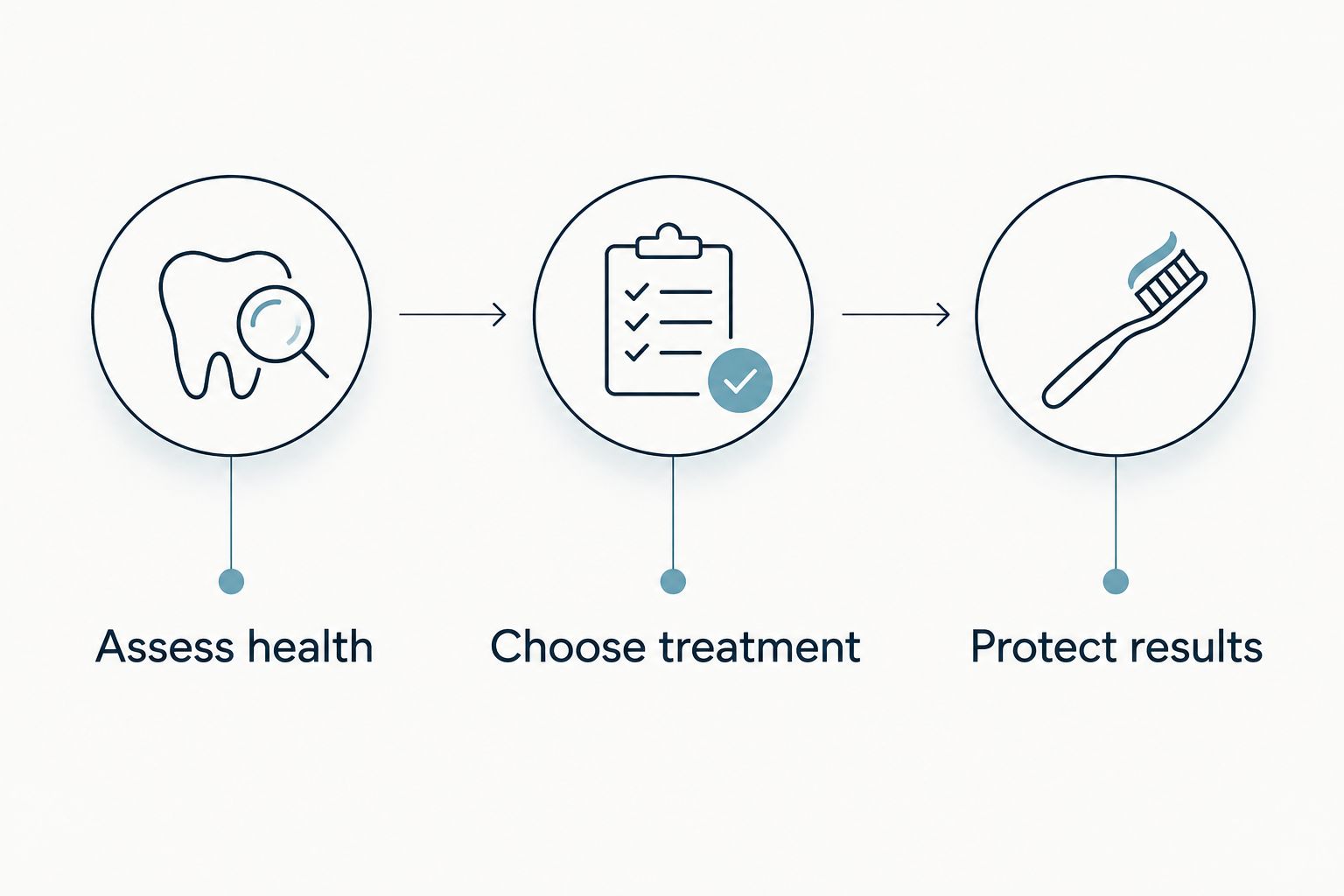
Assess health
Explain what you want to change, then have teeth, gums, existing restorations, and bite assessed. Mention sensitivity, bleeding gums, previous dental work, and grinding. A photograph shows appearance; an examination helps establish what treatment is safe and appropriate.
Choose treatment
Match each concern to its treatment category. Ask whether tooth movement should come before restorations and whether whitening should come before selecting their color. Your 2026 plan should identify which steps are necessary and which are optional.
Protect results
Discuss home care, retainers when prescribed, and protection from grinding when relevant. Ask how you will recognize damage or inflammation and when to arrange follow-up. Cosmetic treatment does not replace preventive care.
Bring your questions to the planning appointment rather than trying to choose every procedure beforehand. Ask what changes are reversible, what removes enamel, and what future maintenance involves. You should understand the reason for each step before agreeing to it.
Keep your natural teeth part of the plan
Cosmetic restorations still need daily care, and the teeth around them remain vulnerable to decay and gum disease. Brush for 2 minutes, 2 times per day, using fluoride toothpaste. Angle the toothbrush about 45 degrees toward the gumline and use gentle movements rather than hard scrubbing.
Clean between your teeth daily, using the method your dental team recommends for your mouth and restorations. Tell your dentist if an area becomes difficult to clean, catches floss, or starts bleeding. Those changes deserve attention even when the smile still looks good.
Which cosmetic dentistry procedure should you choose?
Start with whitening if your concern is color and your natural teeth are healthy. Ask about bonding for a small defect, orthodontics for position, and veneers for broader shape-and-color changes after discussing conservative alternatives.
If a tooth is damaged or missing, begin with a restorative assessment instead. Starboard Dental is a fit for Maine patients seeking general, restorative, and cosmetic dental care. The next step is identifying the problem, not committing to the largest makeover.
FAQ
What's the best cosmetic dentistry procedure for a smile makeover?
The best procedure depends on the concern: whitening addresses natural tooth color, bonding addresses small defects, and orthodontics addresses tooth position. An examination determines whether your teeth and gums are ready for cosmetic treatment.
Are veneers better than teeth whitening?
Veneers are not automatically better than teeth whitening because they solve different problems. Whitening lightens natural teeth without reshaping them, while veneers change visible tooth surfaces and often require permanent enamel removal.
Can I get a smile makeover without veneers?
Yes, a smile makeover can use whitening, bonding, orthodontic treatment, or appropriate restorative care without veneers. The right combination depends on your oral health and the changes you want.
Should I straighten my teeth before getting veneers?
Tooth alignment should be assessed before veneers when crowding, spacing, or bite concerns are present. Orthodontic treatment can address tooth position directly and can reduce the need to disguise misalignment with restorations.
Will teeth whitening change the color of my crowns?
Teeth whitening does not change the color of crowns, veneers, or tooth-colored fillings. Discuss existing restorations before whitening because your natural teeth can become a different shade from those materials.
Can I have cosmetic dental treatment if my gums bleed?
Bleeding gums need assessment before cosmetic dental treatment. Gum inflammation or disease can affect treatment planning, and your dentist should identify and address the cause first.
How do I start a smile makeover at Starboard Dental in 2026?
Start by discussing your appearance goals and oral health concerns with Starboard Dental. The practice provides general, restorative, and cosmetic dental care under Dr. Alex Kerbaugh for patients in Kennebunk, York, and Saco, Maine.
One last thing
Choose the final tooth shade before new cosmetic restorations are made. Whitening natural teeth after receiving a new veneer or crown can create a mismatch because restorative materials do not bleach with your enamel.
For your 2026 smile makeover, ask your dentist to explain the order of treatment as clearly as the treatment itself. A well-sequenced plan avoids choosing a restoration's appearance before the surrounding teeth have reached their intended shade.