
Instead of chasing files between offices, transfer your dental records by confirming your new dentist’s delivery instructions, requesting copies from your previous practice, and checking that the clinical team received readable files. This 2026 workflow explains how to transfer dental records to a new dentist without confusing a sent email with a completed handoff.
- How to transfer dental records to a new dentist: verify the recipient, request clinical records, and confirm receipt.
- Starboard Dental provides general, restorative, and cosmetic dental care for patients of all ages in coastal Maine.
- Request dated X-rays, treatment notes, and relevant specialist reports—not just an appointment summary.
- A records transfer is complete when the receiving office confirms it can open and identify the files.
Why this matters
Your dental history gives a new dentist context that a scheduling form cannot provide. Earlier X-rays, gum measurements, treatment notes, and specialist reports help explain what has changed and what still needs attention.
Starboard Dental is best for patients seeking general, restorative, and cosmetic dental care in Kennebunk, York, and Saco. You can start with Starboard Dental when arranging your next visit, then confirm the office’s current instructions for sending records.
A transfer supports your assessment; it does not replace an examination or guarantee that additional imaging is unnecessary. Your new dentist must decide whether the records answer the clinical questions relevant to your care.
Before you start
Have these materials ready before submitting a request:
- Patient identification and authority: Gather your full name, date of birth, previous names used in the chart, and contact details. If requesting another person’s records, confirm what documentation establishes your authority.
- Receiving-office instructions: Ask your new dental office for the correct recipient, delivery method, and any release form it wants you to use. Have your previous practice’s records contact ready, too.
- The easy-to-miss issue: Ask specifically for dated diagnostic images and clinical notes. A patient-portal summary or screenshot does not necessarily include the underlying X-ray files, gum charting, or specialist reports.
For a transfer in 2026, verify contact information directly with each office rather than relying on an old appointment message. Tell both offices about an upcoming appointment or unfinished treatment before choosing the request’s scope.
Recipient and record scope
Establish where the records should go
- Confirm the recipient. Contact the new office through a verified channel and ask who handles incoming dental records. Write down the practice name, destination, and delivery instructions exactly as provided.
- Confirm the delivery method. Ask whether the office wants a secure electronic transfer, an upload through its designated system, or another accepted method. Do not assume a general inquiry address accepts clinical attachments.
- Identify the patient clearly. Include your full name and date of birth in the request. Mention any former surname or other identifying detail the previous practice needs to locate the correct chart.
- State the care context. Explain whether you are changing providers permanently, seeking another opinion, or transferring during ongoing treatment. Include the appointment date if you have one.
Expected result: Both offices agree on the destination and can match the records to the correct patient. You also know who to contact if delivery fails.
Define what belongs in the transfer
Ask the previous office to include the clinical information relevant to your continuing care. Depending on your history, that includes:
- Examination findings and treatment notes.
- Dental X-rays with dates and identifying information.
- Periodontal charting, which records measurements around your gums.
- Completed treatment and outstanding treatment plans.
- Relevant specialist reports, referrals, and surgical notes.
- Implant documentation, when applicable.
- Relevant medical-history information held in the dental chart.
If you are unsure what matters, ask the receiving dentist to define the scope. Do not select records solely because they look recent: earlier images can provide useful comparison, while a recent appointment summary can omit important details.
Expected result: Your request describes clinical records rather than simply asking for a receipt, account statement, or appointment list.
Written request and delivery
Submit a clear records request
- Obtain the correct instructions. Ask the previous practice how it accepts patient requests and whether it uses a records-release form. If an online system is involved, follow that office’s actual field names and submission instructions.
- Specify the records. Describe the chart information and images requested, including the relevant treatment period. For a full change of providers, ask what is included in a complete clinical-record copy.
- Identify the destination. Enter the new practice’s verified details. If you want a personal copy as well, state that separately and ask how it will be delivered.
- Complete any required authorization. Read the scope, recipient, expiration terms, and signature requirements before signing. Keep a copy of the submitted request and any confirmation.
- Record the submission date. Note when the previous office received the request, not just when you started filling it out.
Under HIPAA, covered providers generally can share protected health information with another provider for treatment without a separate patient authorization. An office can still ask you to complete paperwork to identify the requested records and destination; follow its instructions without assuming every transfer has the same legal requirements.
Expected result: The previous practice has a clear, documented request with an identifiable patient, record scope, and recipient.
Choose who receives the copy
Both transfer routes have practical uses. Ask the offices which route fits their systems before sending sensitive files yourself.
| Transfer route | Best for | Advantage | Limitation |
|---|---|---|---|
| Office-to-office transfer | Continuing care with a confirmed new provider | Sends records directly to the clinical destination | You still need to verify receipt and completeness |
| Patient-held copy | Keeping your own history or coordinating several providers | Gives you access to the files you receive | You must protect the files and confirm the next office can use their format |
Neither route guarantees that the new dentist can use every image. File quality, missing dates, and incomplete exports still need checking.
Receipt and clinical handoff
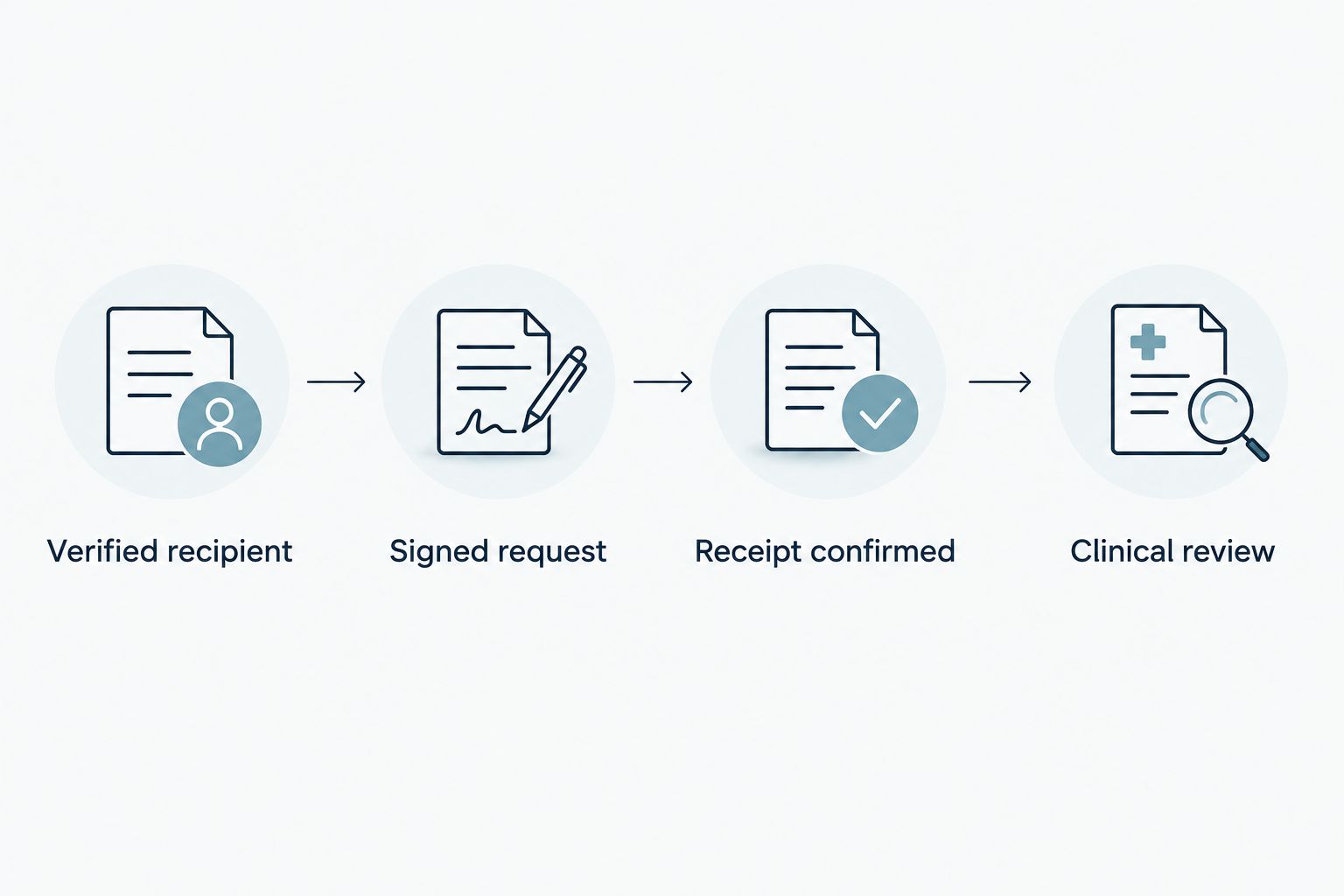
Close the loop with both offices
- Verified recipient: Recheck the destination if the sending office reports a delivery problem. Do not approve a substitute address until the receiving office confirms it.
- Signed request: Resolve missing signatures, identity checks, or unclear record dates with the previous practice. Ask it to identify the specific item stopping the request.
- Receipt confirmed: Contact the receiving office after the sender reports completion. Ask whether the attachments open, belong to you, and include the requested clinical material.
- Clinical review: Ask whether anything else is needed before your appointment. Tell the team about pain, recent procedures, temporary restorations, or treatment that remains unfinished.
Expected result: The receiving office confirms usable records—not merely an email notification—and knows about any unresolved treatment.
Keep a short transfer log with the request date, sending contact, receiving contact, and confirmation status. Schedule 1 follow-up call if you have not received an acknowledgment by the office’s stated processing date; an acknowledgment is not the same as delivery.
Understand the access timeline
For your 2026 planning, distinguish a request for your own records from an office-to-office treatment exchange. The federal access deadline applies to a patient’s HIPAA right-of-access request; it is not a promised turnaround for every transfer arrangement.
Under the U.S. Department of Health and Human Services’ HIPAA access rule, a covered provider generally must act on an access request within 30 calendar days of receiving it. One extension of up to 30 additional calendar days is permitted when the provider gives a written explanation and completion date within the initial period. These are federal access-rule limits, not recommended waiting periods; applicable state law can require faster action.
Ask the office for its expected completion date when you submit the request. If your appointment is sooner, tell both offices and ask what information can be sent first. Do not delay urgent dental assessment while waiting for a chart transfer.
When treatment updates the records
A second workflow applies when you move practices before a procedure or specialist visit is complete. The first transfer cannot contain notes from treatment that has not happened yet.
- Ask the new dentist which records are needed for the first assessment.
- Request those existing records through the same verified process.
- After the remaining treatment occurs, ask the treating office to send the new procedure note, relevant images, and follow-up instructions.
- Confirm that the receiving office added the update to your chart.
For example, a specialist’s final report can add information that an earlier referral did not contain. Identify the treating specialist rather than assuming your previous general dentist holds every outside record.
Expected result: Your new provider receives both the existing history and the later treatment update. Keep the dates separate so an initial transfer does not hide an outstanding report.
Troubleshooting a dental records transfer
The previous office says it sent everything
Ask what it sent, when it sent it, and which destination it used. Then ask the receiving office to check the designated intake channel. Compare the actual contents against your request before asking for a complete resend.
The X-rays are missing or unreadable
Ask the sending office to resend the diagnostic images through the receiving office’s accepted method. Include the image dates if known. A screenshot of a portal page is not a substitute for a usable diagnostic-image export.
Your name does not match the old chart
Provide the name used during previous treatment along with your current name and date of birth. Complete identity verification through the practice’s approved process rather than sending extra identity documents to an unverified address.
A signature or representative document is missing
Ask the records contact exactly what is required and who must sign. For children or adults represented by someone else, authority depends on the circumstances and applicable law; being a relative alone does not settle every access question.
The office links release to an unpaid balance
For records covered by the HIPAA right of access, a provider cannot deny access because you have not paid for healthcare services. Ask to speak with the records or privacy contact and keep a written record of the request. Separate the records-access issue from the billing discussion.
Customize your workflow for your next visit
Moving to a new practice involves more than transferring a chart. Update your medication list, allergies, health changes, and current concerns directly with the receiving office, even if similar information appears in older records.
If you are arranging dental care after a move in 2026, use the guide for new residents moving to coastal Maine alongside this transfer checklist. Keep insurance questions separate from clinical-record delivery so a benefits discussion does not obscure an unfinished handoff.
Starboard Dental provides general, restorative, and cosmetic dental care under Dr. Alex Kerbaugh. When discussing your next visit, explain your oral-health goals and any ongoing treatment; a transferred chart cannot communicate every concern you want addressed.
FAQ
How do I transfer dental records to a new dentist?
Confirm the new dentist’s delivery instructions, request the relevant clinical records from your previous practice, and verify that the receiving office can open them. Include identifying details, dated X-rays, treatment notes, and relevant specialist reports.
Do I have to give a reason for changing dentists?
You do not need to justify changing dentists to exercise your HIPAA right to access your records. Explain any ongoing treatment so the offices can coordinate the clinical handoff.
How long does a dental records transfer take in 2026?
Ask the sending office for its processing timeframe because not every transfer follows the same route. For a patient access request under HIPAA, a covered provider generally must act within 30 calendar days, with one permitted extension of up to 30 additional calendar days and written notice.
Can my old dentist send records directly to my new dentist?
Yes, HIPAA generally permits covered providers to share records for treatment without a separate patient authorization. Confirm the destination and complete the office’s requested routing paperwork.
Will transferred X-rays mean I do not need new ones?
Transferred X-rays do not guarantee that additional imaging is unnecessary. Your new dentist considers image quality, dates, symptoms, and the information needed for your assessment.
Can I request my child’s dental records?
A parent or legal guardian generally can request a child’s records when acting as the child’s personal representative, subject to applicable legal exceptions. Ask the office what identity and authority documentation it needs.
Can I see the new dentist before the records arrive?
Tell the receiving office that your records are pending and ask how to prepare for the appointment. Do not postpone urgent assessment for pain, swelling, or injury just because the transfer is incomplete.
One last thing
A delivery confirmation proves transmission, not clinical completeness. Before your first visit, ask whether the receiving team has the images and treatment notes needed for your appointment—not simply whether it received an email.
For your 2026 transfer, that final check is the step that closes the handoff. Bring your current concerns to Starboard Dental even when your records have already arrived.