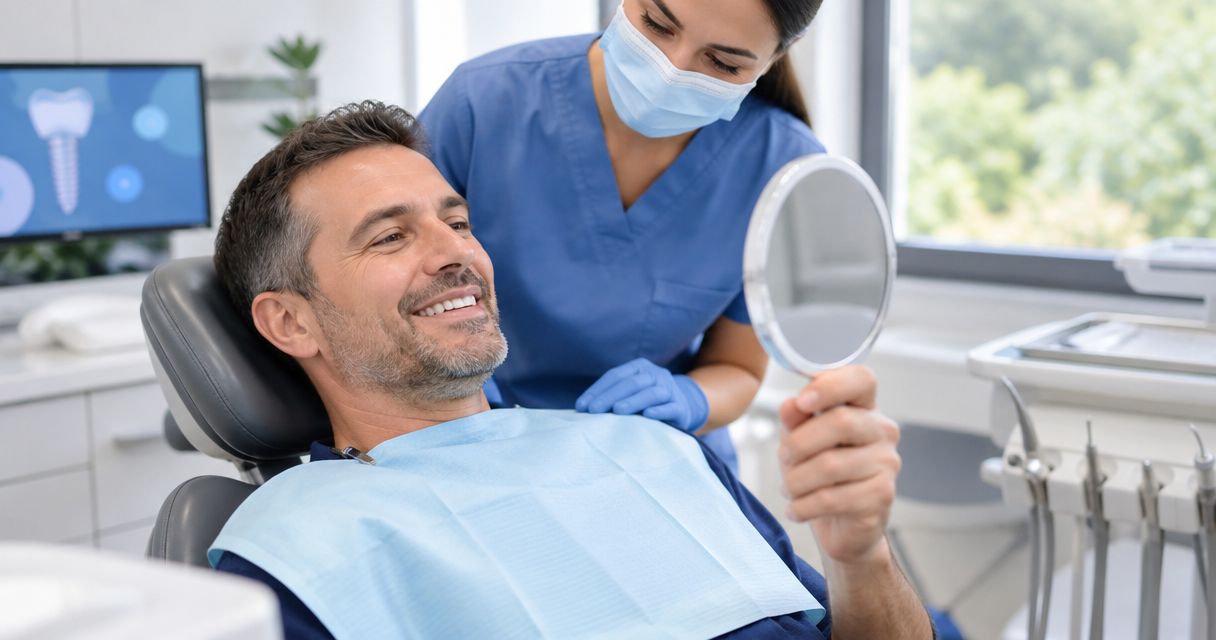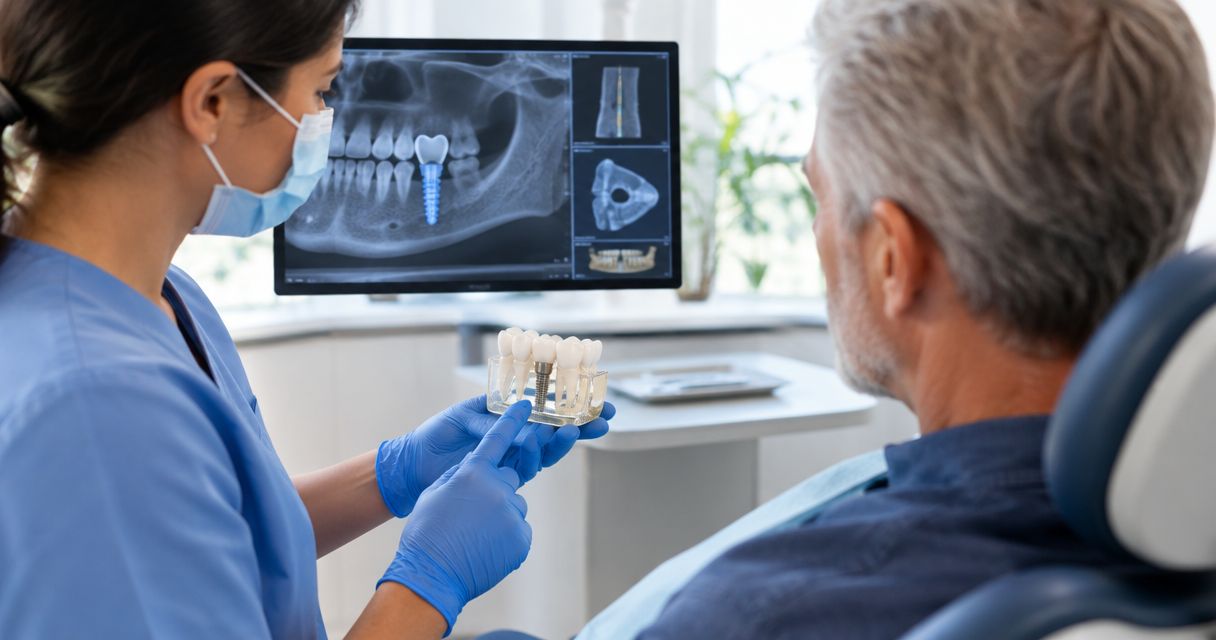
No, it is not too late to straighten teeth as an adult: teeth can move at any age when the gums, supporting bone, and teeth are healthy enough for treatment. In 2026, the deciding factors are your oral health and bite—not your birthday—and any active gum disease or decay needs attention before tooth movement begins.
- Is it too late to straighten teeth as an adult? No—gum health and bone support matter more than age.
- Braces and clear aligners move teeth; the right choice depends on your bite, treatment needs, and daily habits.
- Adult orthodontic treatment requires an examination, healthy supporting tissues, and a plan for long-term retainer use.
- Starboard Dental provides general dental care for adults in Kennebunk, York, and Saco, Maine.
Is it too late to straighten teeth as an adult?
There is no fixed upper age limit for orthodontic treatment. Adults do not need growing jaws for teeth to move, but they do need enough healthy support around the teeth. An examination establishes whether treatment is appropriate and what needs to happen first.
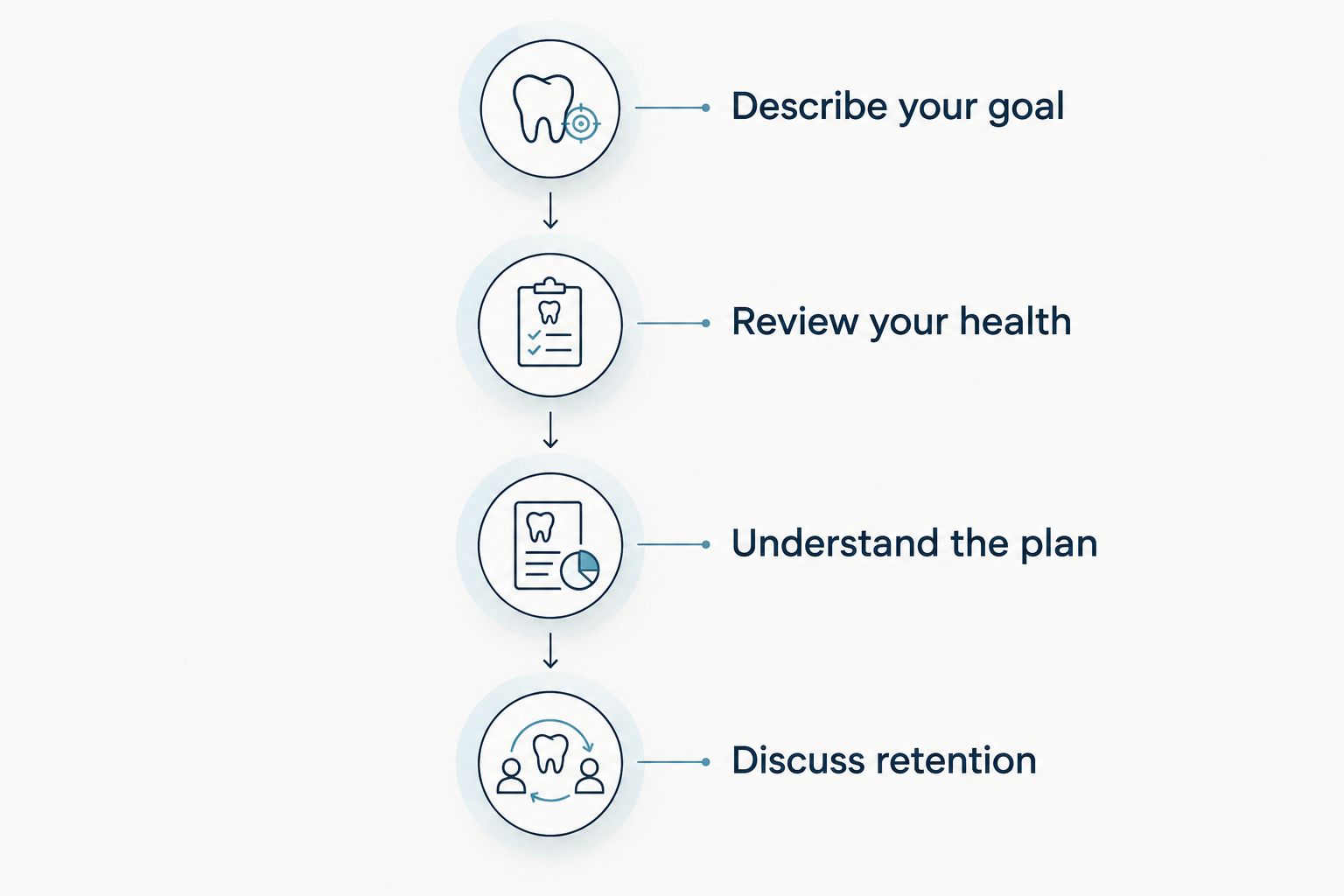
The decision follows a practical sequence:
- Check oral health. Your dentist examines for cavities, gum inflammation, loose teeth, and other problems that need treatment.
- Assess tooth support. Gum measurements and appropriate dental imaging help evaluate the bone and tissues around your teeth.
- Evaluate your bite. The clinician checks how your upper and lower teeth fit together, not just whether the front teeth look straight.
- Choose a plan. Discuss suitable appliances, treatment limits, and the retention needed afterward.
For an overview of the choices, see these options for straightening teeth as an adult. The useful question is not whether you missed your chance; it is what your teeth can safely achieve now.
Why this matters
Crooked teeth do not automatically mean you need treatment. The reason to consider straightening is a specific concern: crowding that complicates cleaning, a bite problem, unwanted spacing, or a smile you would like to change.
Starboard Dental is a starting point for adults in coastal Maine seeking general dental care before discussing tooth straightening. The practice serves patients of all ages in Kennebunk, York, and Saco. A general dental examination can identify problems that deserve attention before an orthodontic assessment; it does not replace that assessment.
Your 2026 treatment decision should begin with a clear goal. Saying that a lower tooth traps food gives the clinician something more useful to evaluate than asking for a perfect smile.
What makes an adult a candidate for teeth straightening?
Healthy gums and adequate bone support are central to safe tooth movement. Orthodontic forces act through the tissues around a tooth, so those tissues need careful evaluation before treatment starts.
Bleeding gums, recession, or a history of periodontal treatment do not answer the eligibility question on their own. Your dentist needs to determine whether disease is active, how much support remains, and whether additional periodontal care is necessary. Do not start moving teeth while active gum disease remains untreated.
Cavities and damaged restorations also need attention. Appliances can make cleaning more demanding, and existing problems should not be left to worsen during treatment.
Tell the clinician about medications, medical conditions, smoking or other tobacco use, and previous dental treatment. These details help shape the assessment. They are not a reason to decide for yourself that treatment is impossible.
Braces: best for fixed, clinician-controlled treatment
Braces attach to teeth and use wires to guide movement. They stay in place, so their main advantage is that you cannot forget to put the primary appliance back in after eating.
Best for: adults whose treatment plan calls for fixed appliances, or who prefer not to manage removable trays. Braces can address a wide range of tooth movements, although the exact plan depends on the bite and supporting tissues.
The trade-off is daily upkeep. Cleaning around brackets and wires takes attention, and some foods can damage the appliance. If your treatment includes elastics, wearing them as prescribed still matters; fixed braces do not remove every responsibility from the patient.
Clear aligners: best for adults who can follow a wear schedule
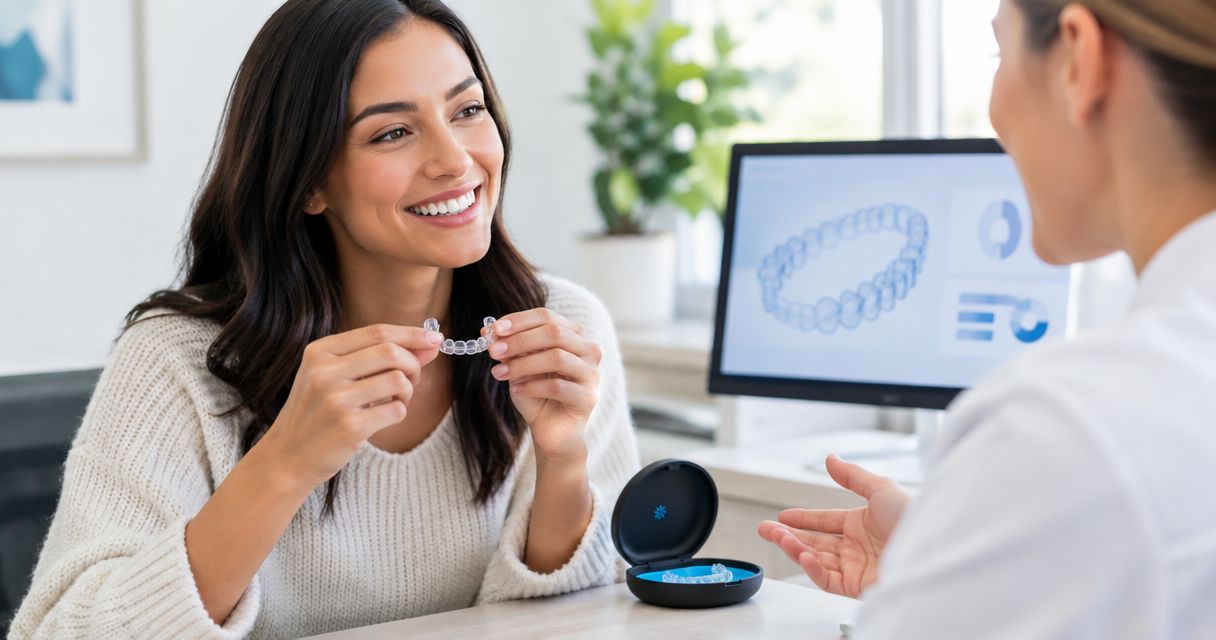
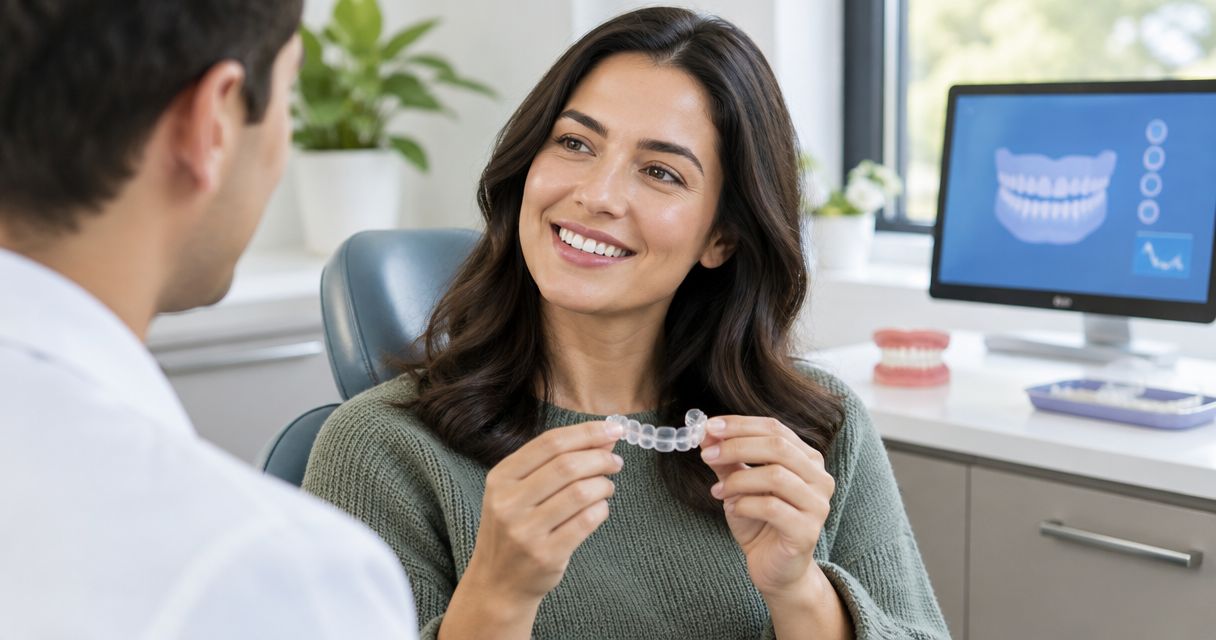
Clear aligners are removable trays that apply planned forces to teeth. Their removability helps with eating, brushing, and flossing, but it also makes your habits part of the treatment.
Best for: suitable cases in adults who can consistently follow the prescribed wear schedule. Some plans use tooth-colored attachments or elastics, so clear aligner treatment does not always mean trays alone.
The main limitation is that an unworn tray cannot move teeth as intended. Clear aligners are also not automatically the right answer for every bite problem. Choose them because the treatment plan fits your needs, not because an appliance looks less noticeable.
| Option | Best for | Main advantage | Main limitation |
|---|---|---|---|
| Braces | Adults needing fixed treatment or preferring not to manage removable trays | Stay attached throughout treatment | Cleaning around brackets and wires takes extra care |
| Clear aligners | Suitable cases in adults who can follow a wear schedule | Removable for meals and oral hygiene | Results depend on consistent wear and appropriate case selection |
Neither option wins simply because you are an adult. In 2026, the useful comparison remains the same: which appliance can deliver the required movements safely, and which routine can you maintain?
Why adult teeth-straightening plans vary
Two adults with similar-looking front teeth can need different treatment. The visible crowding is only part of the problem.
- Gum health: inflammation or periodontal disease changes what needs attention before treatment and how closely the gums need monitoring.
- Bone support: the amount and condition of supporting bone influence safe movement and treatment limits.
- Bite complexity: correcting tooth position is different from correcting a problem involving jaw relationships.
- Existing dental work: crowns, bridges, implants, and missing teeth affect how the clinician plans movement and restoration.
- Daily habits: appliance wear, cleaning, and attendance affect how well you follow the plan.
- Treatment goals: a limited cosmetic change and a broader bite correction are not interchangeable plans.
Ask what the proposed treatment will not fix. A clear explanation of limits is just as useful as a description of the expected result.
Can you straighten teeth if you have crowns or implants?
A crown does not automatically prevent orthodontic treatment. A crowned natural tooth still has a root and supporting tissues, although the crown's condition and the appliance's attachment need consideration.
A dental implant is different. It is anchored in bone and does not move like a natural tooth under ordinary orthodontic forces. The clinician must plan movement around it rather than treat it as another movable tooth.
Bridges and missing teeth also affect the sequence of care. Sometimes the orthodontic plan needs to create or preserve space for later restorative work. In other cases, an existing restoration limits the available approach.
Bring details of previous treatment to your appointment. Knowing which teeth have crowns, root canal treatment, bridges, or implants helps the clinician explain the plan without overlooking an important restriction.
What should you do before starting adult orthodontic treatment?
Start with an examination rather than choosing an appliance from photographs. Straight-looking teeth and a healthy, functional bite are related goals, but they are not the same thing.
Describe your goal
Explain what bothers you and when you notice it. Mention difficulty cleaning, food trapping, a changing bite, or teeth that have shifted since earlier treatment. If appearance is your main concern, say so plainly.
Review your health
Discuss gum disease, previous tooth injuries, medical conditions, and medications. Report new looseness or a sudden change in tooth position instead of assuming it is ordinary crowding.
Understand the plan
Ask which teeth need to move and whether treatment addresses the whole bite or only a limited area. Find out whether the proposed approach requires attachments, elastics, extractions, or coordination with another dental clinician.
Discuss retention
Ask about retainers before active treatment begins. You need to understand the wearing instructions, cleaning, follow-up, and what to do if a retainer becomes damaged or no longer fits.
For a local starting point, Starboard Dental provides general, restorative, and cosmetic dental care led by Dr. Alex Kerbaugh. Discuss your concerns during a dental visit and ask what evaluation or referral is appropriate for your teeth.
Does straightening teeth take longer for adults?
Age alone does not establish your treatment timeline. The movements needed, bite complexity, gum and bone health, appliance choice, and treatment cooperation all affect the plan.
A small-looking change is not always a simple movement. Moving roots, correcting rotations, or coordinating the bite can require more work than a photograph suggests. Conversely, being an adult does not automatically mean you need unusually lengthy treatment.
When comparing plans in 2026, ask what the estimated timeline includes. Active tooth movement, additional finishing adjustments, and long-term retention are different stages; a promise about finishing treatment should not blur them together.
Can you straighten teeth if you have gum disease?
Active gum disease needs treatment before orthodontic tooth movement. A history of gum disease does not automatically rule out future treatment, but the remaining support and disease stability need assessment.
Your dentist may recommend periodontal care and coordination with an orthodontist. Monitoring remains important during tooth movement, particularly when bone support has already been reduced.
Do not dismiss bleeding, swelling, persistent bad breath, or new tooth looseness as cosmetic issues. Those symptoms deserve a dental assessment before you focus on straightening.
Will teeth stay straight after adult treatment?
Teeth need retention after orthodontic treatment because they can shift again. Retainers help maintain the position achieved, and the wearing schedule should come from your treating clinician.
Do not assume the last aligner or the day braces come off marks the end of care. Ask how to clean and check your retainer, when to bring it to appointments, and whom to contact if it breaks.
If an old retainer no longer fits, do not force it onto your teeth. Arrange an assessment so the clinician can determine whether the retainer is damaged, your teeth have moved, or another issue needs attention.
How can you protect your teeth during treatment?
Build the cleaning routine before treatment starts. The American Dental Association recommends brushing twice a day for 2 minutes with fluoride toothpaste and cleaning between your teeth daily. Orthodontic appliances do not replace those basics; they make careful cleaning especially important.
With braces, clean around brackets and along the gumline. Ask your dental team to demonstrate tools that reach areas your toothbrush misses. With removable aligners, follow the prescribed instructions for cleaning your teeth and trays.
Keep regular dental appointments during orthodontic treatment. Visits that check tooth movement serve a different purpose from preventive care and gum monitoring.
For your 2026 plan, make daily care a decision criterion—not an afterthought. An appliance is only a good fit if you can maintain the cleaning and wearing routine it requires.
FAQ
Am I too old for braces at 50 or 60?
Being 50 or 60 does not automatically make you too old for braces. Gum health, bone support, tooth condition, and your bite determine whether treatment is appropriate.
Can adults get clear aligners instead of braces?
Adults can use clear aligners when their tooth movements and bite are suitable for that approach. Consistent wear is essential, and some cases need a different appliance or specialist planning.
Does straightening adult teeth hurt?
Temporary tenderness or pressure can occur when teeth begin moving or an appliance is adjusted. Severe, persistent, or unexpected pain needs a call to your treating dental team.
Can I straighten just my front teeth?
Limited front-tooth treatment is appropriate only when it fits your overall bite and dental health. Ask what it leaves unchanged and whether those limits affect function or stability.
Can teeth move after I had braces as a teenager?
Teeth can shift after earlier orthodontic treatment, especially without adequate retention. New movement needs an assessment before you restart an old appliance or choose another treatment.
Do I need healthy gums before getting braces?
You need gum disease assessed and any active disease treated before orthodontic movement begins. Your clinician also needs to evaluate the supporting bone and plan appropriate monitoring.
Can veneers straighten adult teeth?
Veneers change the visible shape and surface of teeth; they do not move tooth roots or correct the underlying bite. They are not a substitute for orthodontic treatment when tooth movement is needed.
One last thing
Newly crooked teeth are not always just an appearance issue. If your teeth have recently spread, become loose, or changed how they meet, arrange a dental assessment rather than starting with a cosmetic solution.
Starboard Dental's general dental care offers a place to discuss those changes and your oral health goals. Bring one clear concern to the visit; understanding why a tooth has moved comes before deciding how to move it back.