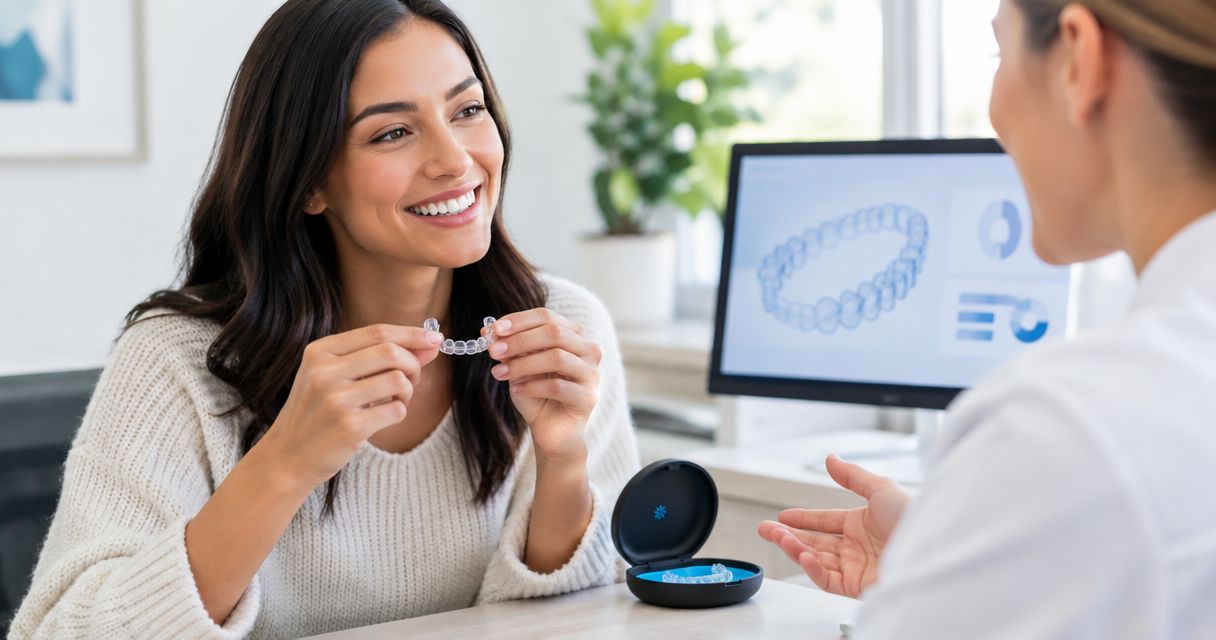
Yes, Invisalign can correct some overbites by moving teeth and changing how the upper and lower teeth meet. It does not correct every overbite: a substantial mismatch between the jaw bones can require treatment beyond clear aligners. This 2026 guide explains what makes an overbite suitable for Invisalign and what to ask before starting treatment.
- Can Invisalign fix an overbite? Yes, when planned tooth movements can correct the bite; jaw-related problems need separate assessment.
- Invisalign requires consistent wear; removable trays are an advantage only when you follow the prescribed schedule.
- Braces and Invisalign both move teeth, but neither automatically corrects a substantial adult jaw mismatch.
- Starboard Dental provides general, restorative, and cosmetic dental care for patients in coastal Maine.
Why this matters
Straight front teeth do not necessarily mean a corrected bite. Treatment needs to address how your teeth contact each other, not just how your smile looks in a photograph. An excessively deep bite can contribute to tooth wear or contact between teeth and gum tissue.
Choosing treatment in 2026 starts with identifying the cause of the overlap. If you are weighing appliances, the guide to whether Invisalign is as effective as braces explains the broader comparison. For an overbite, the more useful question is which appliance can achieve the movements your examination shows you need.
Can Invisalign fix an overbite?
Invisalign can treat selected overbites through planned tooth movement. An orthodontic examination distinguishes a tooth-position problem from a jaw-position problem and checks whether clear aligners can produce a stable result.
Overbite means the vertical overlap of the upper front teeth over the lower front teeth. Some overlap is normal. An excessive overlap is often called a deep bite; overjet describes how far the upper front teeth project horizontally beyond the lower teeth.
These terms matter because people often use overbite to describe both conditions. Your treatment plan should name the actual problem rather than treating every upper-to-lower tooth difference as the same diagnosis.
| Approach | Best for | Main advantage | Main limitation |
|---|---|---|---|
| Invisalign | Selected bite problems that can be corrected with aligner-controlled tooth movements | Trays are removable for meals and cleaning | Success depends on wear and the suitability of the planned movements |
| Fixed braces | Bite problems needing fixed-appliance control or patients who struggle with removable-tray wear | Brackets stay attached throughout treatment | Cleaning around brackets and wires takes extra attention |
| Orthodontics with jaw surgery | Selected substantial skeletal mismatches after growth | Addresses jaw position as well as tooth alignment | Requires specialist assessment and involves surgical recovery |
Choose the treatment that fits the diagnosis, not the appliance that looks simplest. Surgery is not the routine answer to an overbite, and braces are not automatically necessary because an overbite looks pronounced.
When the overbite comes mainly from tooth position
A dental overbite involves the way teeth have erupted or are positioned. Treatment can include moving front teeth vertically, adjusting their tilt, or changing the relationship between the front and back teeth. Your clinician chooses the movements based on your bite and the supporting bone and gums.
Invisalign uses a sequence of trays to apply planned forces. Tooth-colored attachments can help the trays grip teeth and control movement; prescribed elastics can help address relationships between the upper and lower teeth.
The advantage is removability. You take the trays out to eat and clean your teeth, rather than cleaning around fixed brackets. The trade-off is responsibility: leaving trays out interrupts the force needed to follow the treatment plan.
Best for: patients whose required tooth movements suit clear aligners and who can follow the prescribed wear routine. Ask what specific change will reduce the deep bite, rather than accepting a plan described only as straightening.
When jaw position is part of the problem
A skeletal bite problem involves the relationship between the upper and lower jaws. Aligning the teeth can improve the bite in selected cases, but moving teeth is not the same as repositioning an adult jaw bone.
Growing patients have different treatment possibilities from adults because growth can be part of treatment planning. Age alone does not settle the question; the clinician needs to assess growth status, jaw relationships, and the intended result.
For adults with a substantial skeletal mismatch, an orthodontist can explain whether tooth movement alone is an acceptable compromise or whether a surgical consultation is appropriate. A compromise plan should clearly explain what it will improve and what it will leave unchanged.
Best for specialist assessment: patients with a significant jaw discrepancy, facial asymmetry, or a bite that cannot be corrected predictably through tooth movement alone. Do not assume that switching from aligners to braces removes a skeletal limitation.
Why Invisalign suitability varies
A useful 2026 treatment discussion should cover more than how noticeable the trays will be. These factors determine whether an aligner plan addresses your actual bite:
- Cause of overlap: Tooth position and jaw position require different planning. Ask which is responsible for your overbite.
- Movement complexity: Vertical movement, tooth rotation, and root control affect appliance selection and the need for attachments or other aids.
- Growth status: A growing patient's options differ from those of an adult whose jaw growth is complete.
- Oral health: Active gum disease, decay, and problems with supporting tissues need assessment before orthodontic movement.
- Wear habits: Removable aligners require consistent use. Difficulty keeping trays in is a practical treatment limitation, not a minor inconvenience.
- Bite contacts: The plan needs to account for how front and back teeth meet, including any contact that injures gum tissue.
No photograph or online checklist can establish all of these factors. An examination, bite records, and appropriate imaging provide information that a smile selfie cannot show.
What happens before you start treatment?
An assessment should connect your concerns to a diagnosis and a realistic plan. Bring up problems with chewing, tooth wear, gum contact, or jaw discomfort, even if your main reason for visiting is appearance.
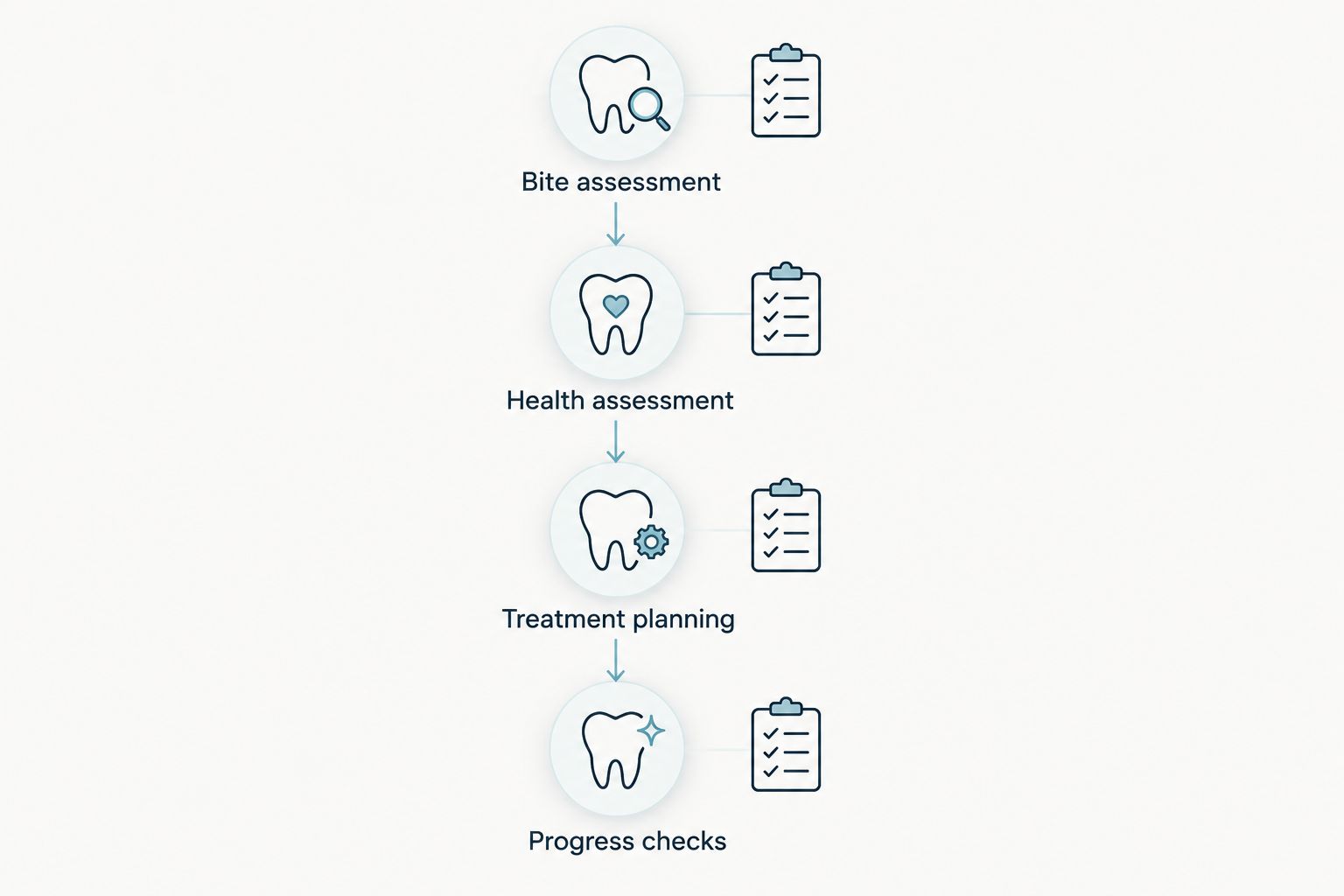
- Bite assessment. The clinician examines the overlap, tooth contacts, alignment, and relationship between the jaws.
- Health assessment. Teeth, gums, existing restorations, and supporting tissues are checked before movement begins.
- Treatment planning. Records and appropriate imaging help determine the movements, appliance, and any need for specialist input.
- Progress checks. During treatment, the clinician checks whether the teeth are following the plan and whether adjustments are needed.
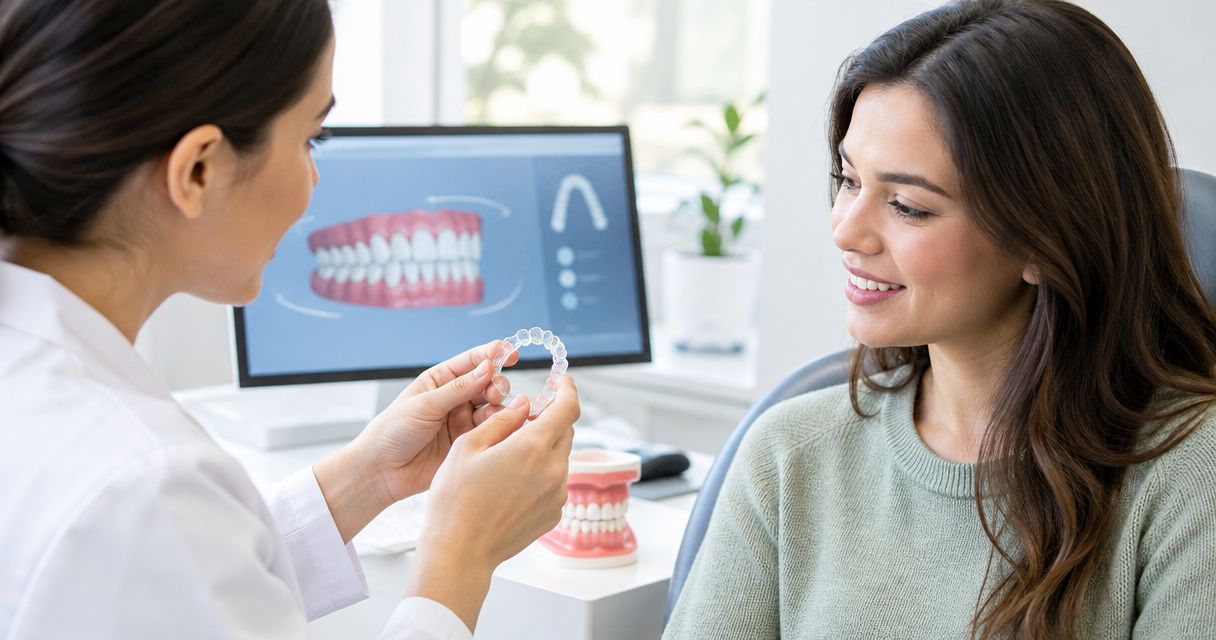
A digital treatment preview shows an intended sequence of movement, not a guaranteed biological result. Ask how progress will be checked and what happens if a tooth does not move as planned. Additional aligners or a change in mechanics can be part of treatment management.
What does wearing Invisalign involve day to day?
Invisalign's patient guidance generally calls for 20–22 hours of wear per day. Follow your treating clinician's instructions for your appliance and situation. Keeping trays out through a long meal and then forgetting to replace them works against that schedule.
Remove aligners for meals and drinks other than water. Clean your teeth before putting them back in, and follow the prescribed tray-cleaning instructions. Trapping food or sugary residue against your teeth is not a harmless shortcut.
Your cleaning routine still matters during orthodontic care in 2026:
- Brush for 2 minutes twice a day with fluoride toothpaste, consistent with American Dental Association guidance.
- Clean between your teeth once a day using an appropriate interdental method.
- Keep dental checkups and orthodontic progress visits on the schedule your clinicians recommend.
- Report trays that stop fitting, broken attachments, or new bite discomfort rather than changing the plan yourself.
Removable does not mean optional. If your work, school, or eating routine makes consistent wear difficult, discuss that before choosing aligners. Fixed braces avoid the need to remember tray wear, although they bring their own cleaning demands.
How long does Invisalign take to fix an overbite?
There is no single treatment duration that applies to every overbite. The starting bite, required movements, oral health, wear consistency, and response to treatment all affect the schedule.
Ask for an estimate based on your records, not a general promise attached to clear aligners. Also ask whether that estimate includes additional aligners if needed and how the clinician defines completion.
For a treatment plan started in 2026, the endpoint should be a clinically acceptable bite and alignment, not simply reaching the last tray. Retainers are needed afterward to help maintain the result; their schedule is part of the treatment discussion, not an afterthought.
Can Invisalign fix an overbite in adults?
Invisalign can correct selected adult overbites when the necessary changes are achievable through tooth movement. Adults do not need ongoing jaw growth for their teeth to move orthodontically.
The limit is the diagnosis, not adulthood itself. A substantial skeletal mismatch requires a discussion about the limits of orthodontics alone, and gum or bone problems can affect the safety and scope of movement.
Tell your clinician about crowns, implants, previous orthodontic treatment, and any history of gum disease. These details belong in the plan before trays are ordered.
Is Invisalign better than braces for a deep bite?
Invisalign is not universally better than braces for a deep bite. The better option is the one that gives your clinician suitable control over the required movements and fits your ability to follow treatment instructions.
Aligners offer removable cleaning access and a less visible appliance. Braces stay attached and do not depend on remembering to reinsert trays, but cleaning takes more attention. Ask why the recommended appliance suits your specific bite rather than looking for an overall winner.
Starting a dental conversation in coastal Maine
Starboard Dental is best for patients seeking general, restorative, and cosmetic dental care in Kennebunk, York, and Saco, Maine. Dr. Alex Kerbaugh leads the practice, which serves patients of all ages.
For an overbite concern, start by describing what bothers you: appearance, chewing, tooth wear, or contact against your gums. A general dental conversation and an orthodontic treatment decision are not interchangeable; ask whether you need an orthodontist's assessment.
You can learn about Starboard Dental before discussing your dental concerns. Ask which findings need attention first and who should assess the bite. That keeps the conversation focused on your health rather than choosing a tray system prematurely.
FAQ
Can Invisalign completely fix my overbite?
Invisalign can fully correct selected overbites, but it cannot correct every cause of excessive overlap. An examination determines whether tooth movement can achieve the intended result or whether a jaw-related problem needs additional treatment.
How many hours a day do I need to wear Invisalign?
Invisalign's patient guidance generally recommends 20–22 hours of wear per day. Follow your treating clinician's instructions and remove trays for meals and cleaning.
Can Invisalign fix an overbite without rubber bands?
Some overbite plans do not require elastics, while others use them to help coordinate the upper and lower teeth. The need depends on the movements required, so do not add or stop elastics without instructions.
Am I too old for Invisalign to correct an overbite?
Adults can receive orthodontic treatment for selected overbites. Tooth and gum health, supporting bone, and the relationship between the jaws matter more than age alone.
Will correcting my overbite stop jaw pain?
Overbite correction does not guarantee relief from jaw pain. Jaw pain has multiple possible causes and needs its own assessment rather than a promise that straightening teeth will resolve it.
Will I need a retainer after overbite treatment?
Retainers are needed after orthodontic treatment to help maintain tooth positions. Your clinician will prescribe the retainer type and wear schedule for your result.
Can I tell from a photo whether Invisalign will work?
A photo cannot establish whether Invisalign will correct your overbite. Treatment planning also requires assessment of tooth contacts, oral health, jaw relationships, and appropriate records.
One last thing
Before accepting an overbite plan in 2026, ask your clinician to show you which tooth contacts will change. A straighter photograph is easy to understand; a healthier, more functional bite needs a clearer explanation.
Ask: What will improve, what will remain unchanged, and how will you check the result? Those questions make the treatment decision more useful than a simple yes or no about Invisalign.