Yes—Invisalign can be as effective as braces for many cases of crowded teeth, spacing, and bite correction, but neither treatment is the best choice for every mouth. The result depends on the tooth movements you need, your oral health, your clinician’s treatment plan, and—for Invisalign—whether you wear the aligners as directed.
- Is Invisalign as effective as braces? Often, yes—but the required tooth movements determine which treatment fits.
- Invisalign works best for suitable cases when you can follow the prescribed daily wear schedule.
- Fixed braces remove the need to remember aligner wear, but require careful cleaning around brackets.
- Starboard Dental provides general, restorative, and cosmetic dental care for patients in coastal Maine.
Is Invisalign as effective as braces?
Invisalign and braces can both straighten teeth and improve how your teeth meet. The useful comparison is not which appliance wins overall, but which gives your clinician the right control for your particular bite.
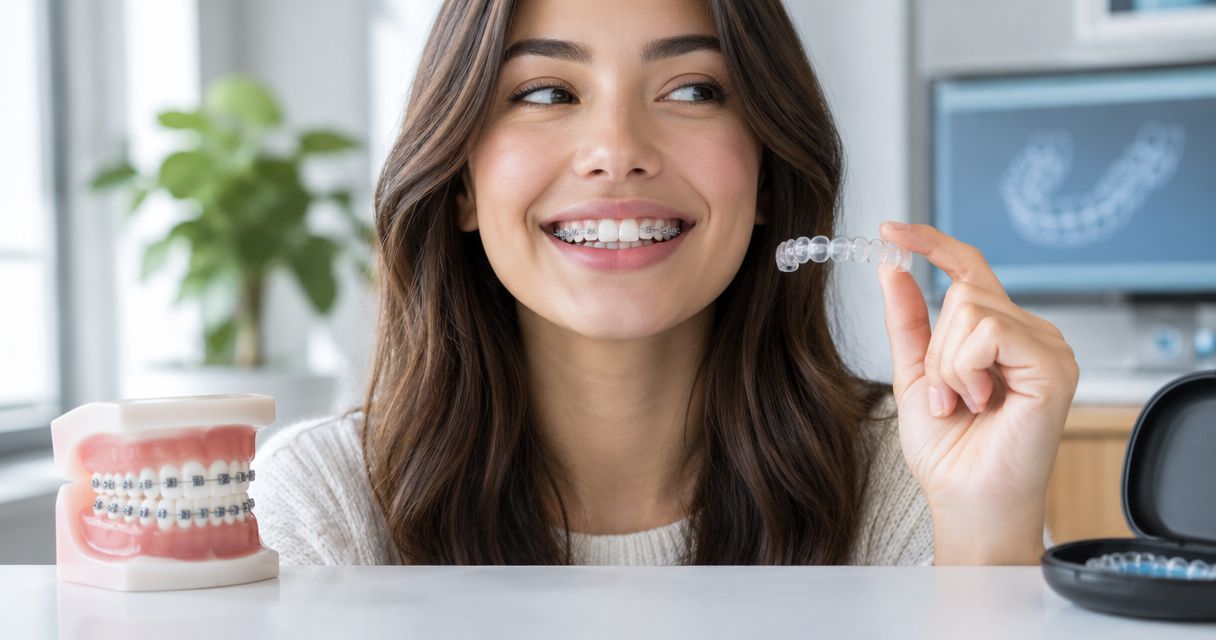
Clear aligners move teeth through a series of removable trays. Fixed braces use brackets and wires that remain attached throughout treatment. Both require professional planning, monitoring, and retainers afterward.
| Treatment | Best for | Main advantage | Main limitation |
|---|---|---|---|
| Invisalign | Suitable tooth movements in patients who can consistently wear removable aligners | You can remove the trays to eat, brush, and floss | Leaving trays out interrupts the planned application of force |
| Fixed braces | Patients who need fixed appliances or would struggle with removable-tray wear | Brackets stay attached, so you cannot forget to put the appliance back in | Cleaning around brackets and wires takes extra attention |
For a 2026 treatment decision, ask your clinician to explain the movements involved rather than relying on before-and-after photographs. Similar-looking smiles can have different bite problems beneath the surface.
For general dental care alongside that decision, Starboard Dental serves patients of all ages in Kennebunk, York, and Saco, Maine. An orthodontic assessment determines which straightening approach suits your needs.
Why this matters
Straight front teeth are only part of a successful result. Your treatment should also consider how your upper and lower teeth fit together, whether your gums can support the planned movement, and how you will maintain the result.
A tray that looks discreet is not automatically the right tool. Brackets that remain attached are not automatically more effective, either. Choose the treatment plan that addresses your bite and fits a routine you can maintain.
That distinction matters when comparing recommendations in 2026: ask what each plan is intended to correct, not just what each appliance looks like.
Invisalign: best for suitable cases and consistent wear
Invisalign uses a sequence of clear aligners designed to move teeth gradually. Your clinician decides whether the planned movements are appropriate for aligners and whether additional features are needed.
Small tooth-colored attachments can help aligners grip teeth and apply forces. Some treatment plans also use elastics. Clear aligner treatment therefore does not always mean trays alone or completely invisible treatment.
Where Invisalign helps
The practical advantage is removability. You take aligners out for meals and oral hygiene, which gives you access to tooth surfaces without brackets and wires in the way.
That can suit someone who already follows a dependable daily routine. You still need to clean both your teeth and the trays, and you need to put the aligners back in promptly.
Invisalign’s patient guidance generally calls for 20–22 hours of wear per day. Your treating clinician’s instructions govern your individual schedule, including when to change trays.
Where Invisalign needs more commitment
Removable trays make you responsible for keeping treatment active. Long meals, frequent snacks, and forgotten trays can reduce wear time and interfere with the planned movement.
Aligners can also feel tight when you begin a new stage. Attachments and tray edges can irritate soft tissues, and trays are visible at close range. Invisalign is a treatment appliance, not a guarantee of an invisible or discomfort-free experience.
Best for: someone whose tooth movements are suitable for aligners and who can reliably follow wear, cleaning, and follow-up instructions.
Fixed braces: best for fixed-appliance control
Fixed braces attach brackets to the teeth and connect them with wires. Your clinician adjusts the system to guide tooth movement, sometimes adding elastics or other appliances when the bite requires them.
Braces offer ways to control tooth position without depending on a patient to reinsert trays. For certain complex movements, a clinician can recommend fixed appliances because they provide more suitable mechanical control.
Where braces help
Braces keep the main appliance attached throughout treatment. That removes a daily decision: you do not have to remember to put the brackets back on after eating.
This matters if you know removable appliances will be difficult to manage. Being honest about that is useful treatment planning, not a failure of motivation.
Where braces need more care
Fixed does not mean maintenance-free. Braces still require appointments, careful cleaning, and any prescribed elastic wear. Broken brackets and damaged wires can interrupt treatment.
Food collects around brackets, so you need to clean above, below, and between them. Your clinician will explain which foods or habits risk damaging the appliance and how to adapt your cleaning routine.
Best for: someone whose treatment needs favor fixed appliances, or who would struggle to maintain a removable-aligner schedule.
Why Invisalign and braces results vary
The same appliance does not produce the same result in every patient. These factors help explain why your recommendation can differ from a friend’s:
- Required tooth movements. Closing a space, rotating a tooth, and changing root position require different kinds of control. Ask which movements drive the recommendation.
- Bite and jaw relationship. A problem involving tooth position differs from a substantial difference in jaw position. Some cases require specialist planning beyond either appliance alone.
- Gum and bone health. Teeth need healthy supporting tissues. Active gum disease requires assessment and management before orthodontic movement proceeds.
- Daily cooperation. Aligner wear matters, but braces also depend on cooperation with cleaning, elastics, and appliance-care instructions.
- Monitoring and adjustments. Your clinician checks whether actual movement matches the plan and changes treatment when necessary.
- Retention. Teeth can shift after treatment with either method. Retainers help maintain the corrected positions.
Do not choose a 2026 treatment plan solely because someone with similar-looking teeth used it. The important details include what your teeth need to do and what keeps them healthy during that process.
How do you find out which treatment fits your teeth?
A useful consultation should leave you understanding the diagnosis and the reason for the recommendation. You do not need to master orthodontic terminology to ask clear questions.
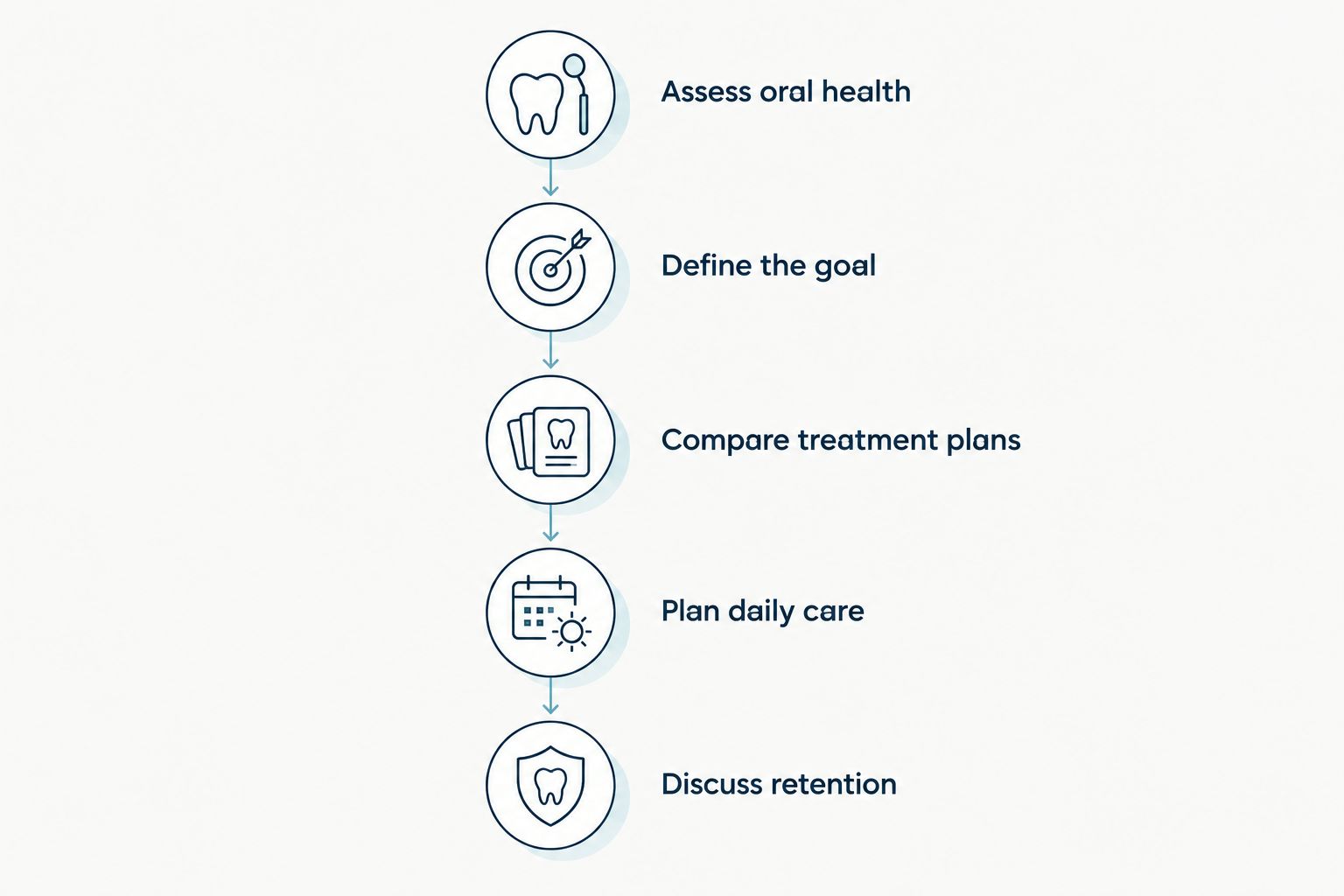
- Assess oral health. Have your teeth and gums examined, and discuss any decay, bleeding, sensitivity, or existing dental work. Your clinician determines what needs attention before treatment.
- Define the goal. Explain what bothers you, then ask whether the concern is tooth alignment, the bite, or both. Mention chewing difficulties rather than focusing only on appearance.
- Compare treatment plans. Ask which movements each approach can achieve in your case. Request an explanation of attachments, elastics, or specialist involvement when relevant.
- Plan daily care. Discuss meals, cleaning, sports, and the practical demands of aligner wear or fixed braces. Choose based on your actual routine.
- Discuss retention. Ask how your clinician plans to maintain the result after active treatment. Include retainer care in the decision from the beginning.
If your dentist recommends specialist input, the guide to orthodontist referral and Invisalign care explains that care pathway. A referral helps clarify treatment needs; it does not mean one appliance has already been selected.
How should you care for your teeth during treatment?
Neither Invisalign nor braces protects teeth from cavities or gum inflammation. Plaque control remains part of treatment, even when the teeth are moving as planned.
Brush for 2 minutes twice a day with fluoride toothpaste and clean between your teeth daily. With braces, ask your dental team to demonstrate cleaning around brackets and under wires. With aligners, follow the cleaning instructions for the trays as well as your teeth.
Remove aligners for food and drinks other than water, following your clinician’s directions. Avoid putting trays back over food debris or sugary residue, and do not use hot water that can distort them.
Keep routine dental visits during orthodontic treatment. Orthodontic monitoring and general dental examinations serve different purposes; checking tooth movement does not replace checking for decay and gum problems.
Starboard Dental is a fit for coastal Maine patients seeking general, restorative, and cosmetic dental care. Keep that ongoing care coordinated with whichever clinician manages your orthodontic treatment.
Is Invisalign faster than braces?
Invisalign is not automatically faster than braces. Treatment duration depends on your starting bite, the movements required, your biological response, and whether treatment proceeds as planned.
A shorter estimate is meaningful only when the plans aim for comparable results. Straightening visible front teeth alone is not the same treatment goal as correcting alignment and the way the teeth meet.
For a 2026 consultation, ask what the estimate includes and what happens if teeth do not move as expected. Additional aligner stages or changes to a braces plan can be part of reaching the intended result.
Can Invisalign fix every bite problem?
Invisalign cannot be assumed to correct every bite problem. Some cases require fixed braces, additional appliances, specialist care, or a combination of treatments.
A substantial jaw discrepancy needs a different discussion from mild spacing. Your clinician should explain whether the proposed treatment addresses the underlying problem or has limits you need to understand.
Be cautious about choosing from photographs alone. A clinical examination and appropriate records help assess details that a smiling selfie cannot show, including how the back teeth meet.
Will your teeth stay straight after either treatment?
Both Invisalign and braces require a retention plan. Teeth can shift after active treatment, and retainers help hold the corrected positions.
Your clinician determines the retainer type and wear schedule. Keep retainers clean, check their fit, and contact the treating office if one breaks, feels distorted, or no longer seats properly.
Do not force an old retainer onto teeth that have shifted. Ask for an assessment instead. Retention belongs in your original treatment conversation, not only at the appointment when the appliances come off.
FAQ
Is Invisalign as effective as braces for adults?
Invisalign can be as effective as braces for adults whose treatment needs are suitable for aligners. Tooth movements, gum health, and consistent wear matter more than age alone.
Is Invisalign as effective as braces for teenagers?
Invisalign can be effective for teenagers with suitable treatment needs who follow their wear instructions. Fixed braces remove the need to remember to reinsert trays, but still require cleaning and cooperation.
How many hours a day do I need to wear Invisalign?
Invisalign’s general patient guidance calls for 20–22 hours of wear per day. Follow your treating clinician’s instructions for your individual schedule and tray changes.
Are braces better if my teeth are very crowded?
Severe crowding alone does not determine whether braces or Invisalign is better. Your clinician needs to assess space, root positions, bite relationships, and the movements required.
Does Invisalign hurt less than braces?
Neither treatment is discomfort-free, and individual experiences differ. Aligners can cause pressure and irritation; braces can also cause soreness and rubbing from brackets or wires.
Will I need attachments with Invisalign?
Your clinician determines whether Invisalign attachments are needed to help control tooth movement. Some plans also use elastics, so ask what your proposed treatment involves.
Do I need retainers after Invisalign or braces?
Yes, both Invisalign and braces need a retention plan because teeth can shift after treatment. Your clinician prescribes the retainer type and wear schedule.
One last thing
Ask this before choosing: What will my bite look like at the end—not just my front teeth? The answer helps separate a cosmetic change from a plan that also considers how your teeth meet.
Bring that question to your 2026 consultation, along with an honest description of your daily routine. A treatment you can follow consistently is a better starting point than an appliance selected for appearance alone.