

Bleeding when you floss is common, but it is not a sign of healthy gums. In 2026, the right response is gentle daily cleaning and a dental evaluation for bleeding that persists or returns—not harder flossing or stopping altogether. Plaque-related gum inflammation and irritation from flossing technique are possible causes; bleeding alone cannot tell you which is responsible.
- Is it normal for gums to bleed when flossing? No—repeated bleeding needs attention, even without pain.
- Keep cleaning gently; snapping floss into your gums can cause injury.
- Starboard Dental provides general dental care for patients seeking help with bleeding gums.
- Persistent bleeding, swelling, loose teeth, or pus calls for a dental assessment.
Is it normal for gums to bleed when flossing?
Healthy gums generally do not bleed with gentle flossing. Seeing blood does not automatically mean you have advanced gum disease, but repeated bleeding deserves attention. The amount of blood alone does not establish the cause or severity.
Use the pattern and accompanying symptoms to decide your next step. These clues guide a conversation with your dentist; they do not replace an examination.
| What you notice | What it can suggest | What to do |
|---|---|---|
| Bleeding after floss snaps into one spot | Local irritation or injury | Use gentler technique and watch for recurrence |
| Bleeding in several areas with red or swollen gums | Gum inflammation, often related to plaque | Continue gentle cleaning and arrange an assessment |
| Bleeding with persistent bad breath, recession, or loose teeth | Possible periodontal disease | Arrange a dental evaluation promptly |
| Heavy bleeding, spontaneous bleeding, or bleeding that will not stop | A problem needing more urgent assessment | Seek prompt dental or medical care |
For local general dental care, Starboard Dental serves patients of all ages in Kennebunk, York, and Saco, Maine.
Why this matters
Plaque is a sticky film of bacteria that collects on teeth, including near the gumline and between teeth. When plaque irritates gum tissue, your gums can become swollen and bleed during cleaning. Brushing alone does not adequately clean every surface between neighboring teeth.
Early plaque-related gum inflammation, called gingivitis, is reversible with appropriate home care and professional treatment. Periodontitis involves damage to the tissues and bone supporting teeth, and requires a different treatment plan. You cannot distinguish the two by checking whether floss looks bloody.
For your 2026 dental routine, treat bleeding as useful information rather than a reason for embarrassment. Tell your dentist what you have noticed, including whether it happens in one place or throughout your mouth.
Why bleeding when flossing varies
Several factors affect whether your gums bleed and how the problem should be addressed. More than one can apply at the same time.
- Plaque buildup: Irregular cleaning between teeth allows plaque to remain along the gumline, where it can contribute to inflammation.
- Flossing pressure: Snapping floss through a tight contact or cutting into the gum can injure the tissue.
- Hardened deposits: Plaque that hardens into tartar requires professional removal; brushing and flossing cannot remove it.
- Hormonal changes: Pregnancy can increase the gums' inflammatory response to plaque, making careful cleaning and dental care especially important.
- Health conditions: Diabetes can affect gum health, particularly when blood glucose is not well controlled.
- Medicines: Anticoagulant and antiplatelet medicines can increase bleeding. Never stop a prescribed medicine without the prescribing clinician's guidance.
These factors are reasons to share your health history, not reasons to diagnose yourself. Bleeding that starts after a medication change still needs an assessment of your gums and your medicines.
How to floss without injuring your gums
Clean the sides of your teeth; do not saw into the gum tissue. The goal is to remove plaque where a toothbrush cannot reach, not to force floss as deeply as possible.
For a practical 2026 routine, the American Dental Association recommends brushing twice a day for 2 minutes with fluoride toothpaste and cleaning between your teeth daily. These are maintenance habits, not a substitute for treating established gum disease.
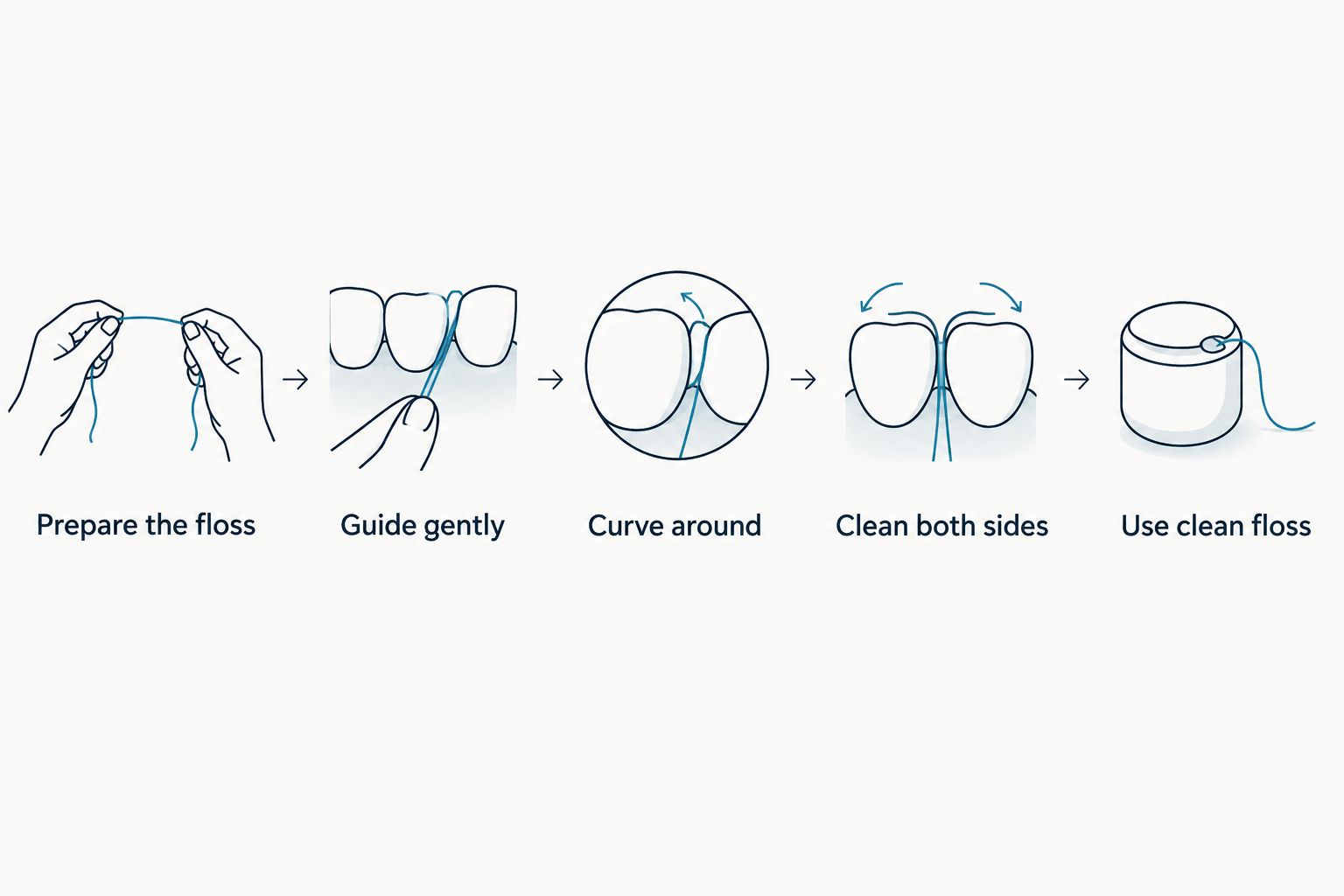
- Prepare the floss. Use about 18 inches of floss, winding most around your middle fingers. Keep a short working section between your thumbs and index fingers so you can control it.
- Guide gently. Ease the floss between neighboring teeth with a gentle rubbing motion. Do not snap it down onto the gum.
- Curve around. When the floss reaches the gumline, curve it into a C shape against one tooth. Keep the floss against the tooth rather than pulling it straight across the soft tissue.
- Clean both sides. Move the floss gently up and down against that tooth, including just beneath the gumline. Repeat against the neighboring tooth before moving to the next space.
- Use clean floss. Move to a fresh section as you work around your mouth. Include the back surface of your last tooth, which is easy to miss.
If you repeatedly cut the same area, ask a dental professional to watch your technique. Tight contacts, limited hand movement, and dental work can make some areas harder to clean. A small adjustment or a different cleaning aid can make the task more manageable.
Which cleaning tool should you use?
The best tool is one that fits your mouth and lets you clean consistently without injury. String floss, interdental brushes, and water flossers have different practical strengths; none removes hardened tartar or replaces a dental examination.
| Cleaning tool | Best for | Main benefit | Limitation |
|---|---|---|---|
| String floss | Tight spaces between neighboring teeth | Wraps against tooth surfaces when used correctly | Requires finger control and careful technique |
| Interdental brushes | Spaces large enough for a properly fitted brush | Cleans between teeth without winding floss around your fingers | An oversized brush can injure tissue; do not force it |
| Water flosser | People who find string floss difficult or need help cleaning around dental work | Provides another way to clean between teeth | Requires correct positioning and does not remove tartar |
Choose by fit and ease of use, not by how forceful the tool feels. A brush that must be pushed hard into a space is not the right size. With a water flosser, follow the device instructions and ask your dental team for help choosing a comfortable setting.
If every cleaning method causes pain or repeated bleeding in the same spot, do not keep experimenting with more pressure. Have the area checked for inflammation, injury, or another local problem.
Should you stop flossing if your gums bleed?
Do not stop routine cleaning solely because you notice a little blood. Leaving plaque in place can allow inflammation to continue. Instead, reduce unnecessary pressure, clean carefully, and arrange dental advice if bleeding persists or keeps returning.
There is an important distinction between gentle cleaning and repeatedly disturbing an injury. If you have cut your gum, do not keep dragging floss across the wound to test whether it still bleeds. Follow any specific instructions your dentist gives you after dental surgery or other treatment.
You also do not need to floss repeatedly throughout the day to make up for missed cleaning. Consistent daily interdental cleaning matters more than an aggressive catch-up session. Keep brushing gently with a soft-bristled toothbrush rather than scrubbing the gumline.
How long should bleeding gums take to improve?
There is no single recovery deadline that applies to every cause of bleeding. Improvement depends on whether the problem is plaque-related inflammation, a local injury, hardened deposits, or periodontal disease. Do not use an online countdown to decide whether your gums are healthy.
Pay attention to the pattern: is bleeding becoming less frequent with gentle, consistent care, or does it continue in the same places? Persistent bleeding, recurrence, or additional symptoms warrants a dental assessment rather than another round of harder flossing.
If your dentist diagnoses gum disease, treatment depends on the findings. You can read more about treatments for gum disease, but the choice should follow an examination—not the appearance of blood on your floss.
When should you call a dentist about bleeding gums?
Arrange a dental visit for repeated bleeding, especially if you also notice swelling, persistent bad breath, gum recession, discomfort when chewing, or loose teeth. Gum disease can develop without significant pain, so waiting until your mouth hurts is not a reliable safety check.
Seek prompt care for pus, significant swelling, fever, or worsening pain. Heavy bleeding or bleeding that does not stop also requires urgent advice. Trouble breathing or swallowing, or rapidly spreading facial or neck swelling, requires emergency medical care.
If you take a blood thinner, tell the dental team and the prescribing clinician about unusual bleeding. Do not skip doses or change your medicine yourself. If you feel faint or weak with ongoing bleeding, seek urgent medical help.
For your 2026 appointment, bring these details:
- Where the bleeding happens and whether it occurs without brushing or flossing.
- Whether you have noticed swelling, soreness, bad breath, or changes in how your teeth feel.
- Your current medicines, supplements, and relevant health conditions.
- The cleaning tools you use and any recent changes in your routine.
What happens at a dental evaluation?
A dentist reviews your symptoms and health history, examines your gums, and checks for plaque, tartar, and signs of periodontal disease. Depending on the findings, the assessment can include measurements around the teeth and dental X-rays when indicated. These checks help separate surface inflammation from damage to deeper supporting structures.
Treatment follows the diagnosis. A professional cleaning and changes to home care address different needs than periodontal treatment such as scaling and root planing. Not everyone with bleeding gums needs a deep cleaning, and persistent bleeding should not be dismissed without an assessment.
Starboard Dental is a general dental care option for patients of all ages in Kennebunk, York, and Saco. The practice is led by Dr. Alex Kerbaugh and provides general, restorative, and cosmetic dental care. Reading about symptoms helps you prepare questions, but it cannot establish which treatment your gums need.
Take the next step for your gums
Discuss repeated bleeding and your daily cleaning routine with a dental professional.
FAQ
Is a little blood on my floss normal?
A little blood on your floss is common, but healthy gums generally do not bleed with gentle cleaning. Repeated bleeding deserves attention, even when there is no pain.
Should I floss more often to stop bleeding?
Clean between your teeth daily rather than repeatedly flossing an irritated area. Gentle, consistent technique matters more than extra pressure or repeated passes.
Can flossing too hard make my gums bleed?
Yes, snapping floss into the gums or cutting across the tissue can cause bleeding. Guide floss gently and curve it against each tooth instead.
Do bleeding gums always mean gum disease?
No, bleeding gums do not always mean gum disease. Local injury, medicines, and other health factors can contribute, but an examination is needed to identify the cause.
Can I have gum disease if my gums do not hurt?
Yes, gum disease can be present without significant pain. Repeated bleeding, swelling, bad breath, recession, or loose teeth warrants a dental assessment.
Is it normal for gums to bleed more during pregnancy?
Pregnancy can increase gum inflammation and bleeding in response to plaque. Continue gentle daily cleaning and tell your dentist about your pregnancy and symptoms.
Can Starboard Dental help with bleeding gums?
Starboard Dental provides general dental care for patients of all ages in Kennebunk, York, and Saco, Maine. A dental assessment is the next step for identifying the cause of repeated gum bleeding.
One last thing
Less bleeding does not always mean healthier gums: smoking can mask bleeding even when gum disease is present. If you smoke, tell your dentist and do not use the absence of blood as proof that everything is fine. Gum measurements and a clinical examination give a fuller picture.
For the rest of 2026, focus on a routine you can maintain: brush gently, clean between your teeth daily, and speak up about changes. The goal is not to tolerate bleeding—it is to find its cause and protect the tissues that support your teeth.