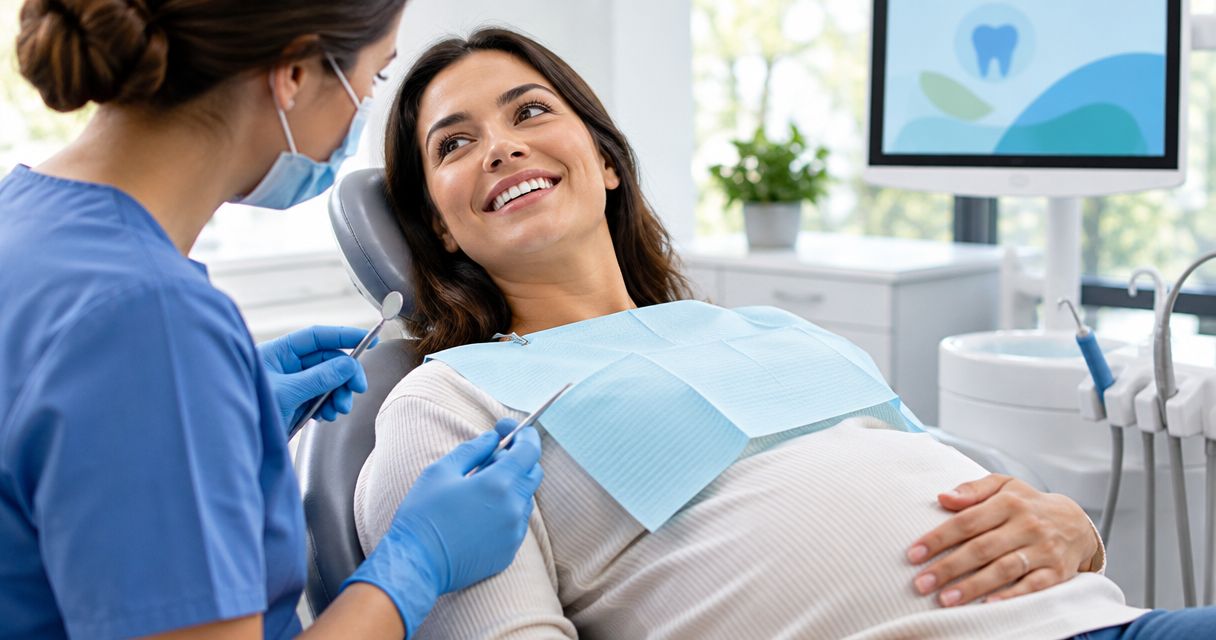
Dental care for pregnant women is preventive and necessary dental treatment during pregnancy, with the aim of protecting your teeth, gums, and overall health. This 2026 guide explains how to manage bleeding gums, morning sickness, and treatment decisions without postponing care you need.
- Dental care for pregnant women includes routine visits and necessary treatment; pregnancy alone is not a reason to postpone care.
- Starboard Dental serves patients seeking general, restorative, and cosmetic dental care in Kennebunk, York, and Saco.
- Pregnancy gingivitis needs gentle brushing, daily flossing, and a dental assessment—not a break from cleaning.
- After morning sickness, rinse your mouth instead of brushing immediately; seek prompt care for tooth pain or swelling.
Why dental care matters for pregnant women
Pregnancy changes how your gums respond to plaque. Hormonal changes can make them swollen, tender, or more likely to bleed, while nausea and vomiting can make your usual brushing routine harder to maintain. Frequent snacks and stomach acid add separate challenges for your teeth.
Pregnancy is a reason to adapt dental care, not stop it. The American Dental Association and the American College of Obstetricians and Gynecologists support preventive care and necessary dental treatment during pregnancy. Dental X-rays and local anesthesia are considered safe when clinically indicated.
Starboard Dental is best for patients in Kennebunk, York, and Saco seeking general, restorative, and cosmetic dental care. You can learn about the practice at Starboard Dental; tell your dental team about your pregnancy before treatment planning.
Your 2026 care plan should focus on preventing avoidable problems and treating existing disease. Do not interpret a pregnancy diagnosis as an instruction to cancel a cleaning or live with tooth pain.
Build your pregnancy dental care plan
Tell your dental team about your pregnancy
Start by sharing your pregnancy status when you schedule, not after you sit down for treatment. Include your estimated due date, any pregnancy complications, and the name of your prenatal clinician. These details help your dentist plan your care and decide whether coordination is needed.
Bring an accurate medication list, including prenatal vitamins, supplements, and nonprescription medicines. A product sold without a prescription is not automatically appropriate during pregnancy. Tell your dentist about allergies and any instructions your prenatal clinician has given you.
If you have a high-risk pregnancy, describe the specific concern rather than assuming all dental treatment is off limits. Your dentist and prenatal clinician can discuss treatment needs together.
- Share your due date and pregnancy stage.
- List prescription medicines, supplements, and nonprescription products.
- Explain pregnancy complications or activity restrictions.
- Mention previous reactions to dental medicines.
- Provide your prenatal clinician's contact information.
Keep preventive visits and assess new symptoms
Continue your dental examinations and professional cleanings according to your dentist's recommendations. At home, check for changes such as bleeding, swelling, sensitivity, or a tooth that hurts when you bite. You do not need to diagnose the problem yourself; you need to describe it clearly.
Professional care removes deposits that brushing cannot remove and checks whether bleeding reflects gingivitis or a more advanced problem. Pregnancy gingivitis and periodontitis are not interchangeable. Periodontitis involves damage to the tissues supporting your teeth and requires a treatment plan.
Starboard Dental provides general dental care alongside restorative and cosmetic care. For local patients, a dental assessment is the next step when home care does not explain or resolve a concern—not repeated changes of toothpaste without an examination.
- Keep scheduled examinations unless your clinicians advise otherwise.
- Describe when bleeding or pain started.
- Explain whether symptoms affect one tooth or your whole mouth.
- Mention any new gum lump, even if it does not hurt.
- Ask whether you need a different cleaning schedule.
Brush gently and clean between your teeth
Use a soft-bristled toothbrush and fluoride toothpaste. Brush for 2 minutes, twice a day, and clean between your teeth once a day. Those habits remain the foundation of pregnancy dental care in 2026; a stronger mouthwash does not replace them.
Bleeding gums need gentle, consistent cleaning rather than avoidance. Scrubbing harder irritates tissue, while skipping the gumline leaves plaque behind. Guide the brush along the gumline and clean all tooth surfaces without pressing forcefully.
Choose an interdental method you can use comfortably and correctly. Floss suits many tight contacts; an appropriately sized interdental brush works in spaces that accommodate it. Ask your dental team to demonstrate the technique instead of forcing a tool into a space.
- Brush for 2 minutes in the morning and at bedtime.
- Choose fluoride toothpaste and a soft-bristled brush.
- Clean between teeth once a day.
- Use gentle pressure along the gumline.
- Ask for help if bleeding persists despite consistent cleaning.
Adapt your routine around nausea and vomiting
If brushing triggers gagging, try a smaller brush head and a time of day when nausea is less intense. A less strongly flavored fluoride toothpaste can make brushing easier. Keep the goal intact: gentle cleaning that you can tolerate consistently.
After vomiting, rinse rather than brushing immediately. Stomach acid temporarily softens the tooth surface, and immediate brushing adds abrasion. The American Dental Association describes rinsing with 1 teaspoon of baking soda dissolved in 1 cup of water to help neutralize acid; spit the rinse out.
Repeated vomiting needs attention from your prenatal clinician as well as your dentist. Dental care addresses the effect on your mouth, not the underlying cause of ongoing vomiting. Report new sensitivity rather than assuming it is an unavoidable part of pregnancy.
- Try a small-headed toothbrush if gagging interrupts brushing.
- Choose a tolerable fluoride toothpaste flavor.
- Rinse your mouth after vomiting.
- Avoid brushing immediately after acid exposure.
- Tell your prenatal clinician about persistent vomiting.
Make food and drink choices easier on your teeth
Pregnancy nausea can make smaller, more frequent meals practical. You do not need to abandon that approach to protect your teeth. Instead, pay attention to repeated exposure to sugary drinks and sticky snacks between meals.
Water is a useful everyday drink for your mouth. Where tolerated, foods such as cheese, plain yogurt, vegetables, or nuts offer alternatives to repeatedly grazing on sweets. Follow your prenatal clinician's food-safety guidance and any advice about allergies or medical conditions.
Acidic drinks create a separate issue from sugar. Sipping a sweetened, acidic drink throughout the day repeatedly exposes teeth to both. Swishing it around your mouth extends contact rather than helping hydration.
- Drink water between meals when you can tolerate it.
- Limit repeated sipping of sugary drinks.
- Pair sweet foods with meals rather than prolonged grazing.
- Avoid swishing acidic drinks around your teeth.
- Follow pregnancy food-safety advice when choosing snacks.
Treat necessary problems without waiting for delivery
A cavity, infection, or broken tooth does not become harmless because you are pregnant. Necessary fillings, root canal treatment, and extractions can be performed during pregnancy. Your dentist chooses treatment based on the problem, your health, and appropriate coordination with your prenatal clinician.
The second trimester is often more comfortable for planned appointments, but it is not the only safe treatment window. Pain or infection should not wait for a preferred trimester. Necessary dental X-rays and appropriate local anesthesia can support diagnosis and treatment.
Medication decisions need a separate conversation. Ask about pain relief, antibiotics, sedation, and any medicine you already take. Local anesthesia and sedation are different; safety guidance about numbing an area does not automatically apply to every sedation option.
- Call promptly about tooth pain, swelling, or a broken tooth.
- Ask what happens if recommended treatment is delayed.
- Discuss clinically necessary imaging rather than refusing it automatically.
- Review medicines with your dentist and prenatal clinician.
- Separate necessary treatment from elective cosmetic procedures.
Adjust appointment comfort and plan follow-up
As pregnancy progresses, lying flat can become uncomfortable. Tell the dental team if you feel dizzy, nauseated, short of breath, or faint in the chair. A change in position and a pause are more useful than trying to push through symptoms.
Discuss appointment length and breaks before treatment starts. A shorter visit can be easier to tolerate, but the plan still needs to complete necessary care safely. Ask which parts of treatment can be scheduled separately and which should stay together.
Your 2026 follow-up plan should identify unresolved symptoms, unfinished treatment, and care that can reasonably wait until after pregnancy. A written summary helps you avoid losing track of a recommendation amid prenatal appointments.
- Request a position change if lying flat feels uncomfortable.
- Agree on a signal for a break.
- Discuss shorter visits when practical.
- Record treatment still needed after the appointment.
- Schedule follow-up based on your dentist's assessment.
Compare pregnancy dental care options in 2026
These options address different needs; they are not substitutes for one another. Use symptoms and an examination to choose the right level of care, rather than treating every concern as a toothpaste problem.
| Option | Best for | Main benefit | Key limitation |
|---|---|---|---|
| Home brushing and interdental cleaning | Daily prevention | Removes plaque regularly between visits | Cannot remove hardened deposits or repair cavities |
| Dental examination and professional cleaning | Prevention and bleeding-gum assessment | Identifies problems and removes deposits | Does not replace daily cleaning |
| Restorative or urgent dental treatment | Cavities, infection, fractures, or persistent pain | Addresses the underlying dental problem | Requires an individualized treatment and medication plan |
| Elective cosmetic treatment after pregnancy | Appearance changes without a health urgency | Keeps optional treatment separate from immediate needs | Does not address pain, infection, or gum disease |
Choose prevention for a healthy mouth and treatment for an active problem. Whitening or another cosmetic procedure is not a substitute for investigating a painful tooth. Elective whitening is generally deferred during pregnancy because pregnancy-specific safety evidence is limited.
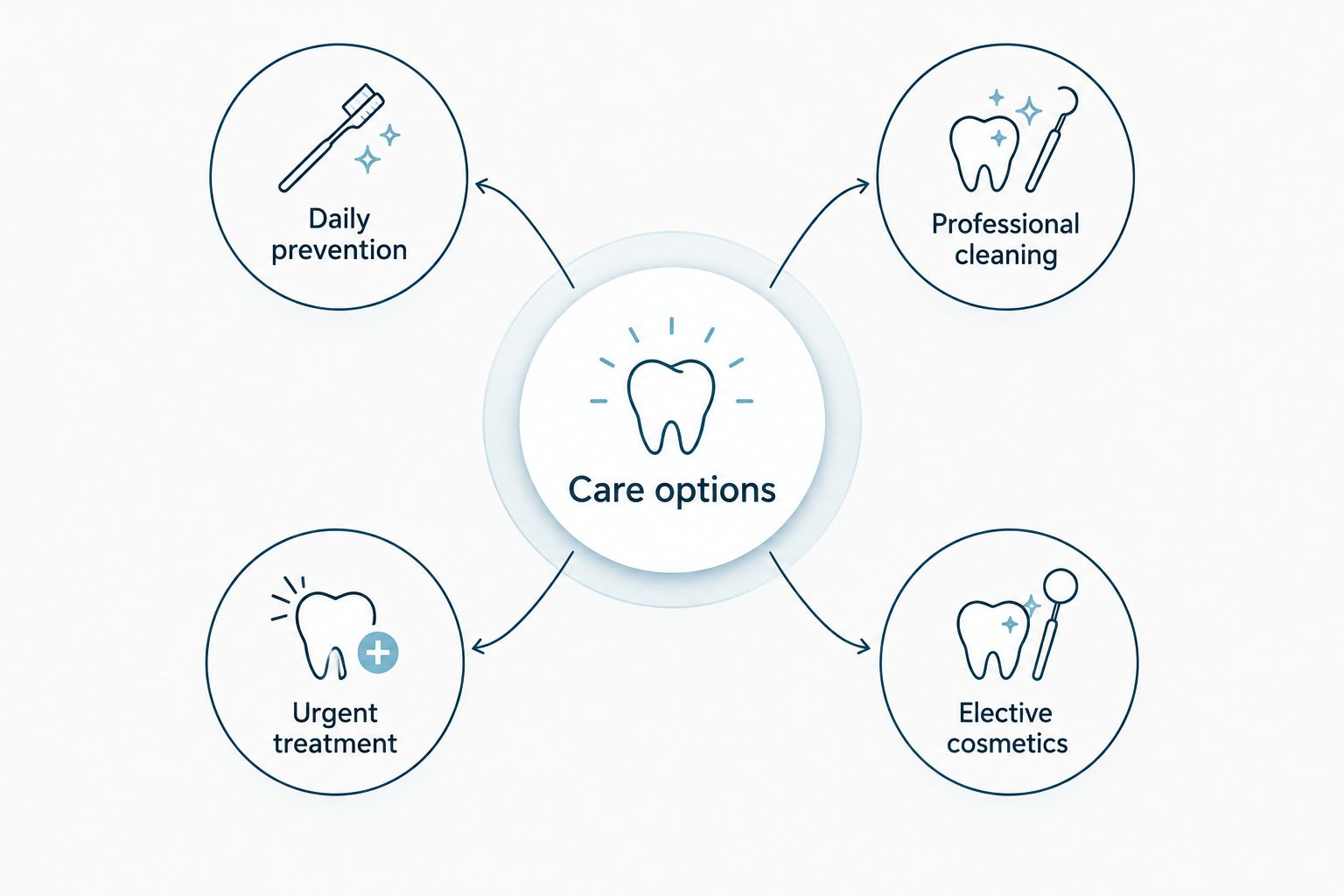
Discuss your immediate concern before choosing a procedure. Starboard Dental offers general, restorative, and cosmetic dental care; your examination determines which category addresses your problem.
Discuss your dental care needs
Learn about general, restorative, and cosmetic dental care in Kennebunk, York, and Saco.
Common mistakes pregnant women make
Stopping flossing because gums bleed
Bleeding during pregnancy is a reason to improve gentle cleaning and get an assessment, not abandon interdental care. Persistent bleeding, swelling, or tenderness needs a dentist's attention. Do not assume hormones explain every gum symptom.
Waiting until delivery for a painful tooth
An untreated dental problem can worsen while you wait. Contact your dentist when pain begins, especially if you also have swelling or a bad taste. Difficulty breathing or swallowing requires emergency medical care, not a routine appointment.
Brushing immediately after vomiting
Brushing immediately after vomiting adds abrasion to an acid-exposed tooth surface. Rinse first and discuss recurring sensitivity with your dentist. Changing to a harder brush makes the problem worse rather than cleaning more effectively.
Assuming every dental medicine follows the same rules
Local anesthesia, antibiotics, pain relievers, and sedation require different decisions. Tell each clinician what you already take, and do not use leftover medicines. The right choice depends on the drug, the dental problem, and your pregnancy.
Treating cosmetic care as urgent care
A desire for whiter teeth is different from infection or a fracture. In your 2026 treatment plan, put symptoms and oral health first. Discuss optional cosmetic work separately so it does not distract from necessary treatment.
FAQ
Is it safe to go to the dentist while pregnant?
Yes, routine dental examinations, cleanings, and necessary treatment are considered safe during pregnancy. Tell your dentist you are pregnant and share any complications or instructions from your prenatal clinician.
What is the best dental care routine for pregnant women?
Brush with fluoride toothpaste for 2 minutes twice a day and clean between your teeth once a day. Keep professional visits and ask your dentist to assess persistent bleeding, sensitivity, or pain.
Can I have dental X-rays during pregnancy?
Yes, clinically necessary dental X-rays are considered safe during pregnancy. Your dentist should select imaging based on what is needed to diagnose or treat your condition.
Can I get a filling or root canal while pregnant?
Yes, necessary fillings and root canal treatment can be performed during pregnancy. Appropriate local anesthesia can be used, and an infection should not be left untreated simply because you are pregnant.
Why do my gums bleed more during pregnancy?
Pregnancy hormones can increase your gums' response to plaque, causing pregnancy gingivitis. Continue gentle brushing and interdental cleaning, and arrange an examination if bleeding persists or your gums become swollen or painful.
Should I brush my teeth right after morning sickness?
No, rinse your mouth after vomiting rather than brushing immediately. Stomach acid temporarily softens the tooth surface, so immediate brushing adds abrasion.
Is the second trimester the only safe time for dental treatment?
No, necessary dental treatment can be provided throughout pregnancy. The second trimester is often more comfortable for planned appointments, but pain and infection need prompt assessment.
Can I whiten my teeth during pregnancy?
Elective teeth whitening is generally deferred until after pregnancy because pregnancy-specific safety evidence is limited. Focus on preventive care and necessary treatment, and discuss cosmetic plans separately with your dentist.
One last thing
Pregnancy does not pull calcium out of your teeth. Increased dental problems are linked to issues such as plaque, changes in eating habits, and acid exposure—not your baby taking minerals from already formed teeth.
Keep a note of when symptoms happen before your next appointment. Record whether discomfort follows vomiting, cold drinks, brushing, or biting. That detail makes your 2026 dental visit more useful than simply reporting that your teeth feel different.