Yes—gum disease can be reversed without surgery when it is gingivitis, the early stage that has not damaged the bone supporting your teeth. Periodontitis requires a different goal: nonsurgical treatment can control infection and inflammation, but it does not reliably restore lost bone or tooth support.
- Can gum disease be reversed? Gingivitis can; periodontitis needs treatment and ongoing maintenance.
- Scaling and root planing removes deposits below the gums without surgery, but some periodontal pockets need additional treatment.
- Brush for 2 minutes twice daily and clean between teeth daily; home care cannot remove hardened tartar.
- Starboard Dental provides general dental care for patients of all ages in Kennebunk, York, and Saco, Maine.
Why this matters: Less bleeding does not prove that gum disease is gone. For your 2026 dental care, the useful distinction is whether inflammation is limited to your gums or has affected the tissues supporting your teeth. The gum disease treatment comparison explains how treatment options address different needs.
Can gum disease be reversed without surgery?
Gingivitis is reversible; periodontitis is manageable, but existing damage is not simply erased. Your dentist distinguishes the two by examining your gums, measuring the spaces around your teeth, and checking bone levels with X-rays when indicated.
Bleeding, redness, and swelling alone cannot tell you which stage you have. Periodontitis can develop without much pain, so waiting until a tooth hurts is not a safe way to judge whether you need care.
| Condition or treatment | Best for | Main benefit | Important limitation |
|---|---|---|---|
| Gingivitis care | Inflammation without loss of tooth support | Professional cleaning and daily plaque removal can restore gum health | Inflammation returns if plaque builds up again |
| Scaling and root planing | Periodontitis needing cleaning below the gumline | Removes plaque and tartar from root surfaces to help tissues heal | Does not reliably replace lost bone; deeper areas can remain diseased |
| Periodontal maintenance | People previously treated for periodontitis | Helps monitor and control recurring disease | Requires ongoing visits and effective home care |
| Periodontal surgery | Sites that need access or further treatment after evaluation | Provides access to difficult areas; selected procedures address tissue defects | Involves a procedure and recovery; not every site is suitable for regeneration |
The American Dental Association and National Institute of Dental and Craniofacial Research distinguish reversible gingivitis from periodontitis involving damage to tooth-supporting tissues. Your treatment should follow that diagnosis, not just the appearance of your gums.
Gingivitis: reversible with nonsurgical care
Gingivitis develops when plaque along the gumline triggers inflammation. Your gums can look red or puffy and bleed during brushing or cleaning between teeth, even though the supporting bone remains intact.
Professional cleaning removes deposits you cannot remove yourself. Consistent brushing and between-teeth cleaning then keep plaque from repeatedly irritating the same areas.
Best for: People with gum inflammation but no periodontal attachment or bone loss. The benefit is that healthy gums can return without surgery; the limitation is that cleaning alone will not keep them healthy if daily plaque removal remains incomplete.
Do not assume that bleeding automatically means you are brushing too hard. Gentle technique matters, but persistent bleeding deserves an examination rather than simply switching toothbrushes and waiting.
Periodontitis: control disease and protect remaining support
Periodontitis affects the attachment and bone that hold teeth in place. Gums can separate from teeth, creating pockets where plaque and tartar collect beyond the reach of normal brushing.
Scaling and root planing, often called a deep cleaning, treats these deposits below the gumline. Your dentist can use local anesthesia to help you stay comfortable while cleaning the affected root surfaces.
Best for: People whose periodontal diagnosis calls for nonsurgical treatment below the gums. Its benefit is reducing the deposits and inflammation driving disease; its limitation is that treatment does not guarantee every pocket will become healthy.
After healing, your dentist checks the response. Persistent deep, bleeding pockets can need further treatment or evaluation by a periodontist, a dentist who specializes in gum disease.
Gum recession can also become more noticeable as swollen tissues settle. That change does not automatically mean treatment damaged your gums, but new sensitivity or concerns about appearance should be discussed at follow-up.
What nonsurgical treatment involves in 2026
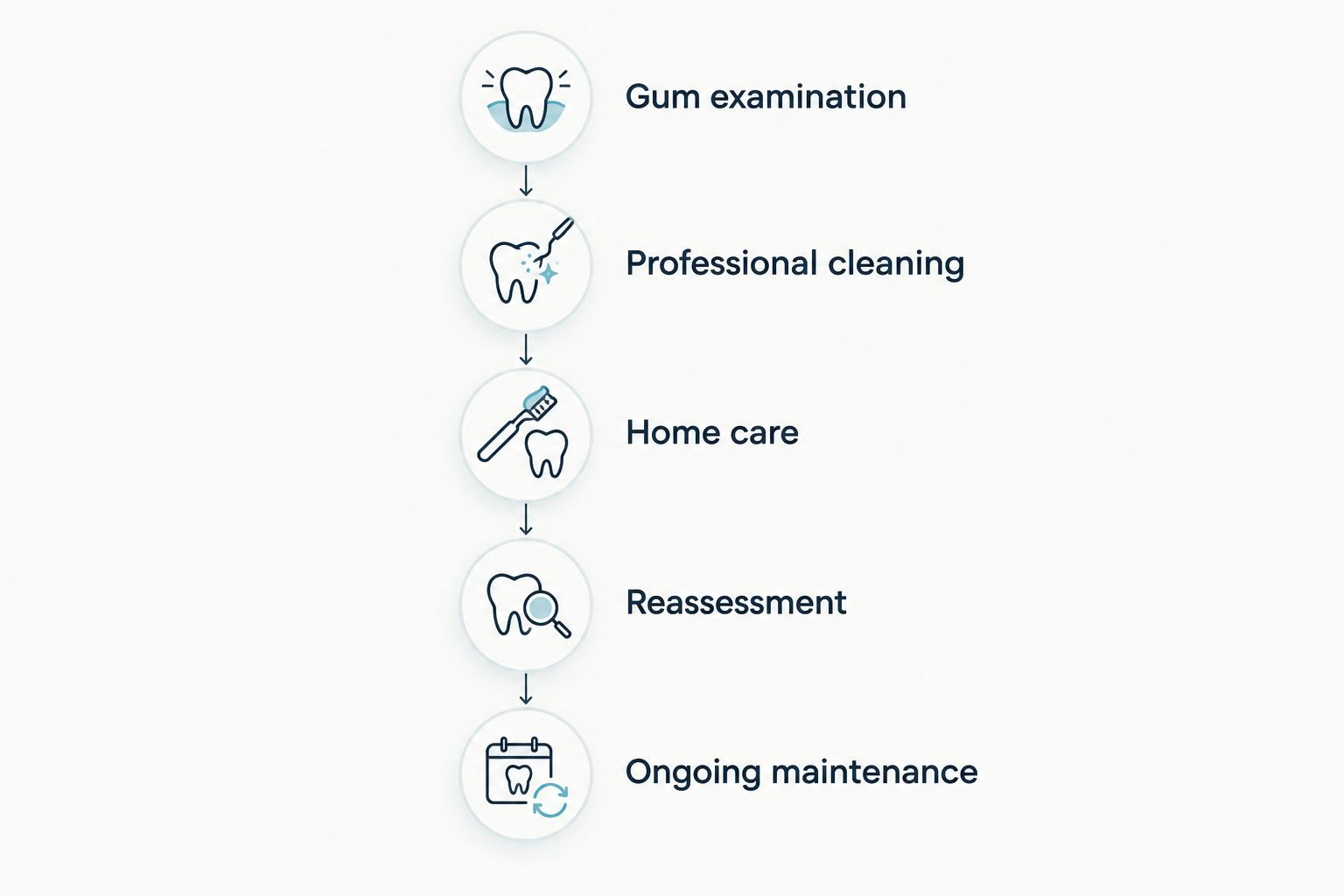
A nonsurgical plan needs a diagnosis, treatment of the deposits causing inflammation, and a check that healing is actually happening. Skipping the last step leaves you guessing about whether the disease is controlled.
- Gum examination. Your dentist reviews symptoms, health conditions, medications, smoking or tobacco use, and your cleaning routine. Gum measurements and appropriate imaging help identify loss of support.
- Professional cleaning. Gingivitis generally needs professional plaque and tartar removal; periodontitis often needs scaling and root planing. The extent of treatment follows the findings, not the amount of pain you feel.
- Home care. Your dental team shows you how to clean the gumline and the spaces between your teeth. Tools should fit your mouth and your ability to use them consistently.
- Reassessment. Your dentist compares bleeding, pocket measurements, and other findings after healing. Remaining disease guides the next decision.
- Ongoing maintenance. Follow-up care helps keep treated periodontitis under control. Your dentist sets the interval according to your condition and response.
You can ask your dentist to explain your measurements in plain language. Knowing which areas need attention is more useful than leaving with a general instruction to floss more.
Starboard Dental is a general dental care option for patients of all ages in Kennebunk, York, and Saco, Maine. For gum concerns, start with an examination rather than assuming that a particular procedure is necessary.
Why results without surgery vary
The same cleaning routine does not produce the same result in every mouth. The disease stage and your body's ability to heal both affect what treatment can accomplish.
- Existing damage. Gingivitis does not involve loss of tooth support; periodontitis does. That difference determines whether reversal or long-term disease control is the appropriate goal.
- Pocket depth and access. Deep pockets and complex root anatomy make deposits harder to remove and harder for you to keep clean.
- Daily plaque removal. Professional treatment addresses deposits present at the visit. Your home routine limits the plaque that returns afterward.
- Smoking and tobacco use. Smoking increases periodontal risk and interferes with healing. It can also make bleeding a less obvious warning sign.
- Diabetes management. Diabetes, especially when blood sugar is not well controlled, can make gum disease harder to manage. Your dental and medical teams need an accurate health history.
- Follow-up findings. Persistent bleeding, deep pockets, or further loss of support can change the treatment plan even when your mouth feels better.
These factors are reasons to personalize treatment, not reasons to blame yourself. Tell your dentist what makes daily care difficult, including sensitive teeth, limited hand movement, or uncertainty about technique.
What should your home routine include?
Brush for 2 minutes twice daily and clean between your teeth at least once daily. These established American Dental Association recommendations support gum health, but they do not replace professional treatment for tartar or periodontitis.
Use a soft-bristled toothbrush and fluoride toothpaste. Angle the bristles toward the gumline and use gentle movements rather than scrubbing harder when your gums bleed.
Floss works well for tight contacts when you can use it comfortably. Interdental brushes suit spaces that accommodate them, while a water flosser can help people who find string floss difficult; the best choice is one your dental team confirms fits your needs.
| Home-care option | Best for | Benefit | Limitation |
|---|---|---|---|
| Dental floss | Tight spaces between teeth | Cleans surfaces a toothbrush misses | Requires controlled technique and hand coordination |
| Interdental brushes | Spaces large enough for a correctly sized brush | Makes open spaces easier to clean | Forcing an oversized brush can injure tissue |
| Water flosser | People who struggle with string floss | Offers another way to clean between teeth and around dental work | Does not remove hardened tartar or replace professional care |
Ask for a demonstration using your own difficult-to-clean areas. A tool that works well around your front teeth might not be the easiest choice around a back molar or bridge.
Can I reverse gum disease with mouthwash alone?
Mouthwash alone does not reverse gum disease. Some rinses help reduce plaque or inflammation as an addition to cleaning, but they cannot remove hardened tartar or treat all deposits inside periodontal pockets.
A prescription rinse is a treatment decision, not an automatic upgrade to your routine. Use it only as directed, and do not let fresher breath persuade you that an examination is unnecessary.
How do I know whether I need gum surgery?
You need a periodontal evaluation to know whether surgery is appropriate. The decision depends on the type of damage, access for cleaning, and whether disease remains after nonsurgical treatment and healing.
Surgery is not a punishment for having gum disease, and avoiding surgery is not the only measure of success. The goal is to preserve comfortable, functional teeth with a treatment plan you can maintain.
Can my gums grow back after gum disease?
Receded gum tissue generally does not grow back with brushing, flossing, or mouthwash. Treating inflammation can make gums healthier without restoring their previous position.
Selected surgical procedures can cover exposed roots or support regeneration in suitable defects. Those possibilities require an examination; neither deep cleaning nor surgery promises to recreate all lost support.
When should you arrange a dental visit?
Arrange an examination for repeated bleeding, persistent bad breath, gum recession, loose teeth, or a change in how your teeth fit together. You do not need to wait for pain, and you do not need to know the diagnosis before asking for help.
Seek prompt dental care for pus, significant swelling, or worsening pain. Facial swelling with fever, or trouble swallowing or breathing, needs urgent medical attention; breathing difficulty is an emergency.
For a 2026 visit with Starboard Dental, bring your medication list and describe when symptoms started. The practice provides general, restorative, and cosmetic dental care; the examination determines whether your gum concerns need treatment there or specialist care.
FAQ
Can gum disease be reversed without surgery in 2026?
Gingivitis can be reversed without surgery, while periodontitis needs treatment to control disease and protect remaining support. Scaling and root planing is a nonsurgical treatment, but some areas need additional care.
How long should I brush if my gums bleed?
Brush for 2 minutes twice daily with a soft-bristled toothbrush and gentle technique. Persistent bleeding needs a dental examination rather than harder brushing or stopping cleaning.
How often should I clean between my teeth?
Clean between your teeth at least once daily using floss or another appropriate interdental tool. Ask your dental team which option fits your spaces and any dental work.
Can I remove tartar from my gums at home?
You cannot safely remove hardened tartar with ordinary brushing or flossing. A dental professional removes it using appropriate instruments; scraping your own teeth risks injury.
Does a deep cleaning mean I will not need surgery?
A deep cleaning does not guarantee that you will avoid surgery. Your dentist checks healing and remaining periodontal pockets before recommending whether further treatment is needed.
Is gum disease gone when the bleeding stops?
Stopped bleeding does not prove that gum disease is gone. Gum measurements and other examination findings show whether inflammation and periodontal disease are controlled.
Do antibiotics cure periodontitis?
Antibiotics alone do not cure periodontitis or remove the deposits causing it. A dentist sometimes prescribes them for specific situations alongside appropriate dental treatment.
Can children and teenagers get gum disease?
Children and teenagers can develop gingivitis, and persistent swelling or bleeding deserves an examination. Do not assume gum problems only affect older adults.
One last thing
Do not use pain as your gum-health checklist. Periodontitis can damage support without giving you the warning you expect, while inflamed gums can bleed before permanent damage occurs.
Make your next 2026 dental visit more useful by asking: Is this gingivitis or periodontitis, and how will we check that treatment worked? Those answers turn a worrying symptom into a clear next step.