Sedation dentistry cost in 2026 depends on the medication, the depth of sedation, the length of your appointment, and who provides and monitors your care. Ask for an individualized written estimate that separates sedation from the dental procedure and explains any evaluation or recovery charges. Compare the complete treatment plan, not just the sedation fee.
- Sedation dentistry cost depends on the planned method, appointment length, monitoring, and dental treatment.
- Nitrous oxide, oral sedation, and IV sedation are not interchangeable; choose with your dentist after a health review.
- Ask whether your estimate includes the procedure, sedation provider, monitoring, and recovery.
- Starboard Dental serves patients seeking general, restorative, and cosmetic dental care in coastal Maine.
How much does sedation dentistry cost in 2026?
The useful number is your estimated out-of-pocket total for a specific appointment. A sedation-only quote does not tell you what the dental work, separate professional services, or follow-up care will add to your bill.
Start by discussing your anxiety and planned treatment, then compare the sedation dentistry options for anxious patients. A method that sounds convenient is not automatically appropriate for your health or procedure.
Ask the dental office to explain these parts of the estimate:
| Estimate component | What to clarify | Why it matters |
|---|---|---|
| Dental treatment | Which procedures are included? | Sedation does not replace the charge for treating your teeth. |
| Sedation service | Which medication route and intended depth are planned? | Different plans involve different preparation and supervision. |
| Provider services | Who administers sedation, and is there a separate bill? | An outside anesthesia provider can have a separate estimate. |
| Appointment time | How is time measured for billing? | Treatment time and total supervised time are not necessarily identical. |
| Evaluation and recovery | Are required assessments and recovery supervision included? | These services affect the scope of the appointment. |
| Insurance | What has the insurer confirmed in writing? | An estimate of benefits is not a guarantee of payment. |
Ask for the total patient responsibility, not simply whether the office accepts your insurance. Those are different questions.
Why this matters
Anxiety can make it difficult to arrange dental care, especially after an uncomfortable experience. Understanding the plan gives you something concrete to discuss: what you will feel, how you will be monitored, and what you need to arrange afterward.
Starboard Dental is a local option for patients seeking general, restorative, and cosmetic dentistry in Kennebunk, York, and Saco, Maine. Ask the practice which comfort approaches are appropriate for your treatment rather than assuming a particular sedation service is offered.
For a 2026 appointment, request an estimate tied to your current treatment plan. An old receipt or another person's bill does not establish what your appointment includes.
How do the main sedation options compare?
The route used to give medication and the depth of sedation are related, but they are not the same thing. Oral or IV medication does not, by itself, tell you whether you will be lightly relaxed, deeply sedated, or unconscious.
The table below describes common approaches. The “best for” labels identify a discussion to have with your dentist, not a treatment you should select yourself.
| Approach | Best for discussing when | Main benefit | Main limitation |
|---|---|---|---|
| Nitrous oxide | You want help relaxing while remaining responsive | The dental team can adjust delivery during care | It does not meet every patient's anxiety or treatment needs |
| Oral sedation | You need more anxiety relief than reassurance alone provides | Medication is taken by mouth | The effect is not adjusted as directly as medication delivered through an IV |
| IV sedation | Your treatment and health review support medication through a vein | The trained provider can adjust medication during care | It requires IV access, monitoring, and recovery planning |
| General anesthesia | The clinical team determines unconsciousness is appropriate | You are unconscious during treatment | It requires anesthesia-level staffing, monitoring, and recovery arrangements |
Do not rank these methods from “good” to “better.” The right approach is the one that meets your clinical needs without unnecessary depth of sedation.
Nitrous oxide: relaxation while you remain responsive
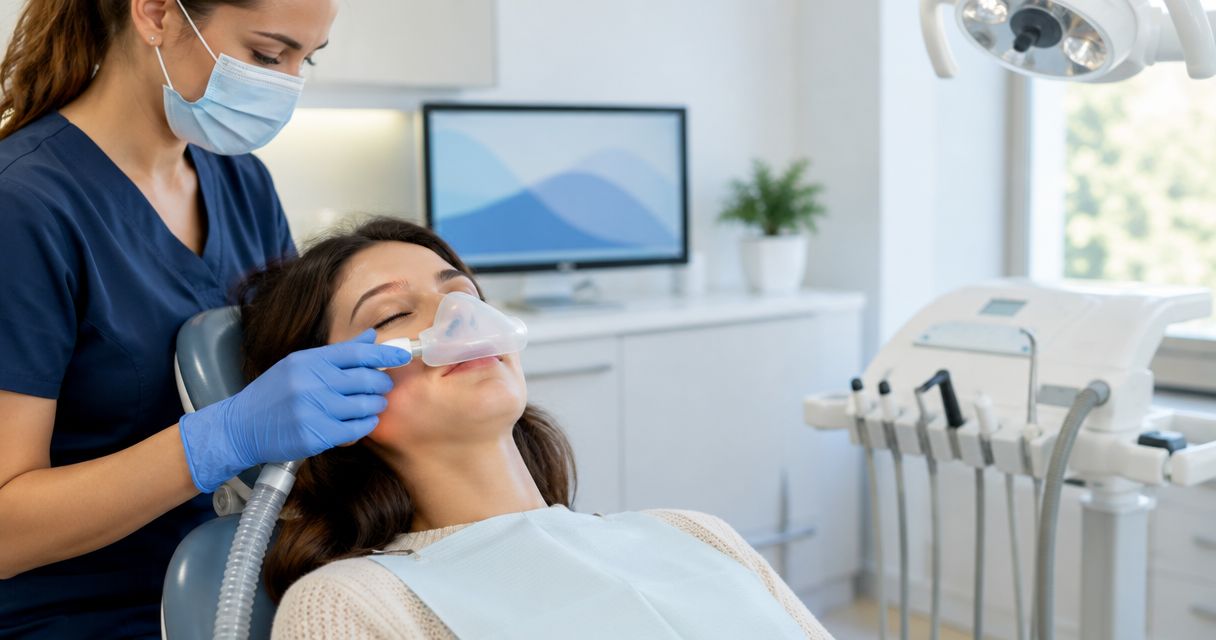
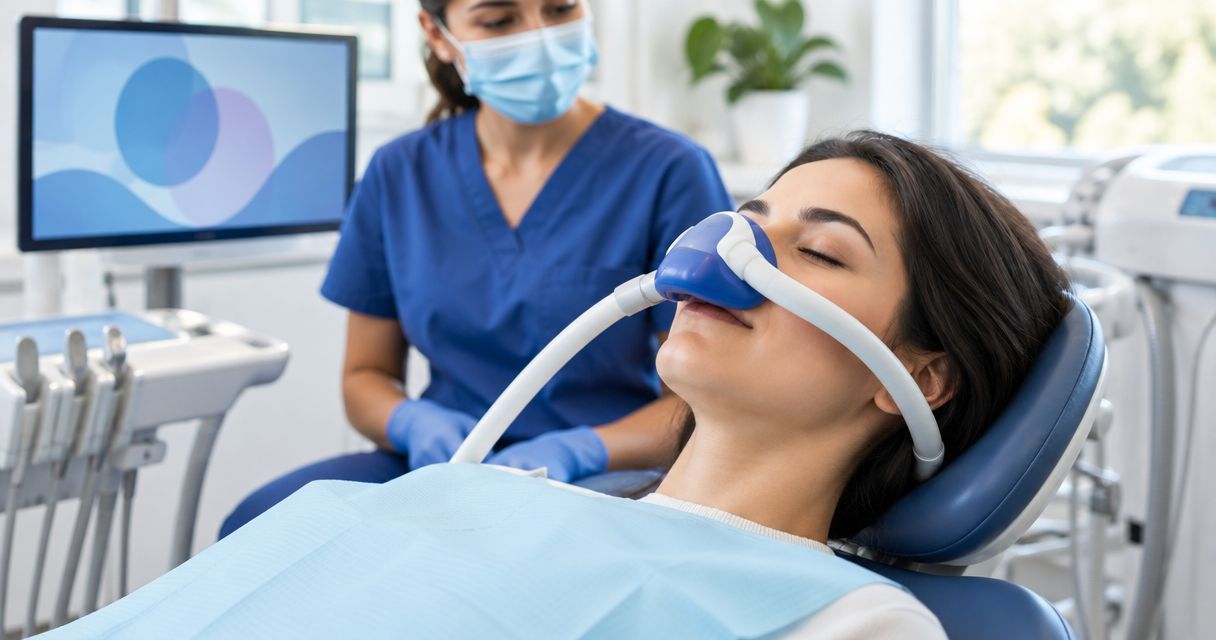
Nitrous oxide is delivered with oxygen through a small mask over your nose. It can help reduce anxiety while you remain able to communicate with the dental team.
Its effects generally wear off quickly after administration stops. However, do not assume that every appointment involving nitrous oxide has identical discharge instructions, particularly if other medications are used.
Ask whether the estimate covers the entire planned appointment and what happens if treatment takes longer. Also explain if congestion or difficulty breathing through your nose could interfere with wearing the mask.
Oral sedation: medication with advance planning
Oral sedation uses prescribed medication taken by mouth. The medication and dose are selected for your situation; another person's prescription is never a substitute for your dentist's instructions.
The main trade-off is less immediate control over the effect after you swallow the medication. Your response also depends on your health, other medicines, and the specific drug used.
Confirm when to take the medication and whether an escort is required before you arrive. Do not take an extra dose because you still feel nervous unless the prescribing clinician explicitly instructs you to do so.
IV sedation: adjustable medication with supervised recovery
IV sedation delivers medication through a vein. Depending on the intended depth and medications, you can remain responsive or become more deeply sedated; an IV does not automatically mean general anesthesia.
The ability to adjust medication during treatment is useful, but it comes with preparation, monitoring, and discharge requirements. Discuss needle anxiety if IV placement itself worries you.
Ask who provides the sedation and who sends the bill. If a separate provider is involved, confirm that both estimates describe the same appointment and planned services.
General anesthesia: unconsciousness for selected situations
General anesthesia is different from simply feeling relaxed or sleepy. You are unconscious, and the anesthesia team manages your care at that level.
This approach requires an appropriate clinical setting and trained personnel. Your medical history, the procedure, and the team's assessment determine whether it belongs in the discussion.
Confirm the treatment location and the professionals involved before comparing estimates. A dental-office appointment and a procedure in a separate facility are not equivalent billing arrangements.
Why sedation dentistry cost varies
The main drivers are the services and supervision your individual appointment requires. Use these factors to understand an estimate rather than assuming that a higher or lower total reflects quality.
- Medication and intended depth: Ask what is planned and why it matches your anxiety, treatment, and health history.
- Appointment length: Clarify whether the estimate depends on time and how additional time is handled.
- Provider and setting: Determine whether a separate anesthesia professional or facility is involved.
- Health assessment: Share your medical conditions and medications so the team can identify necessary preparation or consultation.
- Monitoring and recovery: Confirm which services are included before, during, and after the dental work.
- Dental treatment: Separate the sedation discussion from the work being performed, such as a filling, extraction, or crown.
Insurance changes your out-of-pocket responsibility, not the clinical requirements for safe care. Do not remove necessary monitoring or choose a deeper sedation level solely to fit an insurance benefit.
How do you get a useful written estimate?
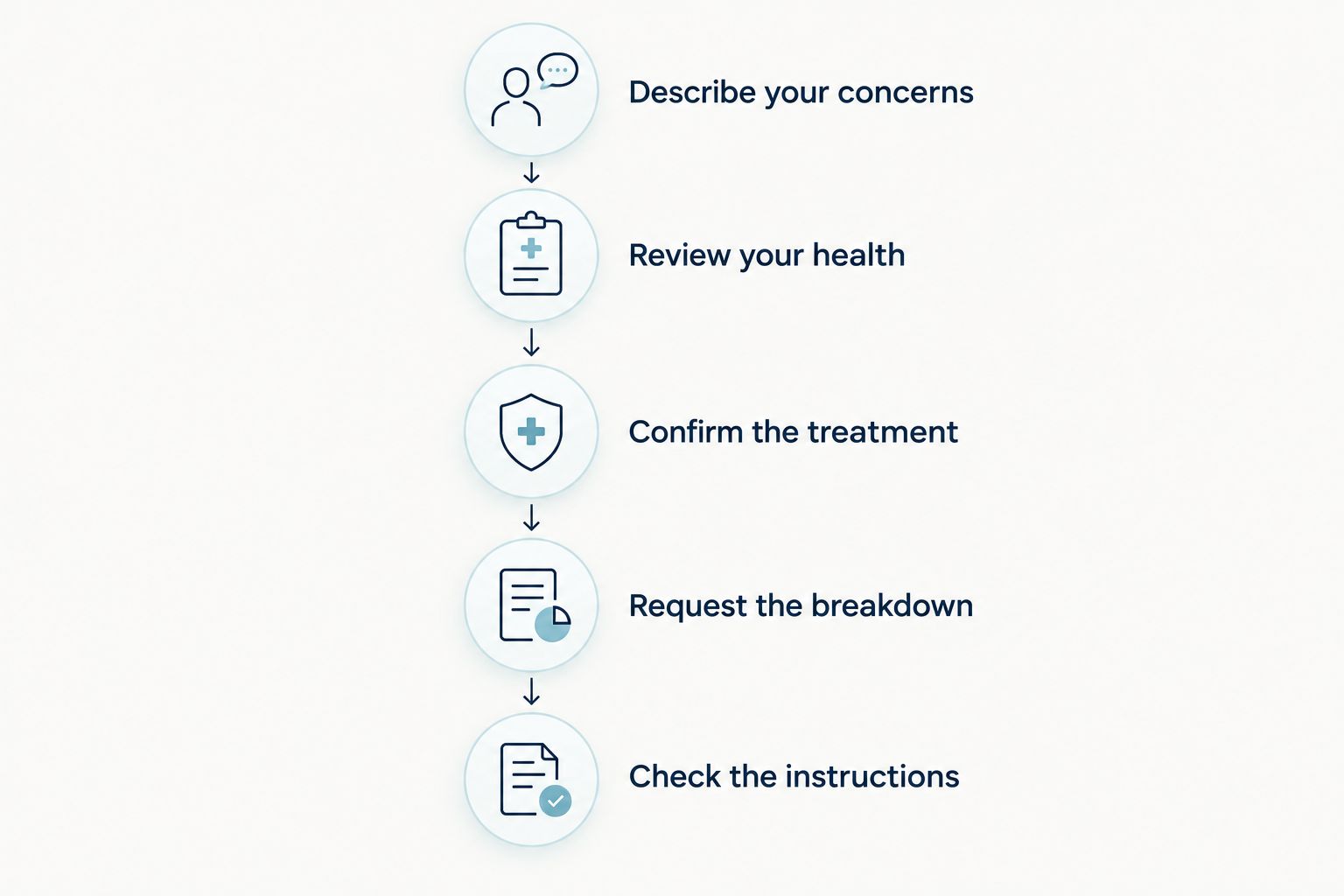
For a 2026 estimate, give the office enough information to plan a specific appointment. A request for the price of being “put to sleep” leaves important details unresolved, including whether you mean anxiety relief or general anesthesia.
- Describe your concerns. Explain whether you fear pain, needles, sounds, gagging, or a previous experience. Say what has helped before.
- Review your health. Provide your medication and supplement list, allergies, medical conditions, and any previous sedation problems.
- Confirm the treatment. Ask which dental procedures are planned and whether treatment involves separate visits.
- Request the breakdown. Get the sedation method, provider, billing basis, included services, and estimated patient responsibility in writing.
- Check the instructions. Confirm eating and drinking restrictions, transport requirements, and recovery arrangements before accepting an appointment.
Keep the clinical plan and financial estimate together. If the planned treatment changes, ask whether the estimate and preparation instructions also need updating.
Does dental insurance cover sedation?
Dental insurance coverage depends on your plan, the procedure, and the insurer's requirements. Sedation is not automatically covered because the dental treatment itself is covered.
Ask the office which procedure codes it expects to submit, then ask your insurer about those exact services. Confirm deductibles, benefit limits, exclusions, and any documentation or preauthorization requirements.
A predetermination helps clarify expected benefits, but it does not guarantee the final claim payment. Keep a copy and ask what you would owe if the insurer pays less than expected.
For your 2026 benefits, check the current plan documents rather than relying on a previous year's explanation of benefits. Also ask about separate provider bills, because participating status can differ between professionals involved in an appointment.
Will you still need local anesthetic with sedation?
Local anesthetic is commonly used alongside sedation because relaxation and pain control are different goals. Sedation helps manage awareness or anxiety; local anesthetic numbs the area being treated.
Tell your dentist if a tooth was difficult to numb during previous care. That history belongs in the treatment discussion even if you are considering sedation.
Feeling calmer does not replace a plan for keeping the procedure comfortable. Ask how the team will check numbness and how you can signal discomfort during treatment when you remain responsive.
Can you drive home after dental sedation?
Your discharge instructions determine whether you can drive, and you should arrange transport before taking sedating medication. Oral sedation, IV sedation, and general anesthesia commonly require a responsible adult to take you home.
Nitrous oxide alone has different recovery characteristics, but your dental team still needs to confirm that you meet its discharge criteria. Feeling awake does not establish that your coordination and judgment have recovered.
Ask about work, childcare, exercise, alcohol, and important decisions after the appointment. Follow the instructions for your actual medication and procedure rather than a general online timetable.
What should you tell the dentist before choosing sedation?
Share your full health history, including sleep apnea, breathing conditions, pregnancy, allergies, and previous reactions to anesthesia or sedation. Include prescription medicines, nonprescription products, supplements, alcohol use, and cannabis use.
This is a safety discussion, not a judgment. Accurate information helps the team identify interactions and decide whether additional assessment is needed.
Never stop a prescribed medicine or change eating and drinking habits based on a generic checklist. Follow the treating team's instructions, and call for clarification if those instructions conflict with advice from another clinician.
FAQ
How do I find out my sedation dentistry cost before booking?
Request a written estimate based on your planned dental treatment, sedation method, health review, and appointment length. Ask it to identify separate provider bills and estimated insurance benefits.
Is nitrous oxide the same as being put to sleep?
No. Nitrous oxide used for dental anxiety generally allows you to remain responsive, while general anesthesia makes you unconscious. Ask which level of awareness your team intends.
Is IV sedation better than oral sedation?
IV sedation is not automatically better than oral sedation. A trained provider can adjust IV medication during treatment, but the appropriate approach depends on your health, anxiety, and procedure.
Will insurance pay for sedation if I have dental anxiety?
Dental anxiety alone does not establish insurance coverage. Ask your insurer about the proposed services and the documentation your plan requires.
Can I eat before dental sedation?
Follow the eating and drinking instructions supplied by your treating team. Requirements depend on the planned sedation, so do not use another patient's instructions.
Does Starboard Dental offer every type of dental sedation?
Ask Starboard Dental directly which comfort and sedation approaches are offered for your planned care. Do not assume that every dental practice provides oral sedation, IV sedation, or general anesthesia.
What should I ask when comparing sedation estimates in 2026?
Compare the planned sedation depth, dental procedures, provider services, monitoring, recovery, and estimated patient responsibility. Check that both estimates cover the same scope of care.
One last thing
A useful comfort plan starts with the part of the appointment you find hardest. Tell the dental team whether the trigger is an injection, a sound, difficulty staying still, or uncertainty about what comes next.
Ask for an agreed stop signal when you will remain responsive. A clear way to request a pause belongs in the conversation alongside medication and the written estimate.