Best overall for periodontitis: scaling and root planing. Best for gingivitis: professional cleaning with daily plaque control. Best for ongoing protection after treatment: periodontal maintenance. This 2026 guide compares the best treatments for gum disease by the problem each treatment addresses, so you can discuss the right next step with your dentist.
- The best treatments for gum disease depend on whether you have gingivitis or periodontitis.
- Scaling and root planing treats plaque and tartar below the gumline in periodontitis.
- Periodontal surgery addresses problems that remain after nonsurgical treatment; antibiotics are not a substitute for cleaning.
- Starboard Dental provides general dental care for patients in Kennebunk, York, and Saco, Maine.
Why this matters
Bleeding gums need attention, but bleeding alone does not tell you which treatment you need. Gingivitis is gum inflammation without the attachment and bone loss that define periodontitis. That distinction changes your treatment plan.
Starboard Dental is a general dental care option for patients in Kennebunk, York, and Saco who want to discuss gum disease concerns. The practice is led by Dr. Alex Kerbaugh and provides general, restorative, and cosmetic dental care. Learn about Starboard Dental before arranging a visit.
Treatment should address the disease underneath the symptoms, not simply make your mouth feel fresher. Mouthwash cannot remove hardened tartar, and replacing a missing tooth does not treat active gum disease around your remaining teeth.
What makes the best gum disease treatment?
The best gum disease treatment in 2026 is the treatment that fits your diagnosis. Use these criteria to evaluate a recommendation:
- Disease stage: Gingivitis and periodontitis require different levels of care.
- Cleaning access: Treatment must reach the plaque and tartar contributing to inflammation, including deposits below the gumline.
- Remaining damage: Bone loss, persistent pockets, and tooth stability affect whether additional treatment is needed.
- Follow-up findings: Your response to initial treatment determines the next step.
- Daily upkeep: Professional care needs support from consistent brushing and cleaning between teeth.
- Treatment burden: Discomfort, healing, medication risks, and your ability to maintain the result belong in the discussion.
These are treatment pathways, not interchangeable products. Your dentist can combine approaches when each addresses a different part of the problem.
Gum disease treatments at a glance
| Treatment | Best for | What it does | Key limitation |
|---|---|---|---|
| Scaling and root planing | Initial nonsurgical treatment of periodontitis | Removes deposits from root surfaces below the gumline | Does not replace reassessment or restore all lost support |
| Professional cleaning plus daily plaque control | Gingivitis without attachment or bone loss | Removes deposits and supports control of gum inflammation | Routine cleaning alone does not address deeper periodontal disease |
| Periodontal surgery | Persistent deep pockets or selected defects after initial care | Improves access or addresses specific tissue and bone problems | Requires assessment, healing, and continued maintenance |
| Dentist-prescribed antimicrobials | Selected cases needing an additional treatment | Targets bacteria as an adjunct to mechanical treatment | Not a stand-alone cure; medication risks matter |
| Daily brushing and interdental cleaning | Everyday plaque control | Disrupts plaque on teeth and between them | Cannot remove hardened tartar or treat advanced disease alone |
| Periodontal maintenance | Long-term care after active periodontal treatment | Monitors disease and removes recurring deposits | Does not replace treatment for active, unresolved disease |
1. Scaling and root planing: best for initial periodontitis care
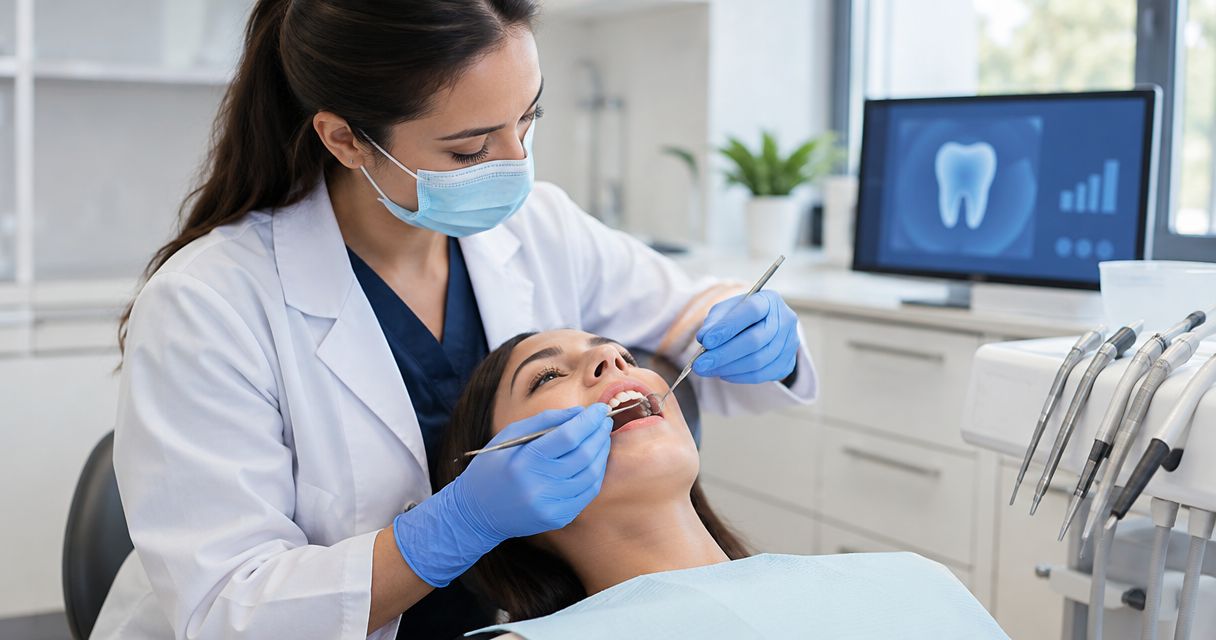
Scaling and root planing is a nonsurgical treatment for periodontitis. Your dental professional removes plaque and tartar from below the gumline and cleans affected root surfaces. Local anesthesia can help make treatment comfortable.
This treatment addresses deposits you cannot remove with a toothbrush or floss. It is commonly an initial step, followed by an examination of how your gums respond. Persistent inflammation or deep pockets require another decision, not an assumption that treatment is finished.
Scaling and root planing pros:
- Reaches deposits below the gumline.
- Provides a nonsurgical starting point for periodontitis treatment.
- Supports reduced inflammation and improved pocket measurements.
- Gives your dentist a basis for evaluating further treatment needs.
Scaling and root planing cons:
- Temporary tenderness or sensitivity can follow treatment.
- Gum recession can become more noticeable as swelling decreases.
- Deep or difficult-to-access areas can require additional treatment.
Best for: Patients diagnosed with periodontitis who need initial treatment below the gumline.
Verdict: Choose scaling and root planing when examination findings support it; do not substitute a routine cleaning.
2. Professional cleaning: best for gingivitis
Professional cleaning removes plaque and hardened tartar that contribute to gingivitis. Daily brushing and cleaning between teeth then help keep plaque from accumulating again. Gingivitis can resolve when its causes are controlled.
The important qualification is the diagnosis. A standard cleaning is not automatically the right treatment for someone with periodontal pockets, attachment loss, or bone loss. Ask your dentist to explain which findings distinguish gingivitis from periodontitis in your mouth.
Professional cleaning pros:
- Removes tartar that home care cannot remove.
- Addresses a common source of gum irritation.
- Creates an opportunity to improve your cleaning technique.
Professional cleaning cons:
- Inflammation returns if plaque continues to accumulate.
- Routine cleaning is insufficient for established periodontitis.
- Other causes of gum irritation still need assessment.
Best for: Patients with plaque-related gingivitis and no periodontal attachment or bone loss.
Verdict: Choose professional cleaning with daily plaque control for gingivitis, rather than treating bleeding with mouthwash alone.
3. Periodontal surgery: best for persistent problems after initial care
Periodontal surgery includes different procedures with different goals. Flap surgery provides access to areas that are difficult to clean, while selected regenerative procedures address suitable bone defects. Gum grafting addresses recession in appropriate cases; it is not a general replacement for infection control.
For a 2026 treatment decision, ask what the proposed operation is intended to accomplish. The answer should identify a specific problem, such as a persistent pocket or a defect with potential for regeneration. A periodontist evaluates whether the procedure fits that problem.
Periodontal surgery pros:
- Provides access to areas that remain difficult to clean.
- Can reduce selected persistent pockets.
- Offers regenerative options for suitable defects.
Periodontal surgery cons:
- Requires healing and postoperative care.
- Recession or sensitivity can occur with some procedures.
- Results depend on the defect, disease control, and maintenance.
Best for: Patients with persistent deep pockets or specific periodontal defects after initial treatment and reassessment.
Verdict: Hold surgery decisions until the diagnosis, initial response, and purpose of the proposed procedure are clear.
4. Prescribed antimicrobials: best as a selected add-on
Your dentist can prescribe locally delivered or systemic antimicrobial treatment in selected circumstances. These treatments target bacteria, but they do not mechanically remove tartar. The prescription belongs within a treatment plan, not in place of cleaning.
Systemic antibiotics are not routine self-care for bleeding gums. Your clinician must consider the indication, medical history, allergies, interactions, and antibiotic resistance before prescribing them.
Prescribed antimicrobials pros:
- Adds bacterial control in selected cases.
- Allows local delivery when that approach is appropriate.
- Can complement mechanical periodontal treatment.
Prescribed antimicrobials cons:
- Does not remove hardened deposits.
- Can cause adverse effects; systemic antibiotics also carry resistance concerns.
- Does not replace reassessment or daily plaque control.
Best for: Patients whose dentist identifies a specific reason for an antimicrobial adjunct.
Verdict: Skip self-prescribed antibiotics and leftover medication; use antimicrobials only as directed for your diagnosis.
5. Daily plaque control: best for supporting every treatment plan
Brush with fluoride toothpaste 2 times per day for 2 minutes per session, consistent with American Dental Association guidance. Clean between your teeth 1 time per day using floss or another suitable interdental cleaner. Ask your dental professional which tool fits your spaces and dexterity.
An interdental brush, floss, or a water flosser can help with different cleaning needs. Fit and technique matter: forcing a tool into a tight space can injure the gums. Professional guidance makes the routine more useful than buying additional products without knowing how to use them.
Daily plaque control pros:
- Disrupts plaque between professional visits.
- Supports both gingivitis control and periodontal treatment.
- Can be adapted to restorations, spaces, and hand mobility.
Daily plaque control cons:
- Cannot remove hardened tartar.
- Technique problems can leave areas uncleaned.
- Cannot reverse established bone loss or replace professional treatment.
Best for: Everyone maintaining gum health, including patients receiving active periodontal treatment.
Verdict: Choose a consistent daily routine, but skip the claim that home care alone cures periodontitis.
6. Periodontal maintenance: best for protecting treated gums
Periodontal maintenance is ongoing care after active periodontal treatment. Visits include assessment of periodontal health and cleaning tailored to the areas that need attention. Your clinician sets the schedule according to your condition and risk.
Maintenance is different from assuming that a completed deep cleaning has permanently solved the problem. Periodontitis requires continued monitoring because disease can recur. A change in bleeding, pocket measurements, or tooth stability can prompt further treatment.
Periodontal maintenance pros:
- Monitors previously treated areas over time.
- Removes deposits that build up again.
- Provides opportunities to adjust home care and treatment.
Periodontal maintenance cons:
- Requires ongoing attendance and daily care.
- Does not guarantee that disease will never return.
- Cannot replace additional treatment when active disease persists.
Best for: Patients who have completed active treatment for periodontitis.
Verdict: Choose periodontal maintenance as continuing care, not an optional finishing touch.
How these treatments are ranked
This 2026 comparison ranks treatments by their role in care, not by popularity or a promise of a universal cure. Scaling and root planing leads for initial periodontitis treatment because it addresses deposits below the gumline without surgery. Professional cleaning leads for gingivitis, while maintenance serves a different purpose after active treatment.
The criteria are disease stage, cleaning access, remaining damage, response to treatment, and daily upkeep. There is no claim that one option works best for every patient, and this ranking does not replace an examination.
What happens before you choose treatment?
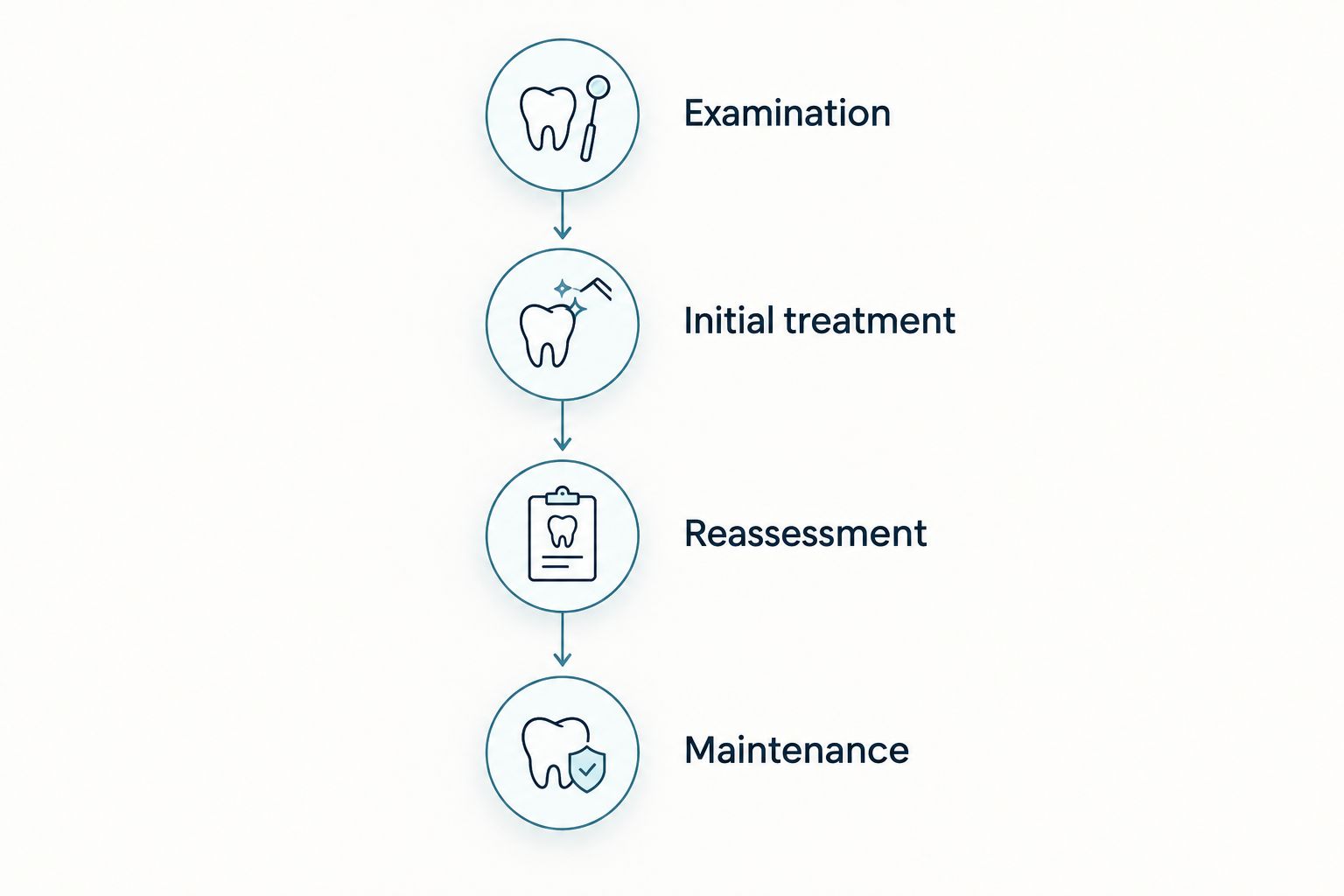
A useful gum disease plan follows a sequence. You should understand both the current diagnosis and how your dentist will judge improvement.
Examination
Your dentist examines the gums, measures periodontal pockets, and assesses bleeding and tooth support. Dental X-rays help evaluate bone levels when indicated. Share your medications, tobacco use, and relevant medical conditions, including diabetes.
Initial treatment
The diagnosis determines whether you need routine cleaning, scaling and root planing, or another approach. Ask what each proposed treatment addresses and which areas need attention. Discuss comfort measures before treatment starts.
Reassessment
Your clinician checks healing and compares findings after initial care. Persistent pockets or inflammation can change the plan. Feeling better is encouraging, but it is not the only measure of disease control.
Maintenance
Your follow-up schedule and home routine should match your periodontal needs. Ask which symptoms should prompt an earlier visit and how to clean areas that remain difficult to reach.
For a 2026 appointment, bring a short list of symptoms and questions. Include when bleeding began, whether teeth feel loose, and whether discomfort affects eating. This helps the conversation focus on your concerns without asking you to diagnose yourself.
Which gum disease treatment should you choose?
Choose an examination first; choose treatment second. For diagnosed gingivitis, professional cleaning and daily plaque control are the usual starting point. For diagnosed periodontitis, discuss scaling and root planing, reassessment, and ongoing maintenance.
Ask about specialist care when persistent pockets, complex defects, or advanced damage need further evaluation. Do not choose surgery, antibiotics, or a branded procedure simply because it sounds more advanced.
At Starboard Dental, patients seeking general dental care can discuss gum disease concerns alongside their broader oral health goals. In 2026, the most useful question remains straightforward: what diagnosis does this treatment address, and how will improvement be measured?
FAQ
What's the best treatment for gum disease in 2026?
The best treatment depends on whether you have gingivitis or periodontitis. Professional cleaning and daily plaque control address gingivitis; scaling and root planing commonly begins nonsurgical periodontitis treatment, followed by reassessment and maintenance.
Is a deep cleaning better than a regular cleaning for gum disease?
Scaling and root planing is appropriate when periodontitis requires cleaning below the gumline. A regular cleaning serves a different purpose and is not a substitute when deeper periodontal treatment is indicated.
Can I cure gum disease at home?
Home care alone cannot treat established periodontitis or remove hardened tartar. Daily plaque control supports treatment, while a dental examination determines whether professional cleaning or deeper care is needed.
Do I need antibiotics for bleeding gums?
Bleeding gums alone do not establish a need for antibiotics. A dentist must identify the cause and determine whether an antimicrobial has a specific role alongside other treatment.
When is gum surgery necessary?
Gum surgery is considered for selected persistent pockets or defects that need additional treatment. The decision depends on examination findings, response to initial care, and the goal of the proposed procedure.
Does deep cleaning hurt?
Local anesthesia can help control discomfort during scaling and root planing. Temporary tenderness or sensitivity can occur afterward; discuss comfort options and aftercare with your dental professional.
Can gum disease come back after treatment?
Periodontitis can recur after treatment, which is why maintenance and daily plaque control matter. Your clinician uses follow-up findings to set your care schedule and identify additional treatment needs.
When should I get urgent help for gum symptoms?
Facial swelling, fever with dental symptoms, or rapidly worsening pain needs urgent assessment. Trouble breathing or swallowing requires emergency care; do not wait for a routine cleaning appointment.
One last thing
Less bleeding does not prove that periodontal disease is controlled. Symptoms are useful, but pocket measurements, tissue health, and tooth support provide information you cannot check at home. Before you leave an appointment, ask when your gums will be reassessed and what the next visit is meant to evaluate.