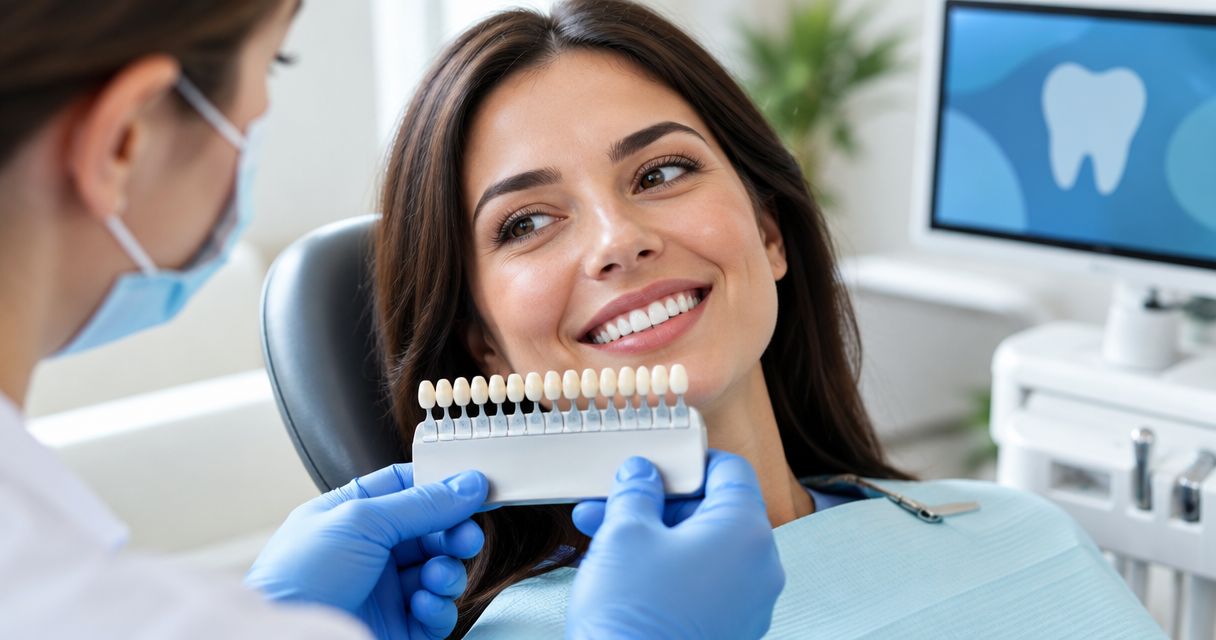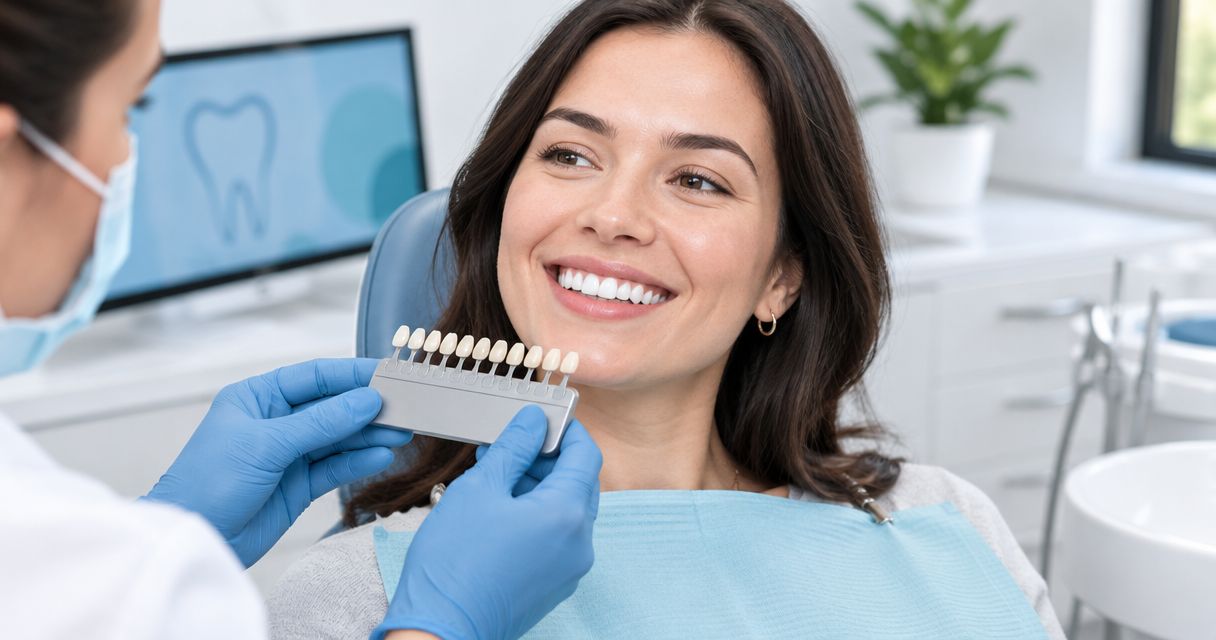
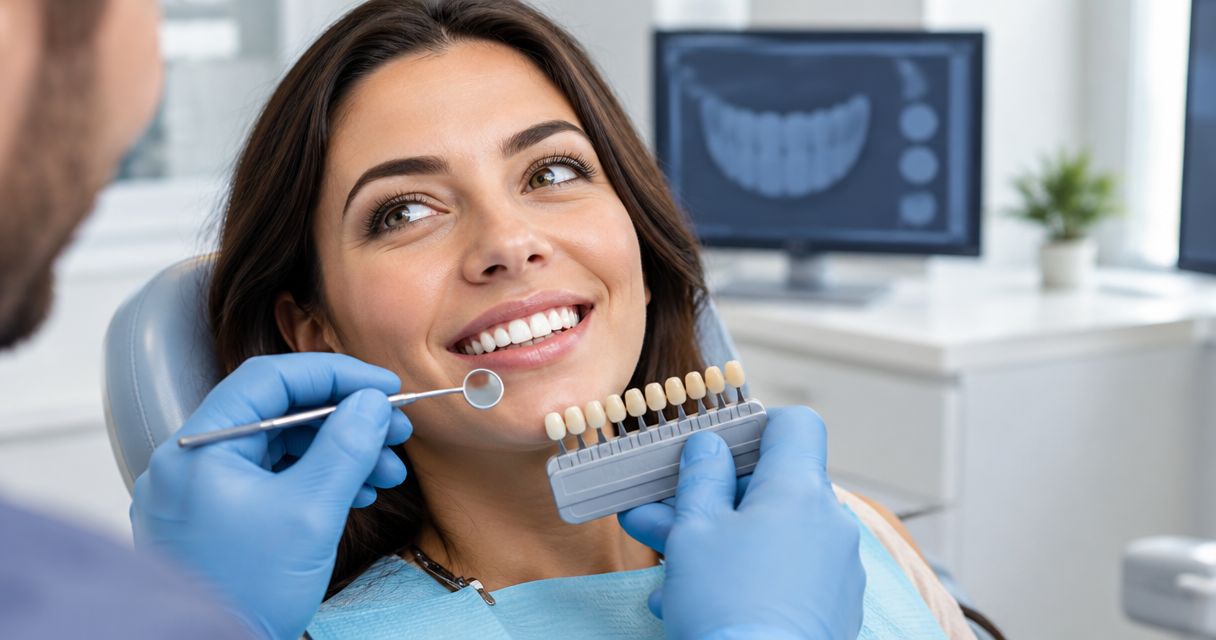
Porcelain veneers can make mildly crooked teeth look straighter, but they do not move teeth or correct an underlying bite problem. If you are considering veneers in 2026, the key question is whether covering the unevenness would preserve healthy tooth structure; veneers generally involve irreversible enamel removal and need ongoing care.
- Can veneers fix crooked teeth? Porcelain veneers disguise mild unevenness; orthodontics moves teeth and addresses alignment.
- Choose treatment around tooth position, bite, enamel, and gum health—not appearance alone.
- Porcelain veneers generally require irreversible enamel removal; discuss less invasive alternatives before deciding.
- Starboard Dental provides general, restorative, and cosmetic dental care for patients in Kennebunk, York, and Saco, Maine.
Why this matters
A straighter-looking smile and straighter teeth are different outcomes. A veneer changes the visible surface of a tooth, while orthodontic treatment changes its position. Confusing those goals can lead you toward treatment that changes your smile without addressing the reason your teeth look crowded.
For a cosmetic dental discussion in 2026, start with what bothers you: overlapping edges, a tooth that sticks forward, a gap, or uneven tooth shapes. Starboard Dental is best suited to local patients seeking a general, restorative, or cosmetic dental evaluation. You can learn about the practice at Starboard Dental.
Can porcelain veneers fix crooked teeth?
Porcelain veneers can camouflage minor crookedness when tooth position, enamel, and bite allow a suitable restoration. They cannot straighten tooth roots, create space within a crowded dental arch, or treat the underlying relationship between the upper and lower jaws.
A veneer covers the front surface of a tooth. By adjusting its shape and contour, a dentist can make an uneven edge or slightly irregular tooth appear more aligned with its neighbors. The limit is how much correction is possible without excessive tooth reduction or an overly bulky result.
The following comparison separates appearance changes from actual tooth movement. These are treatment categories, not recommendations for every crooked tooth.
| Option | Best for | Main benefit | Main limitation |
|---|---|---|---|
| Porcelain veneers | Selected mild unevenness with tooth-shape or color concerns | Changes visible shape and color together | Generally requires irreversible enamel removal; does not move teeth |
| Orthodontic treatment | Crowding, rotations, and alignment or bite concerns | Moves teeth rather than covering their position | Requires treatment over time and retention afterward |
| Dental bonding | Small shape differences, chips, or selected gaps | Adds tooth-colored material, often with less tooth reduction | Can stain or chip and does not move teeth |
| Monitoring without cosmetic treatment | Healthy, stable irregularities you are comfortable keeping | Preserves existing tooth structure | Does not change the appearance you dislike |
Choose the treatment that addresses the problem you actually have. If tooth position is the problem, covering the front surface is not the same as correcting it.
Porcelain veneers: best for selected cosmetic unevenness
Veneers deserve consideration when mild misalignment appears alongside concerns about tooth shape, worn edges, or discoloration. In a suitable case, changing the visible surface can address those concerns together.
The trade-off is permanent alteration of the tooth. Enamel removed during preparation does not grow back, and a veneered tooth needs continued care and future restorative treatment when the veneer eventually needs replacement.
Ask how much tooth structure the proposed correction would remove. A tooth that projects forward presents a different preparation challenge from a tooth that sits slightly behind its neighbors. More dramatic visual correction does not automatically mean a better dental result.
Orthodontic treatment: best for changing tooth position
Orthodontics is the relevant option when teeth need to move. That includes crowding, significant rotations, and certain bite problems that veneers cannot resolve.
Treatment requires follow-through, and retainers help maintain the result afterward. Orthodontics also does not automatically change a tooth's color or repair a chipped edge, so some people discuss a separate cosmetic adjustment after alignment.
Ask whether moving the teeth first would reduce or eliminate the need for veneers. Preserving healthy enamel is a meaningful benefit even when the treatment path requires more patience.
Dental bonding: best for small shape corrections
Bonding uses tooth-colored composite material to change selected areas of a tooth. It can be useful when a small edge or shape adjustment—not movement of the whole tooth—would address your concern.
Bonding often involves less tooth reduction than porcelain veneers, but it has limitations. The material can stain or chip, and adding material to an already prominent tooth can make it look bulkier rather than straighter.
Ask whether an additive correction is realistic before accepting an irreversible one. The answer depends on where the tooth sits and how it meets the opposing teeth.
Why veneer suitability varies
There is no reliable at-home test that determines whether veneers can disguise your crooked teeth. Photos show appearance, but they do not establish enamel thickness, gum health, or the forces acting on a proposed restoration.
These factors shape the decision:
- Degree of crowding: Greater overlap makes it harder to create an aligned appearance without substantial changes to tooth contours.
- Direction of displacement: A tooth that projects outward requires a different approach from a tooth positioned inward.
- Available enamel: The amount and condition of enamel affect preparation and bonding decisions.
- Bite contacts: How your upper and lower teeth meet affects the loads on veneers and their edges.
- Gum and tooth health: Decay or active gum disease needs attention before elective cosmetic treatment.
- Clenching or grinding: Repeated heavy forces increase concern about chipping, fracture, and protecting restorations.
These factors also explain why a result that looks appealing in someone else's photograph does not establish what is appropriate for your teeth. Your treatment plan needs to fit your mouth, not a reference image.
What should happen before you choose veneers?
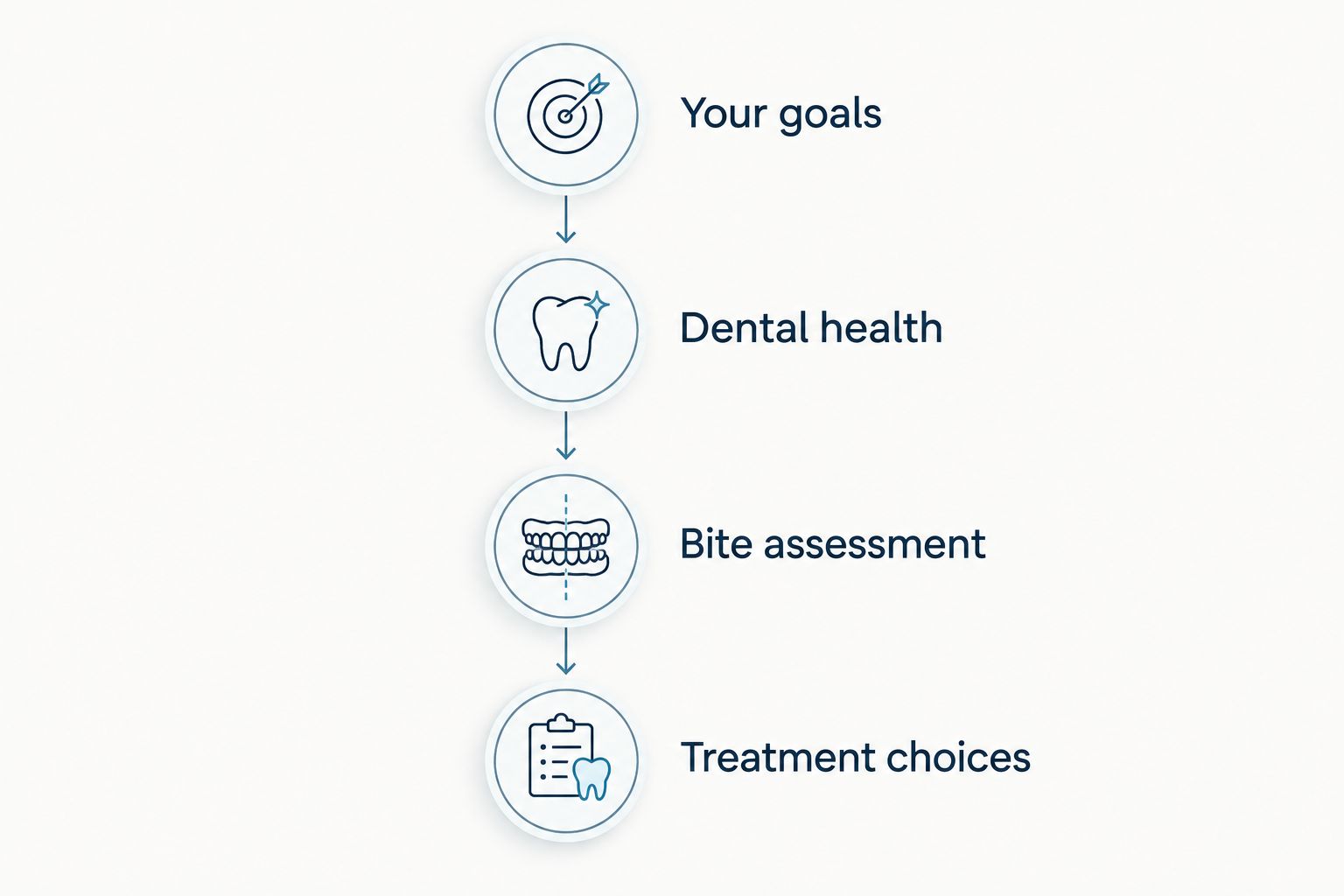
A useful consultation in 2026 should separate your cosmetic goals from the clinical findings. You should leave understanding what each proposed treatment changes, what it leaves unchanged, and what maintenance it requires.
- Your goals: Describe the specific features you want to change. Bring examples if they help, but explain whether your priority is alignment, color, shape, or a combination.
- Dental health: Have teeth and gums assessed before planning elective cosmetic work. Tell the dentist about sensitivity, bleeding, previous dental treatment, and any recent changes.
- Bite assessment: Discuss how your teeth meet and whether you clench or grind. A front-facing smile photograph cannot show all of those contacts.
- Treatment choices: Compare veneers with orthodontics, bonding, and leaving healthy teeth unchanged. Ask what each choice requires now and later.
If a preview or mock-up is part of your consultation, ask what it can demonstrate and what it cannot guarantee. A preview helps you discuss proportions and appearance; it does not replace an examination or predict every aspect of the finished result.
At Starboard Dental, the starting point is a discussion of your oral health goals. The practice's stated scope includes general, restorative, and cosmetic dentistry, so describe both the appearance you want and any symptoms you have rather than asking for a specific procedure alone.
Discuss your smile goals
Learn about general, restorative, and cosmetic dental care for patients in coastal Maine.
Can veneers fix severely crooked teeth?
Veneers do not correct severe crowding or major tooth rotations. Trying to camouflage a large positional difference can require substantial tooth reduction or produce contours that are difficult to clean.
If your teeth overlap significantly, ask for an orthodontic assessment before committing to veneers. The relevant question is not simply whether porcelain can cover the tooth, but whether doing so is a sound choice for its long-term health.
Avoid treating a prominent tooth as a purely surface-level problem. Its root position and bite relationship matter even when your main concern is the photograph you see from the front.
Can I get veneers instead of braces?
Veneers can be an alternative to orthodontics only when the goal is a suitable cosmetic change rather than tooth movement. They are not interchangeable treatments.
If your bite is healthy and the concern is limited to mild visible unevenness, a dentist can assess whether veneers or bonding would meet your goals. If alignment or bite needs correction, orthodontic treatment addresses something veneers leave unchanged.
Choosing veneers solely to avoid orthodontic treatment means accepting their own trade-offs, including permanent preparation and future maintenance. Ask the dentist to explain those trade-offs in plain language.
What if a crooked tooth has recently changed position?
A tooth that has recently shifted, become loose, or developed pain needs an assessment before cosmetic treatment. New movement is not simply an appearance issue to cover with porcelain.
Tell the dentist when you noticed the change and whether you also have bleeding gums, discomfort when biting, or a history of trauma. Those details help guide the examination without requiring you to diagnose the cause yourself.
Do not use a cosmetic appointment as a reason to delay care for symptoms. Establishing why a tooth has changed comes before deciding how it should look.
What care do veneers need afterward?
Veneers still need daily cleaning, and the natural tooth underneath remains vulnerable to decay. Keep a 2026 care routine focused on the gumline and the spaces between teeth—not just the visible porcelain.
- Brush for 2 minutes each time, using fluoride toothpaste and a soft-bristled toothbrush.
- Brush 2 times per day, keeping pressure gentle rather than scrubbing harder.
- Clean between teeth 1 time per day with floss or another interdental tool your dental team recommends.
- Avoid using your teeth to open packaging or bite hard objects.
- Attend dental visits at the interval recommended for your oral health.
If you grind or clench, ask whether a protective appliance is appropriate. A veneer does not stop grinding, and protecting the restoration is a separate part of the plan.
Report a chipped edge, a loose-feeling veneer, or a change in your bite. Do not try to file, glue, or reshape a restoration at home.
FAQ
Can veneers fix crooked teeth without moving them?
Veneers can disguise mild crookedness without moving teeth. They change the visible surface, so the underlying tooth and root position remain unchanged.
Are veneers better than braces for crooked front teeth?
Veneers are not better than braces when the teeth need to move. Orthodontics addresses alignment, while veneers address selected surface-level concerns such as shape and color.
Can I put a veneer on just one crooked tooth?
A veneer on one tooth is an option in selected cases, but tooth position, bite, enamel, and the appearance of neighboring teeth determine suitability. Matching a single restoration also requires careful planning.
Do teeth have to be shaved down for veneers?
Porcelain veneers generally require some enamel removal. The amount depends on the tooth and the planned change, and preparation is usually irreversible.
Can veneers fix an overbite?
Veneers do not correct an overbite. A dentist needs to assess the bite and discuss treatment that addresses the tooth or jaw relationship when correction is needed.
Can crooked teeth still get cavities under veneers?
A veneered tooth can still develop decay. Daily brushing, cleaning between teeth, and dental examinations remain necessary because porcelain does not protect every exposed tooth surface.
Should I straighten my teeth before getting veneers?
Straightening first deserves consideration when tooth position would otherwise require substantial veneer preparation. In some cases, alignment reduces or removes the need for veneers; the decision requires an examination.
One last thing
Before accepting a veneer plan in 2026, ask: Would moving these teeth first let me keep more healthy enamel? That question shifts the discussion from the fastest visible change to the effect on your natural teeth.
For patients considering cosmetic dental care at Starboard Dental, bring that question alongside your smile goals. A useful plan should explain not only what changes, but also what stays untouched.