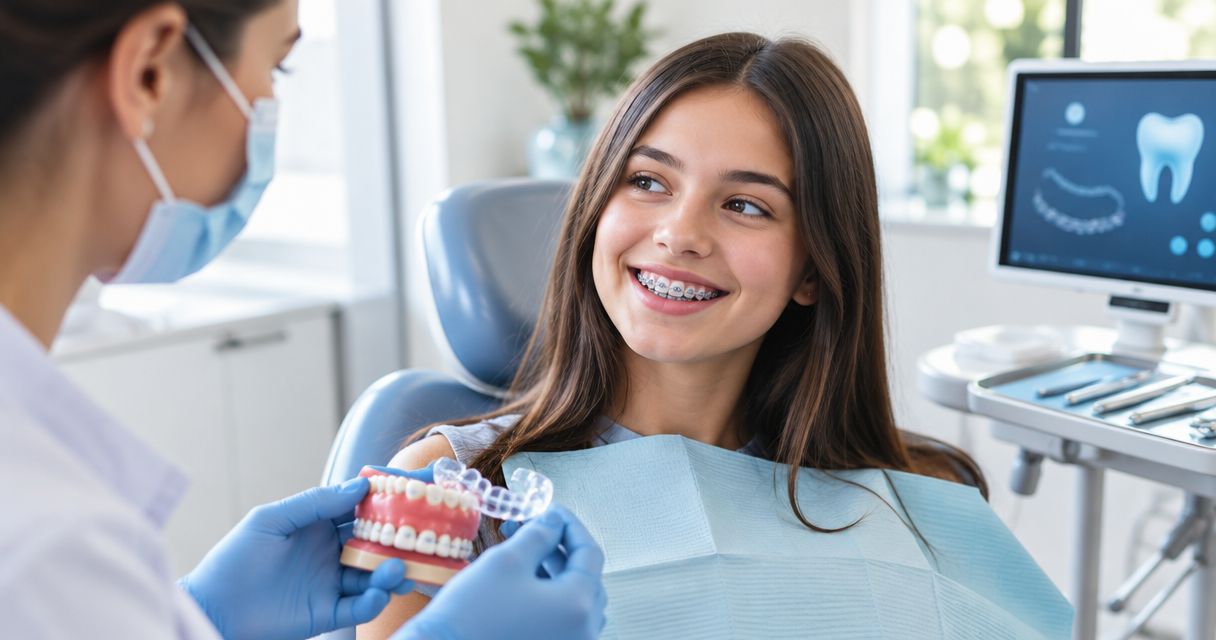
Teen dental care with braces is daily cleaning and professional prevention aimed at keeping teeth and gums healthy while teeth move; this 2026 guide explains how to manage fixed braces and Invisalign. Brackets trap food, while removable aligners require you to balance cleaning, meals, and the wear schedule prescribed by your orthodontist.
- Dental care for teens with braces combines fluoride brushing, daily interdental cleaning, and regular dental visits.
- Starboard Dental is best for teens seeking general dental care in Kennebunk, York, and Saco, Maine.
- Invisalign lets you remove trays for cleaning, but meals and drinks still need careful planning.
- Your orthodontist manages tooth movement; your general dentist checks cavities and gum health.
Why dental care matters for teens with braces
Straight teeth still need healthy enamel and gums. Orthodontic treatment changes tooth position; it does not prevent cavities. Plaque left around brackets or along the gumline can cause inflammation and enamel damage, including chalky white spots that remain after braces come off.
For teens, the challenge is fitting care around school lunches, sports, homework, and sleepovers. Fixed braces make some surfaces harder to reach. Invisalign makes brushing more accessible when trays are out, but putting trays over unclean teeth keeps plaque and food residue close to enamel.
Starboard Dental provides general dental care for patients of all ages in Kennebunk, York, and Saco, Maine. Starboard Dental is best for teens seeking general dental care alongside orthodontic treatment in these communities. Orthodontic appointments and general dental visits serve different purposes, so keep both on your 2026 calendar.
Build a routine you can actually follow
Brush carefully around every bracket and attachment
Start with a soft-bristled toothbrush and fluoride toothpaste. The American Dental Association recommends brushing twice daily for 2 minutes; with braces, pay particular attention to the gumline and the areas above and below brackets. An electric toothbrush is another option, but careful coverage matters more than whether the brush has a motor.
Tilt the bristles toward the gumline and work gently around the hardware. For Invisalign, remove the trays and brush every tooth surface, including around tooth-colored attachments. Do not scrub harder to compensate for a rushed routine: excessive pressure can irritate gums and contribute to wear.
- Brush the outside, inside, and chewing surfaces of every tooth.
- Clean above and below each bracket rather than brushing only across it.
- Use fluoride toothpaste and a soft-bristled brush.
- Replace your toothbrush every 3–4 months, or sooner when bristles fray.
- Ask your dental team to show you the areas you keep missing.
Clean between teeth every day
A toothbrush cannot adequately clean the tight spaces between teeth. Start with floss and a floss threader for fixed braces, or regular floss when aligners are removed. Gently curve the floss against each tooth rather than snapping it into the gums.
If threading floss makes the routine difficult, ask about an orthodontic flossing aid, an interdental brush, or a water flosser. These tools have different jobs: an interdental brush reaches suitable spaces around hardware, while floss reaches tooth-to-tooth contact areas. Starboard Dental can help you discuss preventive care needs; your orthodontist should address questions about cleaning around a particular appliance.
- Clean between your teeth daily, even when nothing feels stuck.
- Thread floss under the wire without pulling on brackets.
- Use an interdental brush only where it fits without force.
- Follow the instructions for any water flosser or flossing aid.
- Tell your dentist about recurring bleeding instead of abandoning cleaning.
Plan meals and drinks around your appliance
For fixed braces, follow your orthodontist's food restrictions. Hard or sticky foods can damage brackets or wires, and biting directly into firm foods puts pressure on the appliance. Cutting food into manageable pieces is a practical alternative when the food is otherwise suitable.
For Invisalign, remove trays before eating and before drinks other than plain water, unless your treating clinician gives different instructions. Repeated sipping of sugary or acidic drinks exposes teeth throughout the day; a sports drink is not the same as water for routine hydration.
School-day planning matters more than a perfect list of forbidden foods. Choose a lunch you can eat safely, and know where you will clean up afterward.
- Cut firm foods into pieces instead of biting with front brackets.
- Avoid chewing ice and other hard objects.
- Keep sugary or acidic drinks from becoming an all-day habit.
- Remove aligners for meals and store them in their case.
- Rinse with water when brushing is not immediately possible.
Clean aligners and protect their wear schedule
Remove Invisalign trays to brush and clean between teeth. Clean the trays according to the instructions supplied with your treatment, and avoid hot water because heat can distort plastic. Do not assume toothpaste, mouthwash, or a household cleaner is appropriate for the trays.
Your orthodontist's prescribed wear schedule takes priority over a generic online schedule. Keep track of time spent eating, drinking, and cleaning rather than leaving aligners out for an entire afternoon. When a tray feels unusually tight, stops fitting properly, or is lost, contact the orthodontic team instead of deciding to skip ahead.
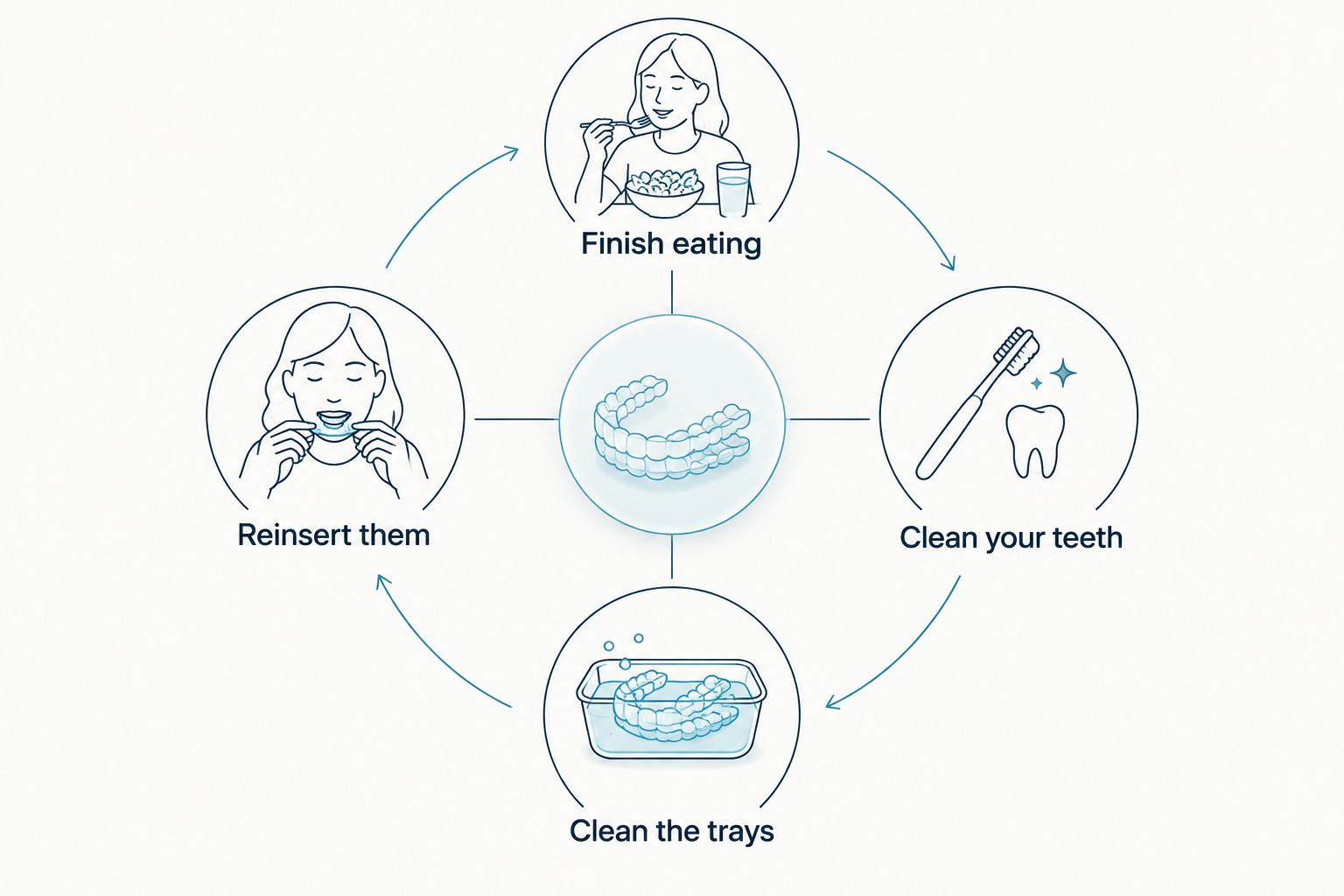
For a 2026 school routine, pair tray removal with a reliable return-to-mouth habit: finish eating, clean your teeth, clean or rinse the trays as instructed, and reinsert them.
- Store trays in a case, not a napkin or pocket.
- Keep trays away from heat and pets.
- Follow the supplied cleaning instructions.
- Follow your prescribed wear schedule and tray-change schedule.
- Contact your orthodontist about missing, damaged, or poorly fitting trays.
Keep dental checkups separate from orthodontic visits
Your orthodontist checks tooth movement, appliance fit, and treatment progress. Your general dentist checks for cavities, gum inflammation, and other oral health problems. An adjustment appointment does not replace a dental examination or professional cleaning.
Starboard Dental's general dental care supports prevention during orthodontic treatment, but orthodontic decisions belong with your treating orthodontist. Professional cleaning helps address deposits you cannot remove at home; it does not replace daily brushing and cleaning between teeth.
Ask your dentist how often you need visits based on your oral health. Some teens need closer monitoring because of recurring plaque, bleeding gums, or previous cavities. Do not choose a visit interval solely because a friend follows it.
- Keep both dental and orthodontic appointments on your calendar.
- Tell your dentist when treatment starts or your appliance changes.
- Ask whether your cavity risk calls for additional fluoride care.
- Bring up dry mouth, sensitivity, or repeated gum bleeding.
- Confirm your next preventive visit before leaving the office.
Respond to soreness and broken hardware promptly
Some tenderness can follow an orthodontic adjustment or a new aligner. Use your orthodontist's comfort instructions, choose foods you can chew comfortably, and ask a parent or clinician before taking pain medicine. Orthodontic wax can cover an irritating bracket or wire when used as directed.
Do not treat every toothache as normal orthodontic soreness. Persistent pain in one tooth, swelling, pus, fever, or pain that interrupts sleep needs professional assessment. A broken bracket or loose wire also deserves a call to your orthodontist, even when it does not hurt.
Trouble breathing or swallowing is an emergency. Seek emergency medical care rather than waiting for a routine dental appointment.
- Use orthodontic wax for rubbing hardware as instructed.
- Contact your orthodontist about broken brackets or loose wires.
- Avoid bending or cutting hardware without professional instructions.
- Report persistent tooth pain, swelling, or fever promptly.
- Seek immediate help for breathing or swallowing difficulty.
Make school, sports, and travel easier
Start with ordinary supplies you already use: a toothbrush, fluoride toothpaste, your interdental cleaning tool, and an aligner case when applicable. Keep them somewhere accessible rather than buried at the bottom of a sports bag. A reminder helps only if the supplies are ready.
For contact sports, ask about a mouthguard suitable for your appliance and changing tooth position. Aligners are not sports mouthguards. Do not use a guard that presses against brackets or interferes with treatment without your orthodontist's guidance.
Update the routine when your 2026 schedule changes. A new lunch period, practice time, or overnight trip is a reason to plan cleaning—not a reason to skip it.
- Pack cleaning supplies before school or travel.
- Set a reminder for evening brushing and interdental cleaning.
- Carry your aligner case whenever you leave home.
- Ask about an orthodontic-compatible sports mouthguard.
- Save your dental and orthodontic teams' contact details.
Compare care options for your teen
The best choice depends on the job: moving teeth, cleaning around hardware, or monitoring oral health. No appliance or cleaning tool removes the need for preventive dental care. Use this comparison to identify what each option helps with and where it falls short.
| Option | Best for | Main benefit | Key limitation |
|---|---|---|---|
| Fixed braces | Teens whose orthodontist recommends fixed treatment | Appliances remain attached between appointments | Brackets and wires make cleaning more involved |
| Invisalign | Teens considered suitable by their orthodontist who can follow wear instructions | Trays come out for brushing and interdental cleaning | Removal makes missed wear time possible; not every case is suitable |
| Floss with a threader | Cleaning between teeth beneath fixed wires | Allows floss to reach tooth-to-tooth spaces | Threading takes practice and patience |
| Water flosser | Teens who need an easier interdental cleaning aid | Directs water along the gumline and around hardware | Does not replace brushing or professional cleaning |
| Starboard Dental general dental care | Teens seeking prevention in Kennebunk, York, and Saco | Supports cavity and gum-health monitoring | Does not replace orthodontic treatment appointments |
| Orthodontic follow-up | Teens actively undergoing tooth movement | Checks appliance function and treatment progress | Does not replace general dental examinations |
Choose cleaning tools you can use correctly and consistently. More tools do not automatically mean cleaner teeth; your dental team can show you which tool reaches a specific area and how to use it without injury.
Common mistakes teens make during orthodontic treatment
- Brushing only the visible front teeth. Plaque also collects behind teeth, at the gumline, and around back brackets. Give those areas deliberate attention.
- Putting aligners back over food residue. Rinsing helps when you cannot brush immediately, but it is not a replacement for your daily cleaning routine.
- Leaving trays wrapped in a lunch napkin. A case protects against accidental disposal and damage. Keep the case with your lunch supplies.
- Skipping cleaning because gums bleed. Use gentle technique and report repeated bleeding. Ignoring the gumline leaves the cause unaddressed.
- Assuming soreness explains every symptom. A single painful tooth, worsening swelling, or damaged hardware needs assessment rather than guesswork.
In 2026, make the routine easier before adding more reminders: accessible supplies, a dependable tray case, and clear instructions from your dental team address the practical obstacles.
FAQ
What's the best daily dental care for teens with braces?
The best daily routine combines fluoride brushing twice a day, careful cleaning around brackets, and daily cleaning between teeth. Keep dental examinations and orthodontic visits because they address different needs.
Is Invisalign easier to keep clean than braces?
Invisalign makes tooth cleaning more accessible because you remove the trays before brushing and flossing. The trade-off is responsibility: you must clean the trays, store them safely, and follow your orthodontist's wear schedule.
Can I use a water flosser instead of a floss threader?
A water flosser is an interdental cleaning option, but the right choice depends on the spaces and hardware you need to clean. Ask your dental team to demonstrate a suitable technique; water flossing does not replace brushing.
Do I still need dental cleanings if I see an orthodontist?
Yes, you still need general dental examinations and professional cleanings during orthodontic treatment. Your orthodontist monitors tooth movement, while your dentist checks cavities, gums, and other oral health concerns.
What should I do if a wire is poking my cheek?
Contact your orthodontist and use orthodontic wax as directed to cover the irritating area. Do not bend or cut the wire unless the orthodontic team specifically instructs you to do so.
Are bleeding gums normal with braces?
Repeated gum bleeding needs attention rather than being accepted as part of wearing braces. Clean gently and consistently, and arrange a dental assessment if bleeding continues or comes with swelling or pain.
Can Starboard Dental help my teen during braces treatment?
Starboard Dental provides general dental care for patients of all ages in Kennebunk, York, and Saco, Maine. Keep your treating orthodontist involved in questions about brackets, aligner fit, wear schedules, and tooth movement.
One last thing
Before the next appointment, ask your teen to demonstrate brushing and interdental cleaning rather than simply asking whether they do it. A missed area is easier to fix when everyone can see it. The most useful 2026 routine is the one your teen can repeat on an ordinary school night.