Yes, a chipped tooth can get worse if it is not fixed: chewing pressure can cause further breakage, and damage that exposes deeper tooth layers can lead to sensitivity or infection. Not every small chip needs extensive treatment, but you need a dental examination to distinguish a minor enamel injury from damage that threatens the tooth.
- Can a chipped tooth get worse if not fixed? Yes; further breakage, tooth sensitivity, and infection are possible.
- A painless chipped tooth still needs assessment because pain does not reliably show how deep the damage goes.
- Starboard Dental provides general, restorative, and cosmetic dental care for patients of all ages in coastal Maine.
- Facial swelling with trouble breathing or swallowing requires emergency medical care, not a routine dental appointment.
Why this matters
A chip changes more than the shape of your smile. A rough edge can cut your tongue, a weakened corner can break again, and exposed dentin—the layer beneath enamel—can make eating uncomfortable. The size you can see does not tell you the full depth of the injury.
In 2026, the practical next step is still an examination rather than guessing from a photograph. Tell your dentist when the chip happened, whether you hit the tooth, and what makes it hurt. Starboard Dental serves patients of all ages in Kennebunk, York, and Saco, Maine.
Can a chipped tooth get worse if not fixed?
Yes. A chipped tooth can lose more structure, develop decay around a damaged area, or become painful if the injury reaches the tooth's inner tissues. These outcomes are not inevitable, but leaving the tooth unexamined leaves the cause and depth of the damage unresolved.
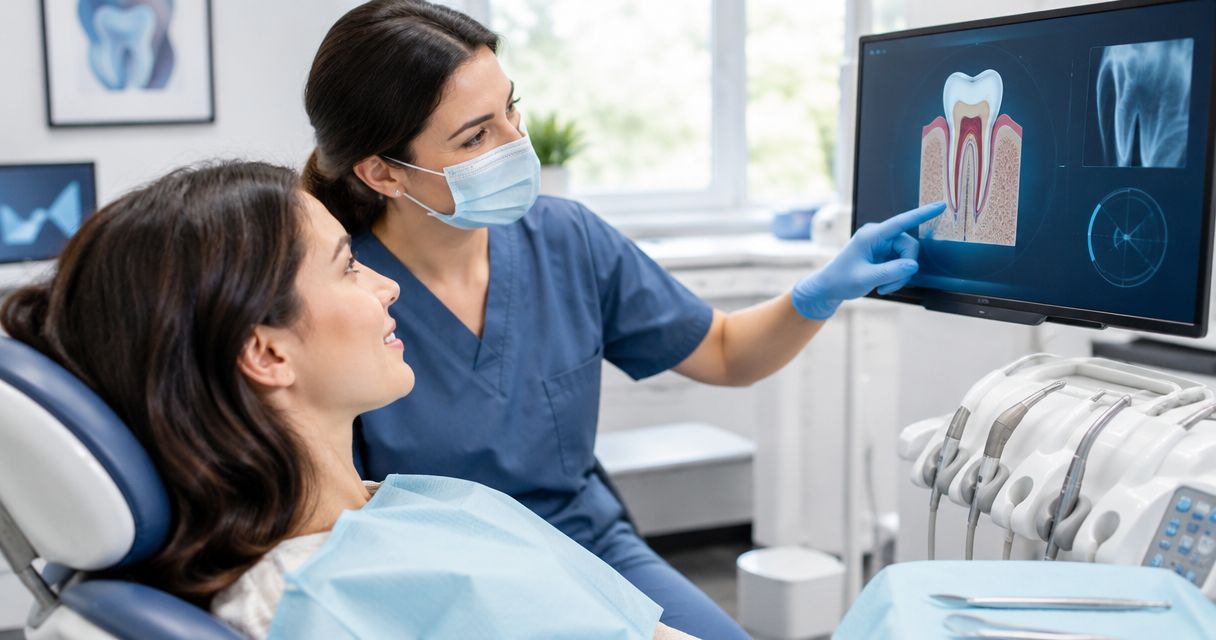
Teeth have a hard outer enamel layer, a softer dentin layer, and an inner pulp containing nerves and blood vessels. A shallow chip can stay within enamel. A deeper fracture can expose dentin or reach the pulp, changing both the urgency and the treatment needed.
| What you notice | What it can mean | What to do |
|---|---|---|
| Small rough edge without pain | A limited enamel chip, although depth needs checking | Arrange a dental examination and avoid biting hard foods with that tooth |
| Sensitivity to cold, heat, or sweets | Exposed dentin or irritation inside the tooth | Contact your dentist and describe the triggers |
| Pain when biting or releasing a bite | A fracture or another problem affecting the tooth | Avoid chewing on that side and request prompt assessment |
| Visible pink tissue or bleeding from inside the break | Possible pulp exposure | Seek urgent dental care |
| Swelling, pus, fever, or worsening pain | Possible infection | Seek urgent dental care; breathing or swallowing difficulty requires emergency medical care |
A tooth that chipped during a fall or collision also needs assessment for injuries beyond the visible edge. Tell the dentist if the tooth feels loose, your bite feels different, or nearby teeth are tender.
Small enamel chips: limited damage still needs checking
A small enamel chip does not automatically mean a crown or root canal treatment. A dentist can sometimes smooth a rough edge or restore the missing shape with bonding, depending on the location and remaining tooth structure.
The advantage of a limited repair is that it preserves more natural tooth. The limitation is that smoothing or bonding does not address an undetected deeper fracture. Have the tooth assessed before deciding that the chip is only cosmetic.
Do not file the edge yourself. You cannot judge enamel thickness or the direction of a fracture with a household tool, and removing more tooth can create another problem.
Deeper chips: exposed dentin needs protection
A chip that reaches dentin can cause sensitivity because dentin contains microscopic channels connected to the inner tooth. Cold drinks, sweet foods, or air passing over the area can trigger discomfort.
Sensitivity does not prove that the nerve is permanently damaged. It does mean the tooth needs assessment rather than repeated testing with ice or hot drinks. Avoid the trigger until your dentist identifies the cause.
A restoration can cover exposed dentin and replace missing structure. The choice depends on how much tooth remains, where the chip sits, and whether the tooth can support the repair.
Chips reaching the pulp: urgent assessment matters
A deep break can expose or injure the pulp. Symptoms can include persistent pain, lingering temperature sensitivity, or visible tissue within the broken area, but symptoms alone cannot establish the diagnosis.
Some injured teeth need root canal treatment and a restoration; others require a different approach. If a tooth cannot be predictably restored, extraction becomes part of the discussion. A chip does not automatically mean losing the tooth.
Your dentist needs to assess the tooth's structure, pulp condition, and surrounding tissues before recommending treatment. Do not assume that antibiotics alone will repair a broken or infected tooth.
Why a chipped tooth's condition varies
Whether a chip stays limited or develops into a larger problem depends on the damage and the forces acting on the tooth:
- Depth: A chip confined to enamel differs from a fracture reaching dentin or pulp.
- Location: A broken chewing surface faces different pressure from a small chip on a front edge.
- Remaining structure: Decay, large existing restorations, or previous damage can leave less tooth supporting the area.
- Biting forces: Grinding, clenching, and chewing hard objects can place added stress on weakened tooth structure.
- Cause of injury: A blow to the mouth can injure supporting tissues as well as chip enamel.
- Ongoing symptoms: New swelling, lingering pain, or a changed bite calls for reassessment rather than continued observation.
A dentist considers these factors together. A small-looking chip with bite pain deserves attention even when a larger-looking chip elsewhere causes no discomfort.
What to do for a chipped tooth in 2026
Protect the tooth while arranging care. Home measures reduce irritation; they do not rebuild missing enamel or diagnose a fracture.
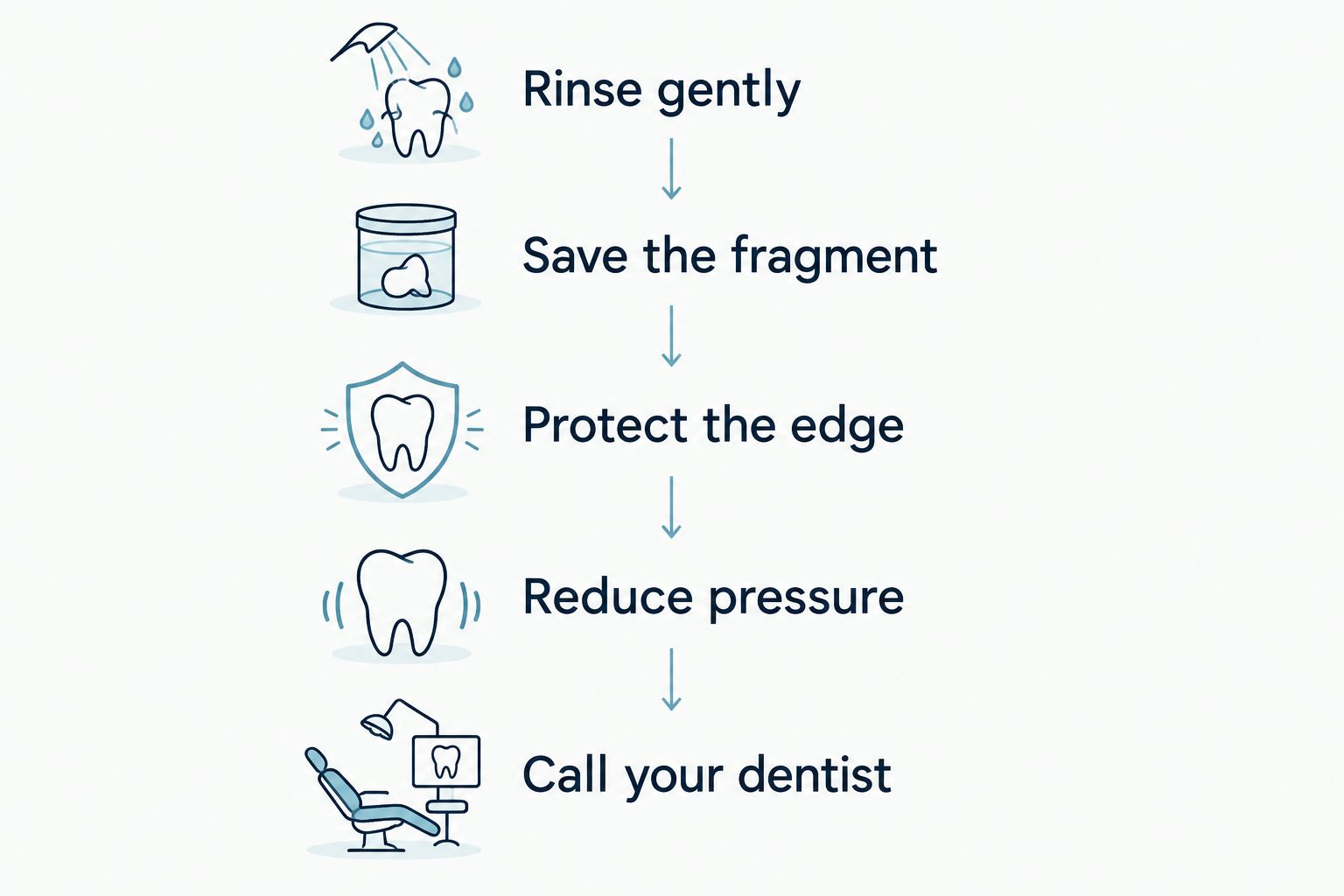
- Rinse gently. Use water to clear loose debris. If there is bleeding, apply gentle pressure with clean gauze without probing the broken area.
- Save the fragment. If you find the broken piece, keep it moist in milk or saliva in a clean container and bring it to the dentist. Do not hold a loose fragment in a young child's mouth.
- Protect the edge. Dental wax can temporarily cover a sharp edge that is rubbing your cheek or tongue. Do not use household glue or attempt to attach the fragment yourself.
- Reduce pressure. Choose softer foods and chew away from the injured tooth. Avoid ice, hard candy, and testing whether the tooth can still bite normally.
- Call your dentist. Describe the injury, symptoms, swelling, and any looseness. Mention a fall or blow to the face even if the chip seems small.
If you need pain relief, follow the medication label and check with a pharmacist or clinician when you have medical conditions, take other medicines, or are treating a child. Never put aspirin directly against a tooth or gum; it can injure the tissue.
When you call in 2026, describe symptoms rather than asking only whether the chip looks serious. A useful description includes whether pain happens spontaneously, follows temperature changes, or occurs when you bite.
Which repairs can protect a chipped tooth?
The right repair addresses both missing structure and the condition of the remaining tooth. Cosmetic appearance matters, but a repair also needs to work with your bite. The guide to options for a chipped or cracked tooth explains the broader treatment choices.
| Treatment | Best for | Main benefit | Main limitation |
|---|---|---|---|
| Smoothing | Selected very small enamel chips | Removes a rough edge | Does not replace substantial missing structure |
| Dental bonding | Selected small or moderate chips | Rebuilds shape with tooth-colored material | Can chip or stain and needs suitable tooth support |
| Dental crown | Selected teeth with substantial structural loss | Covers and protects the remaining tooth | Usually requires reshaping the tooth |
| Root canal treatment with restoration | Restorable teeth with pulp damage requiring treatment | Treats the affected inner tissue while retaining the tooth | Does not replace the need to restore and protect the broken tooth |
| Extraction | Teeth that cannot be predictably restored | Removes a tooth that cannot be retained | Removes the natural tooth and creates a separate replacement decision |
These are treatment categories, not a way to choose your own procedure. Your dentist should explain why the proposed repair fits the fracture and what its limitations are.
Starboard Dental is best suited to patients in Kennebunk, York, and Saco seeking general, restorative, and cosmetic dental care. An examination is the starting point for deciding what an individual chipped tooth needs.
Can I wait if my chipped tooth does not hurt?
No pain does not establish that waiting is safe. Enamel does not contain nerves, and symptoms do not reliably reveal whether a fracture extends beyond the visible chip.
Contact your dentist for advice about appointment timing. A stable, minor chip without symptoms is different from a tooth with swelling, looseness, or pain when biting, but that distinction needs professional assessment.
Can a chipped tooth heal on its own?
Missing tooth structure does not grow back. Saliva and fluoride help protect and remineralize early mineral loss, but they cannot rebuild a broken corner of a tooth.
A chip that stops feeling sharp has not necessarily repaired itself. The edge can wear smoother while the missing structure and underlying cause remain.
When does a chipped tooth become an emergency?
Trouble breathing or swallowing with facial or mouth swelling requires emergency medical care. Do not wait for a routine dental appointment when swelling affects your airway.
Seek urgent dental care for suspected pulp exposure, severe or worsening pain, swelling, fever, or a loose or displaced tooth after an injury. A serious facial injury or bleeding that will not stop also needs urgent medical assessment.
What your dental examination should clarify
At a chipped-tooth visit, the dentist checks more than the missing piece. The examination can include checking the bite, testing the tooth's response, assessing nearby teeth, and taking X-rays when indicated. Some fractures are difficult to see, so a normal-looking photograph or X-ray does not settle every question.
Bring a clear account of what happened. Explain whether the tooth already had a filling or crown, whether you grind your teeth, and whether symptoms have changed since the injury.
Useful questions for your 2026 appointment include:
- Is the damage limited to enamel, or does it involve deeper tissue?
- Is there evidence of a crack beyond the missing piece?
- What does the proposed repair protect, and what can it not fix?
- Which symptoms should prompt an urgent call after treatment?
Protect the repair and the rest of your teeth
Prevention does not replace treatment, but it reduces avoidable stress on damaged teeth. Brush for 2 minutes at a time, 2 times daily, using fluoride toothpaste, and clean between teeth 1 time daily. These established home-care habits remain useful in 2026, whether the chip is new or already repaired.
Avoid chewing ice, opening packages with your teeth, and biting hard objects. If you grind or clench, ask your dentist whether a professionally assessed protective appliance is appropriate. For sports with a risk of mouth injury, use a suitable mouthguard.
A repair is not permission to ignore new symptoms. Contact your dentist if the bite feels uneven, the restoration moves, or sensitivity worsens instead of settling.
FAQ
Can a tiny chipped tooth get worse even if it feels fine?
Yes, a tiny chipped tooth can develop further damage even without pain. A dental examination helps determine whether the chip is limited to enamel or involves a deeper fracture.
How long can I leave a chipped tooth untreated?
There is no single safe waiting period for every chipped tooth. Contact your dentist for timing advice, and seek urgent care for swelling, severe pain, looseness, or suspected pulp exposure.
Can I fix a chipped tooth at home?
You cannot permanently repair a chipped tooth at home. Protect a sharp edge with dental wax, avoid chewing on the tooth, and arrange dental assessment rather than using glue or filing tools.
Does a chipped tooth always need a crown?
No, a chipped tooth does not always need a crown. Selected small chips can be smoothed or repaired with bonding; more extensive damage needs a different assessment.
Will I need a root canal for a chipped tooth?
A chipped tooth needs root canal treatment only when the pulp condition and diagnosis call for it. A chip confined to enamel does not automatically require treatment inside the tooth.
What should I do if my child chips a tooth?
Contact a dentist and explain whether the injured tooth is a baby tooth or a permanent tooth. Mention looseness, bleeding, a changed bite, or a blow to the face, and bring any fragment you find.
Can I eat normally with a chipped tooth?
Avoid biting hard foods with a chipped tooth until a dentist assesses it. Choose softer foods and chew away from the damaged area, especially if biting causes pain.
One last thing
A tooth that stops hurting has not necessarily recovered. Pain can change even when the underlying injury remains, so keep the appointment rather than treating symptom relief as proof that the tooth is healthy.
For your 2026 visit, bring the fragment if you have it and a brief description of what changed. Starboard Dental's general, restorative, and cosmetic dental care serves patients of all ages; the useful first question is what the tooth needs to stay healthy, not simply how to hide the chip.