A traditional dental crown usually takes 2 appointments, with about 2–3 weeks between tooth preparation and final placement; a same-day crown can be completed in one visit when the practice offers that option and your tooth is suitable. For your 2026 treatment plan, remember that this timeline excludes any root canal treatment, gum care, or other work needed before the crown. The time you spend in the chair is separate from the time a laboratory needs to make the restoration.
- How long does it take to get a dental crown? Usually 2 visits, with laboratory fabrication between appointments.
- Same-day crowns avoid the laboratory wait, but availability and suitability must be confirmed with your dentist.
- Root canal treatment or other preparation can extend the complete dental crown timeline.
- Starboard Dental provides restorative dental care for patients in Kennebunk, York, and Saco, Maine.
How long does it take to get a dental crown?
Plan for 2 appointments for a laboratory-made crown, rather than 2 appointments on consecutive days. Cleveland Clinic’s patient guide, Dental Crowns, describes the traditional two-visit process and a laboratory fabrication period of about 2–3 weeks. Your dentist gives you the schedule for your particular tooth.
The main difference is where the crown is made. A laboratory makes a traditional crown between visits; an office with suitable equipment can design and make certain crowns during the same appointment. The dental crown materials comparison explains another part of that decision: what the restoration is made from.
| Crown process | Usual appointment pattern | Best for | Main benefit | Main limitation |
|---|---|---|---|---|
| Laboratory-made crown | 2 visits, with fabrication between them | Patients whose treatment plan calls for laboratory fabrication | Allows a separate fabrication stage before final fitting | Requires a return visit and usually a temporary crown |
| Same-day crown | One treatment visit when appropriate | Patients with a suitable tooth and access to in-office fabrication | Avoids a separate laboratory waiting period | Not offered by every practice or suitable for every case |
An examination, imaging, or a consultation can take place separately from these treatment appointments. Ask whether those steps are included when the office tells you how many visits to expect.
Why this matters
A crown timeline affects more than your calendar. Between traditional crown appointments, you usually have a temporary restoration that protects the prepared tooth while the final crown is being made.
If you are arranging treatment around travel, work, or a family event in 2026, ask about both appointment dates before treatment starts. Do not treat the first visit as the finish line. The final fitting checks how the crown meets your gums, neighboring teeth, and bite.
Laboratory-made crown: 2 treatment visits
The traditional process separates tooth preparation from final placement. That gives the laboratory time to make the crown and gives your dentist a later appointment to check its fit before securing it.
First visit: prepare and protect the tooth
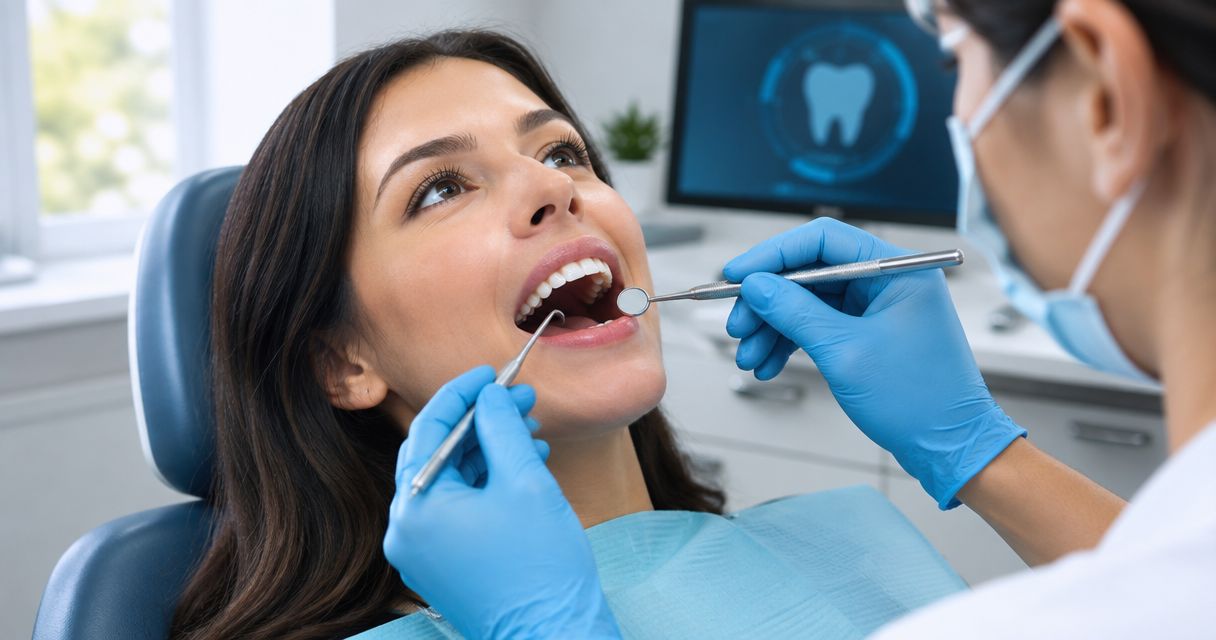
Your dentist examines the tooth and confirms that a crown is appropriate. Imaging helps assess decay, existing fillings, roots, and the surrounding bone when needed.
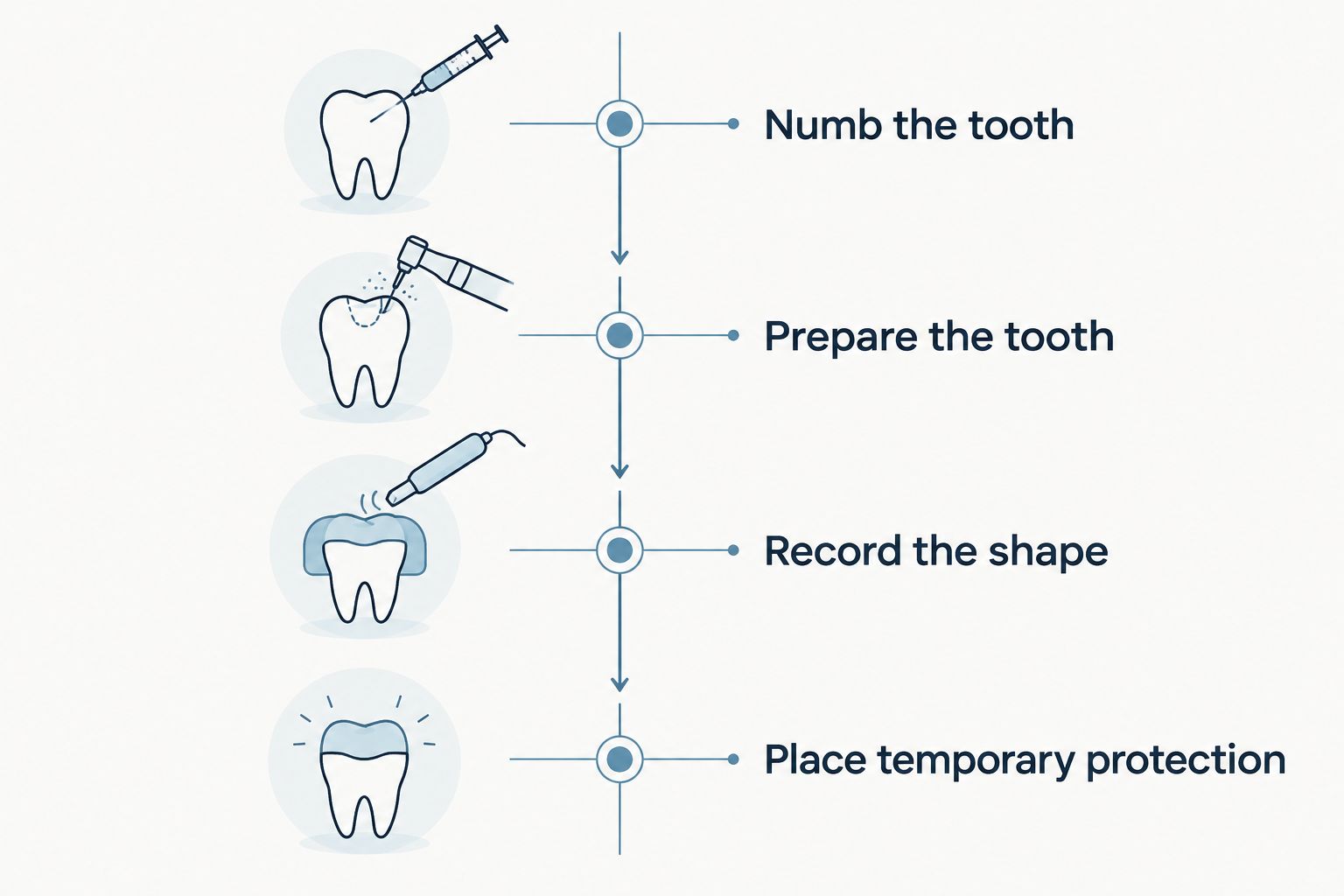
The treatment appointment generally includes these steps:
- Numb the tooth. Local anesthetic helps keep you comfortable while the tooth is prepared.
- Prepare the tooth. Your dentist removes decay and reshapes the tooth to make room for the crown. A damaged tooth sometimes needs additional material to support the restoration.
- Record the shape. A digital scan or an impression records the prepared tooth and surrounding teeth. Your dentist also records how your teeth meet.
- Place temporary protection. A temporary crown usually covers the prepared tooth while the laboratory makes the final restoration.
The appointment length depends on the work involved. A tooth with a large broken filling does not necessarily need the same preparation as an otherwise intact tooth, so ask the office how much time to reserve.
Between visits: the laboratory makes the crown
The laboratory uses the records from your preparation appointment to make the restoration. This waiting period is fabrication time, not a rule that every prepared tooth needs weeks of healing.
Your temporary crown has a practical job: it covers the prepared tooth and helps preserve its position and function. Follow your dentist’s instructions about brushing, cleaning between teeth, and eating while it is in place.
Second visit: check and secure the final crown
Your dentist removes the temporary crown and checks the final restoration. The checks include the edges, contact with neighboring teeth, appearance, and bite.
If the crown fits properly, your dentist secures it to the tooth. If it needs a laboratory change or remake, another appointment is necessary; a crown should fit correctly before it is permanently secured.
Same-day crown: one treatment visit
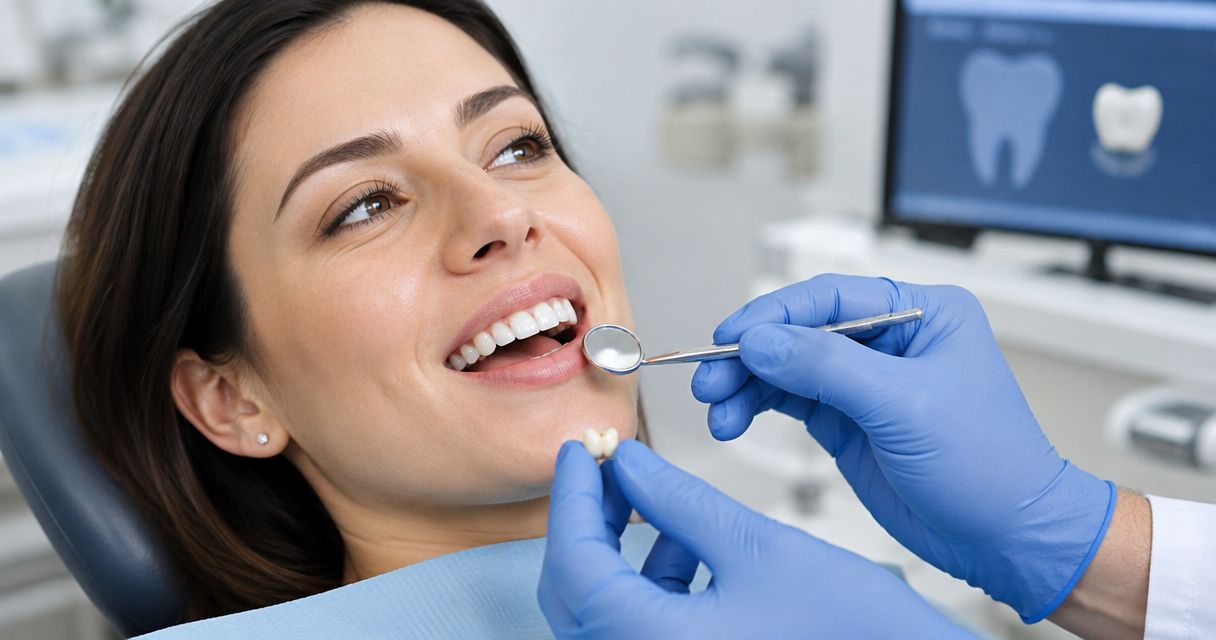
A same-day crown combines preparation, digital design, fabrication, and fitting into one treatment visit. The practice needs in-office equipment, and your dentist must determine whether the method suits the tooth.
Best for: patients with a suitable tooth who want to avoid the temporary-crown interval. The main advantage is fewer treatment visits, not a guarantee that the appointment itself will be brief.
The limitation is that same-day treatment is not the right method for every situation. Material needs, the extent of tooth damage, and the details of the restoration affect the decision.
For a 2026 appointment, ask the office directly whether same-day fabrication is offered for your case. Do not assume that a digital scan means the crown will be made in the office; scans can also be sent to a laboratory.
Why the dental crown timeline varies
The crown-making process is only part of your treatment schedule. These factors determine whether you can move straight to preparation or need other care first:
- Decay and remaining tooth structure. Your dentist needs enough sound tooth structure to support the crown. Removing decay or building up the tooth adds work before fabrication.
- The condition of the tooth’s nerve. An infected or inflamed nerve sometimes requires root canal treatment before the tooth receives its final crown. Not every crowned tooth needs a root canal.
- Gum health and the crown edge. Inflamed gums or a deeply damaged tooth can require additional care so the dentist can prepare and restore the tooth appropriately.
- Fabrication method. Laboratory-made and in-office crowns follow different schedules. Confirm the method rather than planning from the word “crown” alone.
- Fit at the delivery appointment. A crown that needs a substantial correction can require laboratory changes and another visit. Bite and fit checks are part of completing treatment, not optional extras.
- Appointment scheduling. Laboratory completion and an available fitting appointment are separate steps. Ask when the final crown is expected and when it can actually be placed.
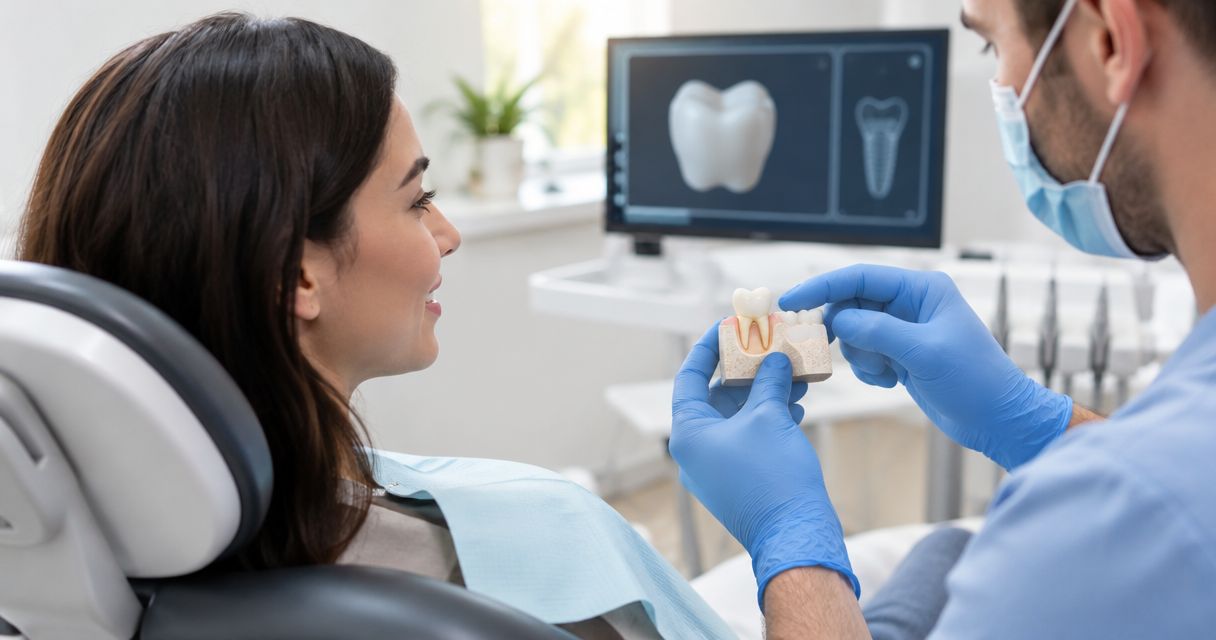
Choose the treatment sequence that protects the tooth, not simply the shortest calendar estimate. If a dentist recommends preliminary care, ask what problem it addresses and which milestone must come before the crown.
How should you plan your crown appointments in 2026?
Start with the dates you need to work around, then ask the dental office to explain the sequence. Tell the team about upcoming travel before tooth preparation, especially if you would be away while wearing a temporary crown.
Use these questions when scheduling:
- Does the appointment include the examination and imaging, or are those separate?
- Is this a laboratory-made crown or an in-office crown?
- Does the tooth need treatment before preparation?
- Will I leave with a temporary crown?
- When should I return for the final fitting?
- Who should I contact if the temporary crown loosens?
For patients seeking general and restorative dental care in Kennebunk, York, and Saco, Starboard Dental is a local practice led by Dr. Alex Kerbaugh. Discuss your tooth, symptoms, and schedule with Starboard Dental to establish a treatment plan rather than assuming a particular crown method is available.
A useful appointment estimate names both the work and the next step. “Preparation first, then final fitting after fabrication” gives you more information than a promise to finish quickly.
Can I eat normally while waiting for my permanent crown?
You can eat while wearing a temporary crown, but you need to protect it. Avoid chewing until numbness has worn off, and follow the instructions your dentist gives you about foods and cleaning.
Sticky foods can pull at a temporary crown, while hard foods can damage it. Chewing on the other side helps reduce stress on the temporary restoration.
If the temporary crown comes off, contact the office promptly rather than waiting for your final appointment. Do not use household glue to put it back; the dentist needs to advise you on protecting the tooth safely.
Does a root canal make getting a crown take longer?
A root canal can extend the overall treatment schedule because it addresses the inside of the tooth before the final restoration. The crown appointments and the root canal appointment are different stages of care.
Needing a crown does not automatically mean you need a root canal. Your dentist assesses symptoms, imaging, and the tooth’s condition before recommending either procedure.
When both are needed, ask who is completing each stage and when to arrange the crown appointment. Clear handoffs matter more than trying to fit every step into a general timeline.
When should I call about pain or a bite that feels wrong?
Contact your dentist if pain is worsening, your crown feels loose, or the tooth seems to hit before your other teeth when you bite. Do not assume you need to tolerate a bite that feels uneven until it settles.
Some sensitivity after tooth preparation or crown placement can occur, but persistent or worsening symptoms need assessment. Facial swelling, fever, or increasing pain also calls for prompt dental advice.
Trouble breathing or swallowing requires emergency medical care. That is not a routine crown-adjustment concern.
FAQ
How long does it take to get a dental crown in 2026?
A traditional dental crown usually takes 2 treatment visits, with about 2–3 weeks for laboratory fabrication between preparation and placement. Examination visits, preliminary treatment, and scheduling can extend the overall timeline.
Can I get a permanent crown in one day?
A permanent crown can be completed in one visit when the practice offers in-office fabrication and your tooth is suitable. Confirm both points before planning around same-day treatment.
How long will I be in the dental chair for a crown?
Your chair time depends on the preparation needed and how the crown is made. Ask the office for separate estimates for the preparation visit and the final fitting rather than using the laboratory waiting period as an appointment estimate.
Why do I need a temporary crown between appointments?
A temporary crown protects the prepared tooth while the laboratory makes the final restoration. It also helps maintain the tooth’s position and function, but it needs care until your permanent crown is placed.
Does every tooth need a root canal before a crown?
No, not every tooth needs a root canal before a crown. Root canal treatment addresses problems involving the tissue inside the tooth; a crown restores and covers the outside of the tooth.
Can I go back to work after a crown appointment?
Many patients return to routine activities after an appointment performed with local anesthetic. Follow your dentist’s instructions, wait until numbness wears off before chewing, and discuss different restrictions if sedation is planned.
Can Starboard Dental tell me my exact crown timeline?
Starboard Dental can discuss your treatment sequence after assessing the tooth. Ask whether preliminary care is needed, how the crown will be fabricated, and when the final fitting should be scheduled.
One last thing
Tell your dentist if your bite feels high before you leave the fitting appointment. A crown can look right while still needing an adjustment to how your teeth meet.
For your 2026 treatment plan, the useful finish line is a crown that fits and functions properly—not simply the earliest placement date. Before leaving, confirm how to clean around it and whom to call if something feels wrong.