
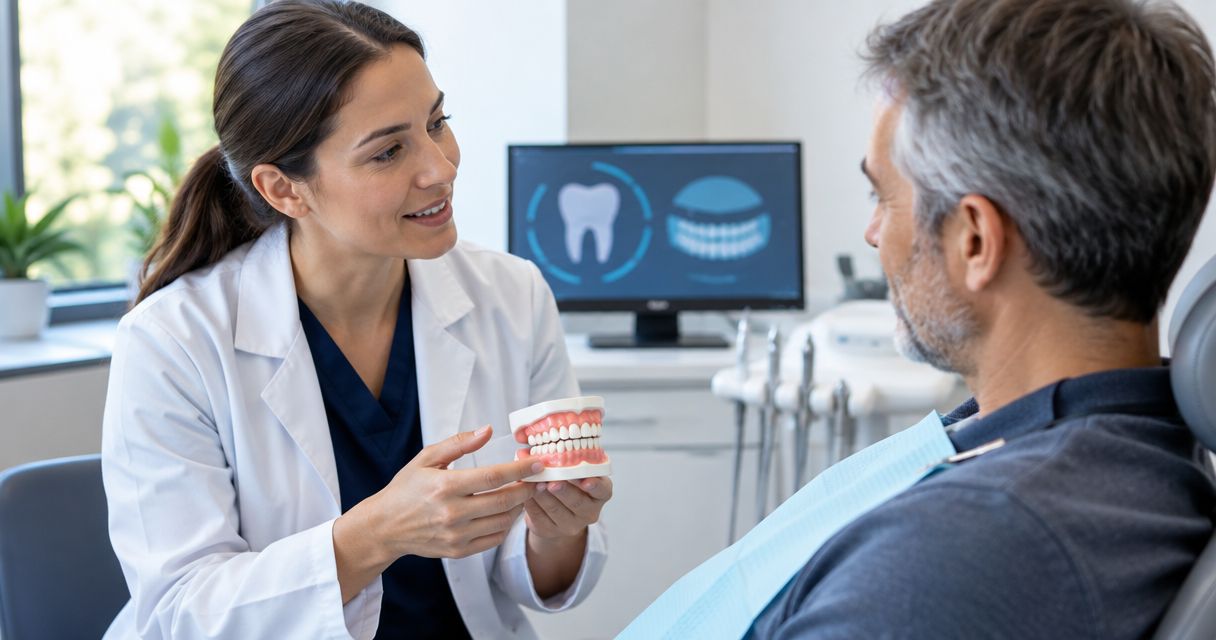
Your full mouth reconstruction cost in 2026 depends on which teeth need treatment, whether your gums and supporting bone need care, and how your final restorations will work together. A useful estimate must also explain whether examinations, temporary teeth, preparatory procedures, and follow-up care are included. Compare written treatment plans—not a headline total without a list of what it covers.
- Full mouth reconstruction cost depends on your treatment plan, not a standard package.
- Compare restorative dentistry plans by included procedures, temporary teeth, follow-up care, and insurance assumptions.
- Treat active dental disease before choosing cosmetic dentistry changes.
- Starboard Dental serves Maine families seeking general, restorative, and cosmetic dental care.
How much does a full mouth reconstruction cost in 2026?
There is no single total that describes every full mouth reconstruction. Your dentist must identify what needs repair, what can remain, and which treatments address your goals before an estimate becomes meaningful.
Ask for a written breakdown that connects each proposed procedure to a specific problem. A plan should distinguish treatment needed to restore health and function from optional appearance changes, without assuming every tooth needs the same work.
| Part of the estimate | What to ask | Why it matters |
|---|---|---|
| Examination and planning | Which examinations, images, and records are included? | Planning identifies problems before treatment begins. |
| Preparatory care | Are gum treatment, extractions, or other preliminary procedures needed? | Final restorations depend on the health of their supporting tissues. |
| Temporary teeth | What will I use while treatment and healing continue? | Temporary restorations can affect eating, appearance, and the treatment sequence. |
| Final restorations | Which teeth need which restorations, and why? | Different dental problems require different solutions. |
| Follow-up care | Which checks and adjustments are included? | Your bite and comfort need evaluation after treatment. |
Why this matters
A lower estimate is not automatically a better plan, and a higher estimate does not prove that more treatment is necessary. You need enough detail to understand the differences.
Starboard Dental provides general, restorative, and cosmetic dental care for patients of all ages in Kennebunk, York, and Saco, Maine. For patients considering extensive dental work, the useful starting point is a discussion about oral health, function, and personal goals—not choosing a package before an examination.
If you are comparing estimates in 2026, ask each practice to describe the same scope of work. An estimate that includes temporary restorations and preparatory care cannot be compared fairly with one that lists only the final teeth.
What should a reconstruction estimate include?
A clear estimate should show what is planned, why it is recommended, and what remains conditional. Some decisions depend on examination findings, imaging, or the condition of a tooth once an existing restoration is removed.
That uncertainty belongs in the discussion before treatment. Ask which findings would change the plan and how you would approve additional work.
A tooth-by-tooth explanation
Ask your dentist to identify the problem affecting each tooth or area. A damaged tooth, a missing tooth, and a healthy tooth do not automatically need the same treatment.
Your written plan should make those distinctions understandable. You should know which teeth can remain, which need protection or repair, and which cannot be predictably restored.
A sequence of care
The order matters. Active infection and gum disease need attention before the final restorative plan can be completed safely.
Ask what happens first, what requires healing, and what follows. A sequence also helps you understand whether treatment can be divided into clinically appropriate stages rather than scheduled entirely around payment preferences.
Clear inclusions and exclusions
Ask whether the estimate covers laboratory work, temporary restorations, fitting appointments, bite adjustments, and follow-up examinations. These questions do not assume any particular practice includes or excludes them; they make the estimate easier to understand.
Keep a copy of the plan. If you receive an updated version, ask what changed and whether the change affects other parts of treatment.
Which reconstruction approach fits your dental needs?
Full mouth reconstruction describes a coordinated treatment plan, not one procedure. Your dentist can combine different approaches according to the condition of your remaining teeth, gums, bone, and bite.
The comparison below explains common approaches without assuming that any one is right for you. For more detail, review the guide to full mouth reconstruction options.
| Approach | Best for | Main benefit | Main limitation |
|---|---|---|---|
| Restoring natural teeth | Teeth that remain suitable for repair | Preserves usable natural teeth | Extensive damage can limit what is restorable. |
| Tooth-supported bridges | Selected gaps with suitable supporting teeth | Provides a fixed replacement | Conventional bridges generally require preparing supporting teeth. |
| Implant-supported restorations | Suitable patients replacing missing teeth | Can support fixed or removable replacement teeth | Requires surgery and assessment of supporting bone and oral health. |
| Removable dentures | Patients considering removable tooth replacement | Can replace multiple missing teeth | Requires adaptation, cleaning, and attention to fit. |
Restoring natural teeth
Keeping a tooth is appropriate when its condition supports a reasonable restorative plan. Depending on the problem, treatment can involve fillings, crowns, or root canal treatment followed by a suitable restoration.
The benefit is retaining natural teeth where appropriate. The limitation is that a tooth with extensive decay, fracture, or inadequate support is not always a sound foundation for further treatment. Ask about the tooth's prognosis, not just whether it can technically receive a crown.
Replacing missing teeth with fixed restorations
Bridges and implant-supported restorations address missing teeth in different ways. A conventional bridge uses supporting teeth, while an implant-supported restoration relies on implants placed in the jaw.
Neither is automatically the right choice for every gap. Ask how the proposed replacement affects nearby teeth, what supporting tissues it requires, and how you will clean it at home.
Using removable replacement teeth
Removable dentures can replace missing teeth without making every replacement permanently fixed in the mouth. Your dentist should explain how the proposed appliance will be supported and how you will insert, remove, and clean it.
The trade-off includes adapting to the appliance and monitoring its fit. If you prefer fixed teeth, say so early, but allow the examination to establish which approaches are appropriate.
Why full mouth reconstruction cost varies
The total follows the work required, rather than the name of the treatment. These factors explain why two people seeking reconstruction can receive very different plans:
- Treatment scope: The number and condition of teeth needing repair or replacement determine the procedures involved.
- Gum health: Gum disease can require treatment before final restorations are placed.
- Tooth prognosis: A tooth suitable for repair creates a different plan from one that needs extraction and replacement.
- Bone support: Implant planning requires evaluation of the available bone; some patients need additional procedures.
- Restoration design: Individual crowns, bridges, and removable appliances involve different clinical and laboratory work.
- Treatment sequence: Temporary restorations, healing stages, and coordination between providers affect what the plan includes.
For a 2026 estimate, ask your dentist to connect each factor to your own findings. You should not have to guess whether an item is essential, optional, or dependent on further evaluation.
How do you compare treatment plans without choosing unnecessary work?
Compare the diagnosis first, the proposed treatment second, and the financial details after you understand both. Different recommendations deserve an explanation—not an assumption that one clinician must be wrong.
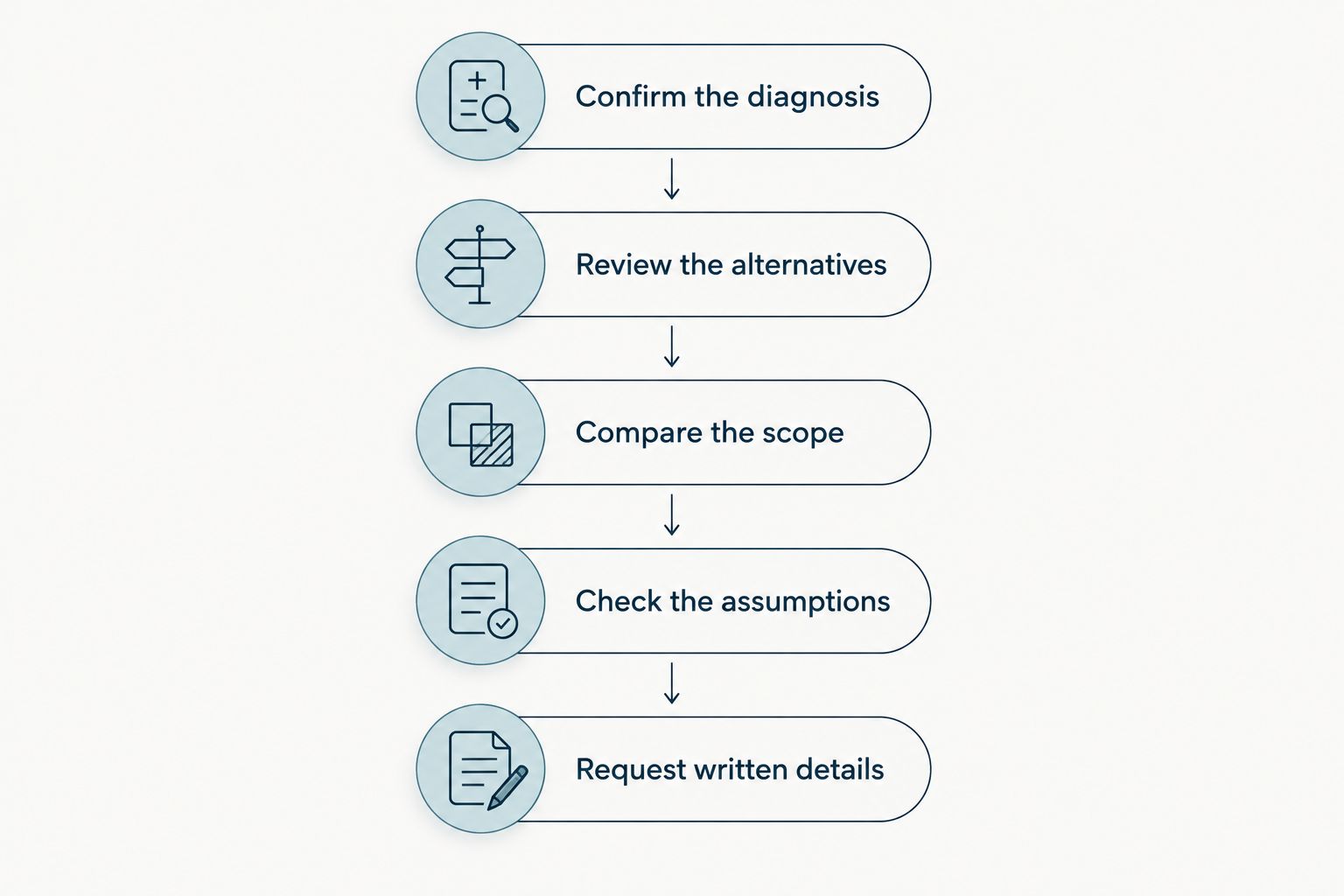
Use this sequence when reviewing your options:
- Confirm the diagnosis. Ask which problems are present and which findings support them. Request an explanation in plain language.
- Review the alternatives. Ask whether each affected area has another reasonable treatment option, including the limitations of that option.
- Compare the scope. Check whether both plans include the same teeth, preparatory procedures, temporary restorations, and follow-up care.
- Check the assumptions. Identify decisions that depend on healing, insurance review, or findings during treatment.
- Request written details. Keep the treatment sequence and estimate together so you can review them without relying on memory.
A second opinion can help when you are deciding about extensive or irreversible treatment. Bring available records and the existing plan, and ask the reviewing dentist to explain differences in diagnosis, prognosis, and treatment—not simply produce a competing total.
Does dental insurance cover full mouth reconstruction?
Dental insurance coverage depends on your specific plan and the procedures being proposed. A treatment plan labeled full mouth reconstruction does not establish what your insurer will cover.
Ask for a procedure-by-procedure review of benefits. Relevant terms include deductibles, annual benefit limits, waiting periods, exclusions, and rules for replacing existing restorations.
An insurance estimate is not a guarantee of payment. Ask what you would owe if the insurer pays differently from the preliminary estimate, and distinguish a confirmed benefit from an assumption.
For treatment beginning in 2026, confirm the applicable benefit period and any changes to your coverage. Do not assume that spreading appointments across benefit periods will make every procedure eligible or that an insurer will cover a clinically unsuitable sequence.
Can you spread full mouth reconstruction across stages?
Staged treatment is appropriate when the sequence protects your oral health and the planned result. Your dentist needs to explain which procedures can wait and which problems require prompt attention.
The advantage is a more manageable sequence of decisions and appointments. The limitation is that waiting is not neutral for every condition: untreated decay, infection, or an unstable tooth can worsen.
Ask what will protect your teeth between stages. You also need to know whether temporary restorations require maintenance and which symptoms mean you should contact the treating office rather than wait for the next planned visit.
Is full mouth reconstruction the same as a smile makeover?
Full mouth reconstruction focuses on restoring oral health and function across multiple dental problems. A smile makeover focuses primarily on appearance, although individual procedures can serve both purposes.
That distinction helps you sort your plan into health needs, functional needs, and elective changes. Improving appearance can be a valid personal goal; it should simply be identified clearly rather than presented as medically necessary without an explanation.
Ask how each cosmetic choice interacts with the restorative plan. For example, changing the appearance of natural teeth and matching replacement teeth requires coordination, not separate decisions made without regard to the finished result.
What should you ask before agreeing to treatment?
You deserve a plan you can explain back in your own words. Before you consent, make sure you understand the purpose, alternatives, expected sequence, and limitations of the proposed care.
Bring these questions to the discussion:
- Which problems need attention first, and why?
- Which natural teeth have a reasonable outlook with treatment?
- What are the disadvantages of the recommended approach?
- What would change the treatment plan?
- Who is responsible for each stage if more than one provider is involved?
- What home care and professional maintenance will the completed work need?
Starboard Dental is a fit for Maine families seeking general, restorative, and cosmetic dental care. If your needs extend to extensive reconstruction, ask which parts of the proposed care would be provided by the practice and whether another provider would participate.
Discuss your oral health goals
Start with your concerns, treatment priorities, and questions about restorative dental care.
FAQ
What's the best way to estimate my full mouth reconstruction cost?
The best starting point is an examination followed by an itemized treatment plan. Ask the dentist to separate necessary care, optional changes, and procedures that depend on additional findings.
Does full mouth reconstruction mean every tooth needs a crown?
No, full mouth reconstruction does not mean every tooth needs a crown. Treatment should reflect the condition of each tooth and the health of the tissues supporting it.
Is saving my teeth better than replacing them with implants?
Saving suitable natural teeth and replacing teeth that cannot be predictably restored are different clinical decisions. Ask your dentist to explain each tooth's prognosis and the benefits and limitations of the alternatives.
Will dental insurance cover all my reconstruction treatment?
Do not assume dental insurance will cover all reconstruction treatment. Coverage depends on your policy, the proposed procedures, benefit limits, and other plan rules.
Can I choose removable teeth instead of implants?
Removable tooth replacement is an option to discuss with your dentist. Suitability depends on your remaining teeth, supporting tissues, goals, and ability to maintain the appliance.
Can Starboard Dental help me discuss restorative care?
Starboard Dental provides general, restorative, and cosmetic dental care for patients of all ages in Kennebunk, York, and Saco, Maine. Ask which services fit your needs and whether your proposed care requires coordination with another provider.
What if my treatment estimate changes after work begins?
Ask the treating dentist to explain the new finding, the proposed change, and the alternatives before additional treatment proceeds. Your updated written plan should make the change and your financial responsibility clear.
One last thing
Ask what happens if you choose not to proceed with each part of the plan. The answer helps distinguish urgent disease treatment from work that can be reconsidered or scheduled later.
For your 2026 decision, bring a written list of what bothers you most: discomfort, difficulty chewing, missing teeth, appearance, or uncertainty about previous dental work. The right discussion starts with your problems and goals—not a predetermined set of procedures.