Best overall for back teeth: zirconia. Best for a natural-looking visible tooth: lithium disilicate. Best for a hidden tooth when appearance is secondary: gold alloy. This 2026 guide compares the best dental crown materials by appearance, chewing demands, tooth preservation, and their main trade-offs.
- The best dental crown materials depend on tooth position, bite, remaining tooth structure, and appearance goals.
- Zirconia is a strong starting point for back teeth; lithium disilicate suits visible teeth needing natural translucency.
- Gold alloy suits hidden teeth when metallic appearance is acceptable; porcelain-fused-to-metal combines a metal foundation with porcelain.
- Starboard Dental provides restorative dental care for patients in Kennebunk, York, and Saco, Maine.
Why this matters
A crown covers a damaged or weakened tooth, but the material alone does not determine whether treatment succeeds. The fit, remaining tooth structure, gum health, and how your teeth meet also matter. A strong crown cannot make an unhealthy supporting tooth healthy.
Starboard Dental is an option for patients seeking restorative dental care in Kennebunk, York, and Saco, Maine. Use this comparison to understand the choices and ask better questions during your dental visit—not to select a material without an examination.
Choose the material for the tooth, not the material with the strongest-sounding name. A highly visible front tooth and a back molar face different demands.
What makes the best dental crown materials?
For your 2026 crown decision, compare these criteria before choosing:
- Chewing demands: Back teeth and grinding habits place different demands on a crown than a lightly loaded front tooth.
- Appearance: Color, translucency, and the crown's edge matter most where your smile exposes the tooth.
- Remaining tooth: The dentist needs enough healthy tooth structure to support the restoration.
- Space and thickness: Each material needs an appropriate preparation and enough room to function.
- Opposing tooth: Surface finish and bite adjustment affect how a crown contacts the tooth above or below it.
- Material sensitivities: Tell your dentist about known metal allergies and previous reactions to dental materials.
These criteria overlap. An attractive crown still needs adequate support, and a strong crown still needs a comfortable bite. Your dentist should explain which requirement controls the choice for your particular tooth.
Dental crown materials at a glance: 2026 comparison
The order below follows common treatment priorities, not a claim that one material is right for everyone. Zirconia takes the first position as a practical starting point for discussing a back-tooth crown.
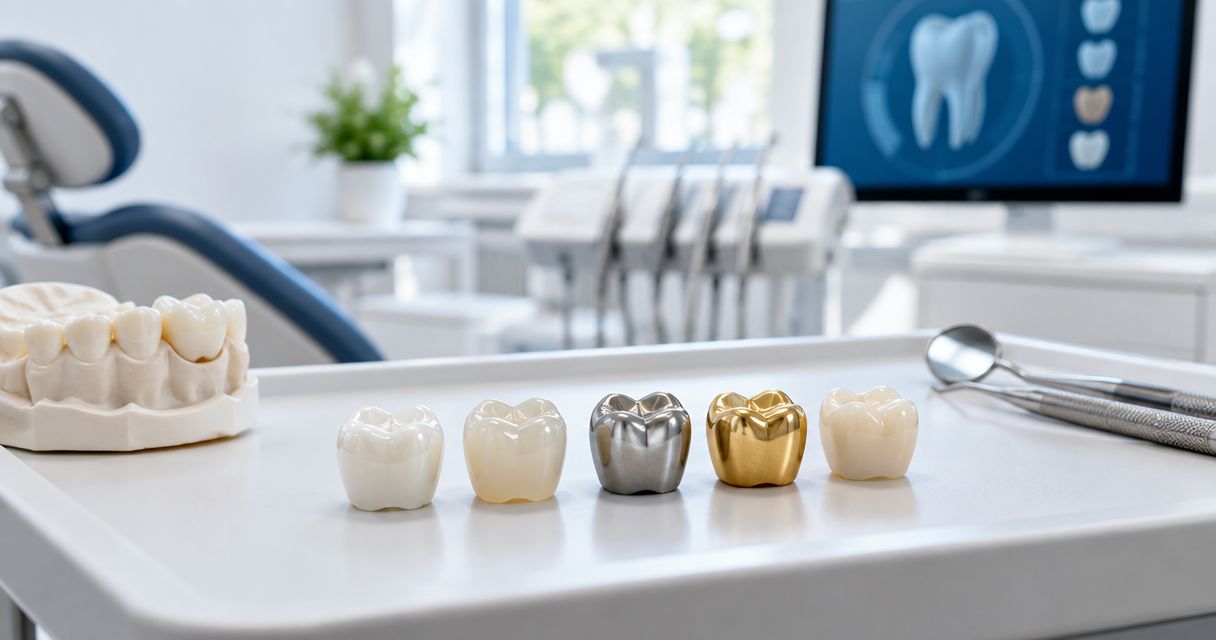
| Material | Best for | Standout feature | Key limitation |
|---|---|---|---|
| Zirconia | Back teeth with substantial chewing demands | High-strength, tooth-colored ceramic | Appearance and strength vary by formulation |
| Lithium disilicate | Visible teeth needing natural translucency | Glass ceramic with strong aesthetic potential | Not the default for every heavy-load situation |
| Gold alloy | Hidden teeth when metallic appearance is acceptable | Ductile metal without a porcelain layer | Clearly metallic appearance |
| Porcelain-fused-to-metal | Teeth needing porcelain over a metal foundation | Combines a metal substructure with tooth-colored porcelain | Porcelain can chip; metal can show at the edge |
| Feldspathic porcelain | Selected front teeth where fine aesthetic control leads | Detailed color and translucency customization | More vulnerable to fracture under heavy loading |
Material families contain different formulations and designs. Ask for the actual material being proposed, rather than accepting a broad label such as ceramic or porcelain.
1. Zirconia: best crown material for demanding back teeth
Zirconia is a tooth-colored ceramic used for crowns. A monolithic zirconia crown is made from zirconia without a separate porcelain covering; layered designs add porcelain for appearance. That distinction changes the trade-offs.
For a molar, zirconia deserves an early place in the discussion because strength matters during chewing. However, zirconia formulations differ: greater translucency does not automatically mean the same strength as a more opaque formulation.
Zirconia pros:
- High strength makes it useful for many posterior crowns.
- Tooth-colored appearance avoids a visibly metallic restoration.
- Monolithic designs avoid a separate porcelain veneer that can chip.
Zirconia cons:
- Some formulations look more opaque than natural enamel.
- A rough or inadequately polished surface can wear the opposing tooth.
- Greater strength does not remove the need to address grinding or an uneven bite.
Best for: A back tooth where chewing demands are a major consideration and a tooth-colored result matters.
Ask whether the proposed crown is monolithic or layered and why that design fits your bite. Proper finishing after adjustment is part of the decision, not a minor detail.
Verdict: Hold the final choice until your dentist confirms the zirconia formulation and crown design suit your tooth.
2. Lithium disilicate: best crown material for visible teeth
Lithium disilicate is a glass ceramic that can reproduce natural-looking color and translucency. Dentists use it for crowns where appearance is important, including selected front and back teeth. It can be bonded using material-specific techniques.
This material belongs near the top of your list when the crown will show in your smile. The dentist still needs to evaluate available space, supporting tooth structure, and bite forces before recommending it.
Lithium disilicate pros:
- Translucency helps create a natural-looking restoration.
- Color customization supports matching neighboring teeth.
- Suitable designs can be adhesively bonded to the prepared tooth.
Lithium disilicate cons:
- Heavy loading or insufficient thickness can increase fracture risk.
- A dark underlying tooth can complicate shade matching.
- Successful bonding requires appropriate preparation and moisture control.
Best for: A visible tooth where matching natural enamel is a leading priority.
Bring up appearance before the crown is made. Explain whether you want to match your current teeth or are considering whitening, because a finished crown does not whiten like natural enamel.
Verdict: Hold until your dentist confirms that the tooth, preparation, and bite support a lithium disilicate crown.
3. Gold alloy: best crown material for a hidden tooth
Gold crowns use a dental alloy rather than pure gold. The alloy provides a metal restoration without a porcelain surface layer. Its metallic appearance makes it a different choice from tooth-colored ceramics.
Gold alloy deserves consideration when the tooth sits out of view and conserving tooth structure matters. Suitable metal crown designs can require less thickness than some ceramic designs, although the preparation depends on the individual tooth.
Gold alloy pros:
- Ductility helps the material tolerate chewing forces without brittle ceramic fracture.
- There is no porcelain covering to chip away.
- Certain designs allow a conservative tooth preparation.
Gold alloy cons:
- The metallic color does not resemble natural enamel.
- Alloy composition matters when you have a known metal sensitivity.
- It does not meet a preference for a metal-free restoration.
Best for: A hidden back tooth when function and tooth preservation matter more than a tooth-colored appearance.
Ask what metals the alloy contains if you have a history of reactions. The word gold alone does not describe the complete composition.
Verdict: Hold until you are comfortable with the appearance and your dentist confirms the alloy is appropriate.
4. Porcelain-fused-to-metal: best for a porcelain-covered metal crown
A porcelain-fused-to-metal crown has a metal foundation covered with tooth-colored porcelain. It combines two materials rather than behaving like a single ceramic crown. The metal supports the restoration, while the porcelain creates its visible surface.
This design remains a treatment option when a dentist recommends a metal-supported restoration. It requires a discussion of both the metal underneath and the porcelain above it.
Porcelain-fused-to-metal pros:
- A metal substructure provides support beneath the porcelain.
- Porcelain creates a tooth-colored outer surface.
- The design can address situations where a metal foundation is preferred.
Porcelain-fused-to-metal cons:
- The porcelain covering can chip even when the metal remains intact.
- Metal can become visible near the gumline, particularly with gum recession.
- Masking the metal can limit natural-looking translucency.
Best for: A tooth where the treatment plan specifically calls for a metal foundation with porcelain coverage.
For a highly visible tooth, ask how the crown's edge will look if the gumline changes. Also discuss metal sensitivities rather than assuming every dental alloy is interchangeable.
Verdict: Hold unless your dentist explains why porcelain-fused-to-metal fits your tooth better than an all-ceramic alternative.
5. Feldspathic porcelain: best for selected aesthetic front teeth
Feldspathic porcelain allows detailed control of color and translucency. It is used in aesthetic dental restorations, including selected crown designs. Its appearance is the main reason to consider it—not maximum resistance to heavy chewing forces.
Do not confuse feldspathic porcelain with every crown described as porcelain. Lithium disilicate and zirconia belong to different ceramic families with different properties.
Feldspathic porcelain pros:
- Supports fine customization of shade and translucency.
- Can reproduce subtle visual details in visible teeth.
- Provides an option where aesthetic demands lead the treatment plan.
Feldspathic porcelain cons:
- Lower fracture resistance limits its role under heavy loading.
- Supporting tooth structure and the bite are especially important.
- It is not a default choice for a heavily loaded molar.
Best for: A carefully selected front tooth where aesthetic detail takes priority and the clinical conditions support it.
Verdict: Hold for a case-specific recommendation; skip it as a default choice for a heavily loaded back tooth.
How we ranked these crown materials
This 2026 ranking gives each material a distinct use case based on established material properties. It does not rank individual manufacturers or claim that every crown within a material family performs identically.
The leading criteria are chewing demands and appearance, followed by tooth preservation, restoration design, and sensitivities. Zirconia leads the back-tooth discussion; lithium disilicate leads the visible-tooth discussion. Gold alloy earns its place when a metallic appearance is acceptable.
Which dental crown material should you choose?
For an undecided patient in 2026, start with zirconia for a back tooth and lithium disilicate for a visible tooth—then let the examination determine the final choice. These are starting points, not prescriptions.
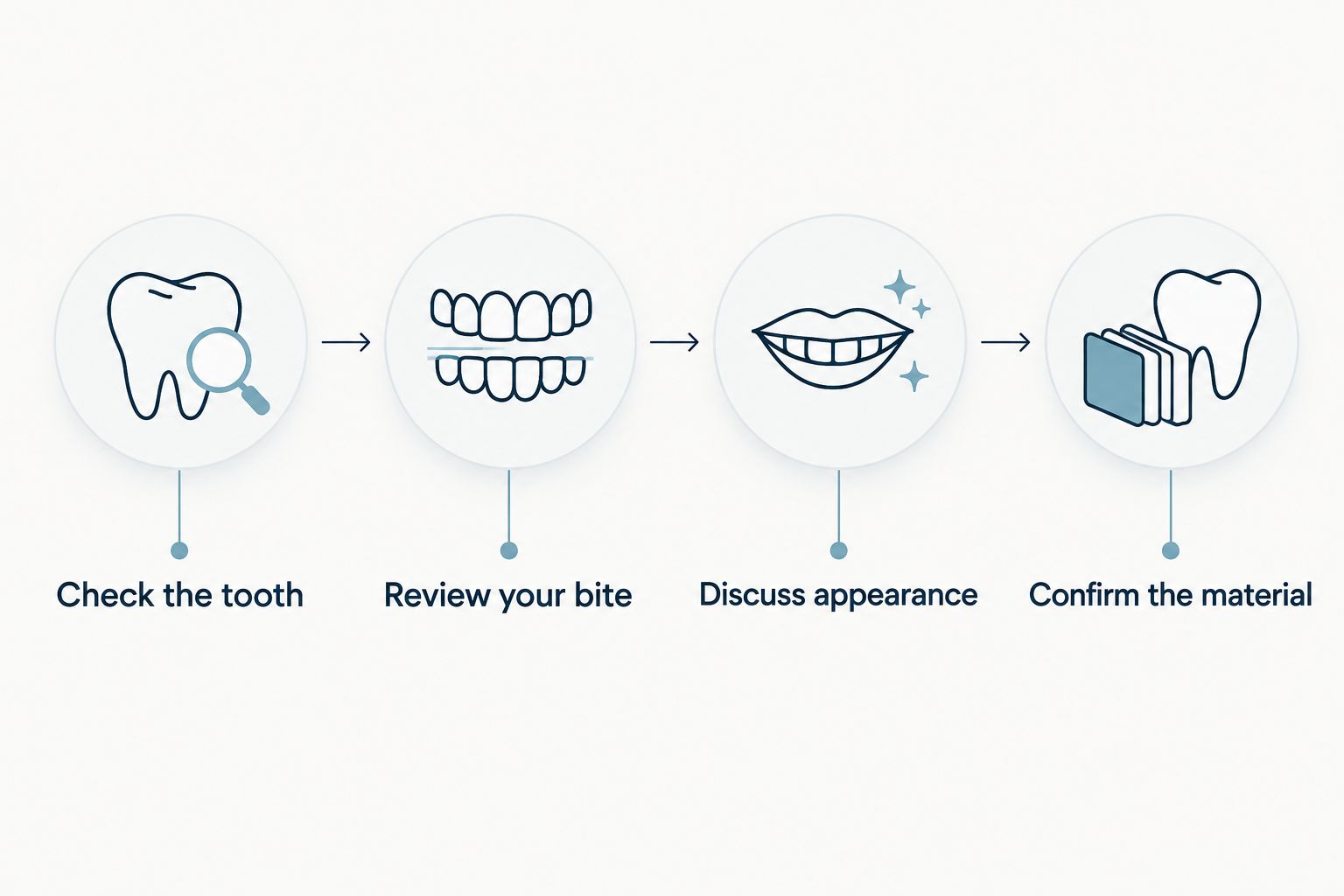
Use this sequence during your visit:
- Check the tooth: Ask whether decay, cracks, gum disease, or inadequate support change the treatment plan.
- Review your bite: Mention grinding, clenching, or pain when chewing.
- Discuss appearance: Explain how visible the tooth is and whether you plan to whiten your natural teeth.
- Confirm the material: Ask for the ceramic family or alloy and the reason it fits your case.
Starboard Dental provides general, restorative, and cosmetic dental care led by Dr. Alex Kerbaugh. Bring your priorities and concerns to the conversation so the proposed restoration addresses the tooth's needs as well as your goals.
Discuss your crown options
Use your tooth's condition, bite, and appearance goals to guide the conversation.
Protect the tooth beneath the crown
A crown does not make the underlying tooth immune to decay. Plaque can collect near its edge, and gum disease can affect the tissues supporting the tooth. Daily care still matters.
Follow standard oral-hygiene guidance: brush for 2 minutes per session, complete 2 brushing sessions per day, and clean between your teeth 1 time per day. Use fluoride toothpaste and ask your dentist which interdental cleaning method suits the crown's contacts.
Tell your dentist if the crown feels high, chewing hurts, or floss repeatedly catches at its edge. Those symptoms need assessment rather than a change of toothpaste. Discuss grinding protection if you clench or grind; material strength alone is not a complete plan.
FAQ
What's the best dental crown material for a back molar?
Zirconia is a strong starting point for a back-molar crown because it combines high strength with a tooth-colored appearance. Gold alloy is another option when metallic appearance is acceptable. Your dentist must assess the bite and remaining tooth structure.
What's the best crown material for a front tooth?
Lithium disilicate is a leading option for a front tooth when natural translucency matters. The shade of the underlying tooth, available space, and bite can change the recommendation.
Is zirconia better than porcelain?
Zirconia is generally stronger than feldspathic porcelain, but porcelain is often used as a broad label for different ceramics. Ask which exact material is being compared. Strength and natural appearance are separate considerations.
Are gold crowns still a good choice?
Gold alloy crowns remain a useful option for hidden teeth when a metallic appearance is acceptable. They have no porcelain covering to chip, but the alloy composition matters if you have a known metal sensitivity.
Which crown material should I choose if I grind my teeth?
Grinding requires a bite assessment before selecting a crown material. Zirconia and gold alloy deserve discussion, but neither makes grinding harmless. Ask whether protective treatment is appropriate for your situation.
Can I whiten a dental crown after it is fitted?
Dental crowns do not whiten like natural teeth. If you are considering whitening, discuss the sequence before the final crown shade is chosen.
Can a crowned tooth still get a cavity?
Yes, the natural tooth beneath a crown can still develop decay, particularly around the crown's edge. Brush with fluoride toothpaste, clean between your teeth, and continue dental examinations.
Does Starboard Dental provide restorative dental care?
Starboard Dental provides general, restorative, and cosmetic dental care led by Dr. Alex Kerbaugh. The practice serves patients of all ages in Kennebunk, York, and Saco, Maine.
One last thing
Before approving a crown in 2026, ask: What makes this material appropriate for my tooth? The answer should connect the choice to your bite, remaining tooth structure, and appearance goals—not simply call it the best material.
Remember that the crown's visible surface and its supporting structure are not always the same material. Understanding that distinction makes comparisons clearer and helps you ask about the right trade-off.