You should get professional teeth cleanings on a schedule based on your gum health, dental history, and current examination—not a calendar rule that applies to everyone. A preventive cleaning is not a substitute for treatment when gum disease is present, and new pain, swelling, or persistent bleeding needs attention before your next scheduled visit.
- How often should you get a professional teeth cleaning? Your gum health and dental history determine the schedule.
- A routine cleaning removes plaque and tartar; established gum disease can require different treatment.
- Starboard Dental provides general dental care for patients of all ages in coastal Maine.
- Ask your dentist to explain your cleaning interval and the findings behind it.
Why this matters
A cleaning schedule should protect your teeth and gums, not simply fill the same appointment slot indefinitely. Your needs change when your health, medications, home care, or gum condition changes.
Starboard Dental serves patients of all ages in Kennebunk, York, and Saco, Maine. Starboard Dental is a local option for families seeking general dental care across these communities. For your 2026 dental plan, start with the condition of your mouth rather than the date printed on an old reminder.
How often should you get a professional teeth cleaning?
Your dentist should recommend a cleaning interval after assessing your teeth, gums, and risk factors. The American Dental Association's MouthHealthy guidance on dental visits supports individualized scheduling rather than one interval for every patient. A dental examination also helps determine whether you need preventive cleaning or treatment for an existing problem.
The distinction matters: a visit that removes deposits from generally healthy teeth serves a different purpose from ongoing care after periodontal treatment. More frequent routine cleanings do not replace treatment for active gum disease.
| Care approach | Best for | Main benefit | Important limitation |
|---|---|---|---|
| Routine preventive cleaning | Patients whose examination supports preventive care | Removes plaque, tartar, and some surface stains | Does not replace treatment for established periodontitis |
| Scaling and root planing | Patients diagnosed with periodontitis when this treatment is indicated | Cleans affected root surfaces below the gumline | Requires diagnosis, follow-up, and continued home care |
| Periodontal maintenance | Patients who need ongoing monitoring after periodontal treatment | Helps manage recurrence and monitor gum stability | Does not mean the history of gum disease has disappeared |
These are care categories, not interchangeable appointment choices. You should not have to decide which one you need from symptoms alone; the recommendation should follow an examination and a clear explanation.
What about the familiar six-month schedule?
A cleaning every 6 months is a familiar preventive schedule, but it is not a universal medical requirement. Some patients need closer follow-up, particularly after gum disease treatment; others need a different interval based on their dentist's assessment.
Do not extend your interval just because your teeth feel clean. Gum disease can develop without obvious pain, and you cannot reliably assess the tissues supporting your teeth by looking in a mirror.
Routine cleaning: prevention for a healthy mouth
A routine cleaning focuses on removing plaque and hardened deposits called tartar. Brushing and cleaning between your teeth help control plaque at home, but established tartar requires professional removal.
Best for: patients whose examination supports preventive care rather than periodontal treatment. The benefit is removing deposits you cannot fully manage yourself while keeping your oral health under regular review.
The limitation is equally important: cleaning visible tooth surfaces does not resolve every problem beneath the gums. If your dentist identifies deeper pockets or loss of supporting bone, the discussion should move beyond simply booking another routine cleaning.
Before leaving your 2026 preventive visit, ask what the examination showed. “Your gums look stable” becomes more useful when you understand whether bleeding, pocket measurements, or other findings have changed.
Periodontal maintenance: follow-up after gum disease treatment
Periodontal maintenance is ongoing care for people with a history of periodontitis. It includes reassessment and cleaning directed at the needs of a mouth that has already experienced disease affecting the supporting tissues.
Best for: patients whose gum disease history requires continued periodontal care. The advantage is targeted follow-up; the limitation is that maintenance cannot undo all previous tissue damage or replace treatment if disease becomes active again.
Some patients receive periodontal maintenance at intervals of 3 months, but that interval is not a prescription for everyone. Your dentist should set and reassess the schedule according to your response to treatment and current findings.
If a previous dentist recommended periodontal maintenance, tell your new dental team before scheduling. Transferring relevant records helps the team understand why that care was recommended instead of assuming you need a standard preventive visit.
Why your teeth-cleaning schedule varies
The useful question is not “How often does everyone go?” It is “What finding makes this interval appropriate for me?” These factors help your dentist answer it:
- Gum findings. Bleeding during examination, deeper gum pockets, and changes in supporting bone affect treatment and follow-up decisions.
- Previous periodontitis. A history of gum disease remains relevant even when your mouth feels comfortable after treatment.
- Plaque control. Areas that remain difficult to clean need practical attention, including changes to brushing or interdental cleaning.
- Medical history. Conditions such as diabetes can affect gum health and belong in the discussion about ongoing care.
- Tobacco use. Smoking increases periodontal risk and can make bleeding a less reliable warning sign.
- Dry mouth and medications. Reduced saliva can increase decay risk, so the plan may need preventive measures beyond cleaning alone.
These factors do not automatically assign you a particular appointment interval. They help explain why two people with similar-looking smiles can need different care.
How does your dentist choose the right interval?
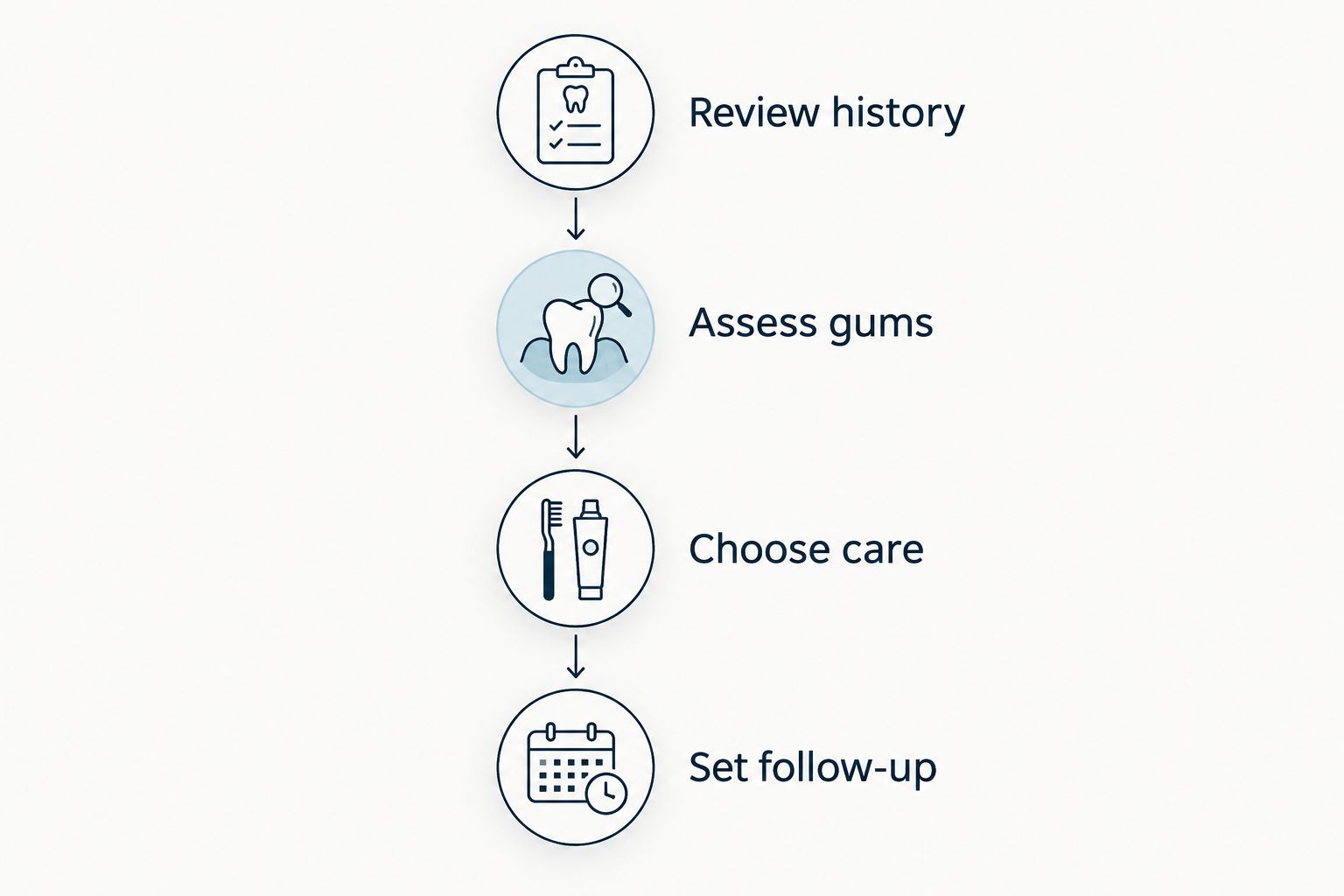
A useful cleaning recommendation connects examination findings to an action plan. You should leave knowing what kind of care you need, why you need it, and what would change the timing.
- Review history. Discuss previous gum treatment, recent symptoms, medical conditions, medications, and tobacco use. Mention changes even if they do not seem directly related to your teeth.
- Assess gums. Your dental team checks the gums and supporting structures. Gum measurements and other findings help distinguish preventive needs from periodontal disease.
- Choose care. The dentist explains whether a routine cleaning, periodontal treatment, or maintenance is appropriate. Ask what the recommended appointment is intended to accomplish.
- Set follow-up. Agree on the next visit and a home-care plan. The interval should be reassessed when your condition changes rather than repeated without explanation.
For a 2026 appointment, bring an up-to-date medication list and tell the team about previous periodontal care. If you do not remember the name of a past treatment, describe what happened and ask whether records would help clarify it.
Should you wait for your next cleaning if your gums bleed?
Persistent gum bleeding deserves an assessment rather than a wait for the next cleaning. Bleeding can accompany gum inflammation, but the cause and severity need evaluation.
If you notice blood during brushing or flossing, keep cleaning gently instead of abandoning the area altogether. Tell your dentist when it started, whether it happens repeatedly, and whether you also notice tenderness, swelling, or a change in your bite.
The guide to whether bleeding gums during flossing are normal explains why this symptom deserves attention. A cleaning reminder is not a reason to postpone reporting a new concern.
Seek urgent dental advice for significant pain, swelling, pus, or a newly loose adult tooth. Facial swelling with trouble breathing or swallowing requires emergency medical care, not a routine hygiene appointment.
Can you skip cleanings if you brush and floss carefully?
Good home care supports professional care; it does not replace it. You can remove plaque with effective daily cleaning, but hardened tartar and disease assessment require professional attention.
Brush for 2 minutes twice daily with fluoride toothpaste, and clean between your teeth daily using a method you can use effectively. These are established American Dental Association home-care recommendations, not a reason to choose your own longer cleaning interval.
Ask your dental team to show you where plaque remains and how to reach it. A practical demonstration around a crowded tooth, bridge, or other difficult area is more useful than a general instruction to brush better.
Does insurance determine how often you need a cleaning?
Your dental benefits describe coverage, not the condition of your gums. Your dentist's clinical recommendation and your plan's covered frequency can differ.
Before scheduling care, ask which service is recommended and how your benefits apply to that service. Routine preventive cleaning and periodontal maintenance are different categories, so an explanation of coverage should identify the actual care being proposed.
For your 2026 benefits review, separate these questions: “What care do I need?” and “What does my plan cover?” Answering both prevents a coverage limit from being mistaken for a medical recommendation.
What should you ask before leaving your appointment?
A short conversation can turn an automatic reminder into a plan you understand. You do not need technical vocabulary to ask useful questions.
- “Are my gums healthy, inflamed, or showing signs of periodontitis?”
- “What type of cleaning or treatment are you recommending?”
- “What finding explains the timing of my next visit?”
- “Which area needs more attention when I clean at home?”
- “What symptoms should make me call before then?”
At Starboard Dental, patients seeking general, restorative, or cosmetic dental care can use these questions to explain their goals and concerns. A recommendation is easier to follow when you understand what it is meant to address.
FAQ
Is a professional teeth cleaning every six months enough?
A cleaning every 6 months is appropriate for some patients, but it is not enough for every situation. Your dentist should base the interval on your gum findings, dental history, and current risk factors.
Why does my dentist want me to have cleanings every three months?
A 3-month interval is sometimes recommended for periodontal maintenance or closer monitoring. Ask which examination findings support that schedule and when it will be reassessed.
Can I get my teeth cleaned only once a year?
Do not switch to annual cleanings without discussing your individual needs with your dentist. A comfortable mouth does not establish that your gums and supporting tissues are healthy.
Is a deep cleaning the same as a regular cleaning?
No, scaling and root planing treats affected root surfaces below the gumline when periodontal disease makes that treatment appropriate. A routine preventive cleaning serves a different purpose and is not a substitute.
Should I cancel my cleaning if my gums are bleeding?
Do not cancel solely because your gums are bleeding; tell the dental team about the symptom before your visit. Persistent bleeding needs assessment, and other symptoms can change how quickly you should be seen.
Do children need the same cleaning schedule as adults?
Children need a schedule based on their own examination, oral health, and risk factors rather than an adult family member's plan. Starboard Dental provides dental care for patients of all ages.
Do I still need cleanings if I have crowns or dental implants?
Yes, crowns and dental implants still require professional monitoring and appropriate cleaning. The surrounding gums and supporting tissues need care even when a tooth has been restored or replaced.
How should I plan my dental cleanings for 2026?
Plan your 2026 cleanings around the interval your dentist recommends after assessing your mouth. Report new symptoms between visits instead of waiting for the next appointment.
One last thing
Less bleeding does not always mean healthier gums. Smoking can mask a warning sign by reducing visible bleeding even while periodontal disease is present.
Before you leave your next appointment, ask the team to explain the findings behind your follow-up date. Knowing why you are returning is more valuable than memorizing a schedule that might not fit your mouth.