Your custom night guard cost in 2026 depends on the appliance prescribed, the care included, and your dental benefits; get a written estimate before you approve treatment. Check whether that estimate includes the examination, fitting, adjustments, and replacement terms, because an appliance-only quote does not tell you your full out-of-pocket responsibility.
- Compare custom night guard cost using written estimates that include fitting, adjustments, and follow-up care.
- A teeth-grinding guard protects teeth but does not necessarily stop grinding or treat sleep apnea.
- Starboard Dental serves patients seeking general, restorative, and cosmetic dental care in coastal Maine.
- Confirm insurance coverage for the prescribed appliance before assuming your plan will pay.
Why this matters
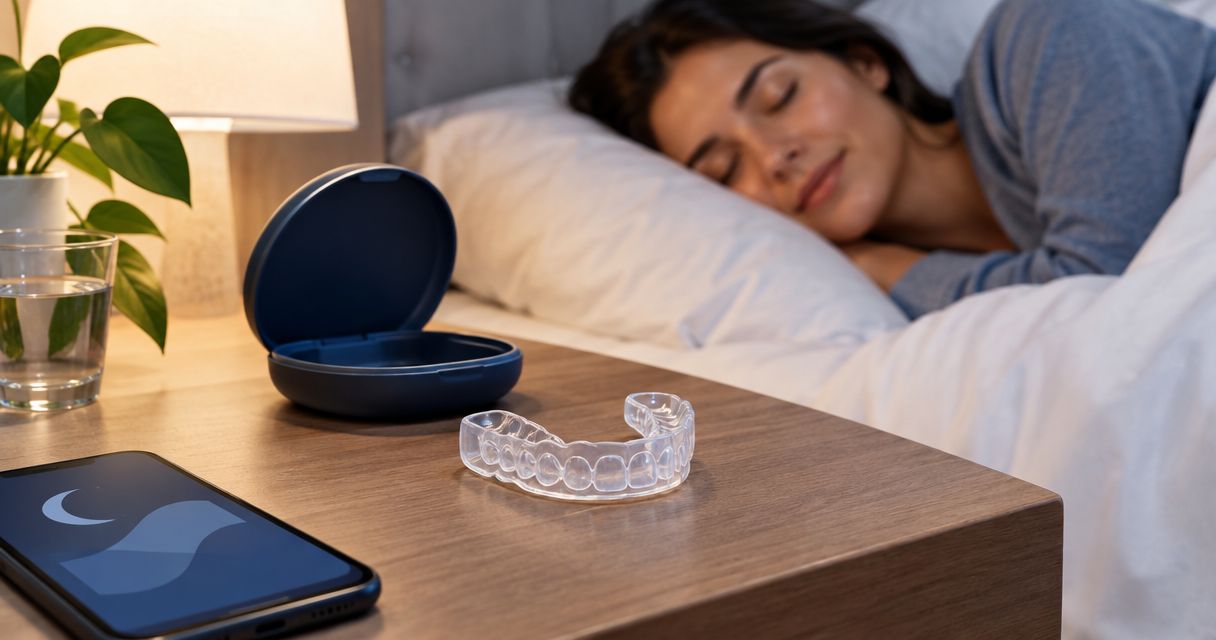
A night guard is something you wear against your teeth while you sleep. Fit, comfort, and the way your teeth meet matter—not just the amount on an estimate.
Starboard Dental is a fit for patients seeking general, restorative, and cosmetic dental care in Kennebunk, York, and Saco. You can start with Starboard Dental to discuss your oral health concerns and ask what evaluation is appropriate.
For your 2026 decision, separate the clinical question from the payment question. First establish whether a guard is appropriate; then compare what the proposed treatment includes. Paying for an appliance that does not address your concern is not a useful saving.
How much does a custom night guard cost in 2026?
Your written treatment estimate is the relevant cost—not an advertised amount for an unspecified guard. It should identify the appliance, the services included, and the portion you are expected to pay after any applicable benefits.
Ask the office to break the estimate into clear parts. These are questions about possible charges, not a list of services that every patient needs or every office bills separately.
| Estimate component | What to ask | Why it matters |
|---|---|---|
| Examination | Is the evaluation included or billed separately? | The dentist needs to assess the reason for treatment. |
| Impressions or scan | Are the records needed to make the guard included? | A custom appliance is made using records of your teeth. |
| Appliance | What type of guard is being prescribed? | Different designs serve different clinical needs. |
| Fitting | Is an appointment to check the fit included? | A guard needs assessment in your mouth, not just delivery. |
| Adjustments | Which adjustments are included, and under what terms? | Discomfort or changes in contact need professional review. |
| Follow-up and replacement | What happens if the guard wears, breaks, or no longer fits? | Future care is separate from the initial purchase unless stated otherwise. |
Do not add these rows together yourself unless the office provides separate figures. Some estimates combine services; others itemize them. Ask for clarification rather than assuming an omitted line means the service is included.
If you have insurance, request an estimate of both the total charge and your expected responsibility. Keep the distinction clear: an insurance estimate is not a guarantee of payment.
Dentist-managed and direct-to-consumer guards: compare the care
A custom appliance made through a dental office and an appliance ordered remotely do not necessarily include the same assessment or follow-up. A ready-made or boil-and-bite guard is another category altogether, even when its packaging mentions grinding.
The useful comparison is not simply custom versus non-custom. Ask who evaluates your teeth, who checks the appliance in your mouth, and who handles a problem after delivery.
| Option | Best for | Main advantage | Main limitation |
|---|---|---|---|
| Dentist-managed custom guard | Patients who need an examination and an in-person fit assessment | Connects appliance selection with clinical evaluation and adjustment | Requires appointments; confirm which follow-up services are included. |
| Direct-to-consumer custom guard | Patients comparing remote ordering after discussing suitability with a dentist | Allows ordering through a remote process | Ordering alone does not replace an oral examination or an in-person bite assessment. |
| Ready-made or boil-and-bite guard | Patients discussing an interim option with a dentist | Does not require a laboratory-made impression-based appliance | Fit and tooth contacts are not individually prescribed in the same way. |
Choose the care pathway before comparing the appliance alone. A dentist-managed guard still requires cleaning, consistent use, and attention to changes in fit. It also does not guarantee that grinding or jaw pain will stop.
For a closer look at those differences, see the guide to night guards for teeth grinding. Bring your questions about fit and supervision to the examination rather than choosing solely from product descriptions.
Why custom night guard cost varies
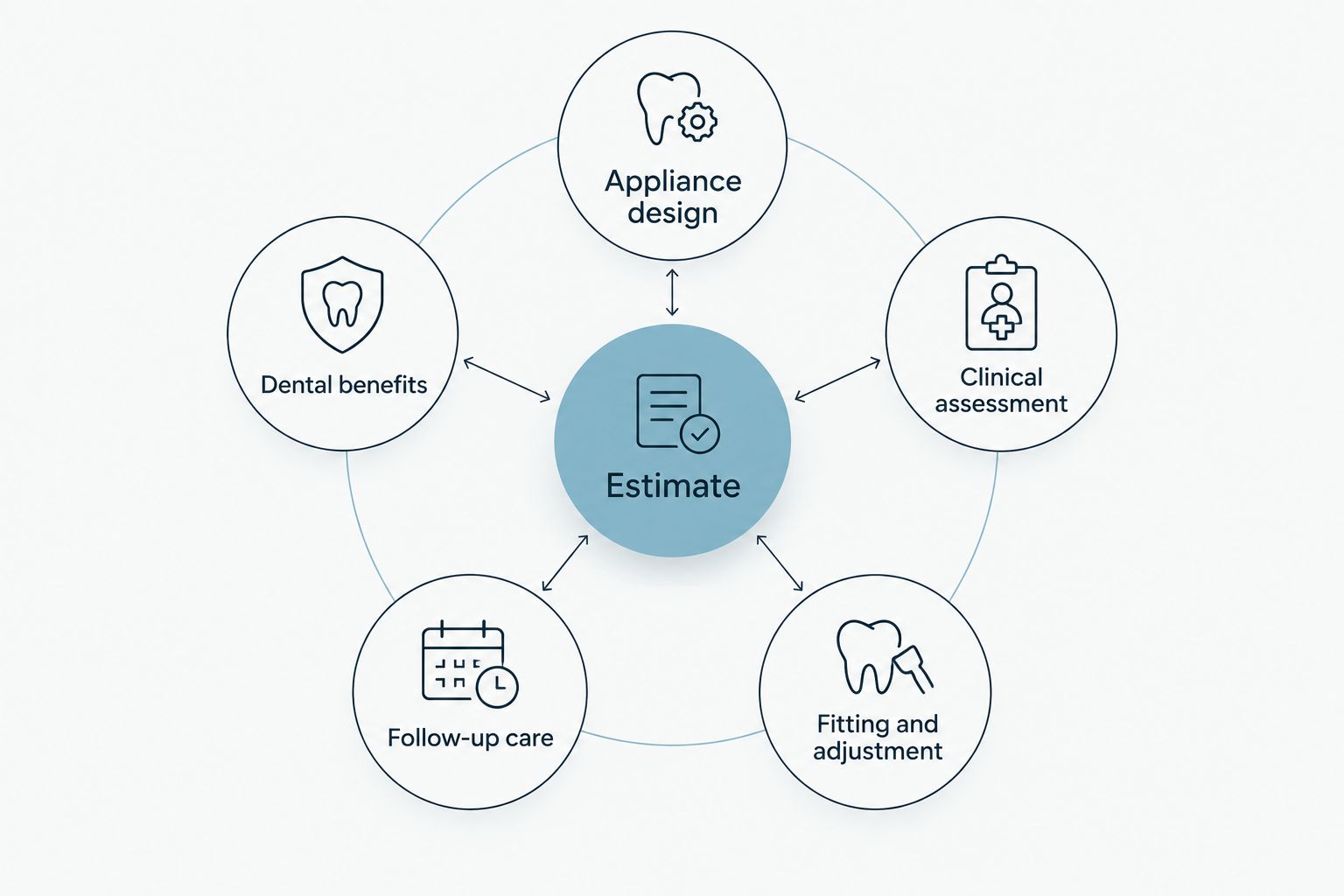
A meaningful comparison uses the same treatment scope. For your 2026 estimate, check these factors before deciding that one quote represents better value:
- Appliance design: Ask what material and design the dentist recommends and why they suit your teeth and symptoms.
- Clinical assessment: Confirm whether the estimate includes the examination and any records the dentist considers necessary.
- Fitting and adjustment: Find out who checks the guard in your mouth and what adjustment arrangements apply.
- Follow-up care: Ask how the office reviews comfort, fit, and wear after you start using the appliance.
- Dental benefits: Your deductible, coverage rules, remaining benefits, and plan limitations affect what you pay.
- Replacement terms: Loss, damage, wear, or changes to your teeth can create a separate replacement decision.
Your symptoms also determine what needs evaluation before an appliance is chosen. Tooth sensitivity, a cracked tooth, and jaw discomfort are not interchangeable diagnoses. A guard should not become a shortcut around finding the reason for pain.
How to get an estimate you can actually compare
You do not need to learn dental billing terminology to ask useful questions. Work through the treatment and payment details in this order, and keep a copy of the answers.
- Describe your concern. Explain whether you have morning jaw soreness, noticed tooth wear, a damaged tooth, or a partner who hears grinding. Mention existing retainers and other oral appliances.
- Ask what the examination shows. Find out why a guard is recommended and what it is intended to protect or manage. Ask whether another problem needs attention first.
- Request the appliance details. Have the office identify the prescribed design and explain how it will fit with your teeth and existing dental work.
- Confirm the included care. Ask about records, delivery, fitting, adjustment visits, and follow-up. Get any replacement terms in writing.
- Check benefits before proceeding. Ask the insurer about coverage for the proposed treatment, then reconcile that answer with the office’s estimate.
- Review your responsibility. Confirm what you are agreeing to pay and how an insurance denial or different benefit payment would affect that responsibility.
If you are comparing offices, use this same checklist for each estimate. Otherwise, you risk comparing a complete course of care with an appliance-only quote.
For a 2026 treatment decision, keep the dated estimate and any benefit correspondence together. Ask how long the estimate applies and whether a change in the treatment plan would require a revised estimate.
Does dental insurance cover a custom night guard?
Dental insurance coverage for a custom night guard depends on your plan and the proposed treatment. Do not assume that coverage for routine dental visits means coverage for an appliance.
Ask whether your plan covers the specific appliance being recommended, whether a deductible applies, and whether replacement-frequency rules affect eligibility. Also ask whether a pre-treatment estimate or supporting documentation is needed.
A benefit estimate helps you plan, but the insurer determines payment under the policy’s terms. Before approving treatment, ask what you would owe if the claim is denied or the benefit is lower than expected.
Is a custom night guard worth it for teeth grinding?
A custom night guard is worth considering when a dentist identifies a need to protect your teeth and recommends that appliance for your situation. Its value comes from an appropriate design, usable fit, and a clear plan for review—not the word custom by itself.
There are limits. A guard creates a barrier between teeth, but it does not necessarily stop the underlying grinding activity. Persistent jaw pain also needs assessment rather than an assumption that any guard will solve it.
Ask what improvement or protection the dentist expects and how you should report problems. You should know the purpose of treatment before deciding whether the proposed care meets your needs.
Can I wear my retainer instead of a night guard?
A retainer is not automatically a substitute for a prescribed night guard. Retainers maintain tooth position; a guard intended for grinding has a different treatment purpose.
Bring your retainer to the appointment and explain how often you wear it. Do not layer appliances, reshape them yourself, or switch between them without advice about how they fit your treatment plan.
When to seek an examination before buying a guard
Pain deserves an assessment, not a shopping decision. Contact a dentist if you have a broken tooth, ongoing sensitivity, pain when biting, or jaw discomfort that persists. These symptoms do not establish that grinding is the cause.
Tell the dentist about snoring, witnessed breathing pauses, or significant daytime sleepiness, too. A standard grinding guard is not the same as a prescribed oral appliance for sleep apnea, and it is not a substitute for evaluating breathing concerns.
At Starboard Dental, general and restorative dental care are part of the practice’s stated services. Describe your symptoms when arranging a visit so you can discuss the appropriate evaluation rather than arriving committed to a particular appliance.
FAQ
What's the custom night guard cost in 2026?
Your custom night guard cost in 2026 is the amount in your individualized treatment estimate, adjusted for any applicable dental benefits. Ask whether the examination, records, fitting, adjustments, and follow-up are included before comparing quotes.
Does a custom night guard stop teeth grinding?
A custom night guard does not necessarily stop teeth grinding. It provides a barrier between teeth, while the cause of grinding and any associated pain require separate assessment.
Is a dentist-made night guard better than an online guard?
A dentist-managed night guard includes the opportunity for an in-person examination and fit assessment; a remote ordering process does not replace those steps. Compare the assessment, adjustment arrangements, and follow-up rather than assuming all custom guards provide the same care.
Will dental insurance pay for my night guard?
Your dental plan determines whether the prescribed night guard is covered. Confirm eligibility, deductibles, limitations, and your expected responsibility before approving treatment.
How long will my custom night guard last?
A custom night guard's usable life depends on wear, damage, fit, and changes to your teeth. Have your dentist check it rather than relying on a fixed replacement schedule.
What should I do if my new night guard hurts?
Contact the prescribing dentist if your new night guard causes pain or changes how your teeth meet. Do not trim, heat, or reshape a custom appliance yourself unless the dentist specifically instructs you to do so.
Can a grinding guard treat sleep apnea?
A standard teeth-grinding guard is not a sleep apnea treatment. Discuss snoring, breathing pauses, or daytime sleepiness with a qualified clinician so the breathing concern receives an appropriate evaluation.
One last thing
Bring an existing guard or retainer to your examination, even if you have stopped wearing it. The dentist can inspect its condition and fit while you explain what felt comfortable, what hurt, and why you stopped using it.
The best next step is a clear diagnosis and a written estimate—not choosing an appliance first. That keeps your decision focused on protecting your teeth and understanding the care you are agreeing to receive.