Best for a small chip: dental bonding. Best for a structurally weakened, repairable tooth: a crown. Best for a tiny, enamel-only rough edge: smoothing. The best options for a chipped or cracked tooth in 2026 depend on the damage, not just how the tooth looks; this guide explains when each treatment fits and when you need prompt care.
- Dental bonding is a leading option for small chips; it is not a treatment for every cracked tooth.
- Crowns protect weakened, repairable teeth, but they do not make an underlying crack disappear.
- Root canal treatment addresses damaged or infected pulp; it does not repair the crack itself.
- Starboard Dental provides general, restorative, and cosmetic dental care in Kennebunk, York, and Saco.
Why this matters
A chipped tooth and a cracked tooth are different problems. A chip means a piece has broken away; a crack can extend into the tooth even when the surface looks nearly unchanged. Pain alone does not tell you how serious either problem is.
Choose the treatment after an examination, not from a photograph. Your dentist checks the remaining tooth, your bite, the gums, and the condition of the pulp—the soft tissue containing nerves and blood vessels.
Starboard Dental is a general dental practice for patients in Kennebunk, York, and Saco seeking restorative dental care. Bring your questions about comfort, appearance, and keeping the natural tooth to your appointment.
What makes the best chipped or cracked tooth treatment?
Use these criteria when discussing your 2026 treatment plan:
- Damage depth: An enamel chip needs a different approach from a crack reaching the pulp or extending below the gumline.
- Remaining tooth: A repair needs enough sound structure to support it. Appearance alone cannot establish that.
- Pulp health: Lingering sensitivity, spontaneous pain, or infection changes the treatment decision.
- Biting pressure: A front tooth edge and a chewing surface face different forces. Grinding also affects repair planning.
- Appearance: Visible front teeth require attention to shape and shade, but cosmetic improvement must not hide an untreated problem.
- Tooth preservation: Keep healthy tooth structure when possible, without attempting to save a tooth that cannot be predictably restored.
Chipped and cracked tooth options at a glance
This ranking follows distinct treatment needs. It does not mean bonding is better than a crown for a tooth that needs structural protection.
| Option | Best for | Standout feature | Key limitation |
|---|---|---|---|
| Dental bonding | Small chips with enough healthy tooth remaining | Tooth-colored material rebuilds the missing area | Not suitable for every deep crack or heavy-load repair |
| Dental crown | Structurally weakened but repairable teeth | Covers and protects the remaining tooth | Requires preparation and cannot rescue every crack |
| Dental veneer | Selected front-tooth chips with cosmetic concerns | Changes the visible front surface | Does not treat deep structural damage or infection |
| Root canal treatment with restoration | Repairable teeth with damaged or infected pulp | Treats the inside of the tooth | Still requires a suitable final restoration |
| Smoothing or contouring | Tiny, superficial enamel chips | Removes a small rough edge | Cannot replace missing structure or treat a deep crack |
| Extraction with replacement planning | Teeth that cannot be restored | Removes the unsalvageable tooth | Loses the natural tooth and creates a replacement decision |
1. Dental bonding: best for small chips
Dental bonding uses tooth-colored composite resin to rebuild a chipped area. Your dentist shapes the material to fit the tooth and your bite. It is a common option when the damage is limited and enough healthy tooth remains.
Best for: A small chip that needs its shape restored rather than full coverage.
Dental bonding pros
- Replaces missing material rather than simply polishing the edge.
- Can match the surrounding tooth's shade.
- Usually preserves more natural tooth structure than a crown.
Dental bonding cons
- Can stain, wear, or chip over time.
- Does not provide the protection needed for every weakened tooth.
A small front-tooth chip can be a good bonding candidate, but the dentist still needs to rule out deeper damage. A repair that looks right must also withstand your bite.
Verdict: Hold off on selecting bonding until the dentist confirms that the damage is limited. For a suitable small chip, it is a strong starting option.
2. Dental crown: best for a weakened, repairable tooth
A dental crown covers the prepared tooth and restores its shape and chewing surface. It is used when the remaining tooth needs more protection than a small repair provides. Crowns can also form part of the final restoration after root canal treatment.
Best for: A tooth with substantial damage that still has enough sound structure to restore.
Dental crown pros
- Covers a larger area than bonding.
- Restores tooth shape and chewing contact.
- Helps protect weakened tooth structure from biting forces.
Dental crown cons
- Requires removal of tooth structure during preparation.
- Cannot guarantee that an existing crack will stop progressing.
A crown protects a tooth; it does not heal a crack. The crack's location and depth determine whether coverage is appropriate. A tooth with a crack extending into an unfavorable part of the root needs a different discussion.
Verdict: Hold off on choosing a crown until the dentist confirms the tooth is restorable. Choose structural protection over a cosmetic-only repair when the tooth needs it.
3. Dental veneer: best for selected cosmetic front-tooth chips
A veneer covers the visible front surface of a tooth. It can improve shape and appearance when a front tooth has a suitable chip or other cosmetic concern. It is not a substitute for treating decay, infection, or a deep crack.
Best for: A selected front tooth with limited damage and a broader appearance goal.
Dental veneer pros
- Addresses visible shape as well as the chipped area.
- Can improve the appearance of the front surface.
- Offers an alternative to full coverage in suitable cases.
Dental veneer cons
- Usually involves permanent changes to the tooth surface.
- Is not designed to protect every damaged chewing tooth.
Ask whether bonding would meet your goal before choosing a veneer. Your dentist also needs to assess enamel, gum health, bite contact, and any grinding habits.
Verdict: Skip veneers as a solution for an undiagnosed deep crack. Consider a veneer only when the tooth is healthy enough and the main treatment goal is cosmetic.
4. Root canal treatment: best for damaged or infected pulp
Root canal treatment removes damaged or infected pulp from inside a tooth, then cleans and seals that internal space. It addresses the pulp problem, not the physical crack. The tooth also needs an appropriate restoration afterward.
Best for: A repairable chipped or cracked tooth whose pulp requires treatment.
Root canal treatment pros
- Treats damaged or infected tissue inside the tooth.
- Can preserve a natural tooth that remains restorable.
- Addresses a problem that surface bonding cannot fix.
Root canal treatment cons
- Does not make an unsalvageable crack repairable.
- Requires a separate decision about the final restoration.
Not every cracked tooth needs a root canal. Your dentist uses symptoms, examination findings, and appropriate tests to assess pulp health. Pain when biting is a reason for evaluation, not proof that this treatment is necessary.
Verdict: Hold off on assuming you need a root canal based on symptoms alone. When the pulp needs treatment and the tooth can be saved, discuss root canal treatment and restoration together.
5. Smoothing or contouring: best for a tiny enamel rough edge
Smoothing removes a small amount of enamel to soften a superficial sharp edge. It does not add material or rebuild a larger missing piece. The dentist must first confirm that the chip is small enough for this approach.
Best for: A tiny enamel-only chip that leaves a rough edge without significant structural loss.
Smoothing pros
- Directly addresses a minor rough edge.
- Does not require an added restoration when polishing alone is sufficient.
- Avoids a larger procedure for a suitably small defect.
Smoothing cons
- Removes enamel rather than replacing it.
- Cannot treat deeper damage or restore a noticeably shortened tooth.
Do not file the tooth yourself. Home filing can remove healthy enamel and alter the bite without showing whether the damage extends deeper.
Verdict: Skip do-it-yourself smoothing. Hold off on any filing until a dentist confirms that professional contouring is appropriate.
6. Extraction: best for a tooth that cannot be restored
Extraction removes a tooth when its damage makes restoration unsuitable. A split tooth or certain root fractures can prevent predictable repair. The dentist needs to establish that finding before you make a permanent decision.
Best for: An unsalvageable tooth, not a repairable chip.
Extraction pros
- Removes a tooth that cannot support a reliable restoration.
- Can address a damaged tooth contributing to infection.
- Creates a clear next step when tooth preservation is not appropriate.
Extraction cons
- Permanently removes the natural tooth.
- Requires discussion of the gap, healing, and replacement options.
Ask why the tooth cannot be saved and what replacement planning involves. If extraction is recommended, review the best ways to replace a missing tooth before deciding on your longer-term plan.
Verdict: Skip extraction as a default for a chipped tooth. Discuss it when an examination establishes that restoration is not suitable.
What to do before your dental appointment
The first step in 2026 is still straightforward: contact a dentist and describe what happened, where the tooth is, and whether you have pain, swelling, or temperature sensitivity. Do not wait for a visible crack to become larger before asking for advice.
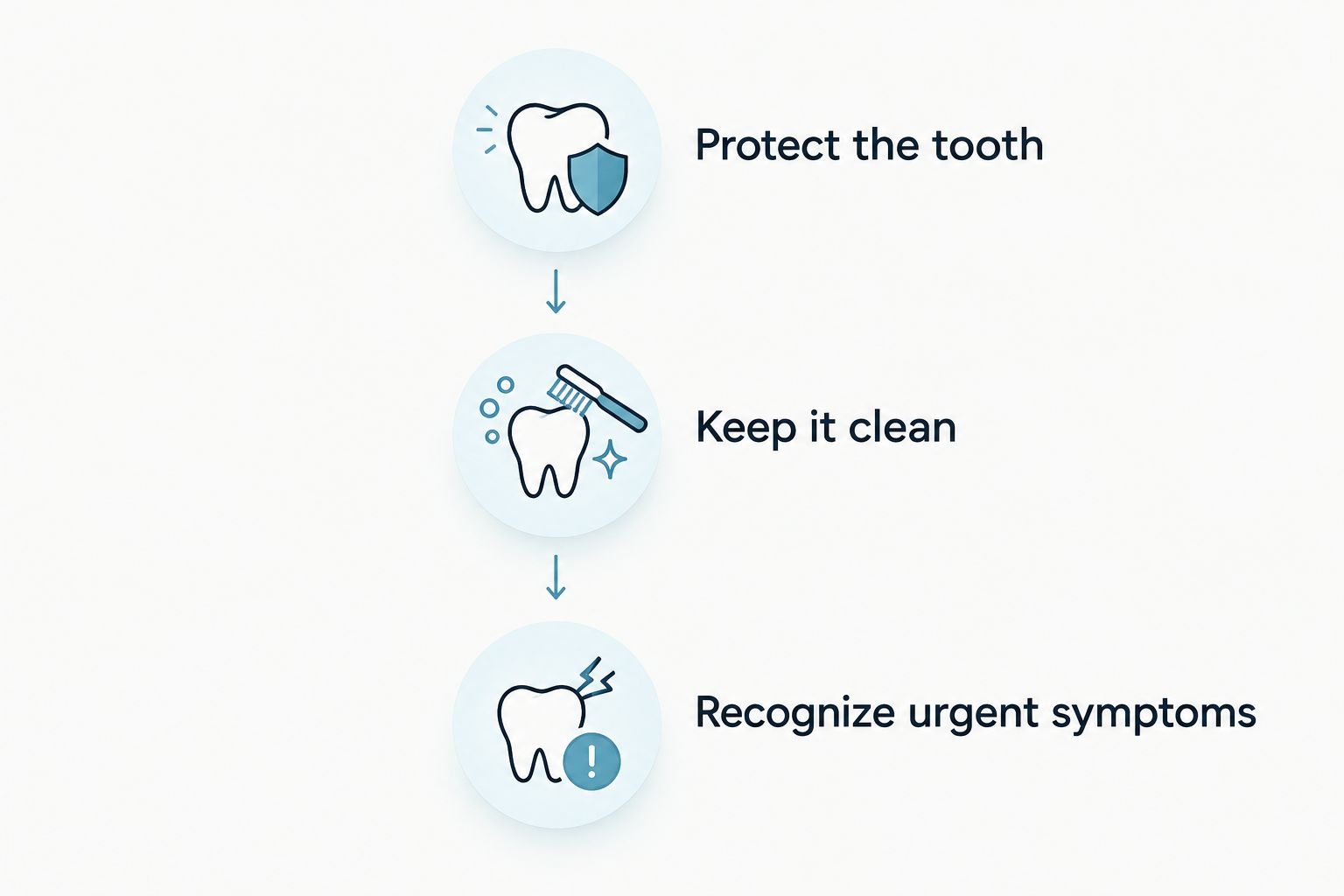
Protect the tooth
Avoid chewing on the damaged side. Choose softer foods, and avoid hard or sticky foods that put pressure on the tooth. Keep any broken fragment and bring it to the appointment; the dentist can assess whether it is useful.
Keep it clean
Brush gently around the damaged tooth and continue cleaning between teeth without forcing floss into a painful area. Do not place aspirin directly on the tooth or gums, and do not use household glue to attach a broken piece.
Recognize urgent symptoms
Contact a dentist promptly for swelling, worsening pain, fever, or a tooth loosened by an injury. Trouble breathing or swallowing, or severe facial swelling, requires emergency medical care. A visible chip without pain still needs assessment, but emergency symptoms take priority.
How these options are ranked
This 2026 guide ranks treatments by the problem they address: missing surface material, structural weakness, appearance, pulp damage, a superficial edge, or an unsalvageable tooth. Tooth preservation and appropriate protection take priority over cosmetic improvement.
The order is a decision guide, not a claim that one procedure works for everyone. Ask Starboard Dental which findings support the recommended chipped or cracked tooth treatment and which alternatives remain appropriate.
Which chipped or cracked tooth option should you choose?
Start with bonding for a small chip discussion; start with a restorability assessment for a crack. That distinction prevents you from choosing a surface repair for a deeper problem.
At your 2026 appointment, ask the dentist to explain:
- Whether the damage is limited to enamel or extends deeper.
- Whether the pulp is healthy.
- How much sound tooth remains.
- Whether the proposed treatment protects the tooth or mainly changes appearance.
- What would make the treatment plan change.
For daily care, American Dental Association guidance recommends brushing for 2 minutes, 2 times per day, with fluoride toothpaste, and cleaning between teeth 1 time per day. These habits support oral health; they do not repair a crack.
If you grind or clench, discuss bite protection after the tooth has been assessed. The guide to night guards for teeth grinding explains that separate decision; a guard is not a replacement for repairing existing damage.
FAQ
What's the best option for a small chipped tooth?
Dental bonding is a common option for a small chip when enough healthy tooth remains. A tiny enamel-only rough edge sometimes needs only professional smoothing. Your dentist must check for deeper damage first.
Is a crown better than bonding for a cracked tooth?
A crown is more appropriate than bonding when a repairable tooth needs broader structural protection. Bonding suits selected limited defects. Neither treatment makes every crack repairable.
Can a cracked tooth heal on its own?
A cracked tooth does not heal like a broken bone. A dentist needs to assess the crack and decide whether restoration, pulp treatment, or extraction is appropriate.
Does every cracked tooth need a root canal?
No, a cracked tooth needs root canal treatment only when its pulp condition calls for it and the tooth remains restorable. The crack's appearance alone does not establish that need.
Can I wait if my chipped tooth doesn't hurt?
Arrange a dental assessment even if the chipped tooth does not hurt. Lack of pain does not confirm that the damage is superficial. Avoid biting hard foods with that tooth while you wait.
Should I use glue to fix a broken tooth at home?
Do not use household glue to repair a tooth. Keep the broken fragment and bring it to a dentist, who can assess the damage and appropriate repair.
What symptoms make a cracked tooth an emergency?
Trouble breathing or swallowing, or severe facial swelling, requires emergency medical care. Contact a dentist promptly for swelling, fever, worsening pain, or a tooth loosened by trauma.
One last thing
A photograph can show a chip without showing the depth of the damage. Before agreeing to treatment in 2026, ask your dentist to separate what is visible from what the examination establishes.
Bring that question to Starboard Dental along with your comfort concerns. Understanding why a treatment fits your tooth matters more than choosing the procedure that sounds simplest.