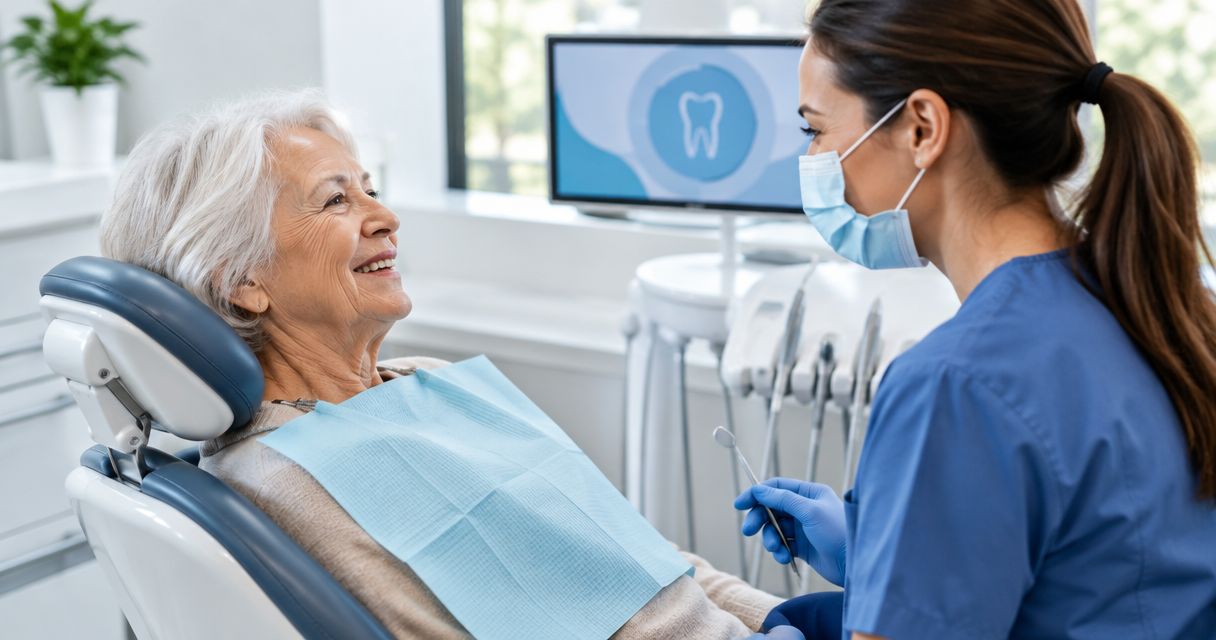
Seniors’ dental care is prevention and treatment tailored to older adults with the aim of keeping your mouth comfortable and maintaining your ability to eat and speak. This 2026 guide to dental care for seniors explains how to adapt daily cleaning, manage dry mouth, and plan treatment around medications, mobility, and existing dental work.
- Dental care for seniors starts with fluoride toothpaste, daily cleaning between teeth, and a manageable routine.
- Starboard Dental provides general and restorative dental care for older adults in Kennebunk, York, and Saco.
- Dry mouth, bleeding gums, and loose dentures need attention; they are not problems to accept as normal aging.
- Choose tooth replacement around your health, cleaning ability, and eating needs—not age alone.
Why dental care matters for seniors
Keeping your teeth healthy is about preserving everyday independence, not just appearance. Mouth pain, missing teeth, and poorly fitting dentures can make meals difficult. A routine that worked before arthritis, a medication change, or new dental work needs reassessment when those circumstances change.
Starboard Dental is a local option for seniors seeking general and restorative dental care in Kennebunk, York, and Saco. The practice, led by Dr. Alex Kerbaugh, serves patients of all ages; your treatment decisions still need an individual examination rather than an age-based assumption.
For your 2026 care plan, focus on the problems that affect your own mouth. Exposed tooth roots need protection against decay, dry mouth needs attention, and restorations need cleaning at their edges. If you wear dentures, your gums and other oral tissues still need regular evaluation.
Build a routine you can maintain
Start with the steps you can take at home: keep a medication list, use fluoride toothpaste, and make cleaning supplies easy to reach. Professional care then addresses problems that home care cannot diagnose or repair.
There is no single visit schedule or tooth-replacement choice that suits every older adult. Your dentist should account for your oral health, medical history, ability to clean your mouth, and treatment goals. The right plan is one you can follow between appointments.
1. Review your medications and mouth changes
Write down your prescription medicines, over-the-counter products, supplements, and allergies before your appointment. Include recent changes and the names of your medical clinicians. Many medicines can contribute to dry mouth, and some medical conditions or treatments affect dental planning.
Do not stop a medicine because you suspect it is causing an oral problem. Ask your dentist and prescribing clinician to review it together. This is especially important if you take blood thinners, medicines for osteoporosis, or treatments that affect your immune system.
Explain what has changed in ordinary terms: food sticks, your mouth feels dry at night, chewing hurts, or a denture moves. Those observations help direct the examination. You do not need to identify the cause yourself.
- Bring an up-to-date medication and supplement list.
- Note when dryness, soreness, or chewing trouble began.
- Report bleeding, swelling, loose teeth, and broken dental work.
- Tell your dentist about osteoporosis treatment and blood thinners.
- Ask whether coordination with your medical clinician is needed.
2. Protect your teeth with fluoride and gentle brushing
Brush natural teeth for 2 minutes, twice a day, using fluoride toothpaste and a soft-bristled toothbrush. These are standard American Dental Association home-care recommendations, not a special routine reserved for younger adults. Pay attention to the gumline, exposed roots, and the edges of crowns or fillings.
Pressure is not a substitute for thorough cleaning. Scrubbing hard can irritate gums and contribute to wear. Use gentle movements and work through the mouth in a consistent order so you do not repeatedly miss the same surfaces.
If toothpaste causes discomfort or brushing hurts, tell your dentist rather than abandoning the routine. Sensitivity can have different causes, including recession, decay, and damaged teeth. Starboard Dental’s general dental care gives seniors a place to discuss these symptoms and their prevention needs; home brushing alone cannot identify the cause.
- Use fluoride toothpaste and a soft-bristled brush.
- Brush the outside, inside, and chewing surfaces of teeth.
- Clean carefully along the gumline and restoration edges.
- Avoid forceful back-and-forth scrubbing.
- Ask whether your cavity risk calls for prescription fluoride.
3. Adapt cleaning to your hands and daily support
Clean between your teeth once a day. A toothbrush does not reliably reach every space between teeth, so brushing and interdental cleaning do different jobs. The best tool is one that fits your mouth and that you can control comfortably.
If arthritis or limited grip makes string floss difficult, try a floss holder, an appropriately sized interdental brush, or a water flosser after discussing technique with your dental team. A powered toothbrush is another option for reducing the hand movements needed during brushing. No device removes the need to reach each surface.
If someone helps with daily care, ask the dentist to demonstrate the routine with that person present and with your consent. Make your 2026 routine practical: a short, repeatable sequence is more useful than several tools you cannot use consistently.
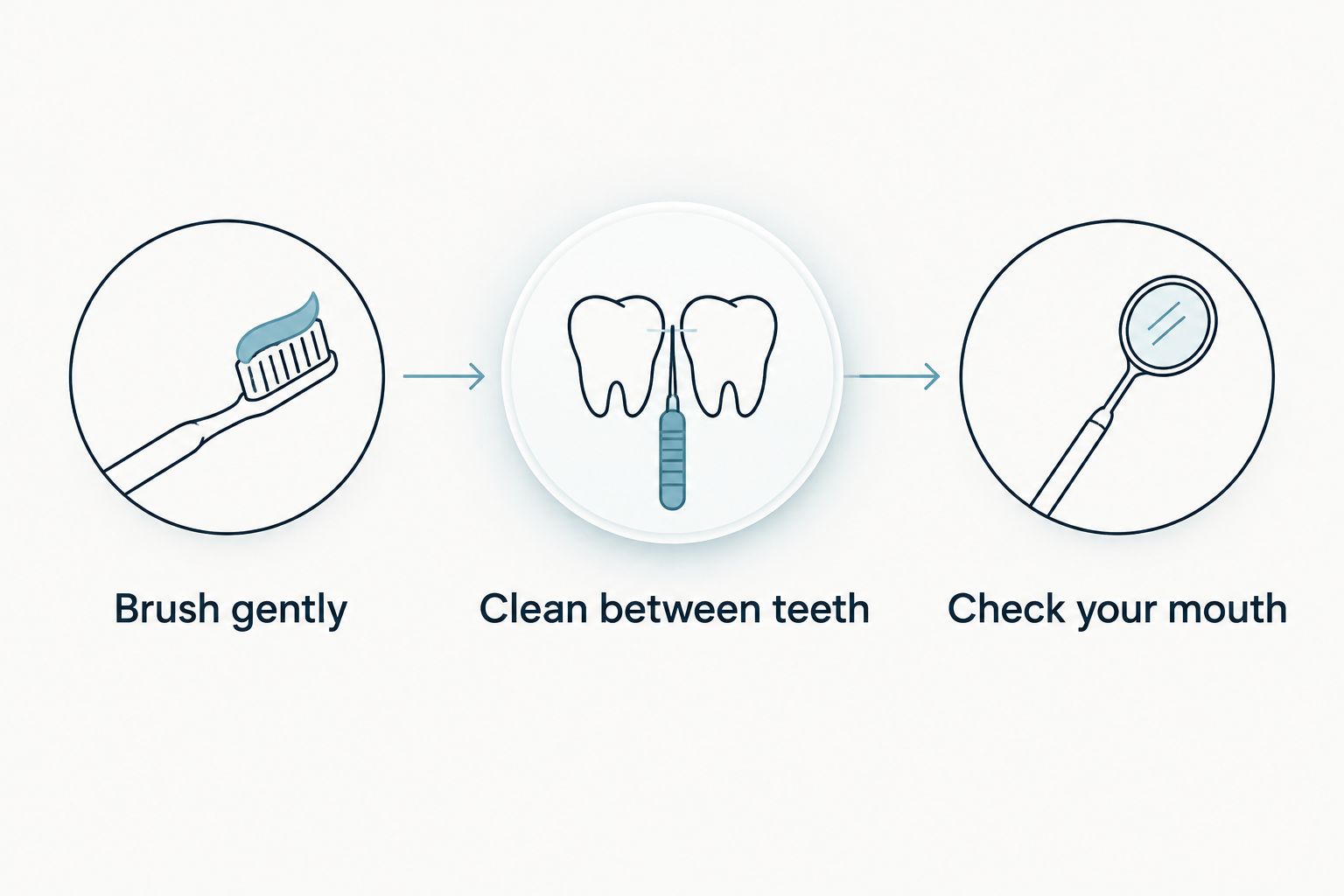
- Brush gently: choose a handle you can comfortably hold.
- Clean between teeth: match the tool to your tooth spacing.
- Check your mouth: report new soreness or damaged dental work.
- Keep supplies visible and within easy reach.
- Ask for a hands-on demonstration before changing tools.
4. Address dry mouth without changing medicines yourself
Dry mouth deserves attention because saliva helps protect teeth and keeps oral tissues comfortable. Medication effects are one possible cause, but your dentist or medical clinician needs to assess persistent symptoms. A dry feeling does not tell you why it is happening.
Start with regular sips of water if your medical care plan allows them. Sugar-free gum can help stimulate saliva if you can chew and swallow safely. Avoid using sugary sweets or frequent sweetened drinks to relieve dryness; repeated sugar exposure adds a separate cavity risk.
Ask about saliva substitutes and whether you need additional fluoride protection. These approaches serve different purposes: one supports comfort, while the other helps protect teeth. If you have a prescribed fluid restriction or swallowing difficulty, get advice that respects those needs rather than following a general hydration suggestion.
- Tell your dentist when dryness affects eating, speaking, or sleep.
- Sip water within any medical fluid restrictions.
- Choose sugar-free gum only if chewing and swallowing are safe.
- Ask whether a saliva substitute suits your symptoms.
- Review persistent dryness with your prescribing clinician.
5. Clean dentures and assess chewing problems
Removable dentures need daily cleaning, and the tissues underneath them need care too. Remove dentures for cleaning, rinse away food, and use a denture brush or other recommended soft brush with a suitable cleanser. Ordinary toothpaste can be abrasive on denture materials.
Follow the instructions for your particular denture and cleaning product. Avoid hot water, which can distort dentures, and ask about suitable soaking instructions if your appliance contains metal. Unless your dentist gives different instructions, leave dentures out overnight to give oral tissues a rest.
A sore spot, clicking appliance, or change in chewing is a reason for an assessment—not a reason to reshape the denture yourself. A dentist needs to check the fit and your mouth. Adhesive does not correct a damaged appliance or explain persistent pain.
- Clean dentures outside your mouth every day.
- Brush your gums, tongue, and any remaining natural teeth.
- Follow material-specific cleaning and soaking instructions.
- Handle dentures over a towel or basin to reduce breakage risk.
- Report sore spots, looseness, and changes in chewing.
6. Plan examinations and treatment around your goals
Ask your dentist to set a visit interval based on your cavity risk, gum health, restorations, and ability to clean at home. Do not assume that everyone needs the same schedule. People without natural teeth still need assessment of their oral tissues and denture fit.
For treatment decisions in 2026, explain what matters most: eating comfortably, keeping a tooth where appropriate, reducing pain, or simplifying daily cleaning. Ask what happens if treatment is delayed and what maintenance each option requires. A proposed restoration should solve a defined problem, not merely fill a space on a treatment plan.
Starboard Dental offers general, restorative, and cosmetic dental care. An examination is needed to determine which approach fits your mouth; the practice description alone does not establish whether a particular procedure is appropriate for you.
- Ask which concerns need attention first and why.
- Explain your eating, comfort, and cleaning goals.
- Request alternatives and the consequences of waiting.
- Discuss appointment length, positioning, and support needs.
- Leave with clear home-care and follow-up instructions.
Discuss your dental care needs
Learn about Starboard Dental’s general and restorative care for patients in southern Maine.
Compare senior dental care options in 2026
Prevention, professional treatment, and tooth replacement solve different problems. Home care helps control plaque but cannot repair a cavity. A replacement tooth can help address a gap, but it brings its own cleaning and maintenance needs.
Use this comparison to prepare questions, not to select treatment without an examination. Age alone does not determine implant eligibility or make removable dentures the automatic choice. Oral health, medical history, anatomy, and your ability to maintain the result all matter.
| Option | Best for | Main benefit | Key limitation |
|---|---|---|---|
| Manual brushing and interdental cleaning | Seniors who can use the tools comfortably | Supports daily plaque removal at home | Technique and consistency determine coverage; it cannot treat established disease |
| Powered brushing and adapted cleaning tools | Seniors with grip or dexterity difficulties | Offers alternatives to difficult hand movements | Tools still need correct positioning and technique |
| Professional preventive and restorative care | Seniors with symptoms, decay, gum problems, or damaged teeth | Provides examination and treatment beyond home care | Requires appointments and continued home maintenance |
| Removable dentures | People considering removable replacement of multiple teeth | Replaces missing teeth with an appliance you remove for cleaning | Fit can change; removal and daily cleaning are necessary |
| Dental bridges | People considering a fixed replacement supported by suitable teeth | Fills a gap without a removable appliance | Supporting teeth and the area beneath the replacement need careful maintenance |
| Dental implants | People whose health and oral examination support implant treatment | Supports replacement teeth without using adjacent teeth as bridge supports | Involves surgery and ongoing cleaning; suitability needs individual assessment |
Before agreeing to replacement treatment, ask how you will clean it with your current hand strength and available support. A fixed option is not automatically easier to maintain than a removable one. Ask the dental team to show the cleaning method before making your decision.
Common mistakes seniors make with dental care
Treating bleeding or pain as normal aging
Bleeding gums, persistent pain, and loose teeth need evaluation. They are not symptoms to accept because you are older. Brushing harder or switching products without an examination does not establish the cause.
Keep cleaning gently and contact your dentist. Facial swelling, fever with dental pain, or rapidly worsening symptoms need prompt assessment; trouble breathing or swallowing requires emergency medical care.
Using sweets to manage dry mouth
Keeping a sweet in your mouth or sipping sugary drinks throughout the day exposes teeth to repeated sugar. That habit works against cavity prevention, even if it briefly improves comfort.
Discuss sugar-free alternatives and saliva substitutes instead. If swallowing is difficult, ask your clinician which approaches are safe before using gum or lozenges.
Assuming dentures eliminate the need for examinations
Dentures replace teeth, not dental assessment. Your dentist still needs to examine oral tissues and assess fit, especially if eating becomes uncomfortable.
Report a mouth sore that has not healed within 2 weeks, a persistent red or white patch, or an unexplained lump. The cause needs examination rather than repeated home treatment.
Choosing treatment without discussing maintenance
A bridge, implant-supported replacement, or denture creates a different cleaning routine. Choosing only by appearance leaves out the daily work needed to maintain the result.
Ask to see the tools and technique before treatment. Include a caregiver in that discussion if they help with your oral care, and explain any hand, vision, or memory difficulties.
FAQ
What is the most important part of dental care for seniors?
A manageable daily cleaning routine and examinations based on your individual risk are the foundation. Brush with fluoride toothpaste, clean between teeth, and report changes such as pain, bleeding, or persistent dryness.
How often should an older adult see a dentist?
Your dentist should set the interval according to your oral health and risk factors. Dry mouth, gum disease, new decay, and difficulty cleaning can affect that schedule; age alone does not determine it.
Is dry mouth just a normal part of getting older?
Persistent dry mouth needs assessment rather than being dismissed as aging. Medicines and medical conditions can contribute, so discuss symptoms with your dentist and prescribing clinician without stopping medication yourself.
Are dental implants better than dentures for seniors?
Neither option is best for every senior. Implants require an assessment of health and oral conditions, while removable dentures require daily removal, cleaning, and attention to fit.
Do I still need dental visits if I have no natural teeth?
Yes, your oral tissues and denture fit still need assessment. Report sore spots, persistent patches, lumps, or changes in chewing rather than waiting for them to resolve on their own.
What should I do if arthritis makes flossing difficult?
Ask your dental team to demonstrate a floss holder, interdental brush, or water flosser suited to your mouth. Choose a tool you can control and use consistently rather than forcing a technique that hurts your hands.
When should a senior get urgent help for tooth pain?
Seek prompt assessment for dental pain with facial swelling, fever, or rapidly worsening symptoms. Difficulty breathing or swallowing requires emergency medical care, not a routine dental appointment.
One last thing
Bring your actual cleaning tools to your next appointment. Showing how you hold a brush or use an interdental cleaner gives your dental team something specific to improve. Describe the hard part, whether it is grip, reaching back teeth, remembering the sequence, or removing a denture.
For your 2026 plan, make that practical demonstration a priority. A routine adapted to your hands and your mouth is more useful than adding another product without learning how to use it.