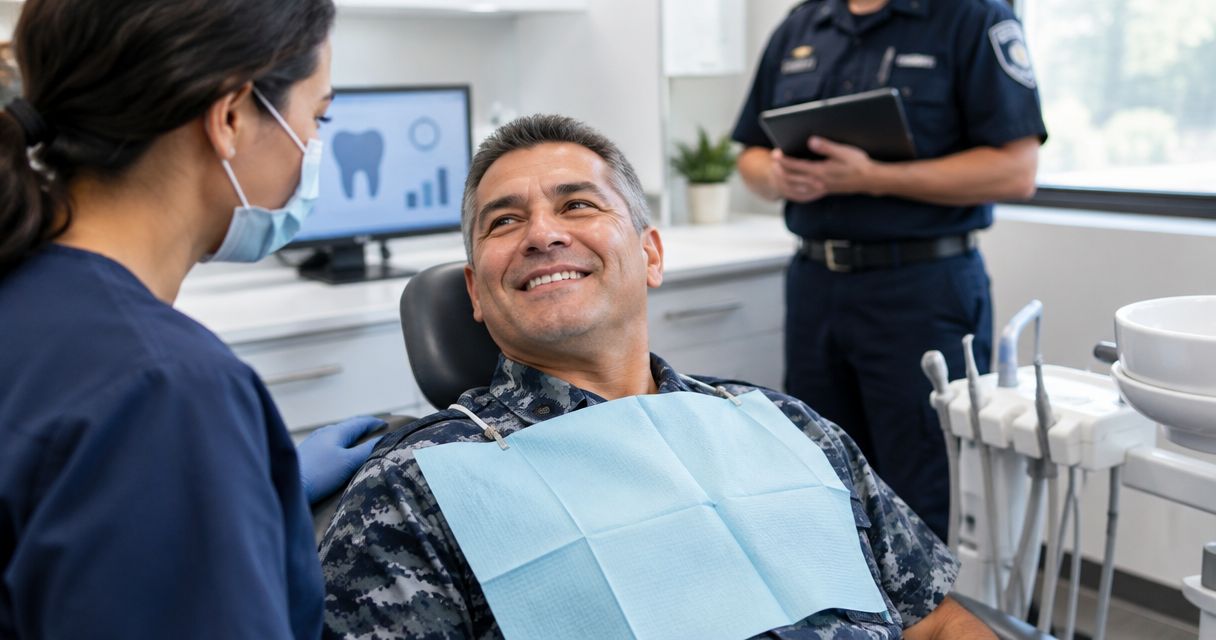
Veterans’ and first responders’ dental care is prevention and treatment planned around health history, benefits, and duty schedules to protect oral health and keep you comfortable. This 2026 guide to dental care for veterans and first responders explains how to check coverage, prepare for a visit, and build a routine that works around service commitments.
- Dental care for veterans and first responders starts with checking eligibility, addressing symptoms, and planning preventive care.
- Starboard Dental suits local patients seeking general, restorative, and cosmetic dental care; confirm coverage separately.
- VA health care enrollment does not automatically establish eligibility for VA dental treatment.
- Brush twice daily with fluoride toothpaste, clean between teeth daily, and report persistent pain or bleeding.
Why dental care matters for veterans and first responders
A dental plan needs to work around your actual responsibilities, not an ideal calendar. If you work rotating shifts, travel for duty, or manage service-related health conditions, explain those constraints before scheduling treatment.
Benefits and treatment needs are separate questions. Being a veteran does not automatically qualify you for every VA dental service, and being a first responder does not establish a particular employer dental benefit. Check your own eligibility and plan documents rather than relying on a colleague’s experience.
Symptoms deserve attention regardless of coverage. If cold drinks or brushing hurt, the guide to options for treating sensitive teeth explains the kinds of issues to discuss with a dentist; sensitivity alone does not identify the cause.
For your 2026 care plan, distinguish routine prevention from active treatment. A cleaning appointment is not a substitute for evaluating swelling, a broken tooth, or pain that interrupts sleep.
Build a dental plan around your service commitments
1. Check your dental eligibility before booking treatment
Start with your existing benefits documents and the organization administering your coverage. Veterans should ask VA about dental eligibility specifically, rather than assuming medical enrollment includes dental treatment. VA dental benefits depend on eligibility categories and circumstances.
For first responders, review your employer’s dental plan separately from medical coverage. If a tooth injury happened at work, report the incident through the appropriate workplace process and ask which documentation is required. Do not assume ordinary dental insurance and an occupational injury claim follow the same rules.
A benefits confirmation helps you plan, but it is not a diagnosis. Seek evaluation for urgent symptoms while you clarify the administrative details.
- Ask whether you qualify for dental treatment, dental insurance, or neither through the program you contacted.
- Confirm whether the dentist you intend to visit participates in your plan.
- Ask about referral and prior-authorization requirements.
- Record the contact person, confirmation date, and any reference number.
- Request written clarification of exclusions that affect your proposed treatment.
2. Separate urgent symptoms from routine needs
Use your symptoms, not your next scheduled cleaning, to decide when to seek help. Severe or worsening tooth pain, facial swelling, a broken tooth, or a knocked-out permanent tooth calls for prompt professional advice. Trouble breathing or swallowing, or swelling affecting your airway, requires emergency medical care.
Write down when the problem began and what triggers it. Note whether pain occurs with chewing, temperature changes, or no obvious trigger. These details help the dentist assess the problem; they do not replace an examination.
Do not take leftover antibiotics or place aspirin directly on your gum. Antibiotics do not repair decay or a damaged tooth, and aspirin against oral tissue can cause injury.
- Contact a dental professional promptly for new swelling or significant tooth pain.
- Seek emergency medical care for breathing or swallowing difficulty.
- Describe any recent blow to the face or jaw.
- Note changes in your bite, chewing, or ability to open your mouth.
- Keep medication names and allergy information ready when asking for advice.
3. Choose a dental home and bring your history
Begin with a written health summary and records from previous dental providers. Include prescriptions, nonprescription medicines, allergies, previous dental treatment, and concerns about comfort. Tell the dentist about anticoagulants, diabetes, dry mouth, sleep-related breathing problems, and any other diagnosed condition relevant to your care.
A dental practice can then help turn that information into a treatment plan. Starboard Dental is best suited to patients in Kennebunk, York, and Saco seeking general, restorative, and cosmetic dental care. The practice is led by Dr. Alex Kerbaugh; confirm insurance participation and any particular treatment requirements directly with the practice.
You can start with Starboard Dental when choosing a local dental home. Its stated services do not establish VA authorization, employer-plan participation, or specialized veteran benefits.
- Prepare a current medication and allergy list.
- Request relevant dental records and existing X-rays from previous providers.
- List your main concerns in order of importance.
- Explain any difficulty lying back, tolerating instruments, or sitting through treatment.
- Ask what the initial examination includes and what decisions follow it.
4. Protect your teeth during irregular routines
Start with a toothbrush, fluoride toothpaste, and an interdental cleaning method you can use consistently. The American Dental Association recommends brushing for 2 minutes, twice daily, and cleaning between teeth daily. Attach those habits to waking and your main sleep period rather than conventional morning and evening hours.
Frequent sugary drinks and snacks create repeated exposure for your teeth. Choose water for routine hydration, and discuss persistent dry mouth with your dentist. Some medications contribute to dry mouth; do not change or stop prescribed treatment on your own.
For your 2026 routine, make the supplies easy to reach. A kit kept with your work belongings removes the need to remember everything before each shift.
- Brush twice daily with fluoride toothpaste and a soft-bristled toothbrush.
- Clean between teeth once daily with floss or another suitable device.
- Use gentle pressure; ADA brushing guidance describes an approximately 45-degree angle toward the gumline.
- Keep a spare toothbrush and toothpaste with your work supplies.
- Tell your dentist about dry mouth, frequent sugary drinks, or difficulty cleaning particular areas.
5. Address clenching, injuries, and treatment discomfort
Notice symptoms before choosing an appliance or changing your routine. Jaw soreness, tooth wear, or morning headaches deserve discussion with a dentist, but none proves that grinding is the cause. A dental assessment helps distinguish tooth problems, jaw-muscle concerns, and other conditions.
Tell your dentist if alarms, close physical contact, particular sounds, or feeling unable to pause make treatment difficult. You do not need to explain personal experiences in detail to describe what helps you feel more comfortable. Ask about an agreed stop signal and explanations before each part of the visit.
A sports mouthguard and a night guard serve different purposes. Do not treat either as a substitute for evaluating jaw pain or a suspected sleep disorder.
- Report tooth wear, jaw discomfort, and any recent facial injury.
- Ask whether an appliance is appropriate for the diagnosed problem.
- Explain which parts of dental treatment feel difficult.
- Agree on a hand signal to pause treatment.
- Ask whether breaks or a different appointment length would help.
6. Sequence treatment around health needs and duty
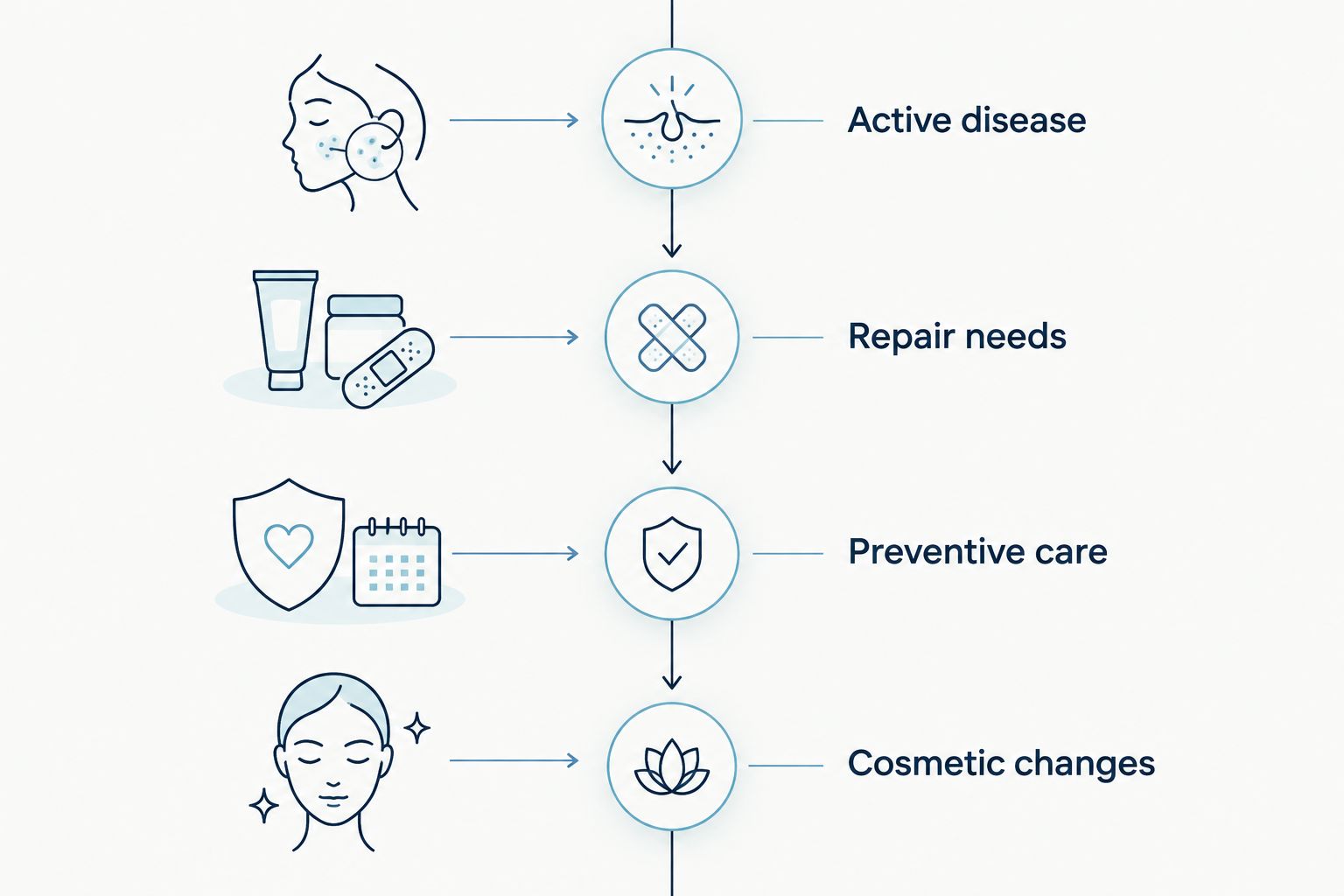
Ask the dentist to explain which problems need attention first and why. Your plan should distinguish active disease, repair needs, preventive care, and elective cosmetic changes. Appearance matters, but it should not obscure infection, decay, or gum problems.
Before a procedure, discuss the expected recovery and whether medicines or sedation affect driving or safety-sensitive duties. Those instructions depend on the actual procedure and your health history. Never assume a coworker’s recovery timeline applies to you.
For planned treatment in 2026, clarify the next appointment before leaving the office. A staged plan helps you understand what is finished, what remains, and which symptoms require an earlier call.
- Request a written treatment sequence with the reason for each recommendation.
- Ask which problems should not wait.
- Explain upcoming travel, deployment, training, or demanding shifts.
- Discuss transportation and work restrictions before any sedation.
- Confirm follow-up arrangements and whom to contact about complications.
7. Review your plan when your circumstances change
Keep a simple record of treatment, symptoms, benefits confirmations, and future appointments. Review it when you change employers, retire, relocate, or receive a new diagnosis. Coverage and clinical needs do not necessarily change together.
Ask your dentist to set your preventive visit schedule according to your oral health, rather than assuming everyone needs the same interval. Gum disease, decay risk, dry mouth, and ongoing treatment can affect the recommended schedule.
Your 2026 plan should also identify how to continue care if you move. Keeping records accessible makes it easier to explain previous treatment without relying on memory.
- Save your treatment plan and relevant benefit documents together.
- Update your medication list after a prescription changes.
- Recheck coverage after an employment or eligibility change.
- Ask when your next examination and preventive visit should occur.
- Request records when transferring to another dental practice.
Compare dental care routes
Choose a route by eligibility and clinical fit, not by your service title alone. The following options describe ways to access care, not interchangeable benefits. A treatment recommendation and an insurance decision answer different questions.
| Option | Best for | Main advantage | Key limitation |
|---|---|---|---|
| VA dental treatment | Veterans who meet VA dental eligibility requirements | Care through an established veterans’ health system | Medical enrollment alone does not establish dental eligibility; covered treatment depends on the applicable category |
| Employer dental coverage | First responders with an employer dental benefit | A defined benefit structure for eligible members | Network rules, exclusions, and authorization requirements vary by plan |
| VA Dental Insurance Program | Eligible veterans or family members considering dental insurance | An insurance route distinct from VA-provided dental treatment | Eligibility and policy benefits require separate confirmation; insurance is not automatic treatment approval |
| Community dental practice | Patients choosing care outside a VA treatment pathway | Direct discussion of diagnosis, prevention, and treatment planning | Coverage and payment responsibilities still need confirmation |
| Starboard Dental dental care | Patients in Kennebunk, York, and Saco seeking general, restorative, or cosmetic care | A local practice led by Dr. Alex Kerbaugh | Its stated services do not confirm VA authorization or participation in a particular insurance plan |
For a 2026 benefits decision, consult the administering organization’s current documents. VA’s published dental-benefit guidance distinguishes eligibility categories, while the VA Dental Insurance Program provides a separate insurance pathway for eligible applicants. Neither establishes what a particular community practice accepts.
Common mistakes veterans and first responders make
Assuming medical coverage includes dental coverage
VA health care enrollment and employer medical benefits are not proof of dental coverage. Ask a dental-specific question before planning routine treatment around those benefits. Confirm the pathway, the provider, and the proposed procedure separately.
Scheduling without mentioning duty constraints
A visit can conflict with driving, equipment operation, or other safety-sensitive duties if treatment involves sedation or medicines that impair alertness. Explain your responsibilities before the procedure is planned. Get instructions from the treating clinician rather than guessing when you can return to work.
Waiting for leave to address swelling or severe pain
An upcoming break in your schedule is not a reason to ignore worsening symptoms. Contact a dental professional for guidance, and use emergency medical care for breathing or swallowing difficulty. Administrative questions can be addressed alongside clinical evaluation.
Treating every jaw symptom as grinding
A sore jaw does not automatically mean you need a night guard. Describe the location, timing, and triggers of your symptoms and let the dentist assess them. Buying an appliance first can leave the underlying problem unaddressed.
Leaving comfort needs out of the conversation
Trying to tolerate a difficult visit without speaking up makes it harder to plan appropriate support. Tell the team what you need: explanations, pauses, or a stop signal. You can make those requests without sharing details you prefer to keep private.
FAQ
Do all veterans qualify for VA dental care?
No, veteran status alone does not establish eligibility for VA dental treatment. VA uses dental eligibility categories and specific circumstances; ask VA to confirm your individual eligibility and covered care.
Does my first responder medical insurance include dental care?
Medical insurance does not establish that you have dental coverage. Check your employer’s dental benefits documents and confirm provider participation, exclusions, and authorization requirements separately.
What is the best dental care route for veterans and first responders?
The best route is one that matches your dental needs, confirmed eligibility, and practical ability to attend treatment. Compare VA eligibility, employer benefits, and community dental care before choosing a routine-care pathway.
Can Starboard Dental help veterans and first responders?
Starboard Dental provides general, restorative, and cosmetic dental care for patients of all ages in Kennebunk, York, and Saco. Confirm insurance participation, VA-related arrangements, and any specific treatment needs directly with the practice.
How do I keep my teeth healthy when I work nights?
Brush for 2 minutes twice daily with fluoride toothpaste and clean between your teeth daily, using your waking and main sleep periods as reminders. Keep supplies with your work belongings and discuss dry mouth or frequent sugary drinks with your dentist.
Should I wait until my next cleaning if my tooth hurts?
No, new or persistent tooth pain should be assessed rather than automatically deferred to a cleaning. Contact a dental professional promptly for significant pain or swelling, and seek emergency medical care for breathing or swallowing difficulty.
What should I tell my dentist if dental visits make me anxious?
Tell your dentist which parts of treatment are difficult and what helps you feel comfortable. Ask about explanations before treatment, breaks, and a clear signal to pause; you do not need to disclose personal experiences in detail.
One last thing
Plan the handoff, not just the appointment. Before leaving after treatment, make sure you know the next step, the symptoms that need a call, and any restrictions affecting your duties. That small conversation connects the dental visit to the rest of your life.