Toddler dental care is daily tooth cleaning and early dental assessment with the aim of preventing cavities and building comfortable habits. A first visit belongs within 6 months of the first tooth appearing and no later than the first birthday; toddlers need adult-led brushing, tiny amounts of fluoride toothpaste, and preparation that matches their attention span.
- Dental care for toddlers first visit: book within 6 months of the first tooth, no later than age 1.
- Starboard Dental serves patients of all ages seeking general dental care in Kennebunk, York, and Saco, Maine.
- Brush twice daily with fluoride toothpaste; use a rice-grain smear before age 3.
- A first dental visit checks oral health and gives parents a prevention plan; it is not a cooperation test.
Why dental care matters for toddlers
Baby teeth help your child chew and speak, and they hold space for permanent teeth. Cavities in baby teeth still need attention: waiting for a tooth to fall out does not address pain or infection.
Toddlers depend on you to clean their teeth and manage eating routines. They also cannot always explain discomfort clearly. A change in chewing, sleep, or willingness to brush deserves attention, especially alongside a visible tooth change.
Prevention starts when the first tooth appears, not when your child can brush independently. The cavity prevention options for kids guide provides a useful companion to the daily habits below.
For your 2026 family routine, use the American Academy of Pediatric Dentistry's first-visit guidance and the American Dental Association's age-based fluoride toothpaste guidance. These recommendations address appointment timing and home care; your child's dentist determines individual treatment needs.
How to prepare for a toddler's first dental visit
Book the visit before a problem develops
The American Academy of Pediatric Dentistry recommends a first dental examination within 6 months of the first tooth erupting, and no later than age 1. If your toddler is older and has not been seen, book now rather than waiting for every baby tooth to arrive.
An early appointment gives you a place to ask about brushing, feeding, tooth development, and habits such as thumb-sucking. It also establishes who to contact when something changes. There is no need to apologize for starting later than recommended.
- Tell the office your child's age and whether this is the first visit.
- Mention pain, swelling, an injury, or a visible tooth change when booking.
- Ask how the practice approaches visits for toddlers.
- Choose a time when your child is usually rested and fed.
Build an adult-led brushing routine
Start with a small, soft-bristled toothbrush and fluoride toothpaste. The American Dental Association recommends a rice-grain-sized smear for children younger than 3 years and a pea-sized amount for ages 3 through 6. An adult should dispense the toothpaste and supervise brushing.
Brush twice daily for about 2 minutes, including before bed. Toddlers need you to do the cleaning, even if they enjoy holding the brush themselves. Let your child practice, then complete the brushing so the back teeth and gumline receive attention.
For a toddler's 2026 brushing routine, focus on consistency rather than a complicated collection of products. The right amount of toothpaste matters more than filling the bristles.
- Use a rice-grain smear before age 3.
- Brush every tooth surface gently, including near the gumline.
- Encourage spitting when your child can do it; discourage swallowing toothpaste.
- Begin flossing when neighboring teeth touch.
- Store toothpaste where your toddler cannot eat it unsupervised.
Choose a dental setting that fits your child
Start by asking about the office's approach, not by assuming your toddler needs a particular specialist or treatment. A general dental practice that sees children and a pediatric dental practice are different options; your child's health, comfort, and treatment needs help determine the fit.
Starboard Dental is best for families in Kennebunk, York, and Saco seeking general dental care for patients of all ages. Led by Dr. Alex Kerbaugh, Starboard Dental provides general, restorative, and cosmetic dental care.
For a toddler's first appointment, ask about age-appropriate care and whether the office can meet your child's needs. The practice's all-ages scope does not establish that it provides every pediatric specialty treatment.
- Explain any medical conditions, medications, allergies, or sensory sensitivities.
- Ask whether you can stay with your child during the examination.
- Describe what helps your child feel comfortable in unfamiliar settings.
- Ask when a pediatric dental referral would be appropriate.
Prepare your child with simple, honest language
Tell your toddler that the dentist will look at their teeth and help you keep them healthy. Practice opening wide together or count a favorite toy's pretend teeth. Keep the explanation short; a toddler does not need a detailed account of every instrument.
Avoid promising that nothing will happen or that nothing will feel uncomfortable. You cannot know exactly what the examination will involve. Instead, explain that your child can let you and the dental team know when they need help.
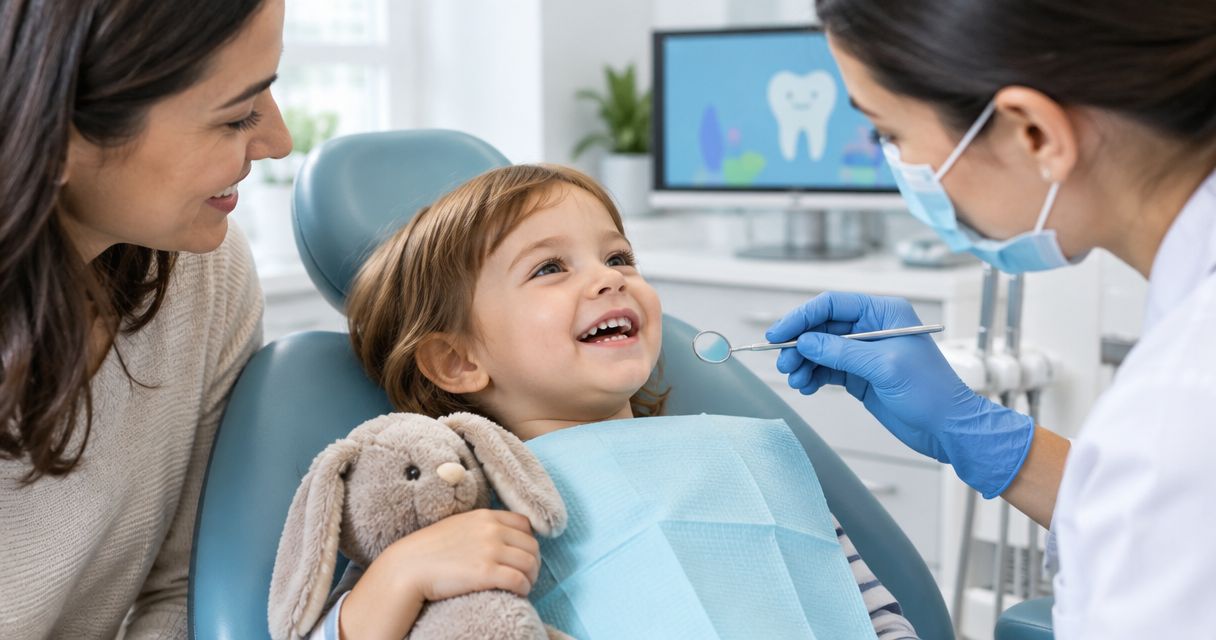
A comfort item gives your child something familiar without turning the visit into a performance. Your calm description matters more than a long rehearsal.
- Use phrases such as looking at teeth and helping teeth stay clean.
- Read a simple, age-appropriate story about a dental visit.
- Bring a familiar toy or small comfort item if the office allows it.
- Keep your own difficult dental experiences out of the preparation conversation.
- Praise participation rather than demanding perfect behavior.
Share the routines that affect tooth health
Bring a brief account of your toddler's usual meals, drinks, brushing, and sleep-related feeding. The dentist needs the ordinary routine, not an ideal version. Frequent exposure to sugary foods and drinks increases cavity risk, so timing matters alongside what your child consumes.
Avoid putting your child to bed with a bottle containing milk, formula, juice, or another sugary drink. Discuss ongoing nighttime feeding with the dentist so the prevention plan fits your child rather than relying on a blanket assumption.
For your 2026 appointment, jot these details down beforehand. It is easier to remember the brushing challenge at home than while helping a toddler settle into an unfamiliar room.
- Describe what your child drinks between meals and overnight.
- Explain who brushes and which toothpaste you use.
- Mention thumb-sucking, pacifier use, or persistent mouth discomfort.
- Bring a current medication list and relevant medical history.
- Identify the part of home care you find hardest.
Understand what the first appointment checks
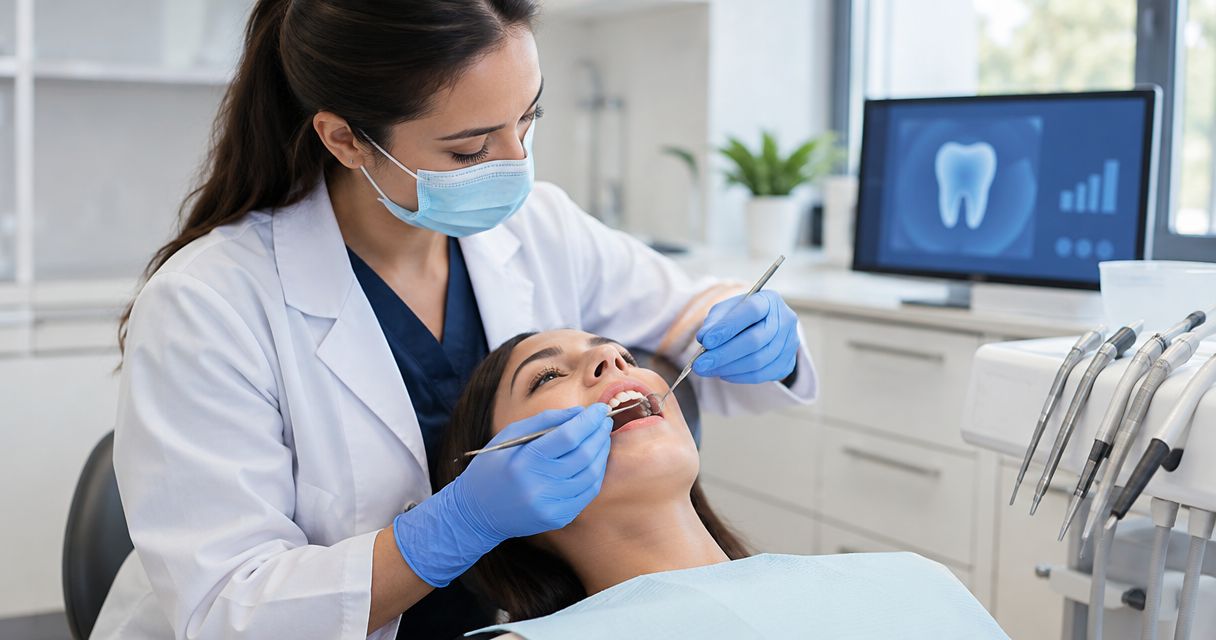
A first visit is an examination and a parent conversation, not automatically a full cleaning or a set of X-rays. The dentist checks the teeth, gums, and oral development, reviews cavity risk, and discusses prevention. X-rays depend on clinical need rather than simply being a first-visit requirement.
For a young child, the dentist can discuss examination positions that allow a caregiver to help. Crying or reluctance does not mean the appointment has failed. The aim is to gather useful information while supporting your child safely.
Ask for a plain-language explanation of any finding before deciding on treatment. You should leave understanding what needs attention, what you can manage at home, and what happens next.
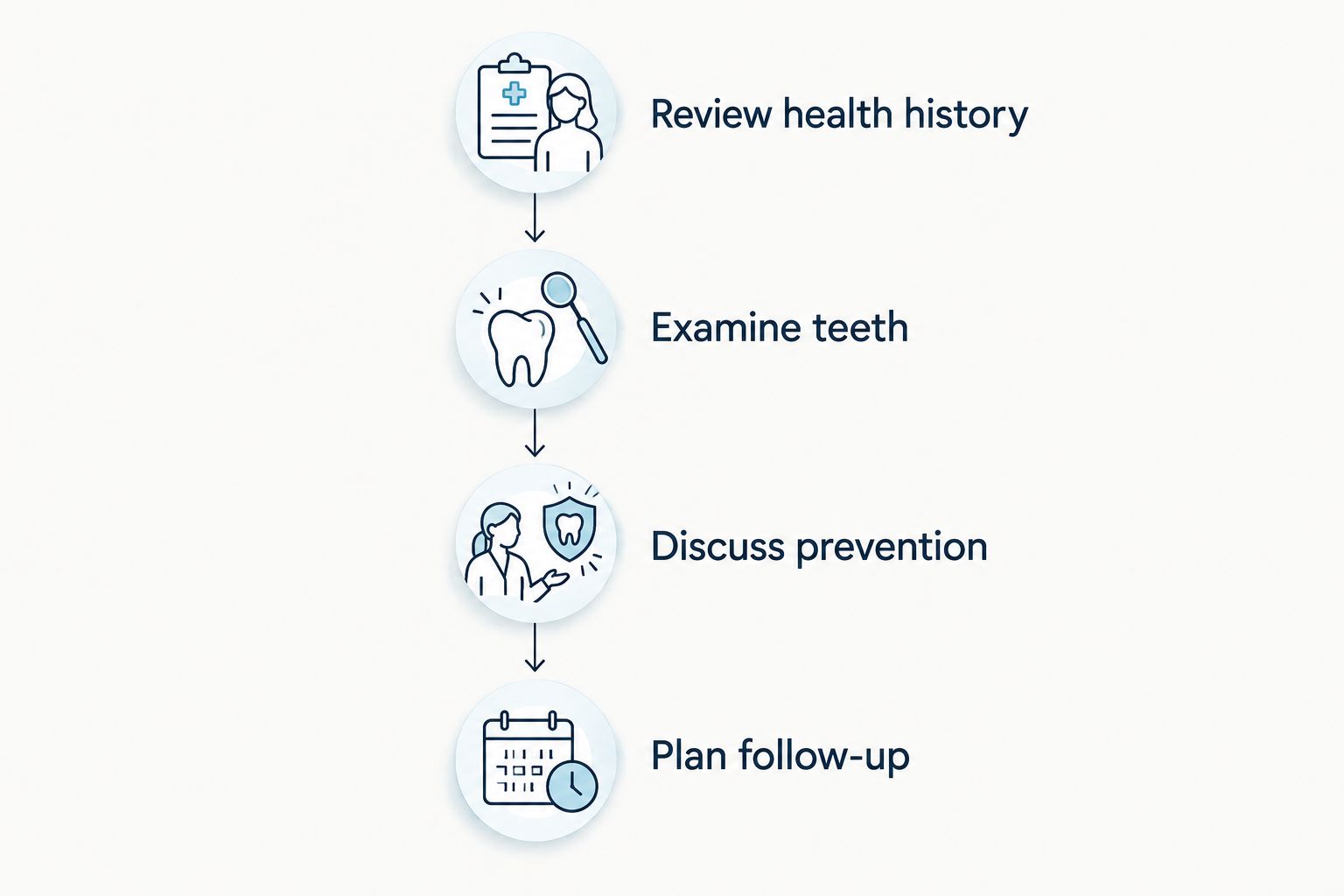
- Review health history and your main concerns.
- Examine teeth and gums as your child tolerates.
- Discuss prevention, including fluoride when appropriate.
- Plan follow-up based on findings and cavity risk.
Leave with a clear home-care and follow-up plan
Before you leave, confirm the toothpaste amount, brushing approach, and follow-up interval for your child. Do not assume that another family's schedule applies. The dentist sets the interval according to your child's oral health and risk.
For your 2026 dental plan, write down the next action in language every caregiver can follow. A grandparent or babysitter should know the same bedtime brushing routine and drink expectations as you do.
A useful first visit ends with instructions you can carry out at home. If a recommendation feels unclear, ask the dental team to demonstrate it rather than trying to reconstruct it later.
- Confirm who will complete brushing each morning and evening.
- Ask whether fluoride varnish is recommended and why.
- Record any finding that needs monitoring or treatment.
- Confirm when to return and how to report new symptoms.
- Share the plan with other caregivers.
Compare care options for toddlers
These options work together rather than replacing one another. Home brushing does not substitute for an examination, and an appointment does not replace daily care.
| Option | Best for | Main benefit | Key limitation |
|---|---|---|---|
| Parent-led home care | Every toddler with erupted teeth | Removes plaque daily and establishes habits | Cannot diagnose cavities or assess development |
| General dental practice serving children | Families seeking routine care across age groups | Provides examination and individualized prevention advice | Confirm toddler care arrangements; specialty needs can require referral |
| Pediatric dental practice | Children needing specialist assessment or support | Focuses on children's dental care and development | Does not remove the need for caregiver-led daily cleaning |
| Dentist-applied fluoride varnish | Children whose dentist recommends added cavity prevention | Supports cavity prevention as part of a care plan | Does not repair an established cavity or replace brushing |
Starboard Dental's general dental care serves patients of all ages. When choosing toddler care, discuss your child's needs directly rather than treating the practice's broad scope as a promise of specific pediatric procedures.
Common mistakes parents make with toddler dental care
Wait for all the baby teeth
A complete set of baby teeth is not the milestone for starting dental visits. Use the first-tooth and first-birthday guidance instead. If those milestones have passed, make the appointment now.
Let the toddler do all the brushing
Independent practice is useful, but toddlers do not reliably clean every surface. Give your child a turn, then finish the job yourself. A sticker or song can support the routine without making tooth cleaning optional.
Treat a shared spoon as the main cavity concern
Avoiding saliva-sharing is sensible, but it does not replace fluoride toothpaste, adult-led brushing, and attention to frequent sugary drinks. Focus your effort on repeatable daily care rather than a single isolated behavior.
Dismiss changes because baby teeth fall out
Pain, a damaged tooth, or a persistent white or brown mark needs dental assessment. A tooth's temporary role does not make disease harmless. Report a change rather than trying to diagnose it from a photograph.
Promise a perfect, tear-free appointment
Toddlers react differently to unfamiliar situations. Set a smaller goal: help your child meet the dental team and allow an assessment as tolerated. Do not describe crying as failure or threaten dental treatment as punishment.
FAQ
When should my toddler have their first dental visit?
Book the first dental visit within 6 months of the first tooth appearing and no later than the first birthday. This follows American Academy of Pediatric Dentistry guidance. If your toddler is older and has not been seen, book now.
How much toothpaste should I use for a 2-year-old?
Use a rice-grain-sized smear of fluoride toothpaste for a 2-year-old. The American Dental Association recommends this amount for children younger than 3 years. An adult should dispense the toothpaste and complete brushing.
What happens at a toddler's first dental appointment?
The dentist examines your child's mouth and discusses health history, cavity risk, and home care. Cleaning, fluoride varnish, and X-rays depend on the child's needs rather than being automatic parts of every first visit.
Is a pediatric dentist better than a general dentist for my toddler?
The right choice depends on your child's needs and the general dentist's approach to caring for young children. A pediatric dentist provides specialist children's dental care. Ask about referral when medical, behavioral, or treatment needs require additional support.
What should I do if my toddler cries at the dentist?
Stay calm and let the dental team guide how to proceed. Crying does not mean that you or your child has failed. Explain what helps your toddler settle and ask about safe, age-appropriate ways to complete the assessment.
Does my toddler need X-rays at the first visit?
X-rays are not automatic at a toddler's first visit. The dentist decides whether they are needed based on the examination, history, and disease risk. Ask what clinical question an X-ray would answer.
When is toddler tooth pain urgent?
Tooth pain with facial swelling, fever, or an injury needs prompt professional assessment. Trouble breathing or swallowing, or rapidly spreading swelling, requires emergency medical care. Do not wait for a routine checkup when these symptoms occur.
One last thing
Before your next appointment, photograph the toothpaste you actually use and note what your toddler drinks after bedtime brushing. Those ordinary details make the conversation more useful than trying to remember a perfect routine.
Keep the 2026 goal simple: adult-led brushing, an age-appropriate dental visit, and a prevention plan you understand. You do not need a perfectly cooperative toddler to begin.