
Best overall for persistent bad breath: a dental evaluation. Best daily foundation: brushing and cleaning between teeth. Best for a coated tongue: gentle tongue cleaning. This 2026 guide compares the best options for treating bad breath by the cause they address, not by how strongly they taste of mint.
- The best options for treating bad breath address the cause: plaque, tongue coating, gum disease, or dry mouth.
- Starboard Dental provides general dental care for patients in Kennebunk, York, and Saco, Maine.
- Brush twice daily for two minutes and clean between teeth daily; mouthwash does not replace either step.
- Persistent bad breath needs a dental evaluation, especially when gums bleed or a tooth hurts.
Why this matters
Bad breath, also called halitosis, is a symptom rather than a diagnosis. Food debris, tongue bacteria, gum disease, and dry mouth can all contribute, so the right treatment depends on what is happening in your mouth.
Starboard Dental offers general, restorative, and cosmetic dental care under Dr. Alex Kerbaugh. Starboard Dental is a general dental care option for patients in Kennebunk, York, and Saco who need help evaluating persistent bad breath.
You do not need to feel embarrassed about bringing it up. Tell your dentist when the odor occurs, whether anyone else notices it, and whether you also have bleeding gums, sensitivity, or dryness.
What makes the best bad breath treatment?
Use these criteria to choose your next step in 2026:
- Cause match: Does the treatment address debris, tongue coating, gum disease, or reduced saliva?
- Cleaning benefit: Does it remove buildup rather than cover the smell?
- Safety: Can you use it without scraping tissue, irritating your mouth, or delaying needed treatment?
- Daily practicality: Can you keep up the routine comfortably?
- Clear limits: Do you know when home care is no longer enough?
There is no single rinse, scraper, or toothpaste that solves every cause. A good treatment improves the source of the odor; a fresh taste alone does not prove that it worked.
Bad breath treatments at a glance
The order below prioritizes diagnosis for persistent symptoms, then daily care and treatments matched to specific causes. The best choice for occasional morning breath is different from the best choice for bleeding gums.
| Option | Best for | Standout benefit | Key limitation |
|---|---|---|---|
| Dental evaluation | Persistent or unexplained bad breath | Identifies dental causes and directs treatment | An examination is a starting point, not a treatment by itself |
| Brushing and interdental cleaning | Plaque and trapped food | Removes buildup from teeth and between them | Does not treat established gum disease on its own |
| Gentle tongue cleaning | Visible tongue coating | Removes debris from the tongue surface | Does not address tooth or gum problems |
| Gum disease treatments | Diagnosed gum disease | Treats inflammation and buildup around the gums | Requires assessment and continued home care |
| Dry-mouth care | Odor associated with oral dryness | Supports moisture and saliva function | Persistent dryness needs investigation |
| Therapeutic mouthwash | An additional step after cleaning | Some formulations target odor-related bacteria | Cannot replace brushing, interdental cleaning, or treatment |
1. Dental evaluation: best for persistent bad breath
A dental evaluation helps identify whether odor comes from plaque, gum disease, decay, trapped food, or another oral problem. Your dentist can examine your teeth, gums, and oral tissues and review symptoms and medications.
This is the strongest starting point when bad breath keeps returning despite consistent cleaning. If the examination does not identify an oral cause, your dentist can recommend an appropriate medical evaluation rather than another breath product.
Dental evaluation pros:
- Connects treatment to an identified problem.
- Checks for conditions that breath fresheners do not address.
- Helps you choose cleaning tools and techniques.
Dental evaluation cons:
- Requires an appointment rather than an immediate home fix.
- Further treatment or medical assessment can still be necessary.
Best for: Persistent odor, unexplained changes, or bad breath with bleeding gums or tooth discomfort.
Before your appointment, note when symptoms started and which products you use. Bring a medication list; dry mouth can be a medication side effect. Starboard Dental provides general dental care for patients of all ages, making this concern appropriate to raise during a dental visit.
Verdict: Skip repeated breath-masking experiments when the odor persists; arrange an evaluation.
2. Brushing and interdental cleaning: best daily foundation
Brushing removes plaque from accessible tooth surfaces. Floss or another suitable interdental cleaner reaches spaces your toothbrush cannot clean well, including places where food collects.
For your 2026 routine, brush twice a day for two minutes with fluoride toothpaste and clean between your teeth once a day. These are established oral-hygiene recommendations, not a guarantee that every case of bad breath will disappear.
Brushing and interdental cleaning pros:
- Removes food debris and plaque rather than masking odor.
- Supports cavity prevention and gum health.
- Gives other treatments a sound foundation.
Brushing and interdental cleaning cons:
- Depends on consistent technique and coverage.
- Cannot remove hardened tartar or treat deeper gum disease by itself.
Best for: Daily prevention and odor associated with plaque or trapped food.
Use a soft-bristled toothbrush and gentle pressure along the gumline. Ask your dentist which interdental tool fits your teeth; forcing a brush into a tight space or snapping floss into the gums can injure tissue.
Bleeding is not a reason to abandon gentle cleaning. It is a reason to ask for advice, particularly if it continues.
Verdict: Skip mouthwash-only routines; make brushing and interdental cleaning your foundation.
3. Gentle tongue cleaning: best for a coated tongue
The tongue's surface can retain bacteria, food debris, and shed cells. Gentle cleaning with a tongue scraper or toothbrush helps remove that coating and can reduce an oral source of odor.
Keep the pressure light and stay within a comfortable reach. Scraping harder is not better, and you do not need to make the tongue look perfectly smooth.
Tongue cleaning pros:
- Targets buildup that toothbrushing can leave behind.
- Fits into an existing bathroom routine.
- Offers a practical step when tongue coating is present.
Tongue cleaning cons:
- Can trigger gagging or irritation.
- Does not treat decay, gum disease, or persistent dry mouth.
Best for: A coated tongue without pain, sores, or an unexplained tissue change.
Stop if cleaning causes pain or bleeding. A patch that persists, a sore, or a change in tongue appearance needs professional assessment rather than repeated scraping.
Tongue cleaning belongs alongside brushing and interdental cleaning. Treating it as the entire routine leaves other sources of buildup untouched.
Verdict: Skip aggressive scraping; choose gentle tongue cleaning when coating is part of the problem.
4. Gum disease treatment: best for diagnosed gum problems
Gum disease can contribute to persistent bad breath. Bleeding, swelling, and deeper spaces around teeth can accompany gum problems, but a dentist must examine your mouth to establish the diagnosis.
Treatment depends on the findings. Professional cleaning addresses plaque and tartar; periodontitis can require cleaning below the gumline and additional care tailored to the condition.
Gum disease treatment pros:
- Addresses a source of odor that home products cannot fully treat.
- Supports the tissues that hold teeth in place.
- Includes a plan for ongoing cleaning and monitoring.
Gum disease treatment cons:
- Can require more than routine preventive cleaning.
- Needs continued home care and follow-up rather than a single fix.
Best for: Bad breath associated with confirmed gingivitis or periodontitis.
In 2026, the useful question is not which mouthwash tastes strongest. It is whether your gums need treatment. Report bleeding, tenderness, gum recession, loose teeth, or a persistent unpleasant taste.
Do not assume that painless gums are healthy; gum disease does not always cause obvious discomfort. Avoid self-starting antibiotics or antiseptic prescriptions to treat odor without a diagnosis.
Verdict: Skip masking odor from diagnosed gum disease; follow the treatment plan for your gums.
5. Dry-mouth care: best when your mouth feels dry
Saliva helps wash away debris and protects oral tissues. When your mouth is dry, odor can become more noticeable, and your risk of tooth decay can increase.
Regular sips of water and sugar-free gum, when you can chew it safely, are practical starting steps. Persistent dryness also deserves a review of medications, symptoms, and possible underlying causes.
Dry-mouth care pros:
- Addresses dryness instead of covering its effects with fragrance.
- Can make speaking and swallowing more comfortable.
- Prompts attention to an issue that also affects dental health.
Dry-mouth care cons:
- Water alone does not resolve every cause of dry mouth.
- Gum is unsuitable for people who cannot chew or swallow it safely.
Best for: Bad breath alongside a sticky mouth, reduced saliva, or frequent oral dryness.
Ask your dentist whether a saliva substitute or other treatment suits your situation. Avoid sugary candies as a moisture strategy, and never stop a prescribed medication without speaking to the prescribing clinician.
Dryness on waking and dryness throughout the day are useful details to report. They help your clinician understand the pattern without requiring you to diagnose it yourself.
Verdict: Hold off on treating persistent dryness as a hydration problem alone; ask about its cause.
6. Therapeutic mouthwash: best as an additional step
Therapeutic mouthwashes contain ingredients intended to address a specific oral-health concern. Some target bacteria involved in odor; cosmetic rinses mainly freshen the taste of your mouth.
Choose a rinse for its intended purpose, not its intensity. Alcohol-free options are a sensible discussion point if rinsing stings or your mouth feels dry, and prescription rinses should be used only as directed.
Therapeutic mouthwash pros:
- Offers an additional step after mechanical cleaning.
- Can target odor-related bacteria, depending on the formulation.
- Provides an option your dentist can match to your needs.
Therapeutic mouthwash cons:
- Does not remove trapped food or hardened tartar.
- Some formulations cause irritation, staining, or taste changes.
Best for: An adjunct to a complete routine or a dentist-directed treatment plan.
Follow the label rather than making a stronger mixture or rinsing more often. Keep mouthwash out of children's reach and check age instructions before use; children who cannot reliably spit should not use it.
Verdict: Hold mouthwash in a supporting role; skip using it as a substitute for cleaning or diagnosis.
How these options are ranked
This 2026 comparison ranks options by cause match, cleaning benefit, safety, daily practicality, and treatment limits. Dental evaluation comes first for persistent symptoms because choosing a product without identifying the cause leaves important problems unaddressed.
For occasional odor with an otherwise healthy mouth, daily cleaning takes priority. The remaining options occupy distinct roles: tongue coating, diagnosed gum disease, dryness, and an additional rinse. None replaces all the others.
Which bad breath treatment should you choose?
Start with consistent cleaning; choose a dental evaluation when bad breath persists. Use tongue cleaning for coating, gum treatment for diagnosed disease, and dry-mouth care when dryness is part of the picture.
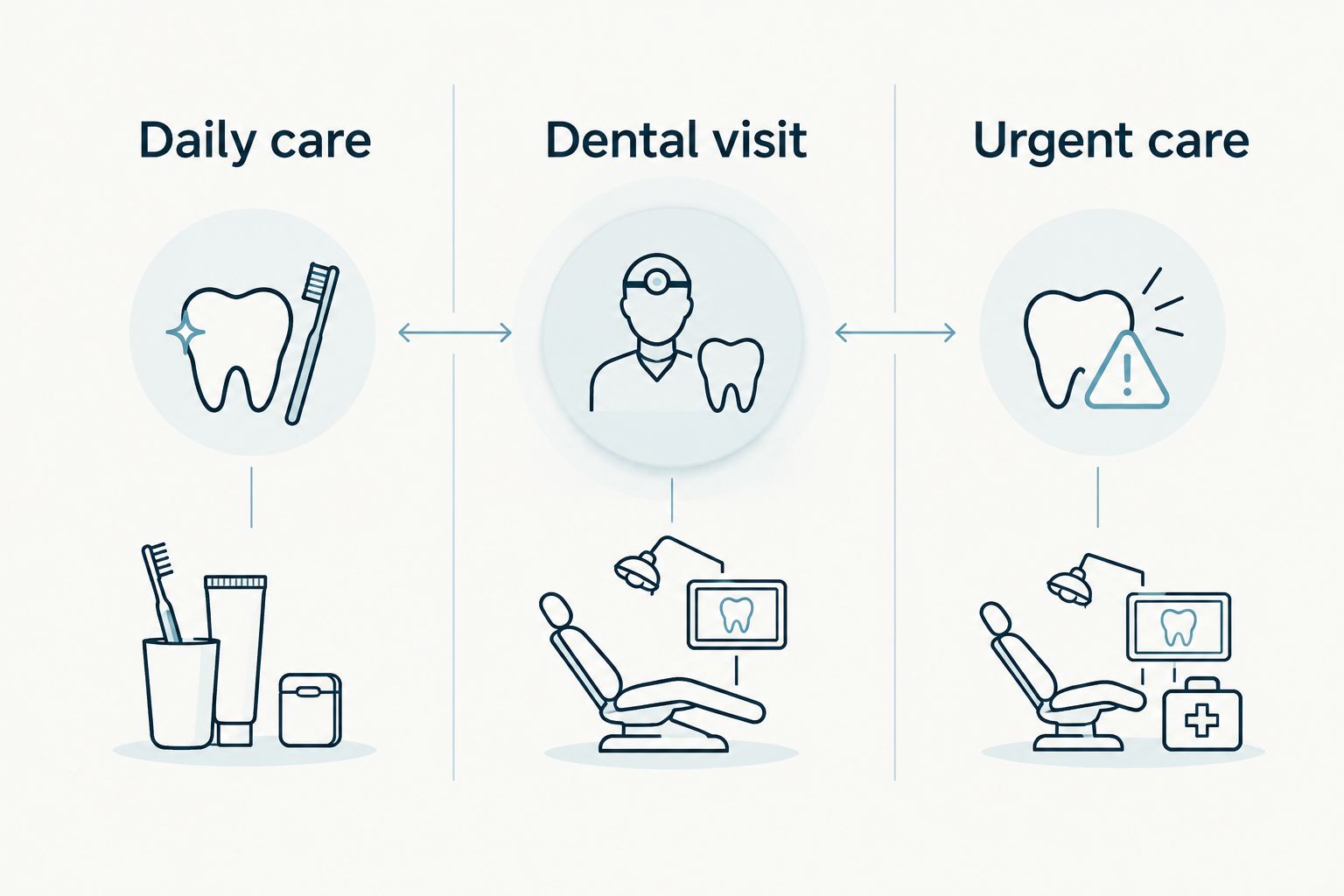
Make your next step simple:
- Daily care: Brush, clean between teeth, and gently clean a coated tongue.
- Dental visit: Arrange an assessment for persistent odor, bleeding gums, or tooth discomfort.
- Urgent care: Seek prompt help for facial swelling or fever with dental pain. Trouble breathing or swallowing requires emergency care.
These are different pathways, not steps you must complete in order. Do not wait to finish a home-care experiment when urgent symptoms are present.
Tell your dentist what you have already tried and whether it helped. Starboard Dental's general dental care is a place to discuss persistent bad breath and your oral-health goals.
Discuss your bad breath concerns
Learn about the practice before arranging a dental evaluation for persistent odor.
FAQ
What's the best option for treating bad breath that keeps coming back?
A dental evaluation is the best starting point for persistent bad breath. It helps identify oral causes such as gum disease, decay, or trapped food and directs treatment to the problem.
Is tongue scraping better than mouthwash for bad breath?
Tongue cleaning is more directly suited to removing tongue coating, while mouthwash is an additional step with effects that depend on its formulation. Neither replaces brushing, cleaning between teeth, or treating dental disease.
Can gum disease cause bad breath even without pain?
Yes, gum disease can contribute to bad breath without obvious pain. Bleeding, swelling, recession, or persistent odor are reasons to arrange a dental assessment.
How often should I brush and floss to help prevent bad breath?
Brush twice a day for two minutes with fluoride toothpaste and clean between teeth once a day. Persistent odor despite that routine needs an assessment rather than increasingly forceful cleaning.
Does drinking water cure bad breath?
Drinking water helps with oral dryness but does not cure every cause of bad breath. Persistent dry mouth, gum disease, and tooth problems need care matched to their cause.
Should I use antibiotics for bad breath?
Do not take antibiotics for bad breath unless a clinician prescribes them for a diagnosed condition. Odor alone does not establish an infection that requires antibiotics.
Can Starboard Dental help me discuss persistent bad breath?
Yes, persistent bad breath is an appropriate concern to discuss during general dental care at Starboard Dental. The practice is led by Dr. Alex Kerbaugh and serves patients of all ages in Kennebunk, York, and Saco, Maine.
One last thing
Minty breath and a healthy mouth are not the same thing. A rinse can change the taste of your mouth without removing the source of the odor. For your 2026 routine, judge progress by consistent cleaning and professional findings, not how strong a product feels.