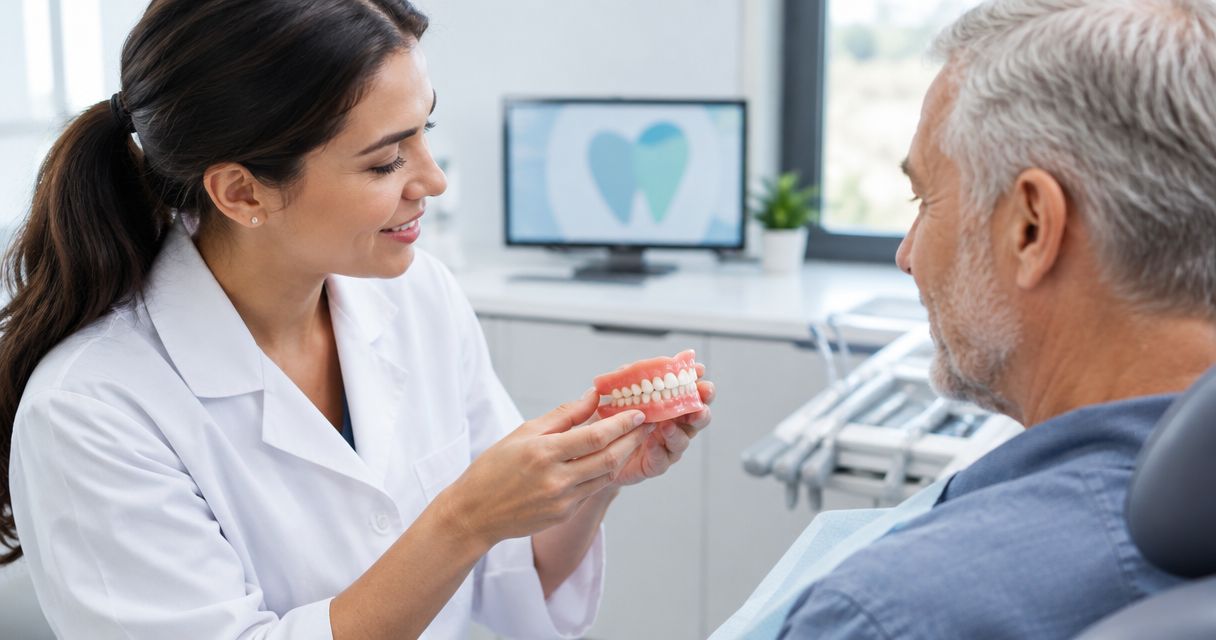
Yes, you can eat a varied, satisfying diet after getting dentures, but you will need to start with soft foods and gradually practice chewing firmer textures. Eating normally does not mean dentures feel exactly like natural teeth: hard, sticky, and tough foods can remain difficult, and pain or repeated slipping needs a dental check rather than more practice.
- Can you eat normally after getting dentures? Yes, with gradual food changes, balanced chewing, and a comfortable fit.
- Start with soft foods, take small bites, and chew on both sides rather than biting with the front teeth.
- Persistent pain or slipping needs a dental check; adhesive does not fix an uncomfortable denture.
- Starboard Dental provides general and restorative dental care for patients in Kennebunk, York, and Saco, Maine.
Can you eat normally after getting dentures?
Yes, but expect to change how you eat before expanding what you eat. Removable dentures rest on the gums and behave differently from natural teeth. Small bites and slow, balanced chewing help you learn how to keep them steady.
The right starting point depends on whether your mouth is healed, whether teeth were recently removed, and what supports the denture. This 2026 guide explains general eating techniques; your dentist's instructions take priority, especially after extractions or implant surgery. For a broader explanation of the designs, see the denture types comparison.
| Food texture | Best for | Benefit | Limitation or caution |
|---|---|---|---|
| Smooth foods, such as yogurt or mashed vegetables | Getting started when chewing feels unfamiliar | Require little chewing | A narrow selection can make meals repetitive |
| Soft foods, such as scrambled eggs or tender fish | Practicing gentle chewing | Add variety without much resistance | Bones and unexpectedly firm pieces still need attention |
| Tender foods cut into small pieces | Returning to more familiar meals | Let you practice controlled chewing | Large pieces can pull or tip a removable denture |
| Hard, sticky, or very tough foods | Later discussion with your dentist | Some can be modified rather than excluded | Can loosen dentures, irritate gums, or damage the appliance |
Why this matters
Eating comfortably is about more than getting through a meal. If chewing feels difficult, you might start avoiding protein foods, vegetables, or meals with other people. Changing preparation methods helps preserve variety without asking sore gums to do more than they can manage.
The useful distinction in 2026 is not between a completely unrestricted diet and a permanent soft-food diet. It is between foods you can manage comfortably, foods that need modification, and symptoms that need professional attention. Progress should make meals easier, not increasingly painful.
How do you start eating with new dentures?
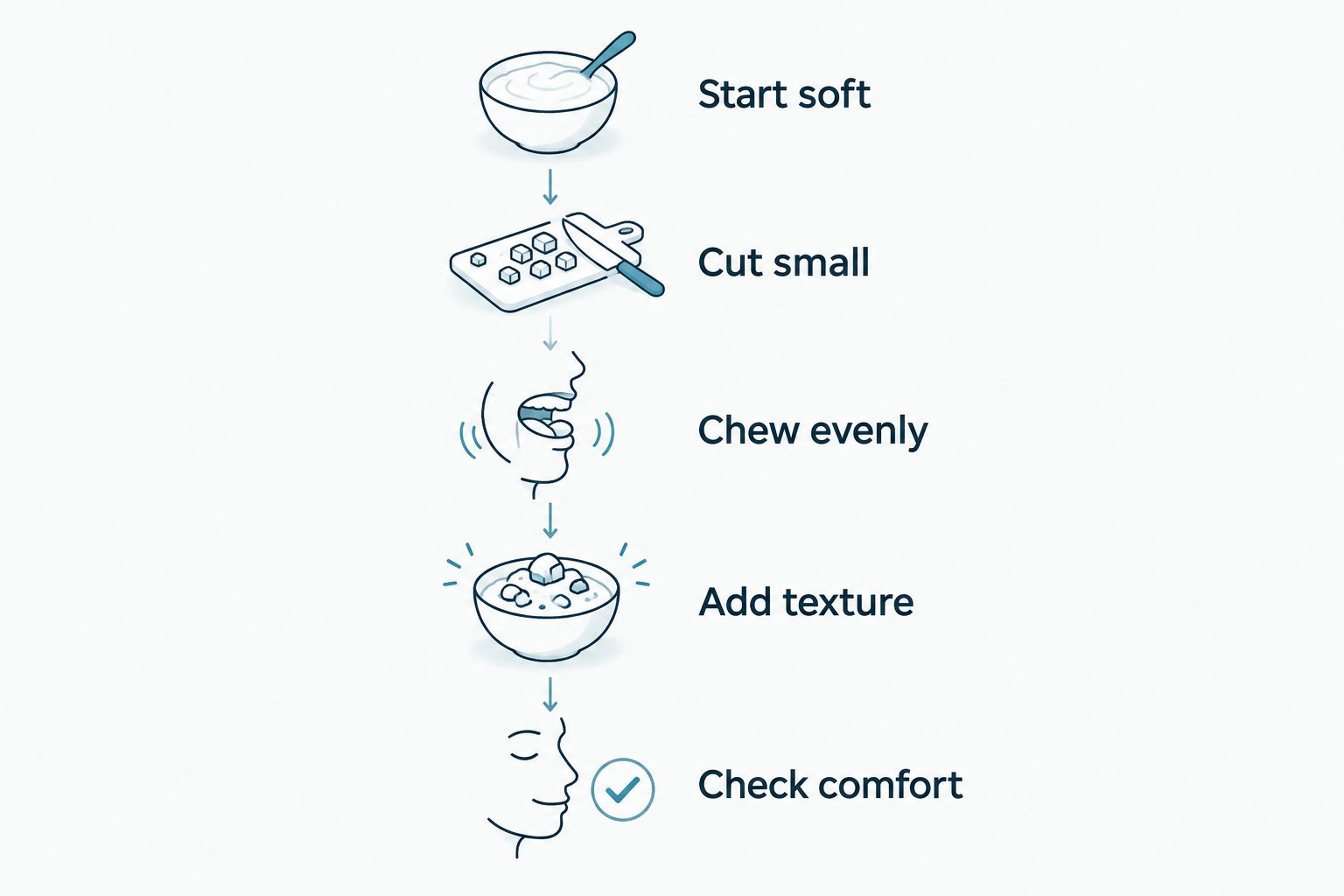
Use a gradual sequence rather than testing your dentures with the hardest food you miss. Comfort and stability should guide the next step, not a deadline on the calendar. If your dentist has prescribed a postoperative diet, follow that plan first.
- Start soft. Choose foods you can mash easily with a fork, such as scrambled eggs, soft pasta, or well-cooked vegetables. Let hot foods cool before eating.
- Cut small. Prepare manageable pieces before taking a bite. Avoid tearing food away with the front teeth of a removable denture, which can tip it.
- Chew evenly. Place food toward the back teeth and distribute chewing across both sides. Slow down enough to notice movement before taking another bite.
- Add texture. Introduce firmer foods gradually when softer meals feel comfortable. Change one challenging texture at a time so you can identify what causes trouble.
- Check comfort. Stop if a food causes sharp pain, repeated rubbing, or denture movement. Return to an easier texture and arrange a dental check if the problem continues.
This sequence is not a test you have to pass. Some meals will be easier than others, particularly when the food contains a mix of soft and tough pieces. Preparing food before you sit down often makes practice less frustrating.
What changes with different denture types?
Denture design affects how food feels and how the appliance stays in place. The distinctions below help explain different experiences, but they do not determine an individual eating schedule. Fit, healing, and the condition of the supporting tissues still matter.
| Denture type | Best for | Eating-related advantage | Eating-related limitation |
|---|---|---|---|
| Complete removable dentures | Replacing all teeth in an upper or lower arch | Restore chewing surfaces where teeth are missing | Can move because they rely on the supporting tissues and fit |
| Removable partial dentures | Replacing some missing teeth when natural teeth remain | Use remaining teeth for support or retention | Food can collect around the appliance and supporting teeth |
| Implant-retained removable dentures | Patients seeking additional retention who are suitable for implants | Attachments help resist denture movement | Require surgery, cleaning around attachments, and ongoing maintenance |
Complete removable dentures
With complete removable dentures, learning to balance chewing forces is especially important. A large bite on one side or pulling with the front teeth can disturb the seal or tip the appliance. Smaller pieces make those forces easier to control.
An upper denture that covers the palate can also change how food temperature and texture feel. Take care with hot drinks and meals. A comfortable fit helps, but practice does not correct a denture that repeatedly rocks or rubs.
Removable partial dentures
Partial dentures replace missing teeth while working alongside the natural teeth that remain. You still need to avoid using the appliance to tear through tough food, and you need to clean both the denture and the supporting teeth carefully.
Food trapped beneath a partial denture can irritate the gums. If the appliance starts feeling different when you bite, have it checked rather than bending clasps or adjusting it yourself.
Implant-retained removable dentures
Implant attachments provide retention that conventional removable dentures do not have. That can improve stability during chewing, but it does not make every food suitable or eliminate maintenance.
If implants were recently placed, healing instructions come before your usual eating routine. A stable-feeling attachment is not permission to advance your diet before your treating dentist recommends it.
Why eating comfort varies
There is no single eating timetable that fits every denture wearer. In 2026, the most useful progress checks remain practical: whether you can chew comfortably, keep the denture steady, and maintain a varied diet.
- Recent extractions: Healing gums need different care from a mouth that healed before the denture was fitted. Follow the instructions for your extraction sites.
- Denture fit: Pressure spots, rocking, or a changed bite can interfere with chewing. These need assessment, not simply tougher gums.
- Denture support: Complete dentures, partial dentures, and implant-retained dentures use different sources of support and retention.
- Saliva: Dry mouth can make food harder to manage and increase friction against the gums. Discuss persistent dryness with your dentist.
- Food preparation: Tenderness, moisture, and bite size affect how much force chewing requires. The same ingredient can be easy or difficult depending on preparation.
- Changes in your mouth: Gums and the underlying bone change after tooth loss. A denture that once felt comfortable can eventually need adjustment or other professional care.
Which foods need extra care?
Modify the food before deciding you must give it up. Cooking, chopping, and adding moisture can make familiar ingredients easier to manage. Avoid treating a difficult bite as a challenge to push through.
For example, cook carrots until tender instead of starting with raw carrot sticks. Slice an apple into manageable pieces rather than biting directly into it. Choose tender, moist meat cut across the fibers instead of tearing through a tough piece.
Sticky candy and chewing gum can pull at removable dentures. Hard candy, ice, and unpopped popcorn kernels can damage dental appliances and natural teeth. Small seeds or fragments can also become uncomfortable if they lodge beneath a denture.
For your 2026 eating plan, focus on preparation rather than a long list of forbidden foods. If a modified food still causes pain or repeated movement, stop and ask your dentist about the fit. Needing an adjustment is not a failure to learn.
When should you call the dentist about eating problems?
Mild unfamiliarity is different from a sore that keeps returning. Contact your dentist if chewing repeatedly causes pain, the denture lifts during ordinary meals, or you cannot eat enough because the appliance feels unstable.
Seek prompt care for worsening swelling, fever, pus, or persistent bleeding after a procedure. Trouble breathing or swallowing requires emergency medical attention. Do not wait for a routine adjustment visit when those symptoms occur.
Do not file, bend, or repair a denture yourself. If your dentist recommends adhesive, use it as directed; adding more is not a substitute for checking a poor fit. After extractions, follow specific instructions about where and when adhesive can be used.
Starboard Dental is best suited to local patients seeking general, restorative, and cosmetic dental care. If eating has become uncomfortable, contact the practice to discuss your symptoms and the appropriate next step.
How long does it take to eat comfortably with dentures?
There is no fixed deadline for eating comfortably with dentures. Learning the movements, healing after extractions, and correcting pressure spots are separate parts of the process. Compare your comfort and stability over time rather than measuring progress against someone else's experience.
If you are not progressing, a review is more useful than repeatedly testing difficult foods. Tell your dentist what you were eating, where it hurt, and whether the denture moved. Those details help explain the problem more clearly than saying the denture feels wrong.
Can you bite into a sandwich with dentures?
Yes, but cutting a sandwich into smaller pieces is often easier than biting and pulling with the front teeth. Start with a soft filling and avoid crusts or chewy bread that require substantial tearing.
If the denture tips when you bite, change the size and placement of the food rather than gripping harder. Persistent tipping during manageable bites deserves a fit check.
Will food taste different with dentures?
Food can feel different with dentures, especially when an upper denture covers the palate. That coverage changes contact with food and temperature, even though the taste buds on your tongue still function.
Keep the appliance clean and mention persistent changes in taste to your dentist. Do not assume every taste change comes from the denture; dry mouth, medications, and oral health problems also need consideration.
FAQ
Can you eat normally after getting dentures in 2026?
Yes, you can return to a varied diet after getting dentures, but start with soft foods and gradually add texture. Some hard, sticky, or tough foods still need modification, and your dentist's healing instructions take priority.
What's the easiest food to eat with new dentures?
Soft foods that require little chewing are a practical starting point with new dentures. Try scrambled eggs, mashed vegetables, or soft pasta, and follow any diet instructions given after extractions.
Should I chew on both sides with dentures?
Yes, distributing chewing across both sides helps keep removable dentures balanced. Take small bites and chew slowly rather than loading one side with a large piece of food.
Is it normal for dentures to hurt when eating?
Persistent pain when eating is a reason to have dentures checked, not something to push through. Pressure spots, rubbing, or an unstable bite can need professional adjustment.
Can I use denture adhesive to stop movement while eating?
Denture adhesive can help retention when used as directed, but it does not correct a poor fit. Ask your dentist before using it around recent extraction sites, and arrange a check for repeated slipping.
Do I need to clean dentures after eating?
Yes, remove and rinse removable dentures after eating to clear loose food, unless your dentist has given different postoperative instructions. Follow the recommended daily cleaning routine and clean your gums and any remaining natural teeth too.
Can Starboard Dental help me decide what to do about uncomfortable eating?
Starboard Dental provides general and restorative dental care for patients of all ages. Contact the practice to discuss eating discomfort and arrange an appropriate evaluation.
One last thing
Before your next appointment, write down the food that caused trouble and point to the exact sore area. Mention whether the denture lifted, rocked, or stayed still while it hurt. That simple description helps separate a chewing-technique problem from a fit problem.
A comfortable meal is a better goal than proving you can eat a difficult food. Bring your questions to Starboard Dental, and let comfort, healing, and professional guidance set the pace.