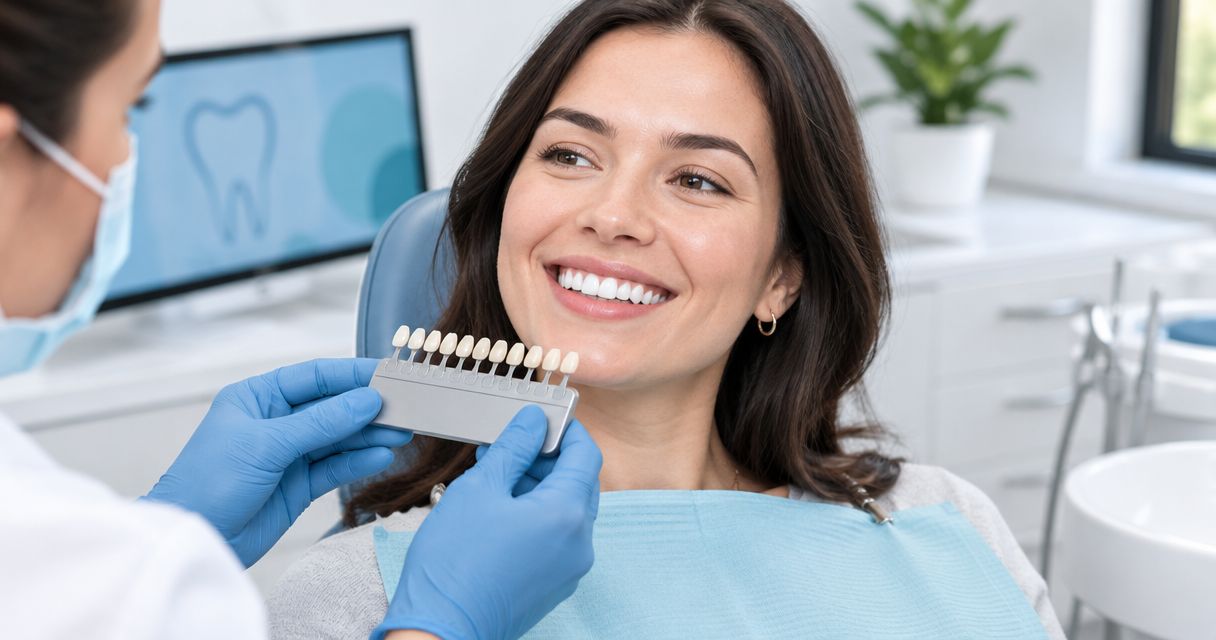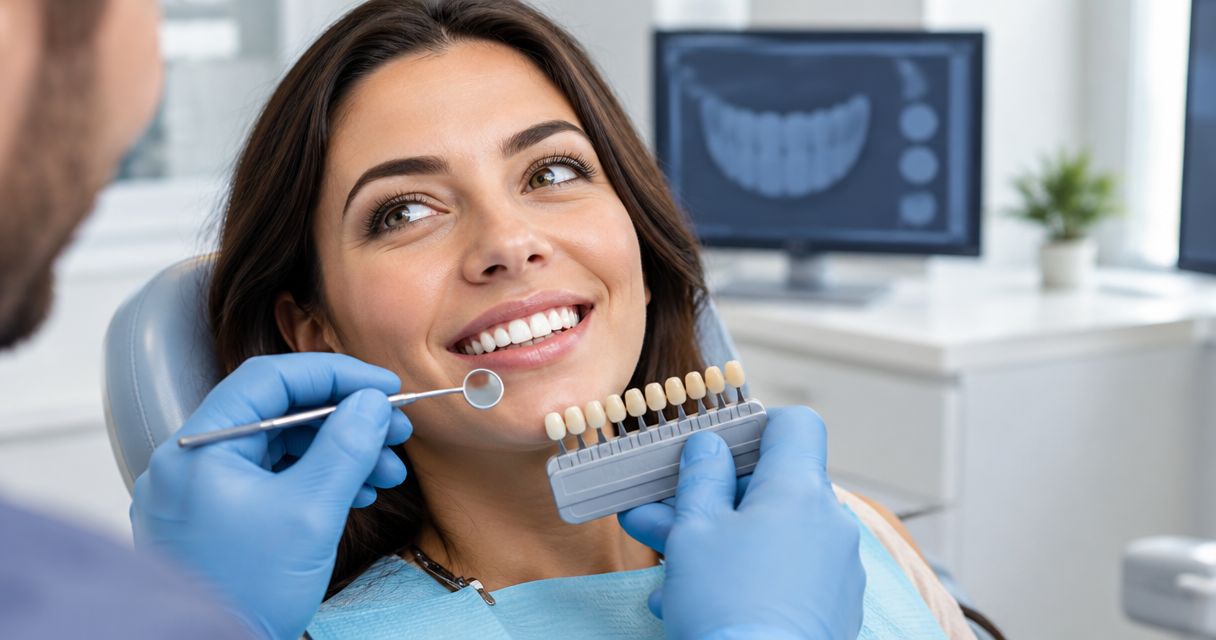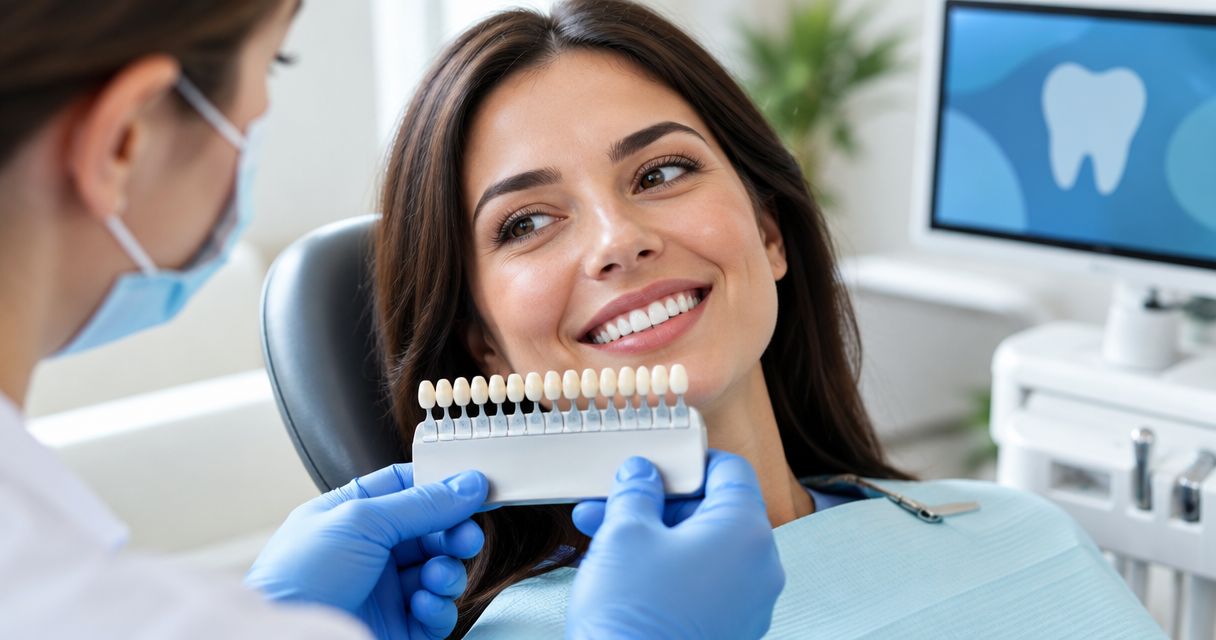
No—you cannot whiten crowns or veneers with bleaching gel the way you can whiten natural teeth. A dentist can sometimes remove surface stains, but cleaning does not change the restoration’s original shade. Whitening the teeth around a crown or veneer can also make an existing color mismatch more noticeable.
- Can you whiten crowns or veneers? No—bleaching does not predictably change their original shade.
- Professional cleaning can remove some surface stains without changing the underlying restoration color.
- Whitening natural teeth can create a mismatch with existing crowns, veneers, or bonding.
- Starboard Dental provides general, restorative, and cosmetic dental care for patients considering changes to their smile.
Can you whiten crowns or veneers?
Crowns and veneers do not respond to whitening like natural tooth enamel. Peroxide-based whitening treatments act on discoloration in natural teeth; they do not reliably change the chosen shade of porcelain, ceramic, or tooth-colored restorative resin.
That difference matters when you compare teeth whitening options. Start by identifying what looks dark: removable surface stain, the restoration itself, or the tooth and gum area around it.
| Approach | Best for | What it can accomplish | Main limitation |
|---|---|---|---|
| Professional cleaning and appropriate polishing | Surface stains | Remove some external discoloration | Does not lighten the original material shade |
| Whitening natural teeth | Discolored natural enamel | Lighten responsive natural teeth | Existing restorations can stop matching |
| Repair or refinishing | Selected surface defects | Address a localized problem when appropriate | Not suitable for every material or defect |
| Replacing a crown or veneer | An unacceptable original shade or damaged restoration | Allow selection of a different restoration shade | Requires dental treatment, not just whitening |
For a 2026 smile refresh, choose the treatment that addresses the cause—not simply the product labeled whitening.
Why this matters
A front crown that matched when it was placed can look different after the surrounding teeth change color. The reverse also happens: natural teeth become darker while the restoration retains its shade.
Neither situation automatically means the crown or veneer needs replacement. A color difference is a reason for an examination, not a reason to start stronger bleaching. Your dentist can distinguish a cosmetic mismatch from decay, a damaged edge, or another problem that needs treatment.
Before starting whitening in 2026, point out every crown, veneer, filling, and bonded area you can see when you smile. Those areas belong in the shade plan even if they are healthy and comfortable.
Porcelain crowns and veneers: cleaning is not bleaching
Porcelain restorations are made in a selected shade. Whitening strips and bleaching trays do not turn that porcelain into a lighter shade, even when nearby natural teeth respond well.
Surface deposits are a separate issue. A dentist or hygienist can assess whether appropriate cleaning or polishing will improve the appearance without damaging the finish. The method needs to suit the restoration material.
Best for surface discoloration: professional assessment and material-appropriate cleaning. The benefit is that you can address an external stain without automatically replacing a restoration. The limitation is equally clear: cleaning cannot transform a crown that was made in a darker shade into a lighter crown.
Do not assume that more scrubbing will solve the problem. Abrasive home treatments can damage surfaces and make future stain control harder.
Composite veneers and bonding: assess the surface first
Tooth-colored composite resin behaves differently from natural enamel. Bleaching is not a dependable way to bring an existing composite veneer or bonded area to a new target shade.
A stained composite surface sometimes benefits from professional polishing or refinishing. A dentist must first determine whether the discoloration is superficial, whether the material is intact, and whether a repair makes sense.
Best for a localized surface problem: assessment for polishing, refinishing, or repair. These approaches can preserve an acceptable restoration, but they cannot correct every shade problem. Deeper discoloration or damaged material can require replacement instead.
Tell your dentist if you do not know which material you have. Appearance alone is not a reliable way to identify a restoration, especially when it has been in place for some time.
Natural teeth beside restorations: plan the match first
Whitening can lighten natural teeth while an adjacent crown or veneer stays the same color. That can leave a restoration looking darker even though nothing about the restoration changed.
If your natural teeth are darker than an existing restoration, carefully planned whitening can sometimes improve the match. The result depends on how your teeth respond and what shade you are trying to match; an exact match is not guaranteed.
Best for natural-tooth discoloration: a whitening plan that includes existing restorations. The advantage is treating responsive natural teeth without automatically replacing healthy dental work. The limitation is that whitening cannot make every part of your smile change together.
When replacement is already being considered, discuss the sequence before treatment begins. For a 2026 treatment plan, decide on the intended natural-tooth shade before choosing the final shade of new visible restorations.
Why the appearance of crowns and veneers varies
The same whitening routine does not solve every dark-looking restoration. These factors help determine the next step:
- Restoration material: Porcelain, other ceramics, and composite resin require different surface-care decisions. Material also affects which repairs are appropriate.
- Surface stain: External deposits can make a restoration look darker without changing its original shade. Cleaning addresses the deposit, not the underlying color.
- Original shade: A restoration made in a particular shade does not become lighter through ordinary tooth bleaching. Changing that shade generally requires a restorative solution.
- Surrounding tooth color: Natural teeth can darken or lighten while the restoration remains unchanged. The contrast can be more noticeable than either shade alone.
- Gum position: Receding gums can expose a root surface or restoration edge. Bleaching does not move the gumline or cover an exposed margin.
- Restoration condition: Chips, roughness, leakage, or decay require an examination. Whitening is not a repair for a damaged restoration or unhealthy tooth.
Take note of whether the change appeared gradually or suddenly. That history helps your dentist assess the problem, but it does not replace checking the tooth and restoration directly.
What should you do before whitening around dental work?
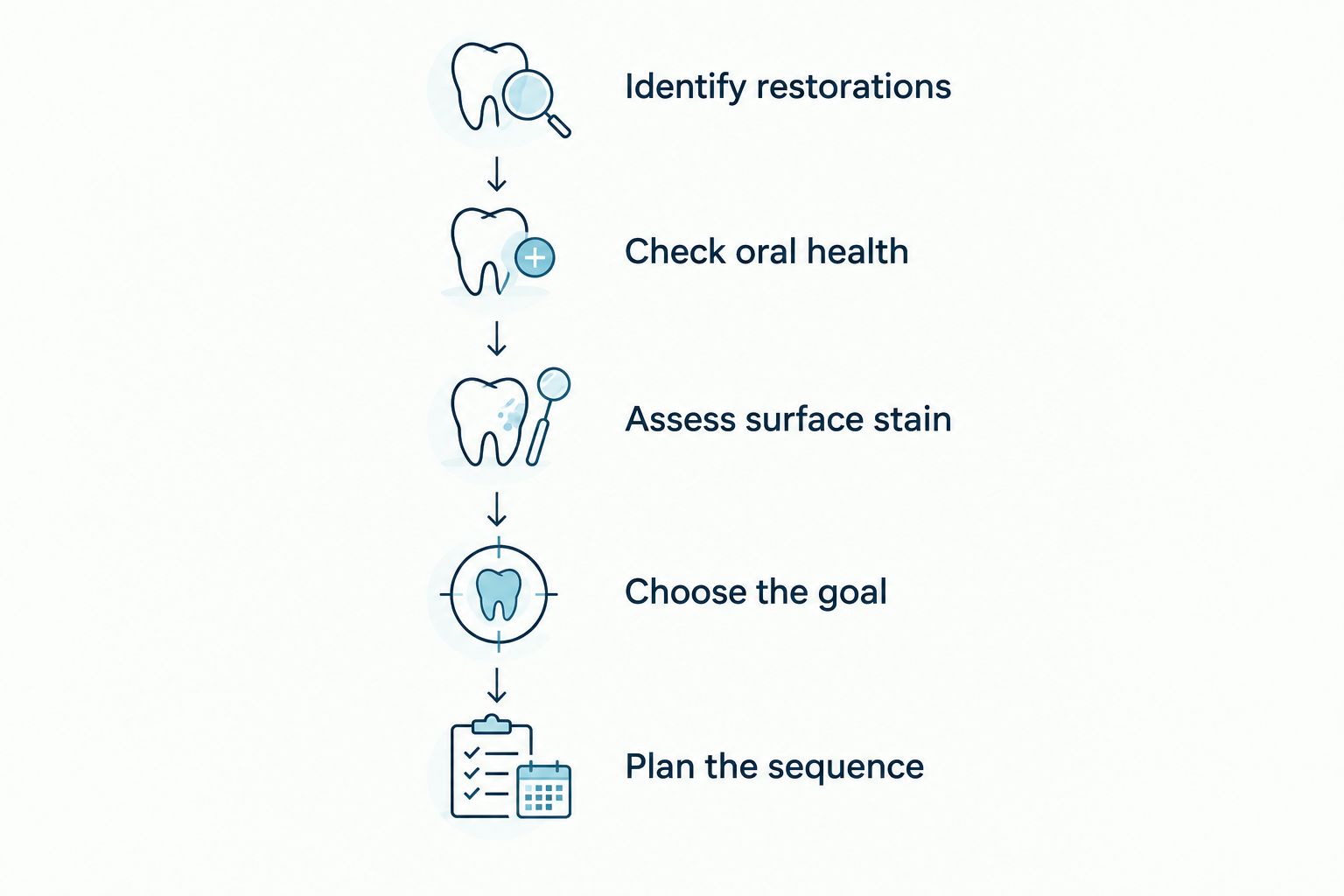
Use this sequence to avoid treating the wrong problem. You do not need to choose a replacement shade or buy a stronger whitening product before the examination.
- Identify the restorations. Tell your dentist which teeth have crowns, veneers, or bonding. Bring relevant dental records if you have them, especially when treatment happened elsewhere.
- Check oral health. Have pain, decay, gum inflammation, and damaged restoration edges assessed before cosmetic whitening. A dark area needs a diagnosis before it needs a color treatment.
- Assess surface stain. Ask whether cleaning or polishing is appropriate for the material. This separates removable deposits from the restoration’s actual shade.
- Choose the goal. Discuss whether you want to match an existing restoration or lighten the natural teeth beyond it. Those goals can lead to different treatment decisions.
- Plan the sequence. If whitening and replacement are both appropriate, coordinate them. Your dentist can decide when the tooth shade is ready for final restoration matching.
Bring a photograph that shows the color difference if it is hard to describe. Use it to explain what bothers you, rather than as an exact shade reference: lighting and camera settings change how teeth appear.
What should you avoid using on crowns and veneers?
Do not use acids, household cleaners, or aggressive scrubbing to try to bleach dental work. Lemon juice and other acidic home remedies can harm exposed natural tooth surfaces. Abrasive powders and unsuitable polishing methods can damage restorative surfaces.
Whitening toothpaste also needs realistic expectations. Some formulas help remove external stains, but they do not change a crown or veneer’s original shade. Ask which toothpaste is appropriate for your restorations rather than choosing solely by the whitening label.
For daily care in 2026, keep the basics consistent: brush twice a day for 2 minutes with fluoride toothpaste and clean between your teeth daily. Follow any additional instructions for cleaning around your particular restoration.
Do not increase the amount of whitening gel or extend treatment beyond its directions because a crown stays dark. That adds exposure without solving the material mismatch and can increase tooth sensitivity or gum irritation.
When does discoloration need a dental examination?
A stable shade difference is different from a newly dark edge, a loose crown, or discomfort when biting. Arrange a dental examination for new discoloration accompanied by pain, sensitivity, swelling, a rough edge, or looseness. These signs need evaluation rather than another whitening session.
A dark line near the gum can have several causes, including an exposed restoration margin or a problem with the tooth. You cannot reliably distinguish those causes from a mirror or photograph.
Seek urgent dental care for facial swelling or rapidly worsening pain. Difficulty breathing or swallowing requires emergency medical attention. Cosmetic treatment should wait until the underlying concern is addressed.
Can whitening strips damage crowns or veneers?
Whitening strips do not predictably lighten crowns or veneers, and their presence does not automatically make every whitening treatment unsuitable. Safety depends on the product, how you use it, and the condition of the teeth, gums, and restoration margins.
Ask your dentist before using strips around visible dental work, particularly if you have sensitivity or a damaged edge. Follow the product directions and stop treatment if you develop significant irritation or pain.
Can a dentist make an existing crown lighter?
A dentist can sometimes make an existing crown look cleaner by removing surface stain, but cannot bleach its original ceramic shade lighter. If the shade itself is the problem, discuss whether leaving it alone, changing the surrounding tooth shade, or replacing it best fits your goals.
Replacement is not automatically the right answer for a healthy crown. It is additional dental treatment, so weigh the cosmetic benefit against the condition of the tooth and restoration.
Should you whiten before getting new veneers?
Discuss whitening before selecting new veneers if you want the natural teeth that remain visible to look lighter. Planning the natural-tooth shade first helps your dentist coordinate the final restoration color.
Do not choose a universal waiting period from an online article. Your dentist should set the timing based on the whitening treatment, shade stability, and planned restorative procedure.
Getting help with a mismatched smile
Starboard Dental is a fit for patients seeking general, restorative, and cosmetic dental care in Kennebunk, York, and Saco, Maine. The practice is led by Dr. Alex Kerbaugh and serves patients of all ages.
When discussing a shade concern at Starboard Dental, explain whether you want a cleaner-looking restoration, lighter natural teeth, or a more even overall match. Those are different goals. Naming the concern helps keep the conversation focused on the treatment decision rather than a whitening product.
FAQ
Can you whiten crowns or veneers at home?
No—home bleaching does not predictably lighten the original shade of crowns or veneers. It can lighten surrounding natural teeth and make a mismatch more noticeable.
Will whitening toothpaste make my crown whiter?
Whitening toothpaste does not change a crown’s original shade. Some formulas remove external stain, but your dentist should help you choose a product suitable for the restoration.
Can professional cleaning remove stains from veneers?
Professional cleaning can remove some surface stains from veneers. It cannot change the underlying material shade, and the cleaning method must suit the restoration.
Why does my crown look darker after whitening?
Your crown can look darker because the surrounding natural teeth became lighter while the crown stayed the same shade. Ask your dentist to assess the mismatch before continuing whitening.
Do I need to replace a stained veneer?
A stained veneer does not automatically need replacement. Your dentist should first check whether cleaning, polishing, or an appropriate repair can address the problem.
Should I keep whitening if my crown does not change color?
No—do not extend treatment beyond the directions to try to lighten a crown. More bleaching does not solve the restoration shade mismatch and can increase sensitivity or irritation.
Can Starboard Dental help me discuss a crown color mismatch?
Starboard Dental provides general, restorative, and cosmetic dental care. Describe the color concern and any pain or sensitivity so the discussion addresses both appearance and oral health.
One last thing
A darker-looking crown does not always mean the crown became darker. Sometimes the surrounding teeth changed, the gumline moved, or a surface deposit altered the contrast.
Before choosing a whitening treatment in 2026, ask one specific question: is the color coming from the surface, the restoration material, or the tooth around it? The answer determines whether cleaning, whitening natural teeth, or restorative treatment addresses your concern.