Teeth whitening can produce a visible change during an in-office appointment, while take-home bleaching usually works gradually over days or weeks; whitening toothpaste removes surface stains rather than bleaching your teeth. The first change is not necessarily your final shade, and sensitivity, the cause of discoloration, and existing dental work all affect the treatment plan.
- How long does teeth whitening take? Office bleaching can show change during treatment; home bleaching works gradually.
- Whitening toothpaste removes surface stains; it does not bleach the underlying tooth color.
- Crowns, veneers, and tooth-colored fillings do not whiten like natural teeth.
- Starboard Dental provides general and cosmetic dental care for patients in Kennebunk, York, and Saco, Maine.
Why this matters
A whitening session, a complete treatment course, and a settled result are different milestones. Knowing which one you mean helps you plan without repeating treatment too soon or expecting toothpaste to do the work of a bleaching gel.
If you are choosing a whitening method in 2026, start with the type of discoloration you want to change. Our guide to teeth whitening options compared explains the choices; this page focuses on when to expect a change and how to judge it safely.
How long does teeth whitening take to work?
In-office bleaching can show a change during an appointment; home bleaching needs repeated applications according to the product instructions. Neither approach guarantees a particular shade. A tooth's starting color and the source of its discoloration matter as much as the method.
The American Dental Association's patient guidance distinguishes peroxide bleaching from products that remove surface stains. That distinction explains why products labeled whitening do not all deliver the same kind of result.
| Method | When to expect change | Best for | Main advantage | Main limitation |
|---|---|---|---|---|
| In-office bleaching | A visible change can occur during treatment | People prioritizing supervised treatment | A dental professional controls application and protects surrounding tissues | Sensitivity can occur; the immediate shade is not always the settled shade |
| Dentist-supervised home trays | Gradual change over the prescribed course | People who prefer treatment at home with professional guidance | The dentist directs gel use and wear time | Results depend on following the schedule; gel can irritate gums |
| Whitening strips | Gradual change during the labeled course | People seeking an over-the-counter bleaching option | Convenient application without a custom tray | Contact with uneven teeth and gums varies |
| Whitening toothpaste | Gradual removal of surface stains | People managing external staining during daily brushing | Fits into an existing brushing routine | Does not bleach deeper tooth color |
There is no interchangeable schedule across these methods. Follow the directions for the exact product rather than borrowing a wear time from another gel, strip, or online routine.
In-office bleaching: visible change during treatment
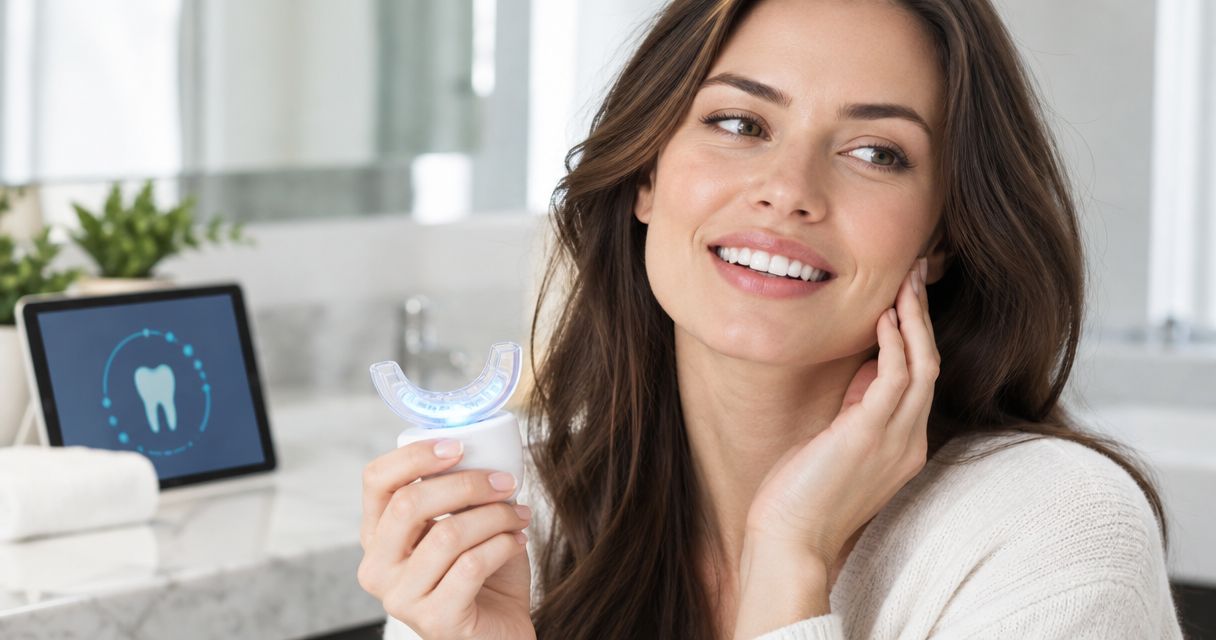
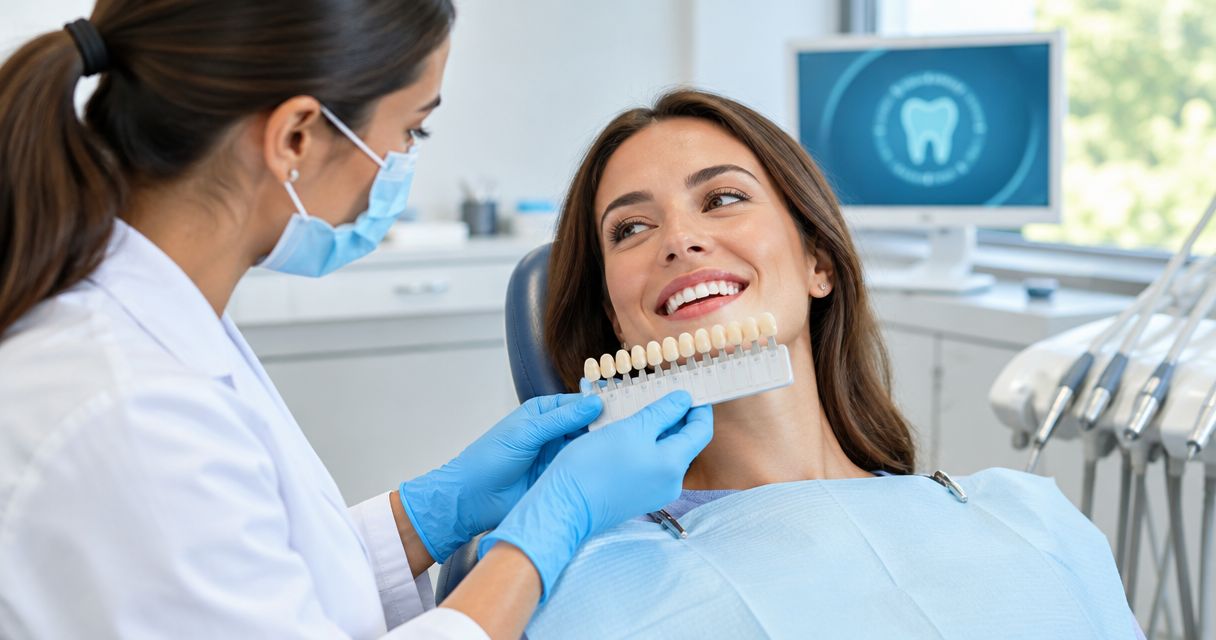
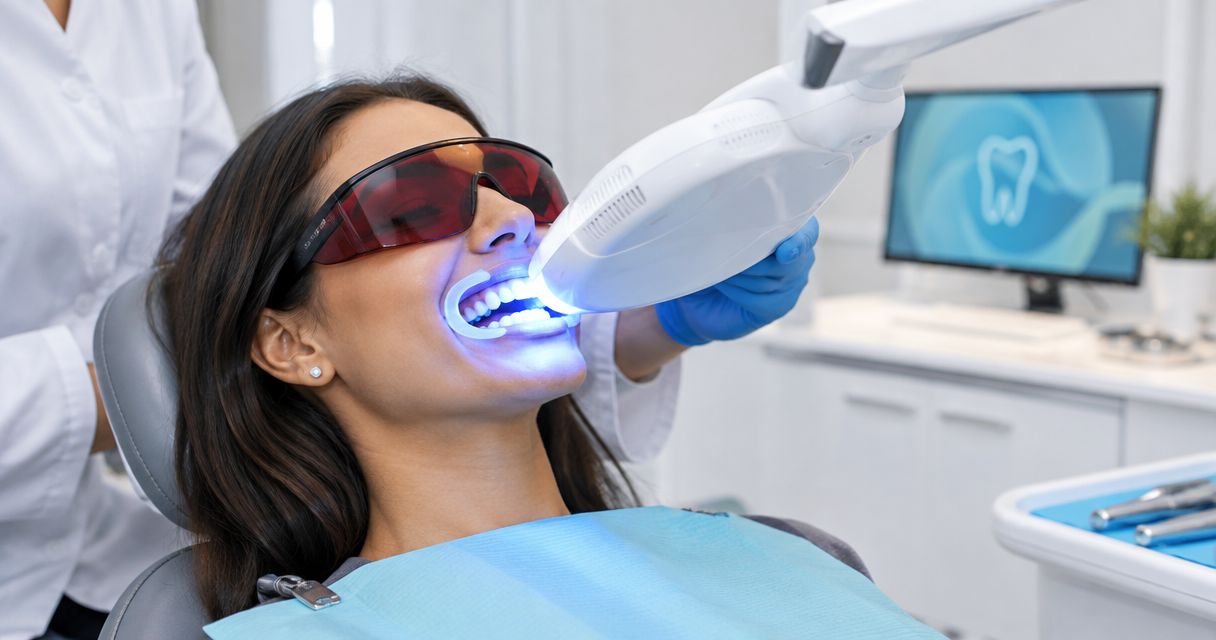
Professional in-office bleaching places a bleaching agent on the teeth under controlled conditions. The clinician protects the gums and follows the treatment system's application instructions. You can notice a difference before leaving, but that does not establish the final outcome.
Teeth can look temporarily lighter when they dry out during treatment. As they rehydrate, the appearance changes again. Do not use the brightest immediate post-treatment shade as a promise of your lasting result.
The advantage is supervision, not a guarantee that every tooth will respond equally. Deep internal discoloration and visible restorations require a different discussion from ordinary external staining.
For a 2026 event, tell your dentist the date before arranging treatment. Your plan needs room to assess your response and manage discomfort, rather than relying on a last-minute appointment to produce an exact shade.
Dentist-supervised home trays: gradual change over the course
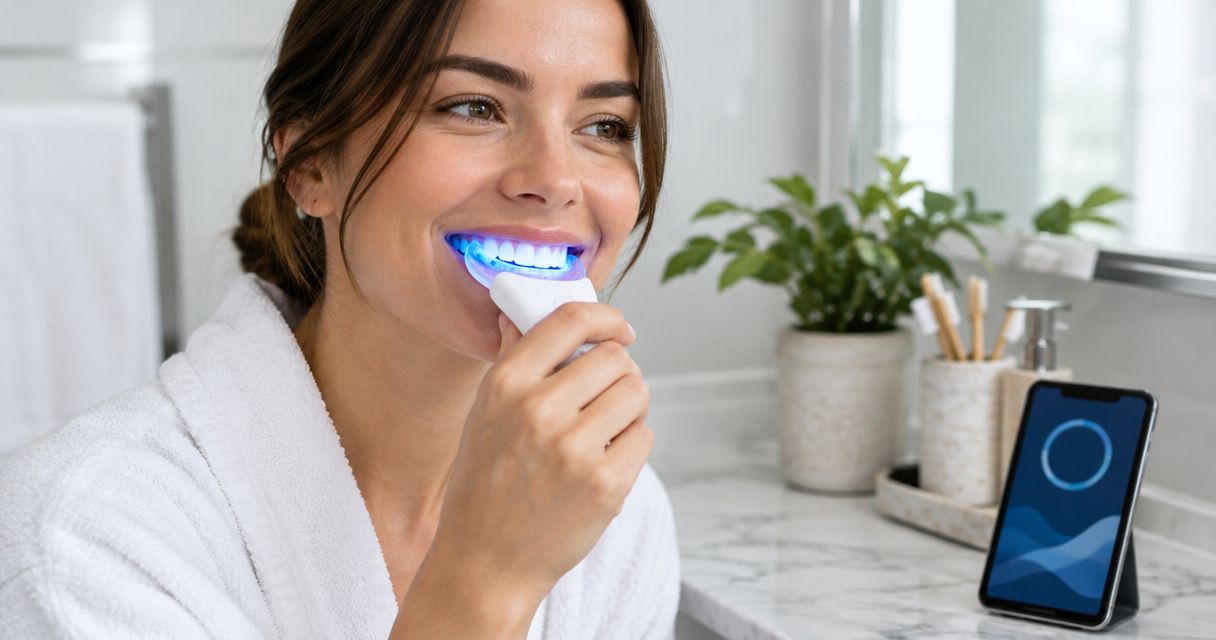
Take-home trays hold bleaching gel against your teeth. Your dentist's instructions determine how much gel to use, how long to wear the trays, and when to stop or return for review. Those details belong to the specific treatment, not to whitening trays as a whole.
The main benefit is a professionally directed course you complete at home. The trade-off is consistency: missed applications, excess gel, or longer-than-directed wear do not create a predictable result.
Use only the amount recommended. Gel squeezed onto the gums increases exposure to soft tissues without giving you a reliable shortcut to whiter teeth.
If progress seems uneven, contact the dentist before increasing treatment. A filling, crown, or difference in the original tooth color can explain the mismatch; additional bleaching will not necessarily solve it.
Whitening strips: gradual change with repeated use
Whitening strips place a bleaching ingredient against the visible tooth surfaces. Some people notice early changes during the course, but the appropriate point for judging results is the endpoint described in the product instructions.
Strips are convenient, but their fit is not customized to your mouth. Crowded teeth, rotated teeth, and spaces between teeth affect where the strip makes contact. Gum exposure also matters when assessing irritation.
Longer wear is not a substitute for following the label. Do not sleep in strips unless the instructions explicitly direct that use, and do not add another bleaching product to accelerate the course.
When comparing products in 2026, read the full directions rather than choosing by a fast-results claim alone. The application schedule and warnings are more useful than a photograph of someone else's smile.
Whitening toothpaste: surface-stain removal, not bleaching
Whitening toothpaste helps remove external stains through cleaning and polishing ingredients. Some formulations contain additional whitening ingredients, but toothpaste is not interchangeable with a dentist-directed bleaching treatment.
This option fits people whose main concern is surface staining. It has a clear limitation: removing stain from the outside of a tooth does not necessarily change the tooth's underlying color.
Choose a fluoride toothpaste and avoid aggressive scrubbing. Harder brushing does not turn toothpaste into a faster whitening treatment, and it can contribute to gum recession and tooth wear.
If the color you dislike remains after surface stains are addressed, ask what is causing it. Continuing to switch toothpastes will not resolve every kind of discoloration.
Why teeth whitening time varies
Whitening speed depends on the teeth, the treatment, and how it is used. These factors explain why a friend's timeline is not a reliable prediction for yours:
- Stain type. External stains and discoloration within the tooth require different expectations. Some internal discoloration is difficult to bleach.
- Starting shade. Teeth do not all begin with the same underlying color or respond to the same degree.
- Treatment instructions. The bleaching ingredient, formulation, contact time, and application schedule determine how a product is used.
- Dental restorations. Crowns, veneers, and tooth-colored fillings do not bleach like natural tooth structure. A color mismatch can remain even when surrounding teeth change.
- Sensitivity and gum irritation. Discomfort can require a pause or a revised plan. Continuing through pain is not a useful measure of progress.
- Ongoing staining. Tobacco and staining drinks can work against the appearance you are trying to maintain.
These factors also explain why an exact shade deadline is unreliable. A sensible plan sets expectations before treatment and checks the response afterward.
How should you plan whitening safely in 2026?
Start with the condition of your teeth, not the strength of the bleaching product. Cavities, exposed roots, cracked teeth, and gum problems need assessment before you treat a cosmetic concern at home.
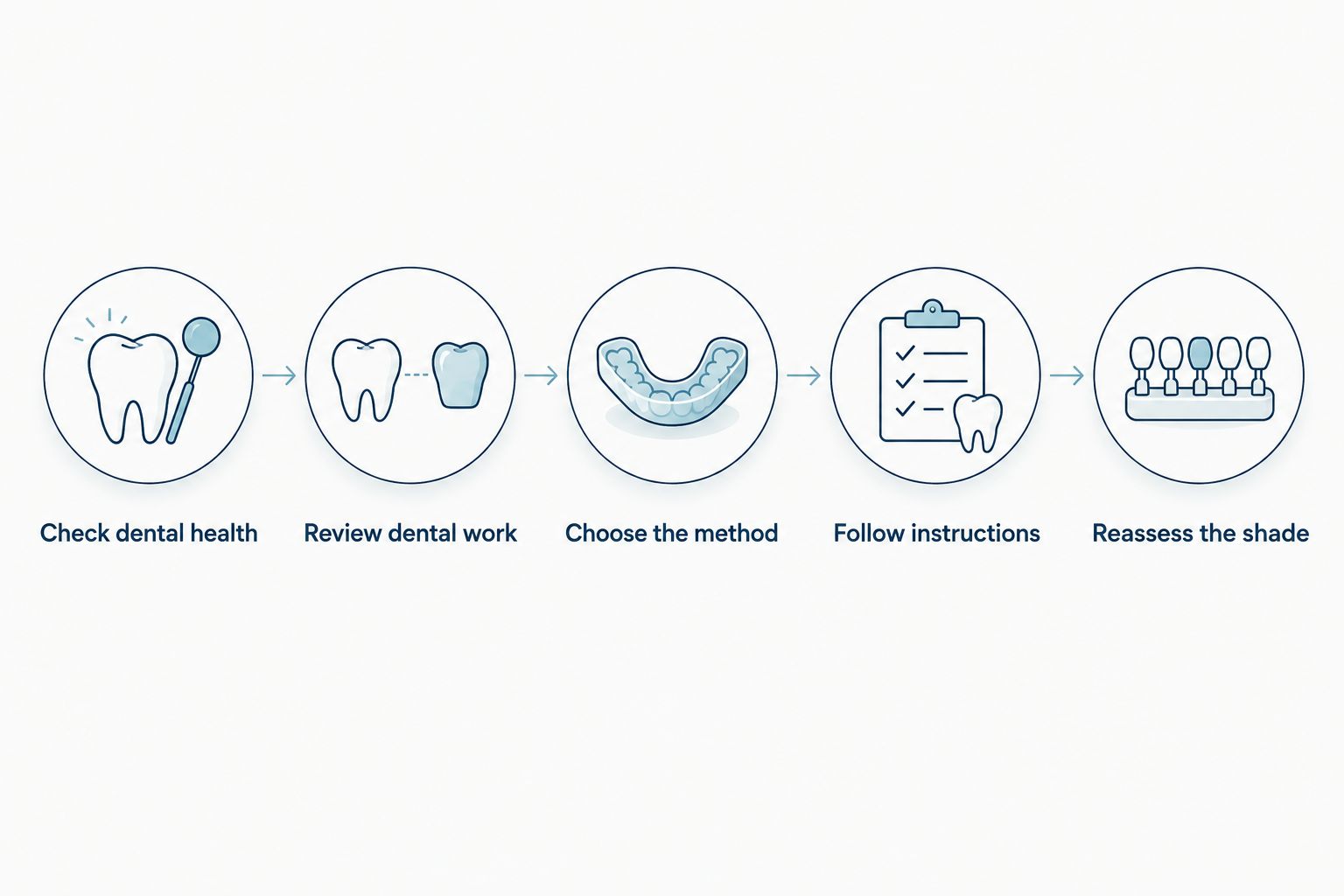
- Check dental health. Tell your dentist about pain, sensitivity, gum bleeding, and previous reactions to whitening.
- Review dental work. Identify visible crowns, veneers, and fillings before deciding what a realistic color change looks like.
- Choose the method. Match the treatment to your goal, your mouth, and your ability to follow the instructions.
- Follow instructions. Keep the prescribed or labeled application schedule. Do not stack products or extend wear time.
- Reassess the shade. Judge the result after the course and after temporary post-treatment changes have settled, with your dentist's guidance.
The sequence matters because whitening cannot diagnose the cause of discoloration. One unusually dark tooth, especially after an injury, deserves an examination rather than a stronger bleaching routine.
Starboard Dental is best for southern Maine patients seeking general and cosmetic dental care in one practice. Led by Dr. Alex Kerbaugh, the practice serves patients of all ages in Kennebunk, York, and Saco. An examination can help separate a cosmetic color concern from a dental problem; no examination guarantees a particular whitening result.
Discuss your smile goals
Learn about general and cosmetic dental care in Kennebunk, York, and Saco, Maine.
Can I make teeth whitening work faster?
Do not increase the application time or combine bleaching products to chase a faster result. More exposure increases the risk of sensitivity and irritation without guaranteeing the shade you want.
Keep your usual oral hygiene routine and follow the product's instructions about eating, drinking, and use. Skip household bleaching chemicals, lemon juice, and other acidic whitening recipes; damaging a tooth surface is not whitening it safely.
If a correctly used treatment does not produce the change you expected, ask your dentist to reassess the cause of the color. The next step is not automatically a stronger gel.
When should I stop whitening and call a dentist?
Stop the bleaching product and seek dental advice if you develop significant pain, persistent sensitivity, or irritated or damaged gums. Pain focused in one tooth deserves attention, particularly when it occurs with biting or lingers after hot or cold exposure.
Temporary sensitivity is a recognized effect of bleaching, but that does not make every symptom normal. Tell the dentist which product you used, how often you applied it, and whether you exceeded its directions.
Facial swelling, fever with dental pain, or difficulty swallowing requires urgent assessment. Trouble breathing is an emergency. These symptoms need care, not another whitening application.
FAQ
How long does teeth whitening take before I notice a difference?
In-office bleaching can show a visible difference during treatment, while home bleaching generally produces gradual change over its instructed course. Your starting shade, stain type, and existing dental work affect what you notice.
Will my teeth be fully white after one appointment?
An appointment does not guarantee a particular final shade. Immediate brightness can include temporary dehydration, and some discoloration does not respond well to bleaching.
Why are my teeth still yellow after whitening?
A remaining yellow appearance can reflect underlying tooth color, incomplete treatment, or discoloration that does not respond as expected. Ask a dentist to assess the cause rather than extending treatment beyond the instructions.
Do crowns and fillings whiten at the same speed as teeth?
Crowns and tooth-colored fillings do not bleach like natural teeth. Whitening the surrounding teeth can make an existing color difference more noticeable.
Should I keep whitening if my teeth hurt?
Stop the bleaching product and contact a dentist if you develop significant pain or persistent sensitivity. Do not increase treatment to finish sooner, especially if the pain is limited to one tooth.
Can I whiten my teeth right before a wedding in 2026?
Plan whitening before the last minute rather than depending on an immediate, predictable shade. Tell your dentist your event date so the plan accounts for assessment, treatment, and your response.
Can Starboard Dental help me decide what to do about tooth discoloration?
Starboard Dental provides general and cosmetic dental care for patients in Kennebunk, York, and Saco, Maine. Discuss the discoloration, any sensitivity, and your goals so the dental evaluation addresses both appearance and oral health.
One last thing
Check the color of your dental work before you chase a lighter tooth shade. A crown that blends in before bleaching can stand out afterward because the natural teeth change and the crown does not.
Bring that concern to the first conversation, not the final shade check. Matching your expectations to your whole smile is more useful than whitening one part of it as quickly as possible.