Yes—a dentist can often fix a chipped tooth in one visit with tooth-colored bonding or by smoothing a small, rough edge. A deeper break, an injured nerve, or damage that needs a crown can require additional treatment, so a same-day repair depends on the examination rather than the chip’s appearance alone. This 2026 guide explains which repairs fit a single appointment and when you need urgent care.
- Can a dentist fix a chipped tooth in one visit? Yes—dental bonding often repairs a small, uncomplicated chip.
- Smoothing suits tiny enamel chips; bonding replaces missing tooth structure, but neither treats an injured nerve.
- Starboard Dental provides general, restorative, and cosmetic dental care for patients in Kennebunk, York, and Saco, Maine.
- Seek prompt dental care after an injury; trouble breathing or swallowing requires emergency medical attention.
Why this matters
A chipped tooth is not always just a cosmetic problem. The missing corner you see does not show whether a crack extends farther into the tooth or whether an impact injured the tissues inside it. The goal is a sound repair, not simply the fastest appointment.
Starboard Dental is a fit for patients in Kennebunk, York, and Saco seeking general, restorative, and cosmetic dental care. You can learn about Starboard Dental before arranging an evaluation; whether your tooth qualifies for a single-visit repair requires an examination.
When planning treatment in 2026, separate two questions: can the tooth be made comfortable today, and can its final repair be completed today? Those are not always the same thing. A temporary covering can protect a damaged tooth without being its finished restoration.
Can a dentist fix a chipped tooth in one visit?
Yes, particularly when the damage is limited and the remaining tooth is healthy. Bonding adds tooth-colored resin to rebuild a missing edge; smoothing reshapes a tiny rough area without replacing the lost piece. Neither approach is appropriate for every fracture.
Common chipped-tooth repairs in 2026
| Option | Best for | Single-visit potential | Main benefit | Main limitation |
|---|---|---|---|---|
| Enamel smoothing | A tiny, superficial chip with a rough edge | Often completed in one visit | Removes an irritating edge | Does not replace missing tooth structure |
| Composite bonding | A small, localized chip with enough healthy tooth remaining | Often completed in one visit | Rebuilds shape with tooth-colored material | Can stain, wear, or chip again |
| Dental crown | A larger break or a weakened tooth needing coverage | Depends on the tooth and restoration process | Covers and protects remaining tooth structure | Requires more preparation than a small bonded repair |
| Porcelain veneer | Selected front-tooth chips where appearance is a main concern | Depends on the preparation and fabrication process | Changes the visible front surface | Does not address every fracture and generally requires enamel preparation |
| Root canal treatment with restoration | Damage involving inflamed or infected tissue inside the tooth | The full treatment plan can require additional visits | Treats the affected tissue inside the tooth | Still requires an appropriate final restoration |
For a wider look at treatment choices, compare the options for a chipped or cracked tooth. A chip and a crack can overlap, but they do not automatically need the same repair.
Enamel smoothing: Often 1 visit
Best for: a tiny chip confined to the outer enamel. A dentist can smooth and polish a sharp edge when reshaping will not compromise the tooth. This helps when the main problem is an edge catching your tongue or lip.
Smoothing removes a small amount of tooth material; it does not rebuild the missing corner. If reshaping would noticeably shorten the tooth or change your bite, adding material or choosing another restoration deserves consideration.
Composite bonding: Often 1 visit
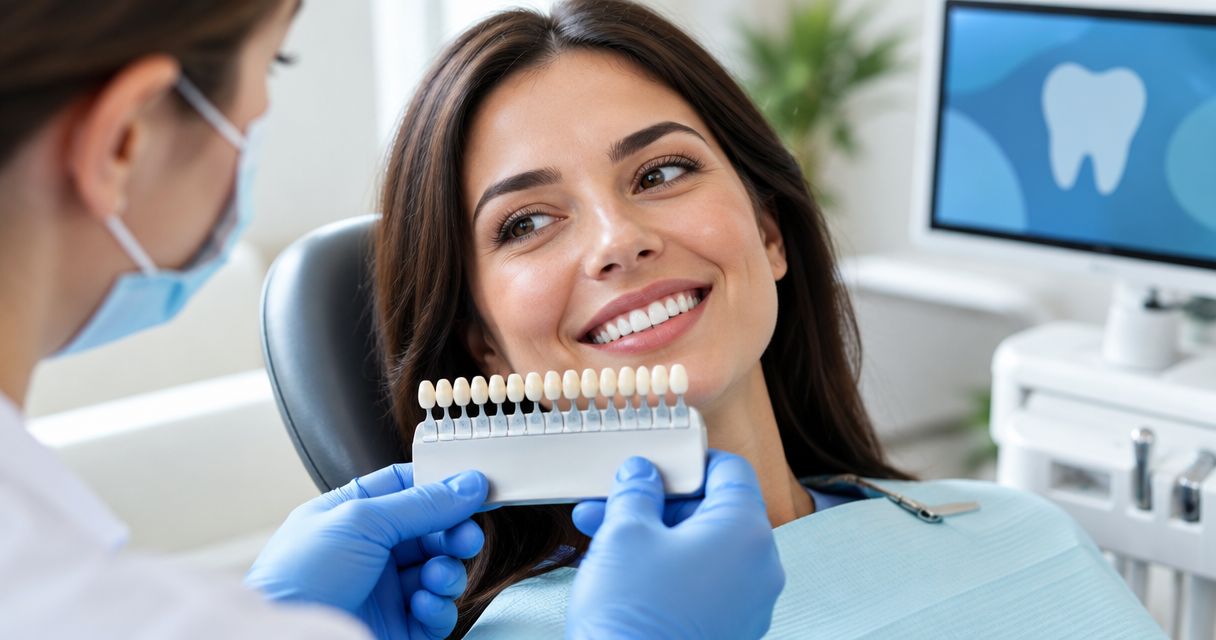
Best for: a small, localized chip that needs its shape rebuilt. The dentist prepares the surface, applies tooth-colored resin, hardens it with a curing light, and adjusts the result. The material is shaped directly on your tooth rather than fabricated separately in a laboratory.
Bonding preserves tooth structure in suitable cases, but the repaired edge is not indestructible. Biting nails, chewing ice, or using your teeth to open packaging puts unnecessary force on it. A larger fracture or heavy biting contact can make another restoration more appropriate.
Crowns and veneers: The schedule depends on the restoration
Best for: selected teeth that need more coverage or a different cosmetic approach than bonding provides. A crown covers the prepared tooth, while a veneer covers its visible front surface. The dentist chooses between them based on the remaining structure, bite, and treatment goal—not speed alone.
Both involve trade-offs. Preparation removes tooth material, and the fabrication process affects the appointment schedule. Do not assume that a practice offers same-day crowns or that a veneer can solve a deep crack without other treatment.
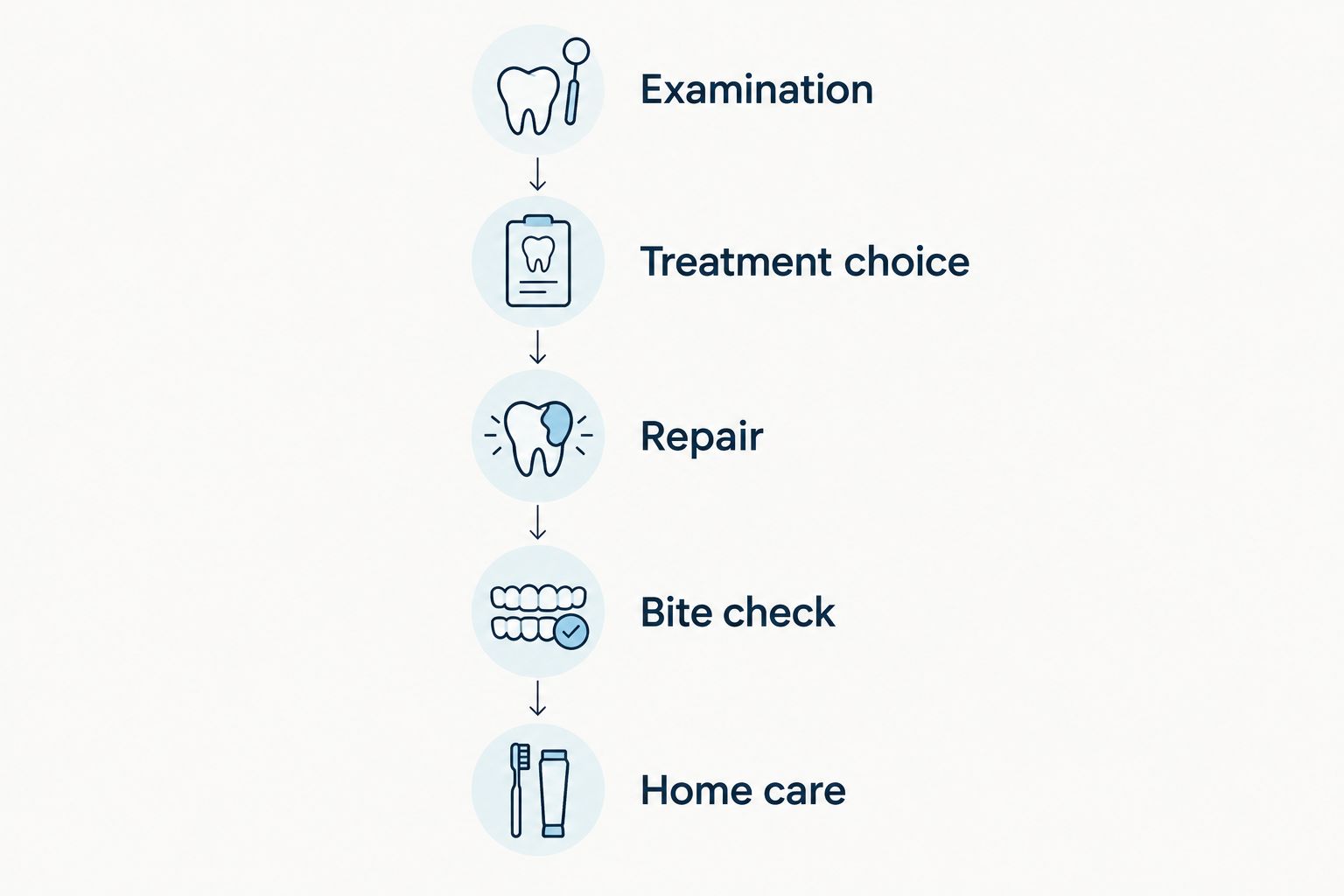
What happens during a chipped-tooth appointment?
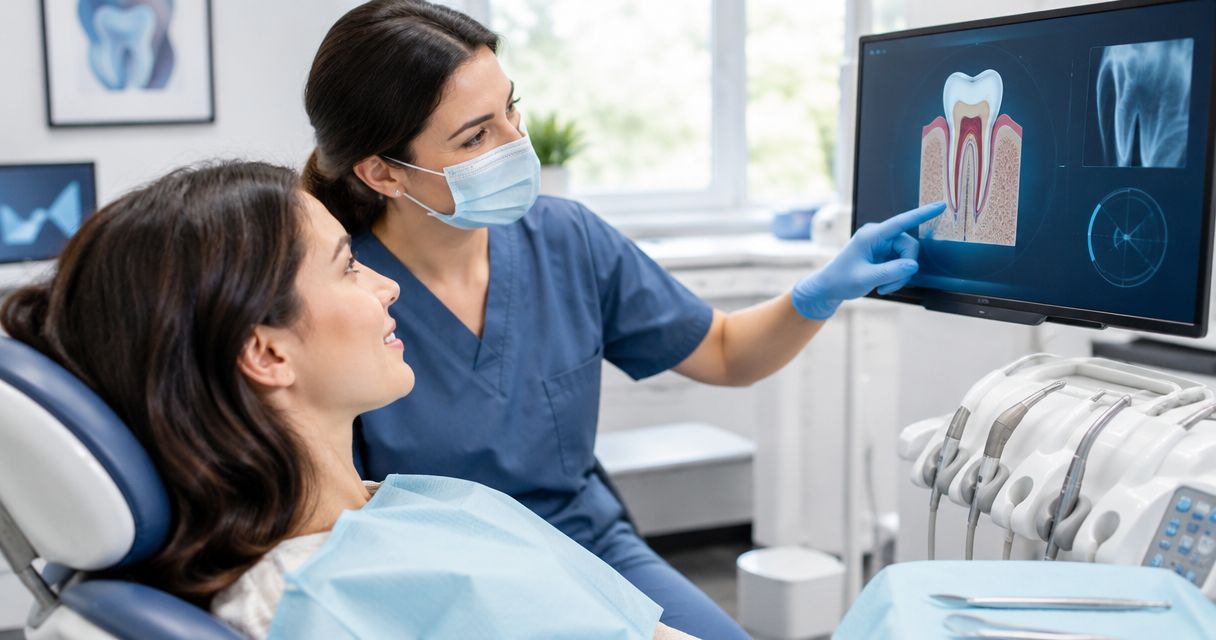
At a chipped-tooth assessment in 2026, the key task remains identifying the damage before choosing a repair. Tell the dentist when it happened, what you were biting or doing, and whether the tooth has become painful, sensitive, loose, or different when you close your mouth.
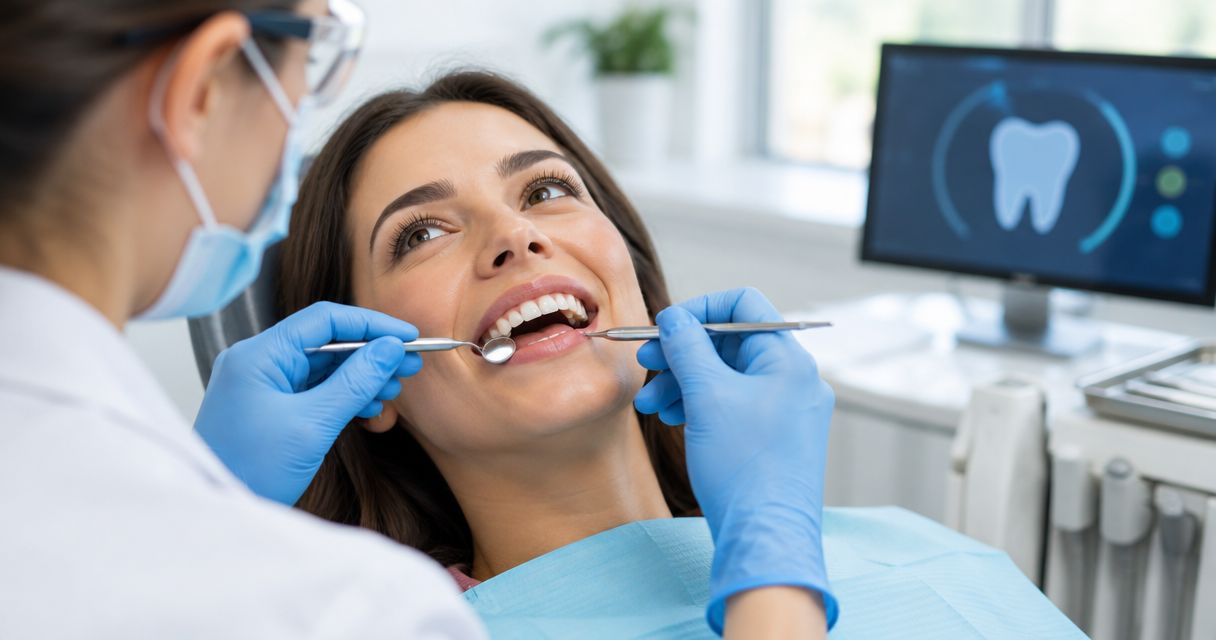
- Examination. The dentist checks the broken area, nearby teeth, gums, and bite. X-rays or additional tests are used when indicated; not every crack appears on an X-ray.
- Treatment choice. You discuss whether smoothing, bonding, coverage, or treatment inside the tooth fits the findings. Ask whether the proposed repair is temporary or final.
- Repair. For suitable bonding cases, the dentist prepares the tooth and shapes the resin. Local anesthetic depends on the depth of damage and the work required.
- Bite check. The dentist checks how your teeth meet and adjusts the restoration as needed. Mention any spot that feels unusually high.
- Home care. You receive instructions about eating, cleaning, and symptoms that need another assessment. If your mouth is numb, avoid chewing until sensation returns.
You do not need to identify the right procedure before calling. Describe the injury and symptoms instead. That gives the dental team more useful information than asking only for a cosmetic repair.
Why the number of visits varies
A small-looking chip does not guarantee a small treatment plan. The dentist must account for the damaged tooth as a whole, including how it functions when you bite.
- Depth of damage: A superficial enamel chip differs from a break that exposes deeper tooth layers or the tissue inside the tooth.
- Remaining tooth structure: A tooth with a large existing filling or extensive decay has different support needs than an otherwise intact tooth.
- Crack location: A fracture extending below the gumline can limit how the tooth can be restored.
- Nerve condition: Persistent pain, an abnormal response to temperature, or signs of infection require assessment before a cosmetic repair.
- Biting forces: Grinding, clenching, and direct contact on the damaged edge affect the choice of restoration.
- Restoration process: A repair shaped directly in your mouth follows a different workflow from a restoration made separately.
Ask for a treatment sequence, not just an appointment count. You should understand what will happen first, what protects the tooth between appointments, and what marks the completion of treatment. Starboard Dental provides restorative dental care; an individual examination establishes which approach fits your tooth.
What should you do before the appointment?
Protect the tooth and contact a dentist promptly. Rinse gently with water, avoid chewing on the damaged side, and choose foods that do not require forceful biting. Do not test the edge repeatedly with your tongue or fingernail.
If you find the broken fragment, place it in a clean container with milk or saliva and bring it with you. A dentist can assess whether reattachment is possible. Keeping the fragment does not guarantee that it can be used, but it preserves that option.
A sharp edge rubbing your tongue can be covered temporarily with dental or orthodontic wax. Do not file the tooth yourself, use household glue, or place aspirin against the tooth or gum. These approaches can cause additional injury rather than repair the fracture.
When is a chipped tooth urgent?
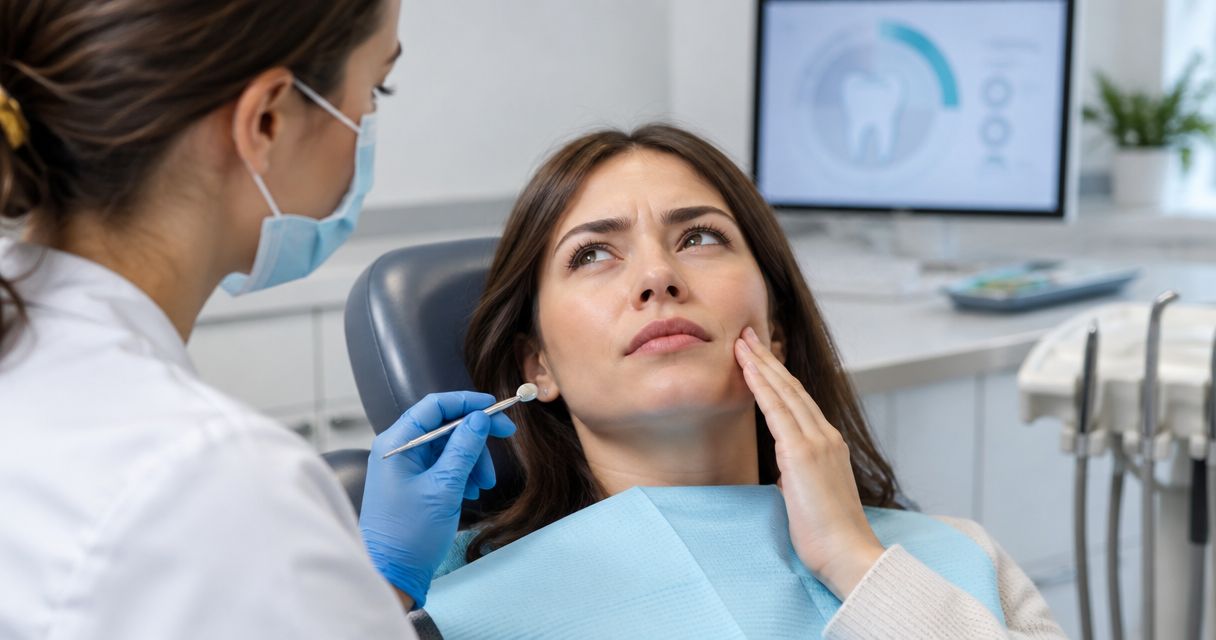
Call a dentist promptly for significant pain, swelling, a loose or displaced tooth, bleeding from the center of the break, or a changed bite after an injury. A painless chip still needs evaluation, particularly after a blow to the mouth.
Trouble breathing or swallowing, rapidly spreading facial swelling, or a serious facial injury requires emergency medical attention. A completely knocked-out permanent tooth is also a dental emergency, not an ordinary chipped-tooth appointment. Do not delay seeking help while trying to arrange a routine cosmetic visit.
Does a chipped tooth always need a crown?
No—a small chip does not automatically need a crown. Smoothing or bonding can be appropriate when enough healthy tooth remains and the bite supports the repair. A crown becomes a consideration when the tooth needs greater coverage or protection.
Ask the dentist what finding makes a crown preferable to bonding in your case. The answer should address structure, fracture pattern, or biting forces rather than simply describing a crown as stronger.
Will fixing a chipped tooth hurt?
A superficial repair often involves little discomfort, but deeper damage changes the treatment needed. Local anesthetic can numb the area when appropriate. Tell the dentist about sensitivity before treatment begins rather than trying to tolerate it silently.
Pain that lingers, occurs without a trigger, or develops when biting deserves assessment. Covering a chip does not by itself treat inflammation or infection inside the tooth.
Can you eat normally after dental bonding?
Bonding resin is hardened during treatment, but eating instructions depend on your tooth and whether you received anesthetic. Wait for numbness to wear off before chewing so you do not bite your lip, cheek, or tongue.
Avoid using the repaired edge to bite hard objects. If your bite feels uneven or the tooth hurts when you chew, contact the dentist instead of trying to wear the high spot down yourself.
How do you care for the repaired tooth?
Keep the repair clean and avoid preventable biting stress. Brush for 2 minutes twice daily with fluoride toothpaste and clean between your teeth daily. Bonding and crowns do not prevent decay from developing around their edges.
If you grind your teeth or play contact sports, discuss protection appropriate to that activity. A sports mouthguard and a night guard serve different purposes; neither replaces repairing an already damaged tooth.
During your 2026 dental visits, mention any recurring roughness, color change, sensitivity, or difference in your bite. Do not wait for a repair to break completely before asking about a change you can feel.
FAQ
Can a dentist fix a chipped front tooth in one visit?
Yes, a small chipped front tooth can often be repaired in one visit with composite bonding or smoothing. The dentist first checks the depth of damage, the bite, and whether the tooth needs additional treatment.
Can I wait to fix a chipped tooth if it does not hurt?
A painless chipped tooth still needs a dental evaluation. Lack of pain does not establish that the damage is limited to enamel, especially after an impact.
Will my chipped tooth grow back?
No, missing tooth enamel does not grow back. A dentist can smooth a minor rough edge or use restorative material to replace lost shape when appropriate.
Is bonding better than a crown for a chipped tooth?
Bonding suits many small chips, while a crown suits selected teeth needing more coverage or support. Neither is automatically better; the amount of healthy tooth and the bite determine the choice.
Can a dentist glue the broken piece back on?
A dentist can sometimes reattach a tooth fragment if its condition and the fracture allow it. Bring the fragment in milk or saliva, and do not attempt reattachment with household glue.
Do I need a root canal for a chipped tooth?
A chip alone does not mean you need root canal treatment. Treatment inside the tooth is considered when the tissue there is irreversibly inflamed, infected, or otherwise requires care.
Can Starboard Dental guarantee a one-visit chipped-tooth repair?
A one-visit repair cannot be guaranteed before an examination. Starboard Dental provides general, restorative, and cosmetic dental care, and the condition of your tooth determines the treatment plan.
One last thing
Mention whether your bite changed—even if the chip looks tiny. A tooth that feels taller, displaced, or painful when your teeth meet gives the dentist information that a photograph cannot provide. Before leaving your 2026 appointment, make sure you know whether the repair is final and which symptoms should prompt a call.