Your dental crown cost in 2026 depends on the tooth, the crown material, any treatment needed beforehand, and your dental benefits; an examination and written treatment estimate give you a useful personal answer. The crown itself is not necessarily the whole treatment: rebuilding damaged tooth structure or treating an infected tooth adds separate care. Compare the complete treatment plan and your estimated share, not just the crown fee.
- Dental crown cost depends on the restoration, supporting treatment, and insurance benefits—not material alone.
- Ask for an itemized treatment plan separating the crown from any buildup or root canal treatment.
- Starboard Dental serves patients seeking general, restorative, and cosmetic dental care in coastal Maine.
- Choose crown materials with your dentist based on tooth position, bite, and appearance.
How much does a dental crown cost in 2026?
A useful crown estimate is specific to your tooth and treatment plan. A quoted restoration fee does not tell you whether the tooth also needs a buildup, root canal treatment, or care for the surrounding gums.
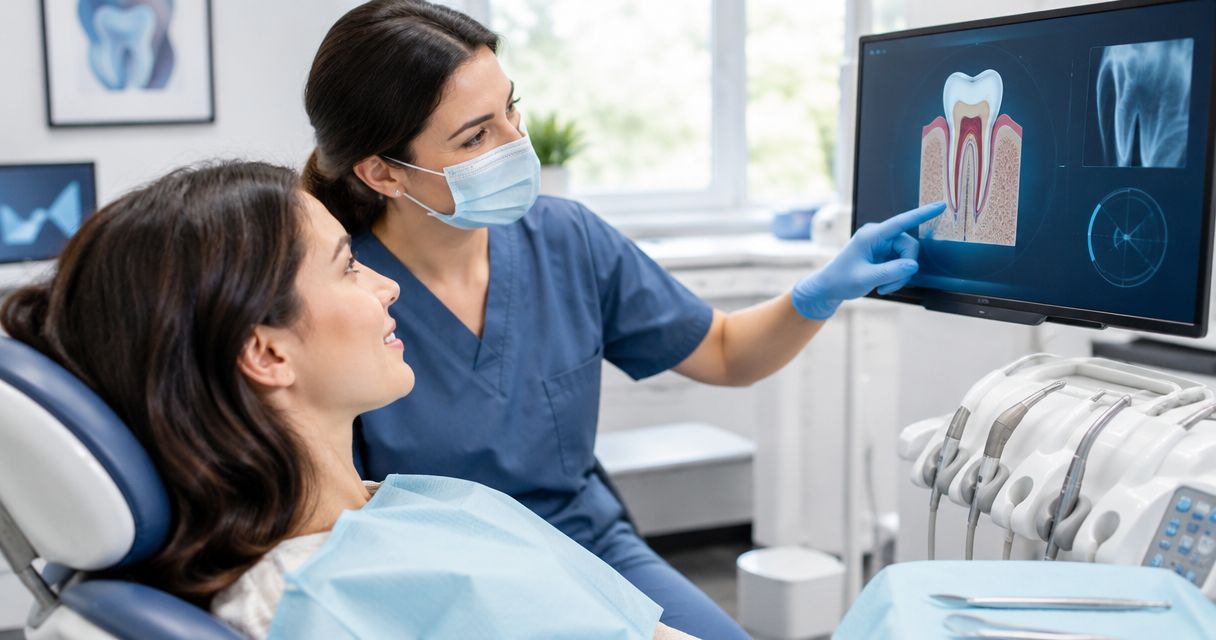
For patients considering Starboard Dental, the starting point is a dental evaluation—not choosing a crown from a price list. Ask what is damaged, whether the tooth can be restored, and which parts of treatment the estimate includes.
Use this breakdown when reviewing a written plan:
| Treatment component | What it covers | What to clarify |
|---|---|---|
| Examination and imaging | Assessing the tooth and surrounding structures | Which diagnostic services are included? |
| Tooth buildup | Replacing missing structure beneath the crown when needed | Does this tooth need a separate buildup? |
| Root canal treatment | Treating inflamed or infected tissue inside the tooth when indicated | Is this necessary, or is the nerve healthy? |
| Crown restoration | Preparing and covering the tooth with the planned restoration | Which material and tooth are listed? |
| Temporary restoration | Protecting the prepared tooth when treatment requires an interim stage | Is temporary coverage part of the plan? |
| Follow-up care | Checking fit, bite, and symptoms | What follow-up does the treatment include? |
Not every tooth needs every item. The right comparison is the same treatment scope for the same clinical problem.
Why this matters
A crown decision affects more than appearance. Your dentist must assess how much healthy tooth remains, whether the nerve is healthy, and whether the gums and supporting bone can support treatment.
A lower quote is not automatically a better plan, and a longer plan is not automatically necessary. Ask the dentist to show you the findings and explain how each recommended step addresses them.
For your 2026 dental budget, distinguish the treatment recommendation from the insurance estimate. One describes the care your tooth needs; the other describes how your plan is expected to contribute.
Crown materials: compare fit, appearance, and trade-offs
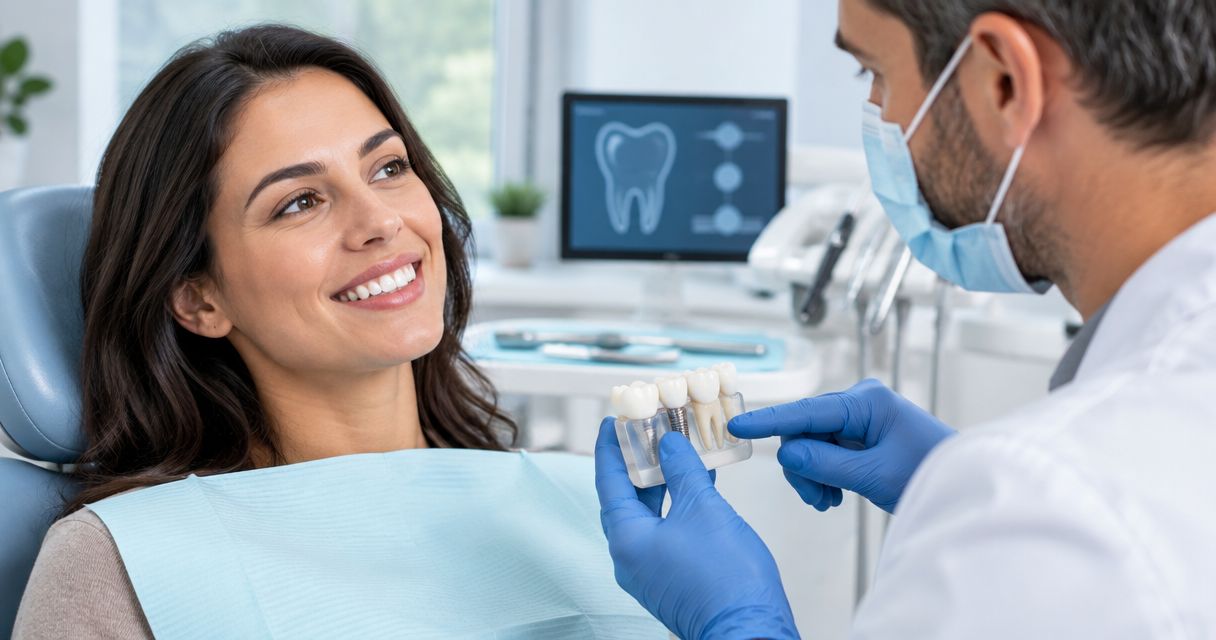
Material matters, but there is no single crown material that suits every tooth. Front teeth place different demands on appearance than back teeth, while your bite and remaining tooth structure also influence the recommendation.
The options below describe general material categories, not a list of materials offered by any particular practice. Your dentist should explain which choices are appropriate for your tooth.
| Material category | Best for | Main advantage | Main limitation |
|---|---|---|---|
| Glass-ceramic, such as lithium disilicate | Suitable cases where a natural-looking result is a priority | Tooth-colored appearance and translucency | Suitability depends on bite forces and restoration design |
| Zirconia | Suitable cases requiring a strong tooth-colored restoration | Strength with a tooth-colored appearance | Appearance varies with formulation and design |
| Porcelain-fused-to-metal | Suitable cases using a metal foundation with a tooth-colored surface | Combines a metal substructure with porcelain | Porcelain can chip, and metal can become visible near the gumline |
| Metal alloy | Suitable back teeth where metallic appearance is acceptable | Strength and resistance to fracture | Visible metallic color |
Glass-ceramic crowns: appearance-focused treatment
Glass-ceramic crowns can reproduce features of natural teeth, including translucency. That makes appearance an important reason to discuss them when a tooth is visible in your smile.
Their limitation is that appearance alone cannot determine suitability. Your dentist also needs to account for the available space, supporting tooth structure, and the forces placed on the restoration.
Zirconia crowns: strength-focused treatment
Zirconia is a ceramic used for tooth-colored crowns. It is a useful option to discuss when strength is a central concern, including suitable back-tooth restorations.
Not all zirconia restorations look or behave identically. Ask why the proposed formulation and design fit your tooth rather than assuming that the material name answers every question.
Porcelain-fused-to-metal crowns: a layered restoration
Porcelain-fused-to-metal crowns use a metal foundation covered with tooth-colored porcelain. They combine the support of a metal substructure with an outer surface designed to resemble a tooth.
The porcelain layer can chip, and the metal margin can become visible if the gumline changes. Those trade-offs deserve particular attention for teeth that show when you smile.
Metal crowns: function with a visible trade-off
Metal crowns are an established restorative option, particularly where appearance is less important. They resist fracture, but their metallic color does not blend with natural teeth.
Choose the material for the tooth, not for its name. The dental crown materials comparison provides another starting point for discussing appearance, strength, and suitability.
Why dental crown cost varies
The treatment around a crown often explains why estimates differ. These factors help you understand the plan without assuming that every additional procedure is necessary.
- Remaining tooth structure: A heavily damaged tooth can need a buildup to provide an appropriate foundation for the crown.
- Nerve health: An inflamed or infected nerve requires a separate assessment. Root canal treatment is not a routine requirement for every crown.
- Crown material and design: The restoration must account for tooth position, appearance, bite forces, and available space.
- Gum and supporting tissue health: Inflammation or insufficient accessible tooth structure can require care before the final restoration.
- Insurance terms: Deductibles, annual maximums, waiting periods, network rules, and replacement restrictions affect your estimated responsibility.
- Treatment scope: An estimate that includes diagnostic care and supporting procedures is different from a quote for the crown restoration alone.
When comparing 2026 estimates, ask each office to identify what is included and excluded. Do not assume that matching the word crown means the plans cover identical care.
How do you get a useful crown estimate?
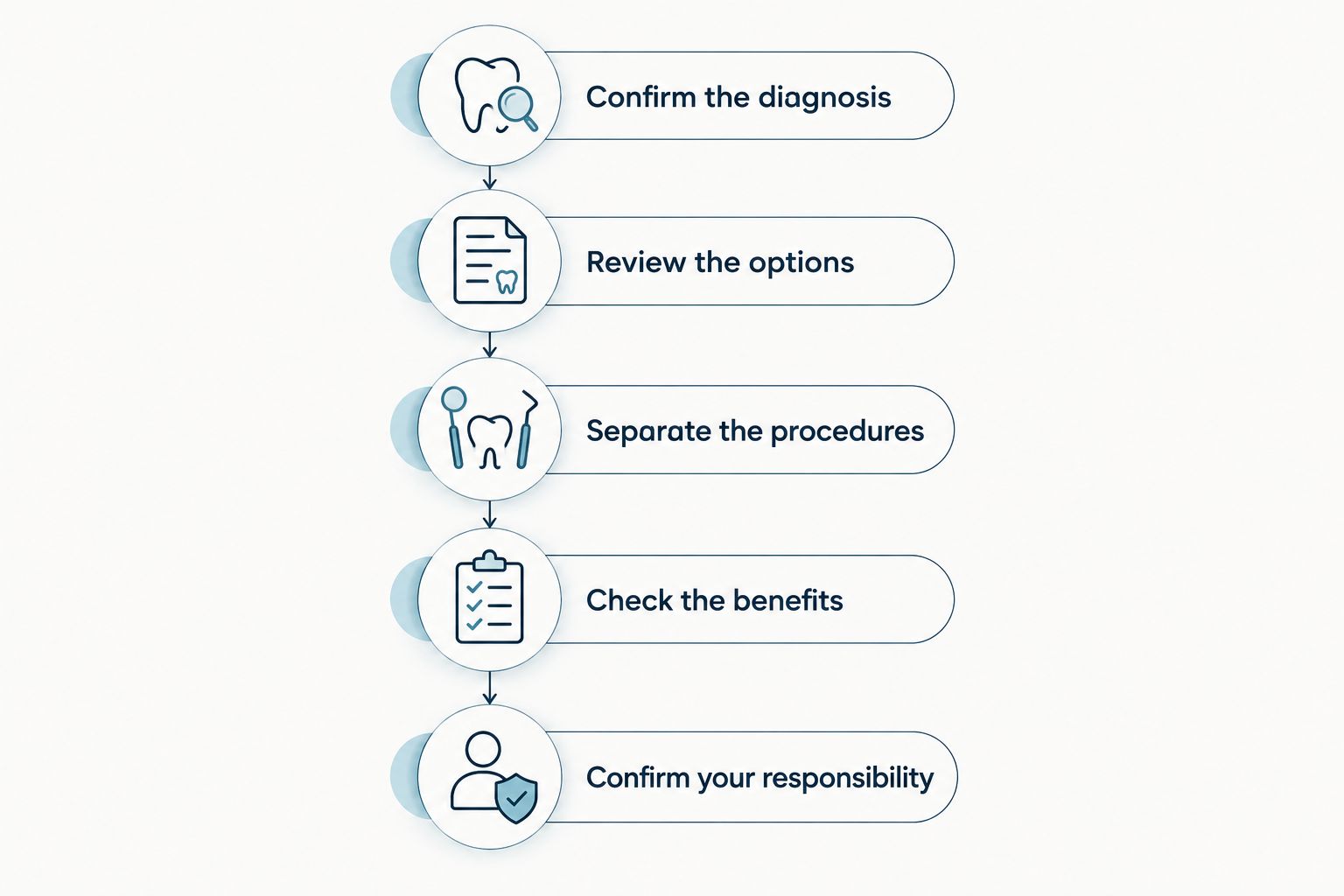
Request a written, tooth-specific plan before agreeing to treatment. You should understand the diagnosis, the proposed restoration, the alternatives, and the expected insurance contribution.
- Confirm the diagnosis. Ask which tooth needs treatment and what the examination or imaging shows. A crack, extensive decay, and an old failing restoration are different problems.
- Review the options. Ask whether a filling, partial-coverage restoration, or crown is appropriate. If the tooth cannot be predictably restored, discuss that finding before planning a crown.
- Separate the procedures. Identify the crown, any buildup, and any additional treatment. Ask which steps are definite and which depend on findings during care.
- Check the benefits. Review the proposed treatment with your insurer and ask whether a pretreatment estimate is appropriate. Clarify any restrictions rather than assuming the crown is covered.
- Confirm your responsibility. Ask the office to explain your estimated share, what remains uncertain, and how changes to the treatment plan will be discussed.
These steps make the conversation more useful than asking only for a general fee. Bring your insurance information and any relevant dental records so the discussion starts with the right details.
An insurance pretreatment estimate is not a guarantee of payment. Eligibility, remaining benefits, and the services actually provided still affect the processed claim.
Does dental insurance cover a crown?
Dental insurance coverage for a crown depends on your plan and the reason for treatment. A crown recommended to restore a damaged tooth is not the same insurance question as treatment requested only to change appearance.
For a crown planned in 2026, ask about your remaining annual benefit, deductible, and any waiting period. Also check whether the plan limits replacement of an existing crown or calculates benefits using a different material.
Ask separately about network participation and claim submission. An office submitting a claim does not, by itself, establish that the dentist is in your plan's network.
Do you always need a root canal before a crown?
A crown does not automatically require root canal treatment. Root canal treatment addresses disease or injury affecting the tissue inside the tooth; a crown restores and protects the tooth's outer structure.
Your dentist bases the recommendation on symptoms, testing, examination findings, and imaging. Ask which findings support root canal treatment if it appears in your plan.
A tooth with severe pain, swelling, or a suspected infection needs prompt assessment rather than a budget comparison alone. Seek emergency medical care for trouble breathing or swallowing, or swelling that affects your airway.
Is a crown better than a filling?
A crown is not automatically better than a filling; the better option depends on the tooth's condition. A filling replaces a damaged area, while a crown covers the prepared tooth and involves removing additional tooth structure.
Ask whether a less extensive restoration can meet the same treatment goal. Conversely, a filling is not a useful substitute when the remaining tooth needs more protection than a filling can provide.
Starboard Dental is for patients seeking general, restorative, and cosmetic dental care in coastal Maine. Bring questions about preserving healthy tooth structure as well as questions about your budget; both belong in the treatment discussion.
FAQ
How can I find out my dental crown cost before treatment?
Request an examination and an itemized written treatment estimate. The plan should identify the crown, any supporting procedures, the expected insurance contribution, and your estimated responsibility.
Is a crown estimate the same as my final insurance responsibility?
A crown estimate is not a guarantee of your final insurance responsibility. Eligibility, plan restrictions, remaining benefits, and the services actually completed affect the processed claim.
Does every dental crown need a buildup?
Not every dental crown needs a buildup. A buildup replaces missing tooth structure when the dentist needs an appropriate foundation for the restoration.
Can I choose a crown material just by comparing fees?
Choose crown material with your dentist based on the tooth's needs, not the fee alone. Appearance, bite forces, remaining tooth structure, and restoration design all matter.
Can I wait to treat a tooth that needs a crown?
Ask your dentist how urgently the tooth needs treatment. Lack of pain does not establish that a damaged tooth is safe to leave untreated, and worsening damage can change the treatment options.
How should I care for a crowned tooth?
Brush for 2 minutes twice daily with fluoride toothpaste and clean between your teeth daily. A crown does not prevent decay at its edges or eliminate the need for dental examinations.
Who leads Starboard Dental?
Dr. Alex Kerbaugh leads Starboard Dental, a general, restorative, and cosmetic dental practice serving patients of all ages in Kennebunk, York, and Saco, Maine.
One last thing
A crown protects a tooth, but it does not make the tooth immune to decay. Clean carefully along the gumline and between neighboring teeth, and ask your dentist to show you any areas that are difficult to reach.
Before accepting a 2026 crown plan, ask one final question: What has to be healthy underneath this crown for treatment to succeed? That question brings the discussion back to the tooth, its supporting tissues, and the purpose of each recommended step.