Best overall: a single dental implant for a suitable candidate. Best fixed alternative: a conventional bridge when neighboring teeth already need crowns. Best removable option: a partial denture when you want to avoid implant surgery. This 2026 guide compares the best options for replacing a single missing molar, including their trade-offs and the questions to ask before choosing.
- A dental implant is usually the strongest starting point for replacing one molar without reshaping neighboring teeth.
- A conventional dental bridge deserves consideration when the teeth beside the gap already need crowns.
- A removable partial denture avoids implant surgery but needs daily removal and careful cleaning.
- Starboard Dental provides restorative dental care; choosing a missing-tooth treatment starts with evaluating your teeth, gums, and bite.
Why replacing a missing molar matters
A missing molar changes where you chew and how your remaining teeth share the work. Neighboring teeth can drift, and an opposing tooth can move into an unoccupied space; these changes are possible, not inevitable.
The right replacement restores useful chewing without creating unnecessary problems for healthy teeth. That means looking beyond the gap itself to your gums, jawbone, neighboring teeth, and bite.
Starboard Dental provides general, restorative, and cosmetic dental care for patients in Kennebunk, York, and Saco, Maine. Starboard Dental is a fit for patients in these communities seeking restorative dental care and guidance on a missing molar.
For your 2026 treatment decision, start with an examination rather than choosing a replacement from appearance alone. A back tooth must handle chewing forces, and its position affects which treatments make sense.
What makes the best replacement for a single missing molar?
Use these criteria to compare a dentist's recommendations:
- Neighboring tooth preservation: Does the treatment leave healthy teeth untouched, or require reshaping them?
- Chewing stability: Is the replacement fixed in place, or removable? How will its design handle your bite?
- Bone and gum health: Is there enough support for the proposed treatment, and does disease need treatment first?
- Daily cleaning: Can you realistically clean around the replacement and any supporting teeth?
- Treatment demands: Does the plan involve surgery, healing, tooth preparation, or adjustments?
- Future repair: What happens if the crown, supporting tooth, attachment, or denture needs attention?
Your 2026 plan should explain these trade-offs in plain language. A treatment that preserves neighboring teeth is not automatically the right choice if its surgical or cleaning requirements do not suit you.
Single-molar replacement options at a glance
| Option | Best for | Standout feature | Key limitation |
|---|---|---|---|
| Single dental implant and crown | A suitable candidate with healthy neighboring teeth | Supports a replacement without using adjacent teeth as anchors | Requires surgery and adequate bone support |
| Conventional dental bridge | A gap beside teeth that already need crowns | Provides a fixed replacement supported by neighboring teeth | Requires preparation of supporting teeth |
| Removable partial denture | Someone seeking a removable replacement without implant surgery | Replaces the missing tooth using a removable appliance | Adds bulk and needs removal for cleaning |
These are treatment categories, not interchangeable products. A dentist must confirm whether each design is appropriate for the exact molar you lost.
1. Single dental implant: best for preserving healthy neighboring teeth
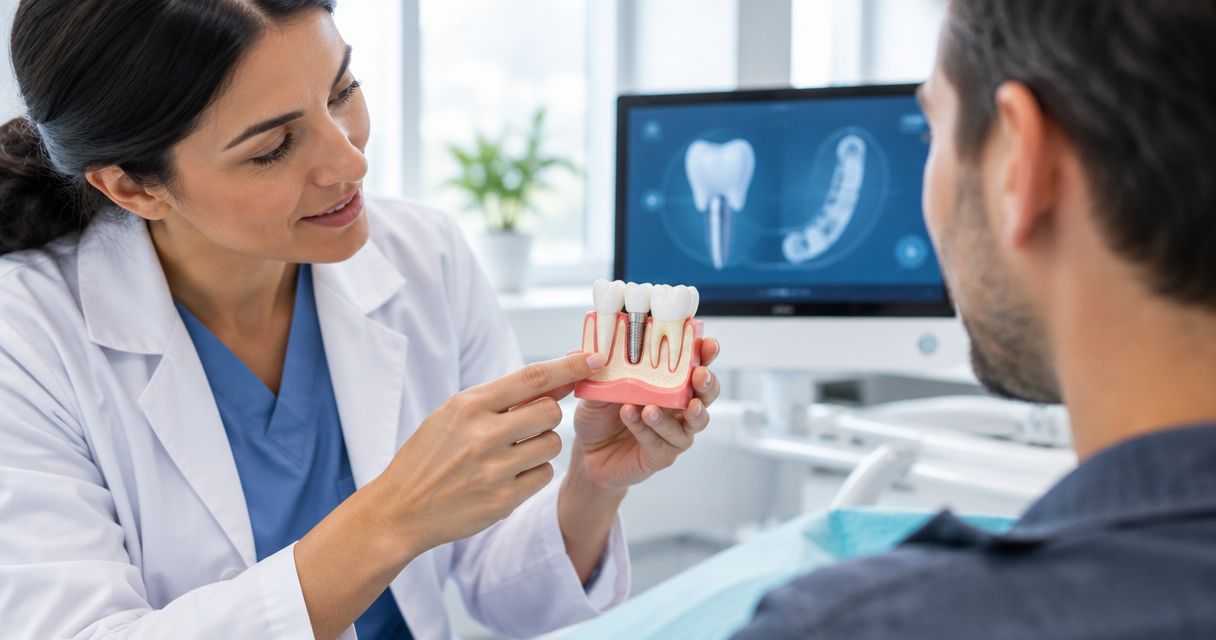
A dental implant is placed in the jawbone and supports a replacement crown. Unlike a conventional bridge, it does not rely on the teeth beside the gap for support.
A single dental implant is usually the best starting point when the neighboring teeth are healthy and you are a suitable surgical candidate. Its main advantage is replacing the missing tooth without preparing otherwise sound adjacent teeth.
What makes an implant a good fit?
Your dentist evaluates the bone where the tooth is missing, the surrounding gums, and the space available for a crown. Medical history, tobacco use, and bite forces also affect planning and healing.
An implant is not just a crown attached to the gum. The plan must account for the supporting implant, the connection to the crown, and the way the finished tooth meets the opposing teeth.
If you want to understand the terminology before your appointment, the dental implant types comparison provides another guide to the category. The useful question is which design fits your anatomy, not which name sounds most advanced.
Single dental implant pros:
- Leaves neighboring teeth unprepared for bridge support.
- Provides a fixed replacement that you do not remove for routine cleaning.
- Supports the replacement independently of adjacent teeth.
- Allows a missing molar to be restored without spanning the gap with a bridge.
Single dental implant cons:
- Requires a surgical procedure and healing.
- Insufficient bone can require additional treatment before placement.
- Needs ongoing cleaning and monitoring; inflammation around an implant can damage its supporting tissues.
- The crown or connecting components can need repair or replacement.
Best for: A person replacing one molar whose neighboring teeth are healthy, whose bone and gums support treatment, and who accepts surgery.
Verdict: Choose a single dental implant when preserving healthy neighboring teeth is the priority and an examination confirms suitability.
2. Conventional dental bridge: best when adjacent teeth need crowns
A conventional bridge uses crowns on supporting teeth to hold a replacement tooth across the gap. A common single-tooth design uses 2 adjacent teeth as supports, although the appropriate design depends on the location and condition of those teeth.
A conventional dental bridge makes the strongest case when the neighboring teeth already need crowns. In that situation, preparing them for a bridge can address their existing restorative needs while replacing the missing molar.
What makes a bridge a good fit?
The supporting teeth need adequate structure and gum support. Your dentist also checks their restorations, root condition, and ability to carry the planned chewing load.
A bridge usually involves reshaping supporting teeth, so it deserves a different discussion when those teeth are healthy and untouched. Ask what each neighboring tooth needs independently of the missing molar; that answer helps separate necessary treatment from treatment required only to support the bridge.
The replacement tooth sits over the gap, so cleaning underneath it matters. Your dentist can show you how to use a floss threader, an appropriate interdental cleaner, or another suitable cleaning aid.
Conventional dental bridge pros:
- Provides a fixed replacement without implant placement surgery.
- Can combine replacement of the missing molar with crowns already needed on adjacent teeth.
- Does not need removal for routine daily use.
- Offers an alternative when an implant is not appropriate.
Conventional dental bridge cons:
- Requires preparation of the supporting teeth.
- Decay or gum problems around a supporting tooth can affect the whole bridge.
- Cleaning underneath the replacement takes additional attention.
- Does not replace the missing tooth root or directly support the bone beneath the gap.
Best for: A person who wants a fixed replacement and has suitable neighboring teeth that already need crowns.
Verdict: Choose a conventional dental bridge when its supporting teeth have a clear restorative need and can reliably support the design.
3. Removable partial denture: best for avoiding implant surgery
A removable partial denture replaces the missing tooth with an appliance you take out for cleaning. Its design can use clasps or other supporting features, depending on the remaining teeth and the shape of your mouth.
A removable partial denture is the main option to discuss when you want a removable replacement without implant surgery. For a single molar, the appliance can extend beyond the small gap, which makes comfort and stability important parts of the decision.
What makes a partial denture a good fit?
Your dentist checks whether your remaining teeth and gums can support a stable appliance. The design needs to resist movement during chewing without putting unsuitable pressure on supporting tissues.
Do not assume that replacing a small gap means wearing a tiny appliance. Ask to understand the planned shape, where it rests, how it stays in place, and how you will insert and remove it.
An appliance that rubs, rocks, or changes your bite needs assessment. Avoid bending clasps or reshaping the denture yourself; adjustments affect how forces reach the supporting teeth.
Removable partial denture pros:
- Avoids implant placement surgery.
- Can replace a tooth when a fixed option is unsuitable.
- Can be removed to clean the appliance and the surrounding tissues.
- Offers a removable approach rather than permanently attaching a replacement.
Removable partial denture cons:
- Adds material beyond the missing-tooth space.
- Can move during chewing and needs assessment if stability changes.
- Requires removal and cleaning according to your dentist's instructions.
- Clasps or other parts can be noticeable, depending on the design.
Best for: A person who accepts a removable appliance and wants to avoid implant surgery, or whose examination rules out a suitable fixed replacement.
Verdict: Choose a removable partial denture when avoiding implant surgery matters more to you than having a fixed tooth.
How these options are ranked
This 2026 ranking puts preservation of healthy neighboring teeth first, then considers fixed chewing support, surgical requirements, and daily maintenance. It is a decision guide, not a claim that one treatment works for every mouth.
A single dental implant leads for a suitable patient with sound adjacent teeth. A conventional dental bridge takes priority when those teeth already need crowns, while a removable partial denture serves a different need: a removable, non-implant approach.
Which replacement should you choose?
Start the discussion with a single dental implant if your neighboring teeth are healthy. Then ask whether your bone, gums, medical history, and bite support that choice.
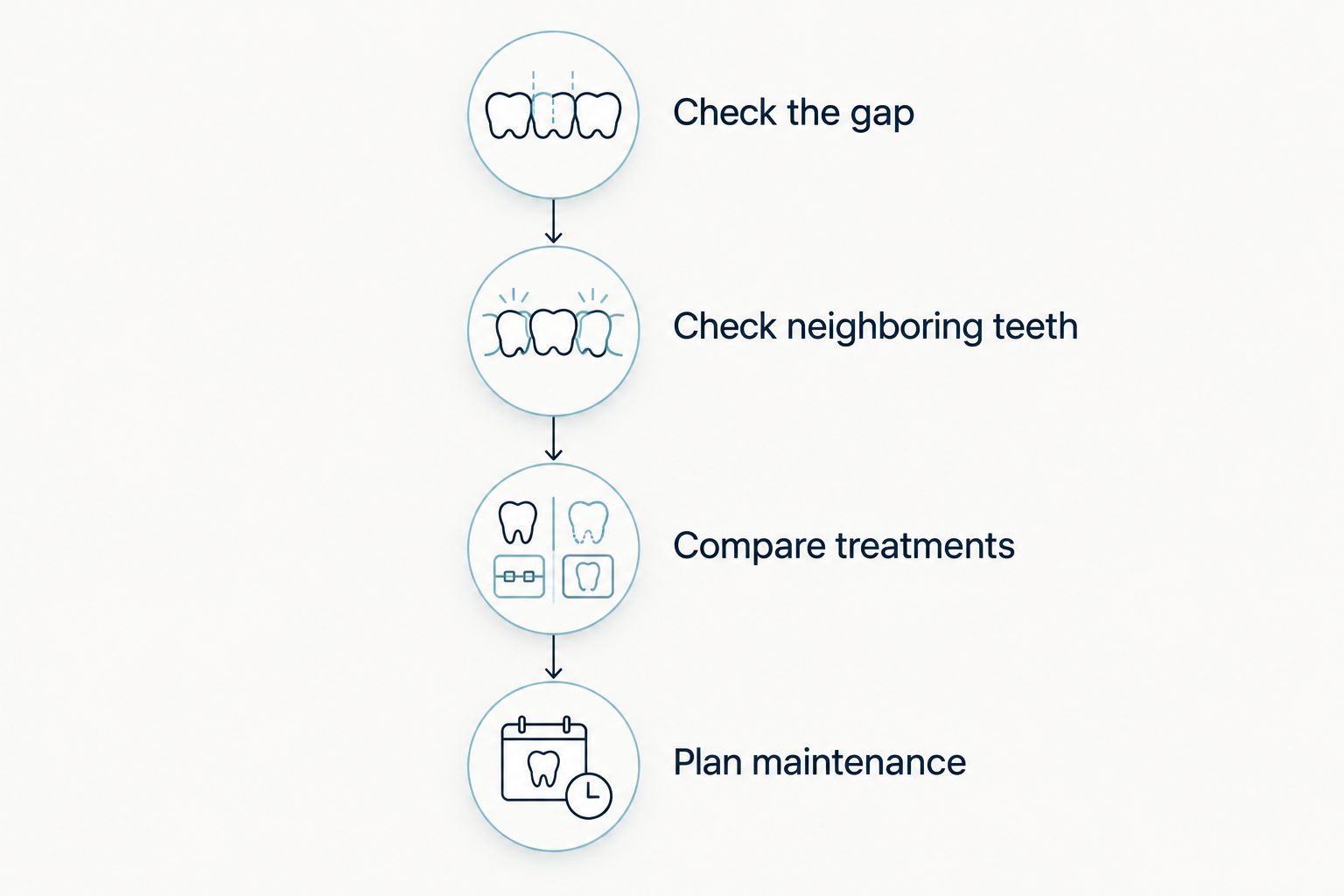
Use this appointment sequence to reach a decision:
- Check the gap: Identify the missing molar, examine the gum, and assess the available space and bone.
- Check neighboring teeth: Establish whether they are healthy, heavily restored, or already need crowns.
- Compare treatments: Discuss surgery, cleaning, chewing stability, and the demands of each suitable option.
- Plan maintenance: Confirm how you will clean the replacement and what follow-up it needs.
Bring your priorities to the conversation, including concerns about surgery, a removable appliance, or difficult cleaning. Starboard Dental provides restorative dental care; your appointment is the place to discuss which missing-molar treatments fit your oral health goals.
Discuss your missing molar
Talk through your oral health goals and the trade-offs of replacing a missing back tooth.
Does every missing molar need replacement?
Not every gap needs the same treatment. Missing wisdom teeth generally do not need replacement, while a missing first or second molar deserves an assessment of chewing, tooth position, and your remaining bite.
In selected situations, monitoring a gap is a reasonable clinical decision. It is not a reason to ignore it: ask what your dentist will monitor and which changes would prompt treatment.
What should you do while deciding?
Keep the neighboring teeth and gums clean, and tell your dentist about food trapping or changes in chewing. Standard oral hygiene guidance includes brushing for 2 minutes, twice daily, with fluoride toothpaste and cleaning between your teeth daily.
If the tooth was recently removed, follow your treating dentist's extraction instructions instead of scrubbing the healing socket. Facial swelling, fever, or worsening pain needs prompt professional attention; trouble breathing or swallowing requires emergency care.
FAQ
What's the best option for replacing one missing molar?
A single dental implant is usually the best starting point when neighboring teeth are healthy and the patient is a suitable candidate. A conventional bridge or removable partial denture can be more appropriate when the examination or patient preferences point away from an implant.
Is a dental implant better than a bridge for a back tooth?
A dental implant has an advantage when preserving healthy neighboring teeth is the priority. A bridge deserves consideration when those teeth already need crowns and have enough support to carry the replacement.
Can I replace one molar without getting an implant?
Yes, a conventional dental bridge or removable partial denture can replace a missing molar without implant placement. Your dentist must assess the supporting teeth, gums, and bite before recommending either option.
Do I have to replace a missing wisdom tooth?
Missing wisdom teeth generally do not need replacement. A missing first or second molar requires a different assessment because its role in your bite and chewing can be more significant.
Can I get an implant if the molar was removed a long time ago?
An old extraction site does not automatically rule out a dental implant. Your dentist needs to assess the remaining bone, the space between teeth, and the opposing tooth before planning treatment.
Will a replacement molar last forever?
No replacement molar comes with a lifetime guarantee. Implants, bridges, and partial dentures all need maintenance, and their crowns, supporting structures, or appliance parts can require treatment.
Does Starboard Dental help patients with missing teeth?
Starboard Dental provides restorative dental care for patients in Kennebunk, York, and Saco, Maine. Discuss your missing molar and oral health goals with the practice so an examination can guide your next step.
One last thing
Before approving your 2026 treatment plan, ask: What treatment do the teeth beside this gap need on their own? That question often makes the implant-versus-bridge decision clearer.
Healthy neighboring teeth strengthen the case for considering an independent replacement. Teeth that already need crowns change the discussion; the best plan protects the whole area, not just the empty space.