Teeth whitening can be safe for sensitive teeth when a dentist first checks the cause of your sensitivity and recommends an appropriate approach. Whitening can still cause temporary tooth sensitivity or gum irritation, even when you follow directions. Treat cavities, cracks, and other sources of pain before starting a cosmetic whitening treatment.
- Is teeth whitening safe for sensitive teeth? It can be, after a dentist evaluates the cause of sensitivity.
- Starboard Dental provides general, restorative, and cosmetic dental care for patients in coastal Maine.
- Whitening strips, trays, and in-office treatments can all cause sensitivity; no approach guarantees a pain-free experience.
- Stop whitening and contact a dentist for sharp, lingering, or worsening pain.
Is teeth whitening safe for sensitive teeth?
Sensitive teeth do not automatically rule out whitening, but unexplained tooth pain is a reason to wait. The decision depends on your tooth and gum health, the whitening product, and how you use it—not simply whether the package says gentle.
For your 2026 whitening plans, start with an examination rather than a stronger product. Bleaching-related sensitivity is different from pain caused by a cavity, exposed root, or cracked tooth, and those problems need different care.
The teeth whitening options comparison provides additional context for the approaches below. These are general categories, not a list of treatments offered by this practice.
| Approach | Best for | Main advantage | Main limitation for sensitive teeth |
|---|---|---|---|
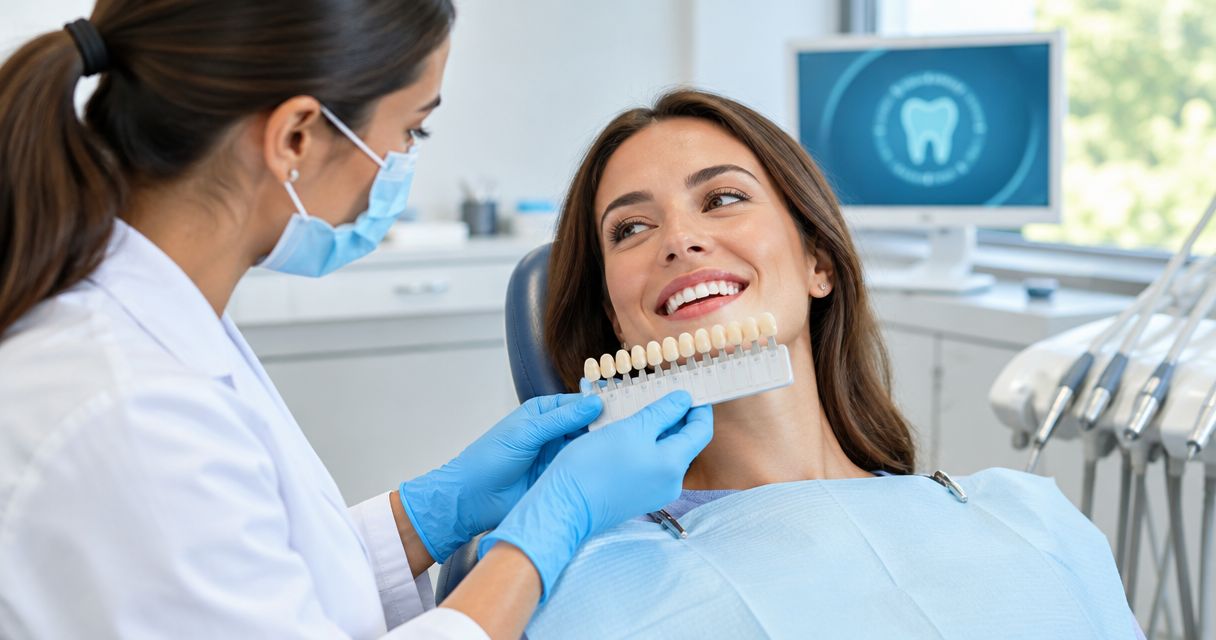
| In-office whitening | People seeking treatment administered by a dental professional | Allows direct application and monitoring | Sensitivity can still occur; professional treatment is not automatically gentler |
| Dentist-supervised take-home whitening | People who need guidance on home treatment | Provides professional direction on product use and response | Requires careful use; trays and gel can irritate gums |
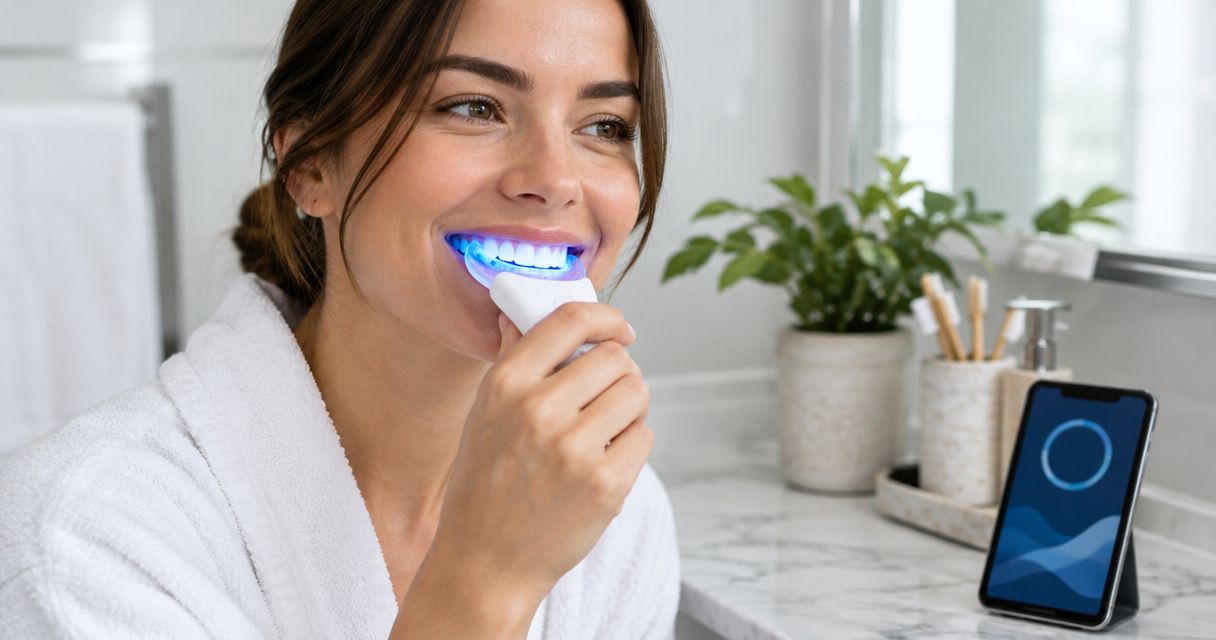
| Over-the-counter whitening strips | People whose dentist has confirmed home bleaching is appropriate | Provides a ready-to-use application format | Fit and gum contact vary, and sensitivity can occur |
| Whitening toothpaste | People mainly concerned about surface stains | Removes surface staining during brushing | Does not produce the same effect as peroxide bleaching; abrasive products can aggravate exposed dentin |
There is no universally safest option for every sensitive mouth. Choose the approach that fits the diagnosis, not the one that promises the fastest change.
Why this matters
Whitening changes tooth color; it does not repair the reason a tooth hurts. Starting treatment without understanding that pain makes it harder to tell whether a symptom comes from bleaching or an existing dental problem.
That distinction matters when one tooth reacts differently from the others. Generalized sensitivity after bleaching can be temporary, while pain in a particular tooth deserves a closer look. You do not need to tolerate pain to earn a brighter smile.
A useful goal for 2026 is straightforward: improve the appearance of healthy teeth without letting a cosmetic deadline override symptoms. Comfort belongs in the treatment decision from the beginning.
In-office whitening: monitored care, not guaranteed comfort
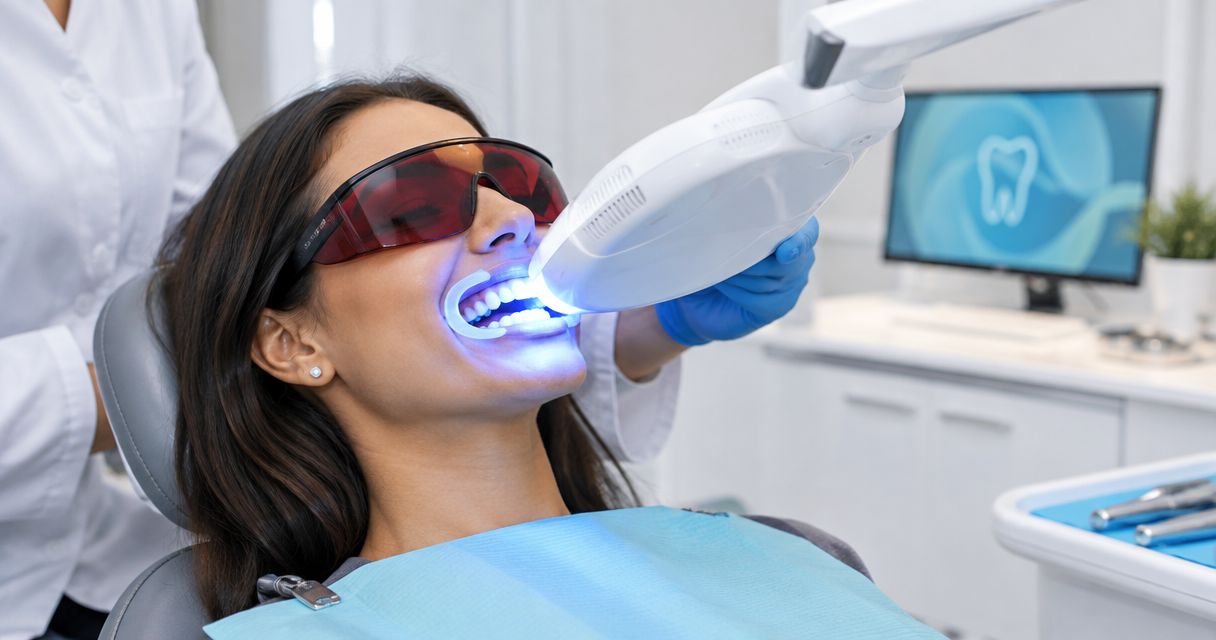
In-office whitening gives a dental professional control over product placement and protection of the surrounding gums. That oversight is useful when your sensitivity history needs discussion before treatment begins.
The limitation is important: professional application does not eliminate bleaching-related sensitivity. Product strength, exposure, and the condition of your teeth still matter, so an office setting alone does not establish that a treatment is right for you.
Best for: someone who wants professional administration and has been assessed as suitable for bleaching. Ask what happens if you develop sensitivity during or after treatment, rather than assuming monitoring prevents it entirely.
Supervised take-home whitening: guidance with home responsibility
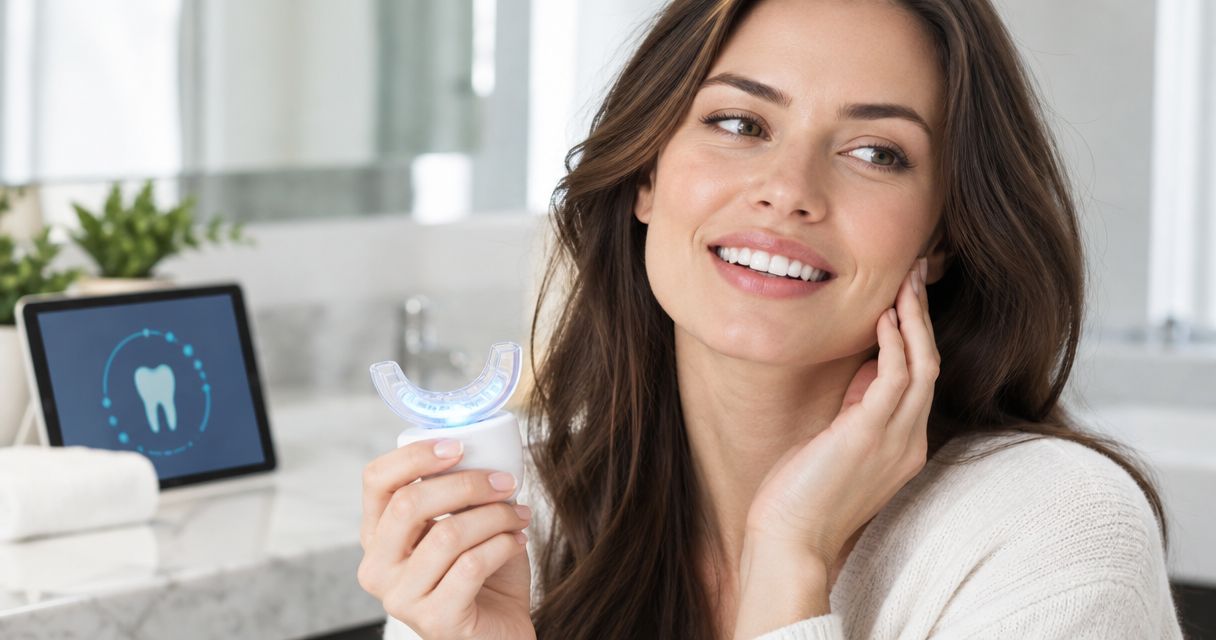
Dentist-supervised home whitening pairs home application with professional instructions. Depending on the treatment, your dentist can advise you about contact time, application, and what to do if discomfort develops.
The trade-off is responsibility at home. Extra gel, longer wear, or repeated applications beyond the instructions do not make treatment safer, and poorly controlled gel contact can irritate gums.
Best for: someone who can follow a prescribed routine and communicate changes in symptoms. Follow the actual instructions supplied for your treatment; do not borrow a schedule from another person's experience.
Whitening strips and toothpaste: different jobs, different limits
Whitening strips use bleaching ingredients to change tooth color. Whitening toothpaste generally targets surface stains, so these products are not interchangeable just because both use the word whitening.
For strips, gum contact and the product's directions matter. For toothpaste, abrasive cleaning is a concern when brushing pressure is already high or root surfaces are exposed. A sensitive label does not replace an examination.
Best for: strips suit people cleared for home bleaching; whitening toothpaste suits people mainly addressing surface stains. Neither is a treatment for the underlying cause of sensitive teeth, and neither should be used to push through dental pain.
Why sensitivity during whitening varies
Bleaching ingredients can reach the dentin beneath enamel and temporarily irritate the tooth's inner tissues. Gum irritation is a separate issue, often associated with product contact against soft tissue.
These factors help explain why another person's whitening experience does not predict yours:
- Existing dental problems: decay, cracks, and faulty restorations can cause pain that needs assessment before bleaching.
- Exposed root surfaces: gum recession leaves areas without the same enamel covering as the visible crown of the tooth.
- Product formulation: bleaching ingredient and concentration influence exposure; stronger does not mean more suitable for sensitive teeth.
- Contact time and frequency: wearing or applying a product beyond its directions increases exposure without establishing safety.
- Application and fit: gel against the gums can cause irritation, whether the product is applied at home or professionally.
- Your previous response: a history of whitening discomfort gives your dentist useful information when planning care.
For a 2026 treatment discussion, bring the product packaging or ingredient information if you already have it. Describe what happened during previous use, including where you felt discomfort and what made it stop.
How do you prepare sensitive teeth for whitening?
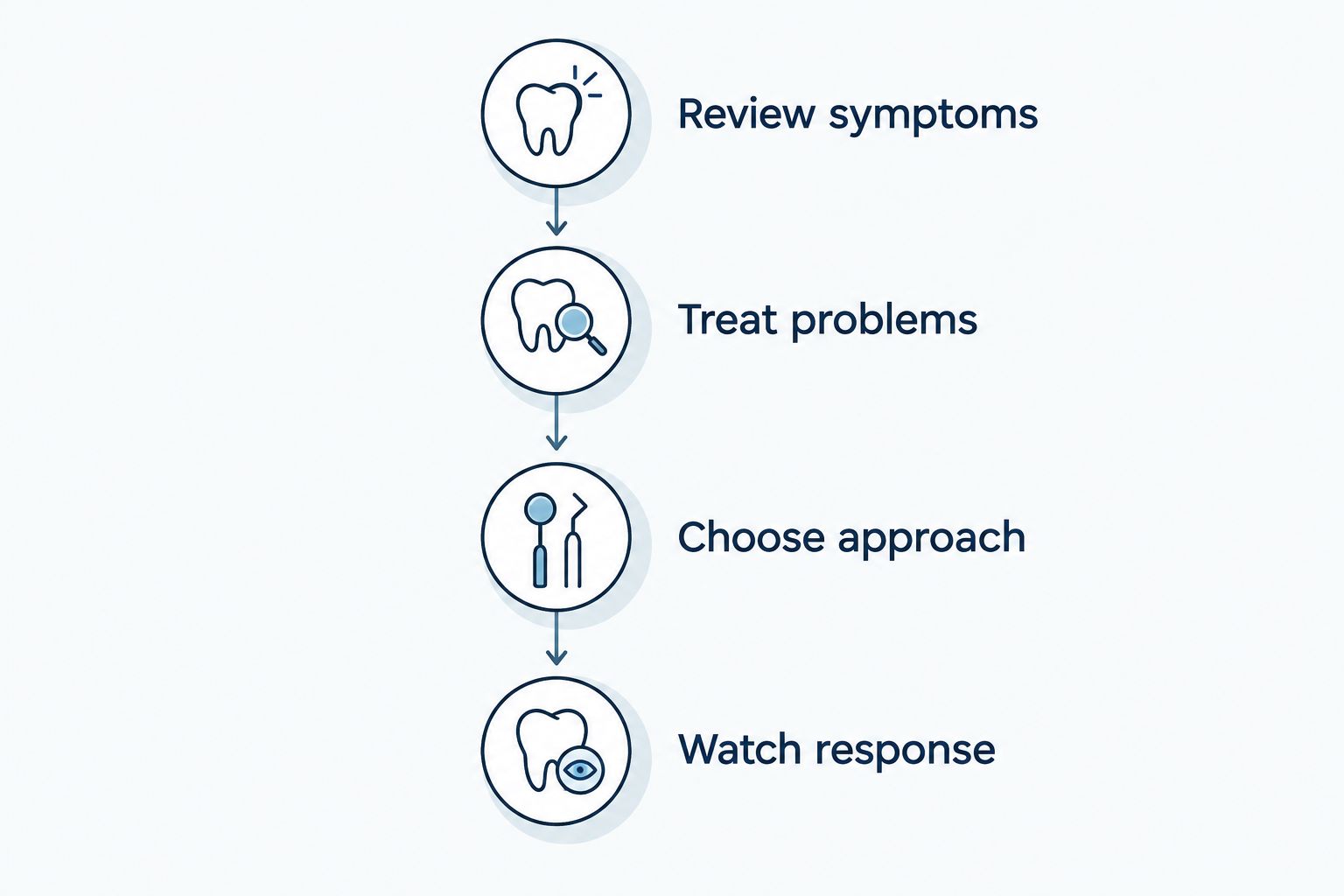
Preparation starts with identifying the source of symptoms, not covering them up. If you already experience cold sensitivity, the guide to options for treating sensitive teeth explains why treatment depends on the cause.
- Review symptoms. Tell your dentist whether the sensitivity affects one tooth or several, which foods or temperatures trigger it, and whether pain lingers. Mention pain with biting and any whitening you have already tried.
- Treat problems. Address diagnosed decay, cracks, gum disease, or other dental conditions before considering bleaching. Your dentist determines whether treatment has resolved the concern sufficiently to proceed.
- Choose approach. Discuss the type of discoloration, existing restorations, and your tolerance for discomfort. Ask whether a desensitizing toothpaste is appropriate and how to use it with the proposed treatment.
- Watch response. Follow the supplied directions and report symptoms rather than increasing exposure. Stop treatment when pain develops and ask for advice before restarting.
During preparation, maintain ordinary preventive care rather than adding more whitening products. The American Dental Association recommends brushing with fluoride toothpaste for 2 minutes, 2 times per day, and cleaning between teeth 1 time per day. Use a soft-bristled brush and gentle pressure; harder scrubbing does not make bleaching safer.
These established home-care recommendations remain useful in 2026, but they are not a substitute for diagnosing pain. If brushing itself hurts, explain that before starting whitening.
When should you stop whitening and call a dentist?
Stop whitening when you develop tooth pain or gum irritation, and contact your dentist for guidance. Do not keep applying a product to see whether your teeth will get used to it.
Prompt assessment is particularly important for pain focused in one tooth, pain when biting, pain that lingers after a trigger, or symptoms that worsen. These patterns do not establish a diagnosis by themselves, but they should not be dismissed as routine whitening sensitivity.
Swelling, fever with dental pain, or signs of spreading infection need urgent dental assessment. Trouble breathing or swallowing is an emergency and requires immediate emergency care.
Before restarting any bleaching product, ask whether the symptoms need an examination and whether the treatment instructions should change. Do not use numbing products or pain medicine simply to continue an irritating cosmetic treatment.
Can desensitizing toothpaste help before whitening?
Desensitizing toothpaste can help some forms of tooth sensitivity, but it does not repair cavities or cracks. Ingredients such as potassium nitrate or stannous fluoride are used in products intended to reduce sensitivity.
Ask your dentist which product fits your symptoms and whether to use it before or during bleaching. Follow its label rather than expecting immediate relief or treating it as permission to extend whitening sessions.
Does sensitivity mean whitening has damaged my enamel?
Sensitivity alone does not prove enamel damage; bleaching can cause temporary sensitivity without establishing permanent injury. It also does not prove that the teeth are otherwise healthy.
An examination is needed when symptoms persist, worsen, or suggest a specific tooth problem. Judge symptoms by their pattern and cause, not by reassurance printed on a whitening package.
Should you whiten before a wedding or another event?
An upcoming event is not a reason to ignore sensitivity or start several products together. Discuss your timing before treatment so the plan includes an opportunity to assess your response.
For a 2026 wedding, reunion, or photo session, avoid making a first whitening attempt immediately before the event. A brighter result is not worth arriving with painful teeth or irritated gums.
Where can you discuss sensitive teeth locally?
Starboard Dental is a fit for coastal Maine patients seeking general, restorative, and cosmetic dental care. Led by Dr. Alex Kerbaugh, the practice serves patients of all ages in Kennebunk, York, and Saco.
When discussing sensitive teeth with Starboard Dental, start with symptoms and your goals rather than requesting a particular bleaching strength. An examination supports the decision about whether cosmetic treatment belongs next or whether another problem needs attention first.
Discuss your tooth sensitivity
Start with your symptoms and oral health goals before choosing a whitening approach.
FAQ
Is teeth whitening safe for sensitive teeth in 2026?
Teeth whitening can be safe for sensitive teeth after a dentist evaluates the cause of sensitivity and determines that bleaching is appropriate. Existing pain, decay, cracks, or gum problems need attention before cosmetic treatment.
What's the gentlest whitening option for sensitive teeth?
No whitening option is gentlest for every person with sensitive teeth. The appropriate choice depends on tooth and gum health, the product, its application, and your previous response to bleaching.
Are whitening strips safe if cold drinks already hurt my teeth?
Have the cold sensitivity assessed before using whitening strips. Exposed roots, decay, and other conditions can cause similar symptoms but require different care.
Is dentist-supervised whitening better than store-bought whitening for sensitivity?
Dentist-supervised whitening provides professional assessment and instructions, but it does not guarantee less sensitivity. Suitability depends on the individual treatment and the reason your teeth are sensitive.
Can I keep whitening if my teeth start hurting?
Stop whitening if your teeth start hurting and contact your dentist before restarting. Sharp, localized, lingering, or worsening pain should not be treated as something to push through.
Will whitening make my crowns or fillings lighter?
Whitening does not lighten crowns or tooth-colored fillings the way it lightens natural teeth. Discuss visible restorations before treatment because a color mismatch can become more noticeable.
Can I ask Starboard Dental about sensitivity before cosmetic treatment?
Starboard Dental provides general, restorative, and cosmetic dental care for patients in Kennebunk, York, and Saco, Maine. Discuss your sensitivity and oral health goals before deciding on cosmetic treatment.
One last thing
Whitening changes natural tooth color, not the color of existing crowns or fillings. If a visible restoration already matches your teeth, bleaching the surrounding teeth can make that match less consistent.
Mention restorations at the same visit where you discuss sensitivity. Planning for comfort and color together is more useful than choosing a product first and trying to solve the consequences afterward.