Yes, TMJ pain can go away on its own, especially when a temporary flare settles and you reduce strain on your jaw. But pain that persists, keeps returning, or comes with locking, swelling, or trouble eating needs an evaluation rather than continued waiting.
- Can TMJ pain go away on its own? Yes, but persistent pain or jaw locking needs evaluation.
- The National Institute of Dental and Craniofacial Research supports starting with simple, reversible care for many temporomandibular disorders.
- Starboard Dental is a local starting point for general dental assessment, not a substitute for emergency care.
- Painless jaw clicking alone does not necessarily need treatment; pain and changes in movement matter more.
Can TMJ pain go away on its own?
TMJ pain can settle without a procedure, but improvement is not the same as identifying its cause. Temporary muscle soreness can ease when you stop overworking your jaw. Ongoing joint problems, recurring clenching, and pain from a tooth need a different response.
The National Institute of Dental and Craniofacial Research explains that many temporomandibular disorder symptoms improve without treatment. Its patient guidance favors simple approaches first and cautions against treatments that permanently change the teeth, bite, or jaw joint without a clear reason.
Use your symptoms and ability to function—not a promised recovery deadline—to decide what comes next.
| Approach | Best for | Benefit | Limitation |
|---|---|---|---|
| Gentle home care | Mild soreness that is improving, without warning signs | Reduces avoidable jaw strain | Does not establish the cause or rule out a dental problem |
| Dental assessment | Persistent or recurring pain, painful clicking, or chewing difficulty | Helps distinguish tooth-related pain from muscle or joint symptoms | An examination does not guarantee an immediate diagnosis or instant relief |
| Urgent assessment | Jaw locking, significant swelling, injury, or rapidly worsening symptoms | Addresses problems that should not be watched at home | The appropriate setting depends on the symptoms; some require emergency medical care |
Why this matters
Jaw pain can make meals, conversations, and sleep uncomfortable. Calling every ache “TMJ” can also hide another explanation, including a cracked tooth or dental infection.
Starboard Dental provides general, restorative, and cosmetic dental care for patients in Kennebunk, York, and Saco, Maine. Starboard Dental is best for local patients seeking a general dental assessment as a starting point for unexplained jaw or tooth pain. Emergency symptoms need emergency care, not a routine appointment.
For a practical 2026 approach, separate mild symptoms that are improving from symptoms that are worsening or limiting normal activities. That distinction matters more than whether someone else’s jaw pain disappeared quickly.
What does TMJ pain actually mean?
You have 2 temporomandibular joints, one on each side of your jaw. They help your jaw open, close, and move when you speak and chew.
“TMJ” names the joint; “TMD” describes temporomandibular disorders affecting the joints, chewing muscles, or related structures. People commonly use “TMJ pain” for both muscle soreness and joint discomfort, but those symptoms do not all have the same cause.
An ache near your ear does not establish a diagnosis. Your dentist considers the location, triggers, movement, and dental findings together.
Mild soreness: when home care is reasonable
Mild soreness that is clearly easing is different from pain that steadily worsens. Gentle home care is reasonable when you can eat and drink, your jaw moves normally, and you have no swelling, fever, injury, or other warning signs.
The goal is to reduce strain while keeping comfortable movement. You do not need to keep testing how wide your jaw opens or repeatedly clicking it to check whether the problem remains.
Try these steps:
- Choose softer foods temporarily. Pick foods that need less chewing, and cut meals into smaller pieces. Avoid turning a short-term adjustment into a permanently restricted diet without professional advice.
- Pause gum chewing. Skip chewy candy and habits such as biting pens, fingernails, or ice.
- Avoid exaggerated opening. Take smaller bites and do not force your jaw through a painful stretch.
- Notice daytime clenching. When you are not eating, let your jaw rest with your teeth apart rather than pressed together.
- Use gentle warmth or cold if comfortable. Protect your skin with a cloth, and stop if either increases discomfort.
Home care should make normal activities easier, not give you a reason to ignore worsening symptoms. Stop an exercise or self-treatment that increases pain or changes how your jaw moves.
Should you take pain medicine?
An over-the-counter pain reliever can reduce discomfort, but it does not identify why your jaw hurts. Follow the package directions and ask a pharmacist or clinician about safety if you take other medicines, are pregnant, or have relevant medical conditions.
Avoid combining products with the same active ingredient. If you need repeated medication to keep eating or sleeping, arrange an assessment instead of continuing to cover the symptoms.
Recurring pain: when an examination matters
Pain that disappears and returns deserves attention even if each episode feels manageable. Repeated flares can mean the trigger is still present, and tooth pain can sometimes feel like a broader jaw ache.
Book a dental assessment when pain is not improving, repeatedly interrupts sleep, or makes chewing difficult. Painful clicking, a change in how your teeth meet, and reduced jaw movement are also reasons to be examined.
Bring a short description of what happens: where it hurts, what starts it, whether you wake with soreness, and whether your jaw catches. Include any recent injury, dental work, or new appliance.
You do not need to wait until pain meets a chronic-pain definition. Pain lasting more than 3 months is generally considered chronic, but significant symptoms warrant attention much earlier.
Urgent symptoms: when you should not wait
Do not treat a locked jaw, facial swelling, or a possible infection as an ordinary TMJ flare. These symptoms need prompt assessment, and some require emergency medical care.
- Seek emergency care for difficulty breathing or swallowing, especially with facial, mouth, or neck swelling.
- Seek emergency care for jaw discomfort with chest pressure, shortness of breath, sweating, or nausea. Jaw pain can sometimes be a symptom of a heart problem.
- Get prompt assessment if your jaw becomes stuck open or closed. Do not force it back into position yourself.
- Arrange urgent dental or medical assessment for fever with swelling, significant injury, or rapidly worsening pain.
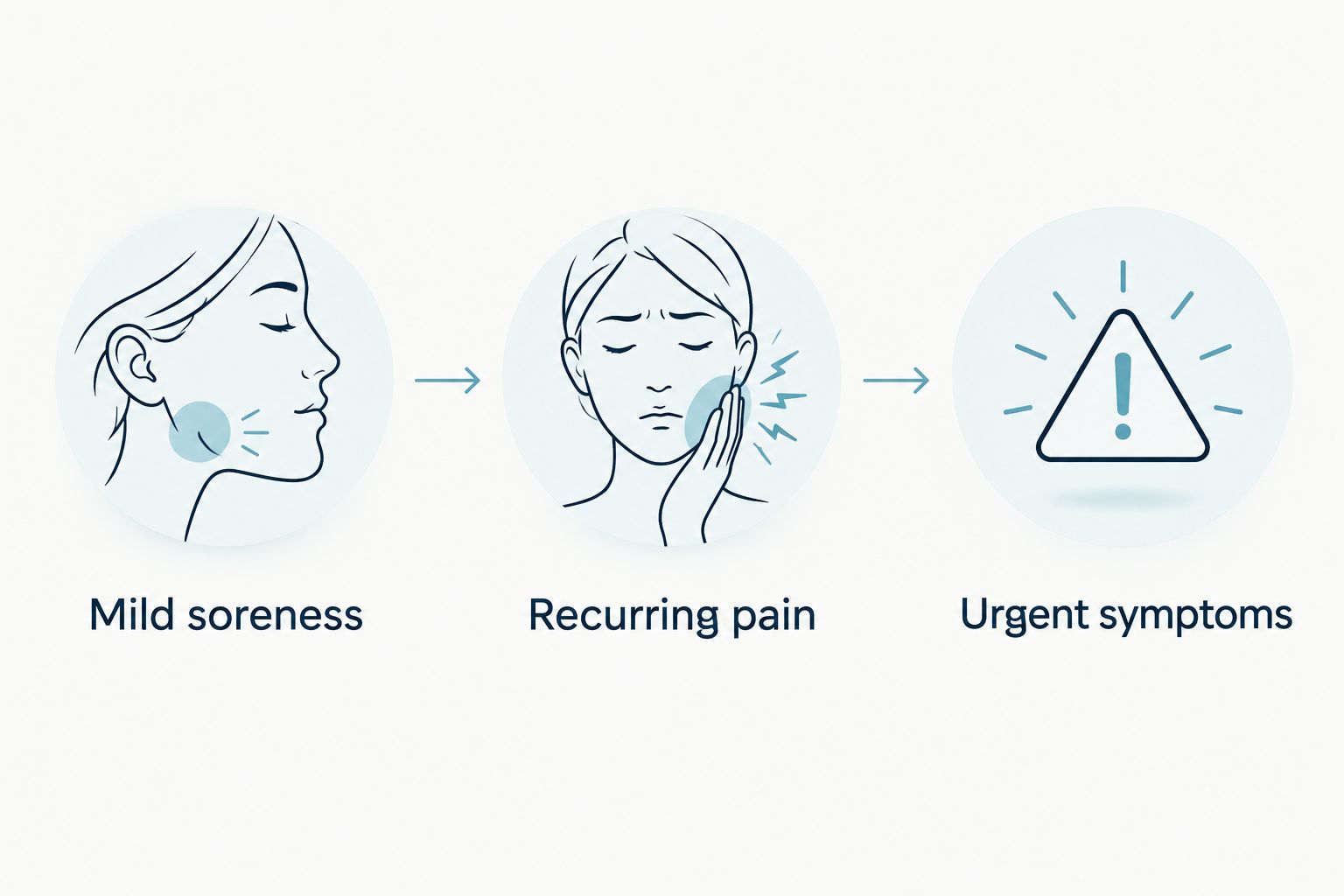
The following diagram summarizes the decision—not a diagnosis. Choose the response that matches your symptoms rather than assuming every jaw ache has the same explanation.
Why TMJ pain recovery varies
There is no single recovery schedule because jaw pain describes a symptom, not one condition. These established clinical factors help explain why one episode settles while another needs more care:
- The source of pain: Muscle soreness, joint inflammation, and tooth-related pain require different decisions.
- Continued strain: Clenching, gum chewing, or painful chewing can keep provoking symptoms.
- Jaw movement: Catching, locking, or restricted opening changes the need for assessment.
- Previous episodes: Repeated flares make it important to look for a recurring trigger rather than treating each episode separately.
- Other health factors: Sleep problems, stress, arthritis, and other pain conditions can affect symptoms and care planning.
Stress can contribute to muscle tension, but that does not make jaw pain imaginary. It also does not rule out a dental or joint problem.
What conservative care means in 2026
Conservative care starts with approaches that do not permanently alter your teeth or jaw. Depending on the examination, that can include education, habit changes, guided exercises, physical therapy, or an appropriate oral appliance.
Each option has limits. Exercises need to match the problem; forceful stretching is not a universal solution. An appliance can protect teeth or help selected symptoms, but it does not prove that grinding caused the pain or guarantee that pain will stop.
Do not assume that jaw pain means you need your bite permanently changed. The National Institute of Dental and Craniofacial Research advises caution with irreversible treatments for TMD, including procedures that permanently alter teeth or the bite.
Before agreeing to treatment, ask what the diagnosis is, what the treatment aims to improve, and how progress will be reviewed. Ask about less invasive alternatives and what happens if the first approach does not help.
Will a night guard make TMJ pain disappear?
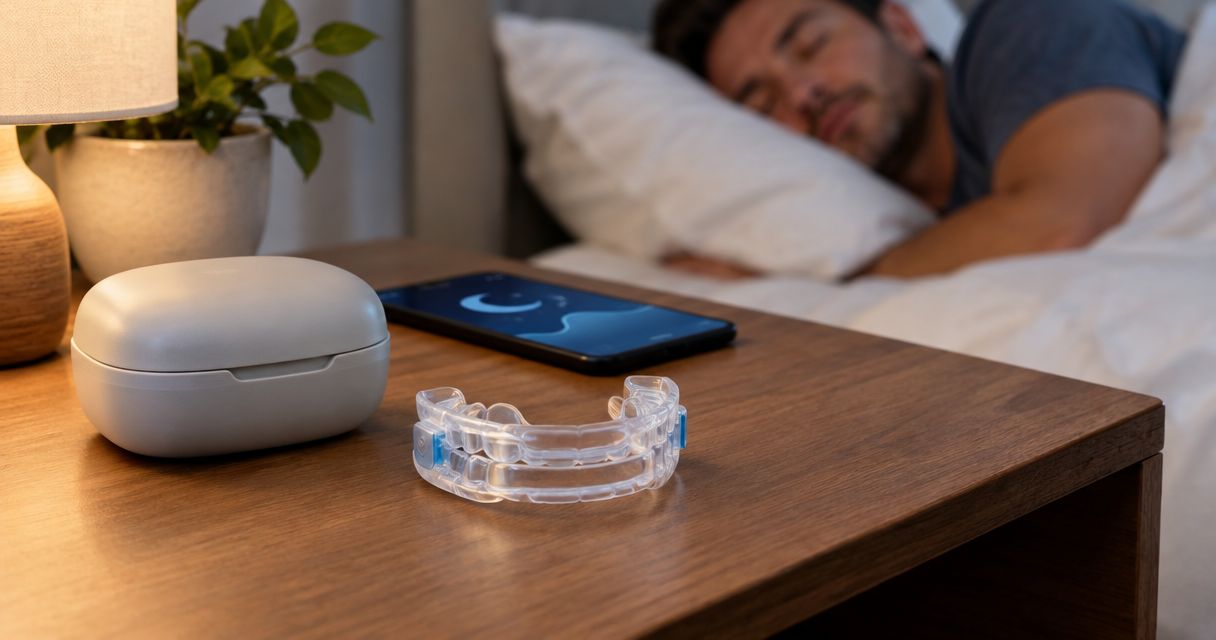
A night guard does not guarantee that TMJ pain will disappear or that grinding will stop. An appliance can help protect teeth in selected cases, but suitability depends on your symptoms, examination, and fit.
Tell your dentist if an appliance increases pain or changes your bite. Do not keep wearing an uncomfortable device simply because it was marketed for jaw pain.
Can painless jaw clicking go away without treatment?
Painless jaw clicking does not necessarily need treatment, whether or not the sound disappears. Clicking without pain or restricted movement is common and does not by itself establish a disorder requiring treatment.
Arrange an assessment if clicking becomes painful, your jaw catches, or opening becomes difficult. Avoid repeatedly making the sound to test it.
Can TMJ pain return after it goes away?
TMJ pain can return after it goes away, particularly when the same strain or trigger continues. Record recurring patterns and discuss them with your dentist rather than assuming every episode will resolve in the same way.
Planning a dental visit in 2026
A useful appointment starts with a clear symptom history, not a request for a particular device. Your dentist can examine your teeth and mouth, assess jaw movement, and decide whether further evaluation or referral is appropriate.
Bring a medication list and any appliance you already wear. Explain whether the pain feels tooth-specific, follows chewing, appears on waking, or occurs with headaches or ear-area discomfort.
Starboard Dental is led by Dr. Alex Kerbaugh and serves patients of all ages. You can contact the practice to discuss arranging a dental visit; severe or emergency symptoms belong in the urgent-care pathway described above.
Keep up gentle oral hygiene while your jaw is sore. Brush for 2 minutes with fluoride toothpaste, without forcing your mouth wider than is comfortable, and ask for advice if pain prevents cleaning.
FAQ
Can TMJ pain go away on its own without treatment?
Yes, TMJ pain can improve without a procedure or other formal treatment, especially when a temporary flare settles. Persistent pain, recurring episodes, or difficulty moving your jaw needs evaluation rather than indefinite waiting.
How long should I wait before seeing a dentist for jaw pain?
Do not use a fixed waiting period if jaw pain is worsening, keeps returning, or interferes with eating or sleep. Locking, swelling, fever, or injury calls for prompt assessment, while breathing or swallowing difficulty requires emergency care.
Is it normal for my jaw to click without hurting?
Painless jaw clicking is common and does not necessarily need treatment. Pain, catching, locking, or reduced opening changes the situation and warrants assessment.
Should I stop moving my jaw completely while it hurts?
Avoid painful overuse, but do not force complete immobilization or aggressive stretching on your own. Keep movement comfortable and ask a clinician about exercises if symptoms persist.
Will a night guard permanently stop TMJ pain?
A night guard does not guarantee permanent relief from TMJ pain. An appliance can protect teeth or help selected symptoms, but its usefulness depends on the diagnosis and fit.
Can a tooth problem feel like TMJ pain?
Yes, tooth problems can produce pain that feels like a broader jaw ache. An examination helps distinguish dental pain from muscle or joint symptoms; swelling or fever needs prompt attention.
What is a sensible first step for TMJ pain in 2026?
Start by checking for warning signs and reducing avoidable jaw strain if symptoms are mild. Arrange an assessment when symptoms persist, recur, or limit normal activities instead of choosing a treatment before you know the cause.
One last thing
A quieter jaw is not the only sign of progress. Eating more comfortably, opening without pain, and returning to normal activities matter more than eliminating every harmless click.
For your 2026 care plan, write down what makes the pain better or worse before trying another remedy. That short record gives your clinician something more useful than a guess—and helps you notice whether you are actually improving.