
There is no single price that answers how much veneers cost in Maine in 2026. Your total depends on the veneer material, how many teeth you treat, and the work needed before placement. The useful figure is a written treatment estimate that separates veneer work from any other recommended care.
- How much do veneers cost in Maine? In 2026, get an itemized quote rather than relying on one statewide figure.
- Porcelain veneers and composite veneers involve different materials and treatment steps; compare the full plans, not just the veneer line.
- Ask whether preparation, temporary veneers, follow-up visits, and other recommended dental care are included.
How much do veneers cost in Maine?
A Maine veneer estimate should tell you what treatment is proposed, which teeth it covers, and what is included in the total. A per-tooth figure alone does not answer those questions. It also does not tell you whether the dentist recommends treating another dental problem first.
| Part of the estimate | What to ask |
|---|---|
| Veneer material | Are the proposed veneers porcelain or composite? |
| Teeth included | Which teeth does the plan cover, and why? |
| Preparation | What work on the teeth is planned before placement? |
| Temporary veneers | Are temporary veneers part of this treatment plan? |
| Other dental care | Is any separate care recommended before cosmetic work begins? |
| Follow-up | What visits after placement are included? |
Compare the complete treatment plans, not isolated veneer figures. A lower-looking veneer line does not establish a lower total if the written estimates cover different work. If a line is unclear, ask the practice to explain it before you agree to treatment.
Why this matters
Veneers change the visible surfaces of teeth, but they do not treat decay or gum disease. A cosmetic plan therefore starts with a dental assessment, not a material choice alone. That distinction matters when you are comparing estimates from different practices in 2026: the proposed work may differ because the dentists are addressing different needs.
Starboard Dental is a local cosmetic dentistry option for patients in Kennebunk, York, and Saco considering veneers. Its Starboard Dental website is a starting point for asking about a cosmetic dentistry consultation. Confirm whether veneer treatment is offered and request a written plan for your own teeth; do not treat a general price guide as a quote from the practice.
Porcelain veneers: what the estimate needs to cover
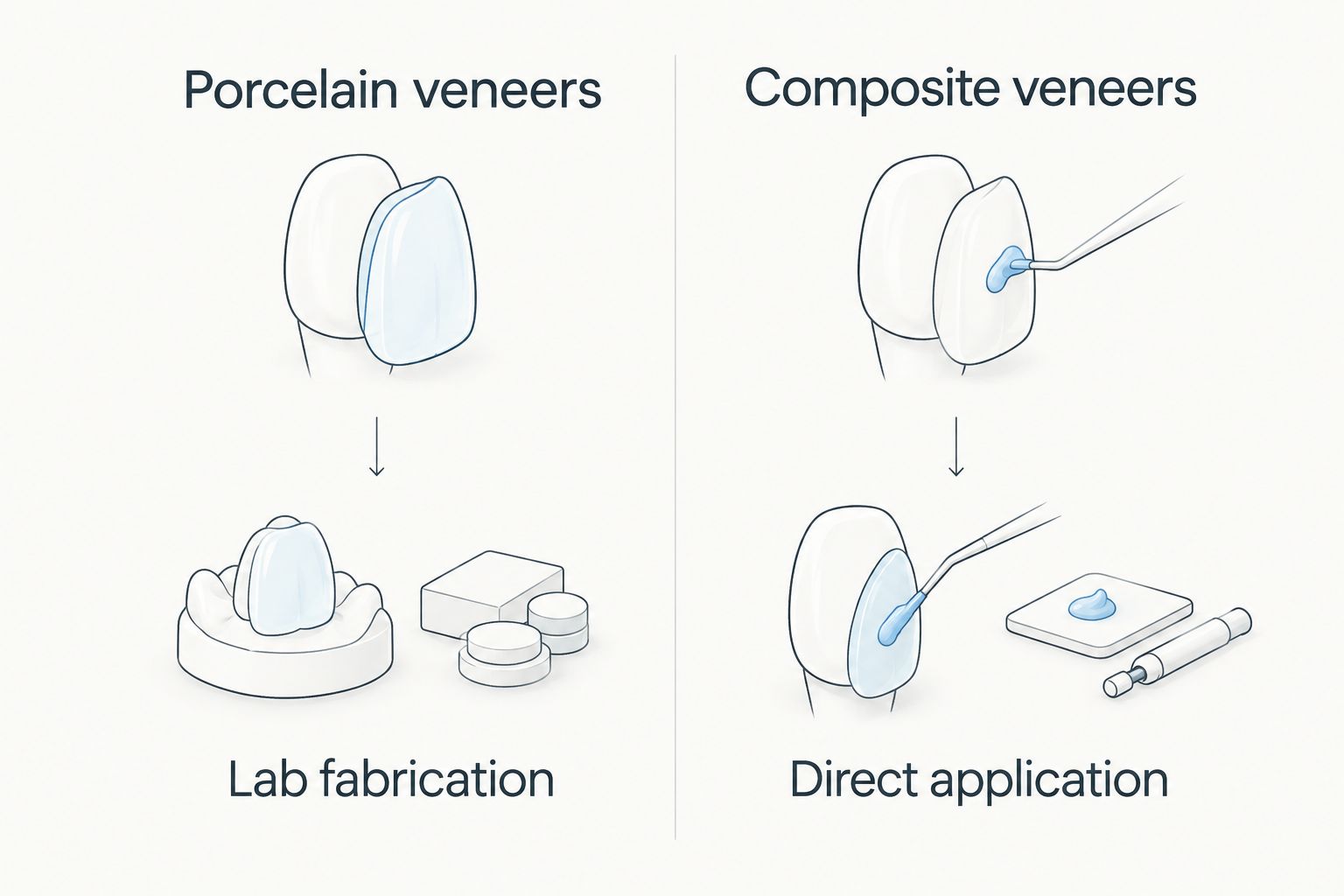
Porcelain veneers are thin restorations made to fit the front surfaces of teeth. Treatment generally involves planning, tooth preparation when indicated, fabrication, and placement. Your estimate should make clear which steps are included and whether temporary veneers are planned while the final restorations are made.
Best for: someone whose dentist recommends porcelain to achieve the proposed cosmetic result and who accepts the preparation involved. Porcelain can resist staining better than composite resin, but it is not stain-proof. Placement can require removing some tooth structure, so ask what will change about your natural teeth before consenting.
Porcelain is not automatically the better answer for every tooth. If your concern is a small chip or a limited shape change, ask whether a less extensive option addresses it. If a tooth needs restorative treatment for reasons beyond appearance, ask how that changes the plan. The right comparison is the treatment your dentist recommends for your teeth, with its benefits and trade-offs explained.
Composite veneers: what the estimate needs to cover
Composite veneers use tooth-colored resin. Composite can be applied directly to a tooth, though the precise technique depends on the treatment plan. Ask whether the proposed work is direct application, what preparation is needed, and what the plan includes if the veneer later needs repair.
Best for: someone whose dentist finds composite appropriate for the specific change they want and who understands its maintenance trade-offs. Composite is generally more prone to staining than porcelain and can need polishing or repair. That does not make it the wrong choice; it makes the expected upkeep part of the decision.
| Question | Porcelain veneers | Composite veneers |
|---|---|---|
| How is the material used? | Fabricated to fit, then attached to the tooth | Often applied directly to the tooth |
| What is a potential advantage? | Better stain resistance than composite | Direct application can suit limited cosmetic changes |
| What is a trade-off? | Fabrication and tooth preparation can be part of treatment | More susceptible to staining and repair needs |
| What belongs in the estimate? | Preparation, lab fabrication, placement, and any temporary veneers | Preparation, direct application, finishing, and follow-up |
The table compares materials, not quotes. Ask the dentist to explain why a particular material fits each tooth. In 2026, a written plan remains more useful than choosing between porcelain and composite on material alone.
Why veneer estimates vary
The same question about veneer cost can produce different answers because the proposed treatment differs. These are the factors to check in an itemized estimate:
- Material: Porcelain and composite use different materials and placement processes. Confirm which one the estimate names.
- Number of teeth: A plan for one tooth is not the same treatment as a plan covering several teeth. Check the exact teeth listed.
- Condition of your teeth and gums: Decay or gum disease needs assessment before cosmetic work. Ask which recommended services are separate from veneer placement.
- Preparation: The amount of tooth preparation depends on the clinical plan. Ask the dentist to describe what will happen to each tooth.
- Fabrication and temporary work: Ask whether lab work or temporary veneers are part of the proposed treatment.
- Follow-up: Check which visits after placement the written estimate includes.
Do not assume every factor above will apply to you. Ask for the proposed work in writing, then compare estimates line by line. If the plans recommend different materials or different numbers of teeth, ask each dentist to explain that decision before comparing totals.
How to get a veneer estimate you can use
A consultation should resolve the questions a general Maine price guide cannot answer. Bring the specific changes you want to discuss, whether that is a chip, tooth shape, or another appearance concern. The dentist can then assess your teeth and explain which options fit those goals.
- Describe the result you want. Point to the teeth that concern you rather than requesting a material before an examination.
- Ask which treatment is proposed. Confirm whether the plan calls for porcelain veneers, composite veneers, or another approach.
- Review preparation tooth by tooth. Find out what the dentist plans to change and whether that change is reversible.
- Request an itemized estimate. Have the practice identify veneer work, any temporary work, other recommended care, and follow-up visits.
- Check your coverage directly. Ask your insurer about the proposed procedures and request the practice's billing details so you can verify your benefits. Do not assume cosmetic treatment is covered.
Ask when the written estimate expires and what would cause it to change. If you are comparing practices, give each the same description of your goals. Different recommendations deserve a clinical explanation, not a comparison based on the final line alone.
Are porcelain veneers more expensive than composite veneers in Maine?
No verified Maine-wide figure in this guide establishes what either option will cost you in 2026. Porcelain and composite involve different materials and treatment steps, but your quote also depends on the number of teeth and any other work in the plan. Request itemized estimates for both options if your dentist says both are appropriate.
Does dental insurance pay for veneers in Maine?
Coverage depends on your policy and the reason for treatment. Do not assume a procedure will be covered because a dentist recommends it, or excluded because it changes a tooth's appearance. Ask your insurer to review the proposed procedures and explain your specific benefits before you commit.
Is the lowest veneer quote the best choice?
The lowest quote is not the best comparison unless it covers the same treatment. Check the teeth, material, preparation, temporary work, and follow-up listed in each estimate. If one plan leaves out a step included in another, ask why.
FAQ
How much do veneers cost in Maine in 2026?
There is no single Maine veneer price that applies to every treatment plan in 2026. Request a written estimate showing the material, teeth covered, preparation, and any other recommended care.
Are porcelain or composite veneers better for me?
The better choice depends on your teeth and the cosmetic change you want. Ask a dentist to explain the preparation and maintenance trade-offs of each suitable option.
Are veneers covered by dental insurance in Maine?
Coverage depends on your policy and the proposed treatment. Ask your insurer to review the procedures in your written plan before assuming any benefit applies.
Does a veneer estimate include temporary veneers?
Only the written estimate can confirm whether temporary veneers are included. Ask the practice to identify any temporary work and the visits it covers.
Can veneers fix decay or gum disease?
No. Veneers do not treat decay or gum disease, so ask your dentist whether other care is needed before cosmetic treatment.
Should I compare veneer prices per tooth?
A per-tooth figure is not enough to compare complete treatment plans. Check which teeth, materials, preparation steps, and follow-up visits each estimate includes.
Can I ask about veneers for just one tooth?
Yes. Tell the dentist which tooth concerns you and ask which treatment would address it. The recommendation depends on that tooth and the result you want.
One last thing
A veneer decision is also a decision about your natural tooth. Before accepting any 2026 estimate, ask the dentist to show you which teeth need preparation and why. That answer is more useful than a statewide price figure when you are deciding whether the proposed treatment is right for you.